

6 Anti-Inflammatory Leafy Greens to Eat Every Week
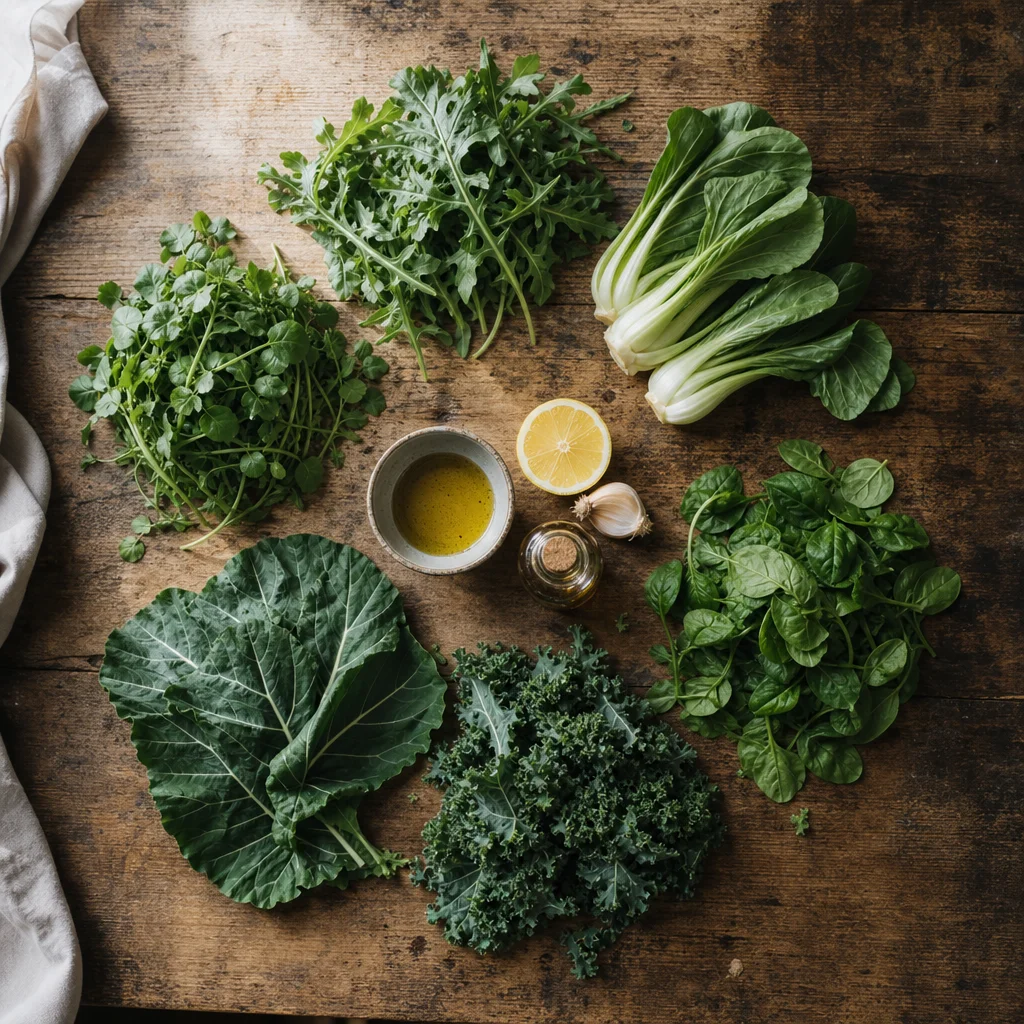
Key Takeaways
- Leafy greens rank among the most nutrient-dense foods per calorie. Watercress, bok choy, and spinach lead the CDC’s powerhouse ranking.
- A vegetable-rich diet is linked to lower levels of inflammatory markers like C-reactive protein (CRP).
- Each green brings different protective compounds — glucosinolates, carotenoids, nitrates, and vitamin K — so rotation matters.
- How you cook greens changes the benefits. Chop first, steam instead of boil, and add a little fat.
- If you take blood thinners or have had kidney stones, simple precautions keep greens safe for you.
Picture this: you’re in the produce aisle, staring at a bunch of collards you’ve never cooked. There’s a bag of watercress you’ve walked past a hundred times. You know leafy greens are good for you. But are they worth the extra effort? The answer is yes. Anti-inflammatory leafy greens may be one of the simplest, most affordable ways to support your body’s defenses against chronic inflammation.
Chronic inflammation isn’t a feeling you notice on any given day. It’s the slow, low-grade simmer that research links to heart disease, type 2 diabetes, and metabolic problems. The good news? Your grocery cart is one of the most powerful tools you have. Let’s explore which greens deliver the most benefit and how to cook them so you actually get it.
Quick Answer: Do Leafy Greens Really Fight Inflammation?
Yes — when they’re part of a vegetable-rich eating pattern. No single food can switch off inflammation overnight. But leafy greens are among the most nutrient-dense, evidence-supported anti-inflammatory foods you can buy. The keys are variety, smart cooking methods, and consistency.
Why Anti-Inflammatory Leafy Greens Work
Let’s be honest: no single food is a magic bullet. That’s not how inflammation works. However, the overall pattern — your daily mix of foods — clearly matters. In a large 2024 Japanese study, women with the highest vegetable intake had about 14% lower CRP. CRP is a key marker of inflammation. The comparison was with women who ate the fewest vegetables. Processed meat showed the opposite pattern.
The link goes beyond vegetables in general. A 2025 study from the Swedish SCAPIS cohort tells a similar story. In over 1,000 middle-aged adults, higher blood levels of carotenoids came with lower inflammatory markers like CRP and IL-18. Lutein, the carotenoid most concentrated in leafy greens, stayed linked to lower inflammatory markers even after accounting for other factors. These plant pigments are doing real work.
Leafy greens also win on pure nutrient density. The CDC’s powerhouse fruits and vegetables ranking scored 47 foods on how many nutrients they pack per calorie. Watercress ranked first. Bok choy came in second. Spinach, collard greens, kale, and arugula all landed in the top 20. That means more protective nutrients per bite.
The 6 Anti-Inflammatory Leafy Greens Worth Rotating Every Week
Here’s the thing: no single green has everything. That’s why rotation beats obsession. Each of these six anti-inflammatory leafy greens brings its own compound profile — and its own flavor. Here’s what each offers, plus the easiest way to cook it.
1. Arugula
Arugula is one of the most underrated anti-inflammatory leafy greens in the produce aisle. It’s a cruciferous green, so it’s packed with glucosinolates. These sulfur compounds turn into isothiocyanates — small molecules with anti-inflammatory activity. Arugula also provides quercetin, a flavonoid that some research suggests may help block inflammatory compounds. And it’s rich in nitrates, which a 2025 meta-analysis of 75 trials linked to modestly lower blood pressure.
How to use it: eat arugula raw. Scatter a handful over pizza right after it comes out of the oven. Or use it as a bed for pasta. Keep it simple with olive oil and lemon juice.
2. Bok Choy
Bok choy — also called Chinese cabbage — scored 91.99 on the CDC nutrient-density scale. Only watercress beat it. It delivers vitamin C, vitamin K, beta carotene, and folate. Early research is also exploring whether bok choy supports the gut microbiome and helps strengthen the intestinal barrier. It’s promising, but it’s still early days. Think of bok choy as a smart addition, not a cure.
How to use it: every part is edible. Slice halved stalks crosswise and drop them into noodle soup during the final minutes of cooking. Or halve them lengthwise and char on the grill. A quick stir-fry with tofu and a garlicky sauce is one of the easiest ways to enjoy it.
3. Spinach
Spinach is one of the most-studied anti-inflammatory leafy greens around. Its claim to fame is carotenoids — lutein and beta carotene. These help neutralize the oxidative stress that drives chronic inflammation. One cup of raw spinach delivers 121% of the daily value for vitamin K1. That’s per the NIH’s vitamin K fact sheet. Your body also needs a little fat to absorb it well — more on that below.
How to use it: spinach works raw or cooked. Blend it into a smoothie. Fold it into eggs. Or saut\u00e9 it with garlic. Just skip the boiling — steaming keeps more nutrients in the leaf.
An Honest Note About Nitrates
Arugula and spinach are both rich in nitrates, and the blood pressure research is solid. But nitrates don’t directly lower inflammatory markers. A 2022 randomized trial tested this directly. A week of nitrate-rich juice raised blood nitrate levels but changed no inflammatory cytokines. The takeaway? These greens support healthy blood pressure and replace pro-inflammatory foods. That’s enough.
4. Kale
Kale brings the same glucosinolate power as its cruciferous cousins, plus carotenoids and flavonoids. Research has found these compounds may inhibit inflammatory pathways. Kale is also rich in vitamins C, K, and A. Its CDC nutrient-density score came in at 49.07 — a strong showing, even if it isn’t the top.
How to use it: kale is the most bitter green on this list. Strip the tough stems, then massage olive oil and lemon juice into the leaves until they soften. The texture turns silky, and the bitterness fades. Or roast the leaves until crisp for a snack.
5. Collard Greens
Collards are the budget superstar of the anti-inflammatory leafy greens world. One half-cup of cooked collards packs 442% of the daily value for vitamin K. That’s the highest on this list, per the NIH. The figure comes from frozen collards that are boiled. Collards also offer glucosinolates, fiber, calcium, and vitamin C. And they’re usually one of the cheapest greens in the store.
How to use it: skip the long, slow simmer. A fast braise keeps more nutrients and flavor. Cook collards in broth with a little vinegar for 15 to 20 minutes. For a fun swap, blanch one whole leaf for about half a minute. Plunge it into ice water, pat it dry, and roll it up like a tortilla. It’s a technique dietitian Jackie Topol recommends.
6. Watercress
Watercress is the one that beats them all. It scored a perfect 100 on the CDC nutrient-density scale. It’s also the green on this list with the strongest direct human evidence. In a 2007 randomized crossover study in the American Journal of Clinical Nutrition, 60 healthy adults ate 85 grams of raw watercress daily for eight weeks. Basal DNA damage dropped about 17%. Oxidative DNA damage fell close to 24%. Blood levels of lutein doubled.
How to use it: watercress has a peppery bite. Swap it for lettuce on a sandwich. Or give it a quick toss in a hot pan with garlic, ginger, and a few drops of sesame oil.
How to Cook Greens Without Losing the Benefits
Now, you might be thinking: doesn’t cooking destroy the nutrients? It can — if you do it wrong. The good news: anti-inflammatory leafy greens are forgiving once you know a few basics. Three simple rules make a big difference.
Chop first, cook second. Chopping cruciferous greens activates myrosinase — an enzyme that converts glucosinolates into their active forms. Let chopped greens sit for a few minutes before cooking. A 2025 review in Foods shows how much food preparation matters for this conversion.
Steam over boil. Boiling pulls water-soluble nutrients out of the leaf and into the pot. Steaming or a quick saut\u00e9 keeps them on your plate.
Add fat. Vitamin K is fat-soluble, so it needs fat for your body to absorb it. Your body absorbs only 4-17% as much vitamin K from raw spinach as from a supplement. And that absorption gap matters. A 2014 study linked vitamin K status — not just intake — to lower inflammatory markers like IL-6 and CRP. Olive oil does double duty: it helps absorption and brings its own anti-inflammatory polyphenols. A 2026 meta-analysis of 23 trials linked high-polyphenol olive oil to modestly lower CRP.
How Much to Eat: A Simple Weekly Greens Plan
U.S. dietary guidelines recommend two to three cups of vegetables a day. One cup of cooked greens — or two cups of raw — counts as one serving. And you don’t have to eat every one of these anti-inflammatory leafy greens every week. Pick two or three you enjoy, and rotate from there.
Here’s a realistic week using all six:
- Monday: spinach and berry smoothie, plus arugula on your lunch salad.
- Tuesday: bok choy stir-fry with tofu and garlic sauce.
- Wednesday: massaged kale salad with lemon vinaigrette.
- Thursday: watercress sandwich with a squeeze of lemon.
- Friday: quick-braised collards with a little vinegar.
- Weekend: arugula on pizza straight from the oven, plus leftover greens in soups or eggs.
Keep the pattern, not the perfection. Eating two or three anti-inflammatory leafy greens a week is a great start. Working toward most days is even better.
Budget-Friendly Greens: Eat Well for Less
Collards, bok choy, and frozen spinach are often the most affordable options. Frozen spinach costs less than fresh and is always ready when you need it. Buy what’s on sale, wash and chop it the same day. Store it with a paper towel in a container. For longer-lasting freshness, see our leafy greens longevity guide. Ready-to-use greens make healthy choices the default.
Who Should Be Careful with Leafy Greens
For most people, eating more anti-inflammatory leafy greens is a pure win. A few groups should take simple precautions.
If you take a blood thinner: warfarin and similar medications work partly by keeping vitamin K levels steady. The concern isn’t eating greens. It’s suddenly changing how much you eat. Sudden jumps can change how the drug works. The NIH recommends keeping your intake consistent. Talk with your clinician about what that means for you.
If you’ve had kidney stones: spinach is high in oxalates, compounds that can contribute to calcium-oxalate stones. A large Harvard cohort study looked at spinach and stone risk. Eating 8 or more servings per month carried a modestly higher risk. That increase was about 30% in men and 34% in older women. Interestingly, the study found no association in younger women. If you’re prone to stones, lean on kale, collards, arugula, and watercress. Pair spinach with calcium-rich foods.
If you have a thyroid condition: raw cruciferous greens contain goitrogens. These compounds can interfere with thyroid function in very large amounts. Cooking largely neutralizes them. That’s one more reason to enjoy most of your greens cooked.
Food safety matters here. Leafy greens have triggered foodborne illness outbreaks in the past. Wash all greens under running water before eating — even pre-washed bags — and dry them well.
Frequently Asked Questions
Is frozen spinach as healthy as fresh? Yes — it’s a convenient, budget-friendly option. Frozen spinach is picked at peak ripeness and works beautifully in smoothies, soups, and eggs.
Do green powders replace whole greens? Not really. Powders are convenient, but you lose the fiber and the volume that make whole greens satisfying. They’re also pricier. Think of powders as a backup, not a replacement.
Which green is the healthiest? There’s no single winner. Watercress tops the nutrient-density ranking, and spinach is the most studied. But each green brings different protective compounds. Variety beats perfection.
The Bottom Line
Here’s the honest truth. Leafy greens won’t erase inflammation overnight. Nothing will. But the research keeps pointing the same direction. A vegetable-rich diet is linked to lower inflammation. And leafy greens lead the pack in nutrient density.
Making anti-inflammatory leafy greens a regular habit is one of the simplest, most affordable upgrades in the grocery store. Pick two greens you don’t usually buy. Learn one new way to cook each. Follow the three rules — chop, steam, add fat — and stay consistent. Small weekly habits are how real change happens.