Added Sugar and Gut Health: What Happens Inside Your Gut
Key Takeaways
- Added sugar feeds harmful gut bacteria (like Enterobacteriaceae) while starving the helpful ones that make short-chain fatty acids.
- A 2025 review found that diets high in added sugar cut levels of SCFA-producing bacteria such as Clostridium and Ruminococcus.
- Too much added sugar can weaken your gut barrier, leading to inflammation over time.
- The average American eats far more added sugar than the daily limit recommended by the American Heart Association.
- You don’t have to quit sweets. Adding fiber-rich foods and swapping sugary drinks can rebalance your gut without strict rules.
You already know too much sugar isn’t great for your waistline or your energy. But here’s what you may not know: every time you reach for that soda or late-night cookie, you’re not just feeding yourself — you’re feeding the bacteria in your gut. And based on what you pick, you may be feeding the wrong ones. That’s where added sugar gut health becomes a real thing worth understanding.
Quick Answer: Is Added Sugar Bad for Your Gut?
Yes — when you eat too much. Research shows that regularly eating more than the advised daily amount of added sugar can shift your gut bacteria, cut diversity, and weaken your intestinal lining. The good news? Your gut can bounce back with small changes.
What Is Added Sugar Gut Health, Really?
Think of your gut as a busy city with trillions of tiny residents. Some are helpful — they make vitamins, keep inflammation low, and help you digest food. Others are less friendly and can cause trouble if they take over. The foods you eat act like votes: each meal lets you decide which residents get to thrive.
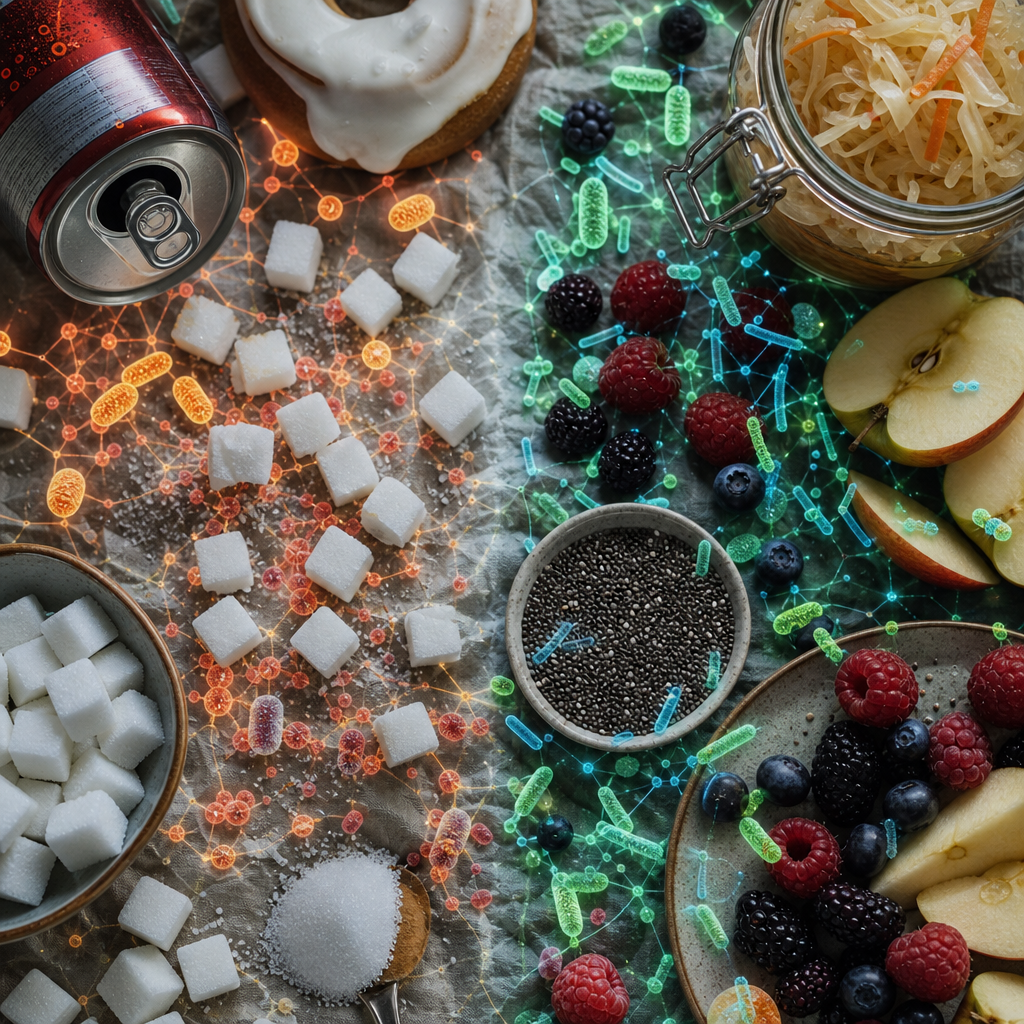
Added sugar gut health is about that voting process. When you eat a lot of added sugar — from sodas, candies, baked goods, and sneaky sources like flavored yogurt and salad dressing — you’re running a campaign for the less-friendly bacteria. They love sugar, and they multiply fast. Meanwhile, helpful bacteria that prefer fiber start to fade.
A 2025 review in the journal Gut Microbes looked at more than 50 studies and found a clear pattern: added sugars like glucose, fructose, and sucrose change the gut microbiome. They boost sugar-loving bacteria such as Enterobacteriaceae, Blautia, and Bacteroides, while cutting bacteria that make short-chain fatty acids (SCFAs) — the compounds that keep your gut lining healthy.
The Three Ways Added Sugar Disrupts Your Gut
When we talk about added sugar gut health, we’re looking at three key ways sugar changes what’s happening inside you. Here’s the breakdown.
1. It Feeds the Wrong Bacteria
When you eat added sugar, certain bacteria throw a party. The Gut Microbes review found that Enterobacteriaceae family members (which include some harmful strains) thrive on simple sugars. At the same time, microbes like Clostridium and Ruminococcus — which make the anti-inflammatory compound butyrate — get pushed out. Less butyrate means less protection for your gut lining.
2. It Starves Your Good Bacteria
Added sugar doesn’t just add — it replaces. Foods high in added sugar tend to lack fiber, which is the main food for good bacteria. When you fill up on sugary snacks and drinks, you crowd out the fruits, veggies, and whole grains your good gut bugs need. The result? Lower diversity and a less sturdy gut. A well-balanced gut health breakfast is one easy way to start adding those fiber-rich foods back in.
3. It Weakens Your Gut Barrier
Your gut lining is a thin layer of cells that acts like a security gate — it lets nutrients in and keeps toxins out. The review explains that a high-sugar diet makes good bacteria produce fewer SCFAs, which weakens this barrier. Over time, the gate develops cracks, letting bacterial pieces slip into your blood. That triggers systemic inflammation — which over time is linked by research to digestive discomfort, fatigue, and even mood changes.
How Much Added Sugar Is Too Much?
The American Heart Association advises limiting added sugar to no more than about 6 teaspoons per day for women and 9 for men. For reference, a single 12-ounce can of regular soda has about 39 grams — that’s already past the daily max.
The average American eats far more added sugar than the daily limit recommended by the American Heart Association. And research hints that liquid sugar — like soda and sweet tea — may hit your gut harder than solid sugar, since it delivers a fast, fiber-free dose.
A 2024 study in Nutrients found that people who ate more added sugar had lower gut bacterial diversity. For each increase in added sugar intake, diversity dropped in a measurable way. That’s some of the clearest human evidence we have.
5 Simple Swaps to Help Your Gut Without Cutting Out Sweets
Here’s what I want you to take away: improving your added sugar gut health doesn’t mean saying goodbye to cookies forever. Think addition, not subtraction. Every time you add a fiber-rich food, you vote for the good bacteria.
- Swap soda for sparkling water with citrus. A 12-ounce soda has about 39g of added sugar. Swapping even one a day for plain or citrus water makes a big difference. Try lime, lemon, or cucumber. For more gut-supporting drink ideas, explore our list of 6 Healthy Natural Drinks for Gut Health & Antioxidants.
- Swap candy for fruit. Fruit has natural sugar, but it also comes with fiber, water, and antioxidants. A bowl of berries or a sliced apple can curb a sweet craving while feeding your good bacteria.
- Swap refined grains for whole grains. White bread, white rice, and sugary cereals are low in fiber. Oats, quinoa, and barley are prebiotic powerhouses that help SCFA-producing bacteria thrive.
- Add a fiber source to every meal. Sprinkle chia seeds on yogurt, toss beans into your salad, or snack on raw veggies with hummus. Each add-in helps crowd out less-helpful bacteria.
- Include fermented foods. Kimchi, sauerkraut, kefir, and yogurt bring live probiotics that can help restore balance after a high-sugar day. Think of them as backup for your gut.
Your added sugar gut health journey is about progress, not perfection. One swap at a time adds up.
A 2026 review in Current Opinion in Clinical Nutrition and Metabolic Care showed that adding mixed fiber can help counter many effects of a high-sugar diet, reshaping the gut microbiota and supporting metabolic health. That’s strong proof that what you add matters as much as what you cut.
Frequently Asked Questions
Does natural sugar from fruit affect my gut the same way?
Not at all. Whole fruit has fiber, which slows sugar absorption and feeds your good bacteria. A 2025 review noted that fiber-rich foods boost helpful bugs, while added sugars without fiber tend to feed harmful ones. So eat your fruit — it’s on your side.
How long does it take for my gut to recover after cutting sugar?
Gut bacteria are highly adaptable and can begin responding to dietary changes relatively quickly, though the exact timing varies from person to person. What’s clear is that every fiber-rich meal you add helps rebalance your microbiome.
Are sugar substitutes better for my gut?
It depends. A 2026 review in Revista Española de Enfermedades Digestivas warned that some artificial sweeteners and sugar alcohols can also disturb gut bacteria and cut diversity. The best rule: choose whole foods over processed ones, including when it comes to sweetness.
The Bottom Line
Added sugar gut health is a real thing that affects how you feel every day. When you eat too much added sugar, you shift your gut toward bacteria that love sugar, reduce the good bugs that protect you, and weaken the barrier that keeps inflammation in check.
Your gut is incredibly adaptable. You don’t have to cut all sweets. Start by adding a fiber-rich food to each meal, swap one sugary drink for water, and notice how your body responds. Your gut bacteria will thank you — and you’ll likely feel the difference in your energy, digestion, and overall wellbeing.
Here’s to feeding the good guys.