

Benefits of Green Tea for Women: How Many Cups Work
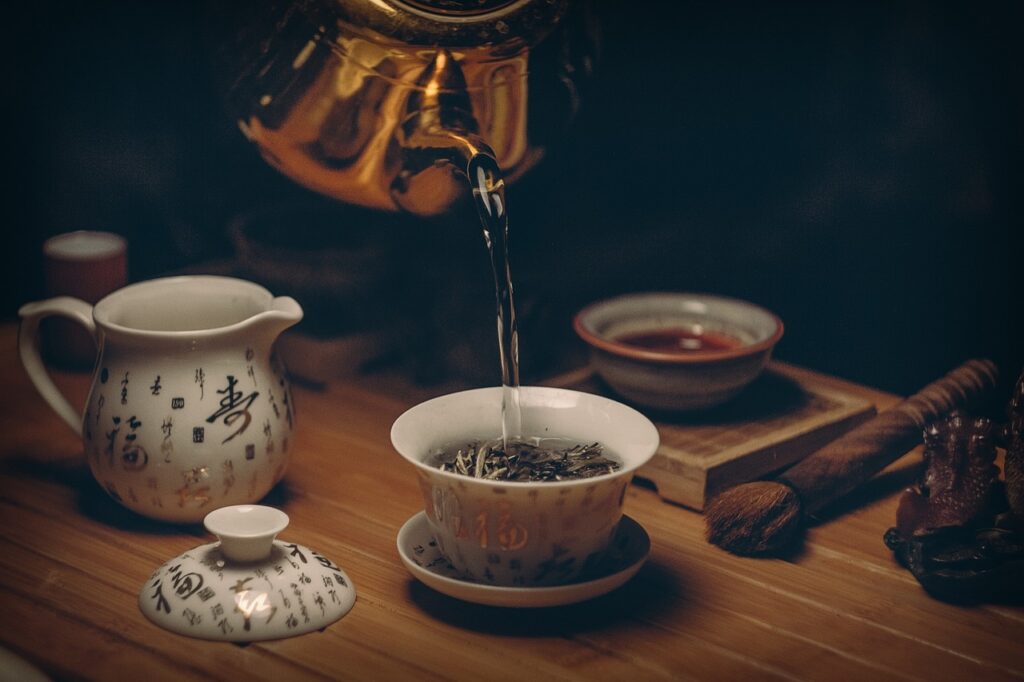
Green tea is sold as a fat-burning, cancer-blocking, metabolism-resetting cure. The research tells a smaller story, and a far more useful one. The real benefits of green tea for women come with conditions attached: a cup count, a timing rule, and a hard look at your iron and your medications.
Last updated: November 18, 2026
Quick Answer: How Many Cups Work?
The benefits of green tea for women show up at two to three cups a day. That is roughly 50 to 90 mg of caffeine and an estimated 100 to 200 mg of EGCG, the best-studied compound in the leaf. The death-risk curve flattens near two cups in pooled data. One large Japanese study saw its strongest result in women at five cups. Up to eight cups is safe for most healthy adults. Brewed tea and capsules are not the same product, and that gap decides most of the safety questions below.
So what do you do with a drink that is genuinely good for you and wildly oversold? You get specific. Below you will find the dose, the brewing temperature, the stomach rules, and the situations where green tea is the wrong choice for your body.
Benefits of Green Tea for Women: What Holds Up and What Doesn’t
Green tea is rich in plant compounds called catechins. EGCG is the one researchers study most. These compounds act as antioxidants, which means they help limit cell damage. That part is well established. What is not established is how much difference a daily cup makes over a decade.
Start with cancer, the claim that sells the most tea. The National Center for Complementary and Integrative Health calls the cancer results inconsistent. A large Japanese cohort study found no cancer death difference at any intake level. A 2024 pooled analysis of 38 cohort datasets reached the same place, with an estimate that was not statistically significant.
So the real list is shorter than the headlines. The table below ranks the main benefits by how well the research supports them. Each row carries the number that defines it.
| Benefit | Strength of evidence | The number that matters |
|---|---|---|
| Heart and longevity | Moderate (observational) | 23% lower all-cause death in women at 5+ cups |
| Weight and waist | Moderate but small | -1.23 kg and -3.46 cm over 4 to 24 weeks |
| Cholesterol and blood sugar | Moderate | Small LDL drop, no change in HDL |
| Mood and focus | Moderate | Calmer alertness than caffeine alone; a cup carries only ~28 mg L-theanine, far below trial doses |
| Stomach comfort | Tolerance, not treatment | Gentler than coffee at 1 to 2 cups with food |
| Cancer prevention | Not supported | Pooled cancer death risk: not significant |
Notice the pattern. The strongest evidence sits in heart health and in modest metabolic effects. The weakest evidence sits in exactly the places where marketing gets loudest.
How Many Cups Deliver the Benefits of Green Tea for Women?
Two to three cups a day is where the useful evidence sits. At roughly 25 to 30 mg of caffeine per 8-ounce cup, that puts you near 50 to 90 mg of caffeine. EGCG levels shift with the leaf and the steep time, but published estimates land around 50 to 100 mg per cup.
Two cups keeps appearing for a reason: the shape of the curve. A meta-analysis of 1.96 million people found the all-cause death benefit flattened around 2.0 cups a day. Drinking more did not lower risk further.
Each cup’s effect is also smaller than most pages admit. A dose-response review in Advances in Nutrition estimated about 4% lower heart-related death per extra 8-ounce cup. That same review graded the certainty of the evidence as low to moderate for heart-related death, and low for stroke and overall death.
Caffeine is the number that drives sleep, jitters, and pregnancy limits, so compare it directly:
| Drink (8 oz unless noted) | Caffeine |
|---|---|
| Green tea, brewed | 25 to 30 mg |
| Black tea, brewed | 47 mg |
| Coffee, brewed | 96 mg |
| Matcha, 1.5 g serving | About 40 mg (varies by grade and serving size) |
Matcha earns its own row because you swallow the whole leaf. That means more caffeine, more EGCG, and more vitamin K than a steeped cup. Keep matcha to about 2 level teaspoons (roughly 4 g) a day. That is the amount that lands near the 338 mg catechin and EGCG level regulators treat as safe for adults. If you drink more than that, go easy; matcha is closer to a low-dose extract than to a cup of steeped tea.
Safety guidance for healthy adults generally caps brewed green tea at eight cups a day. Two to three cups is the useful range. The space between those two numbers is where most tea marketing lives.
Heart Health: The One Finding That Is Stronger in Women
This is the result that makes a women-specific article worth writing. The Ohsaki cohort study in JAMA followed 40,530 Japanese adults for up to 11 years. Women drinking five or more cups a day had 23% lower all-cause death than women drinking less than one.
The heart result was larger: 31% lower death from heart and blood vessel disease (95% confidence interval 0.53 to 0.90). The difference between men and women reached statistical significance for all-cause death, where men saw only a 12% reduction, but not for heart deaths. That is a wide confidence interval on one cohort, so read it as a direction, not a fixed number.
However, this is one cohort in one country, and the design is observational. Heavy tea drinkers in Japan may differ from light drinkers in ways no model fully captures. Pooled data also show the heart pattern more clearly in Asian populations than in Western ones.
So treat it as a good daily habit, not a treatment plan. Two to three cups most days is a fair target. Five cups is where one large study saw its strongest signal, yet the extra gain after two cups is small.
Green Tea Benefits for Stomach: Two Truths, Not One
Search this question and you get two opposite answers. One camp says green tea soothes digestion. The other says it irritates the stomach lining. Both describe real experiences, and neither describes the same product.
The first truth is about brewed tea. A cup carries about a third of the caffeine in coffee and arrives diluted in water. At one to two cups, taken with or after food, most women tolerate it better than the same amount of coffee. That is a tolerance claim, not a cure.
No trial shows green tea treats reflux, gastritis, or indigestion. Traditional use is not evidence, and plenty of pages build this claim on tradition alone. If you have reflux, caffeine is the variable to watch, and green tea is simply the lower-caffeine option.
The second truth is about capsules. The USP review of green tea extract found that taking repeated doses of extract on an empty stomach sharply raises EGCG blood levels. In daily life, as NIH’s complementary-health center also notes, that can mean nausea, belly discomfort, and sometimes constipation. USP’s own label requirement is direct: do not take on an empty stomach, and take with food.
Dose separates the two products. Published liver injury cases involve EGCG intakes from 140 mg to about 1,000 mg a day. European regulators flagged 800 mg a day from supplements as the level of concern. A brewed cup delivers roughly 50 to 100 mg of EGCG, spread across a large volume of water.
So the stomach rules are short. Brew it, start with one or two cups, and drink it with food. Skip concentrated extract capsules unless your doctor is supervising and knows your liver history.
Weight, Cholesterol, and Blood Sugar: Real Numbers, Small Effects
Green tea does affect weight in women, and the effect is small enough to state exactly. A 2026 review in the International Journal of Molecular Sciences cited a pooled analysis in women with overweight or obesity. Average results were 1.23 kg of weight loss and 3.46 cm off the waist, over trials lasting 4 to 24 weeks.
The mechanism story is equally measured. A review of EGCG trials estimated that about 300 mg a day raised energy use by roughly 158 kJ, or about 38 calories, per day. That is a wide estimate, and the review’s own word for it was “possibly.” It is a rounding error in a day of eating, not a fat-burning switch.
Cholesterol numbers look similar. Expect small drops in total and LDL cholesterol and no meaningful change in HDL or triglycerides. Most of those trials used extracts rather than brewed tea. Blood sugar findings are short-term and inconsistent over months.
None of that makes green tea useless. It makes it a good drink that supports a good diet. For the deeper metabolic picture, our guide to green tea and metabolic syndrome in women covers insulin, waist size, and what the trials measured.
Green Tea and Iron: Why the Timing of Your Cup Matters
A randomized stable-isotope study in women matters more than every benefit claim above. Researchers in Morocco gave 46 women a test meal containing iron, once with water and once with 300 mL of green tea. The tea carried 492 mg of polyphenols.
Iron absorption fell by more than 85%. In women who were already iron deficient, the fraction absorbed dropped from 36.7% to 4.1%. Having anemia did not protect them, because the tea blocked the iron anyway.
Why does this hit women harder? Heavy periods, pregnancy, and low ferritin all raise iron needs. If you take an iron supplement or eat iron-rich meals, the timing of your cup is not a small detail.
The fix is simple and does not require giving up tea. Keep green tea at least an hour away from iron-rich meals and iron pills. Drink it between meals instead. Decaf green tea blocks iron just the same, so switching does not solve this one.
Also get ferritin checked if you are tired, cold, or bleeding heavily each month. Then move the tea, and take the iron your body needs.
How to Drink It: Temperature, Timing, and the 2 PM Cutoff
Brewing decides whether the cup tastes grassy and clean or bitter and harsh. Boiling water pulls out more tannins, which is why badly made green tea makes people wince.
The water temperature does most of the work. Aim for 160 to 180°F (71 to 82°C) and steep for one to three minutes. You do not need a thermometer: let a kettle sit for two or three minutes after it boils and you are in range.
Then build the habit around your day. Two to three cups spread across the morning, always with or after food. If you are caffeine-sensitive, make your last cup by early afternoon. That cutoff is practical guidance, not a tested threshold.
On lemon: lab data suggest vitamin C can help catechin absorption, and human trials have not confirmed a real benefit. A squeeze of lemon costs nothing and tastes good. Treat it as a bonus, not a technique.
Cutting caffeine for sleep, pregnancy, or anxiety? Our breakdown of decaf green tea and blood sugar explains what changes when the caffeine comes out, and what stays exactly the same.
Who Should Be Careful, and Who Should Skip It
Most women get the benefits of green tea for women without any trouble. A few groups need a different plan, and the reasons are specific.
Pregnant. The American College of Obstetricians and Gynecologists advises keeping total caffeine under 200 mg a day. At 25 to 30 mg a cup, two or three cups fits easily. Breastfeeding. Caffeine passes into breast milk; low to moderate intake is usually fine, but high intakes can make an infant fussy and sleep poorly, so the same 200 mg ceiling is a sensible place to stay. Count coffee, soda, and chocolate too, because caffeine adds up from every source. If you want the caffeine gone entirely, our guide to decaf green tea and blood sugar shows what the swap changes.
Low iron or heavy periods. Separate tea from iron sources by at least an hour, as above. This is the single most useful change most women can make.
Reflux, anxiety, or insomnia. Two cups may already be too much. Start with one cup alongside breakfast and see how your body answers.
On daily medication. Green tea at high doses can lower blood levels of nadolol, a beta-blocker used for blood pressure and heart rhythm. Green tea extract can reduce atorvastatin. A federally funded study found an interaction with raloxifene. Whole-leaf matcha also supplies vitamin K that a steeped cup does not, so if you take warfarin, keep your matcha intake consistent day to day and tell your prescriber.
Anyone considering capsules. This is where to be firm. The NIH LiverTox database lists green tea extract as a well-established cause of liver injury, with more than 100 reported cases. In one prospective study, liver enzyme rises appeared in 6.7% of women taking extract versus 0.7% of controls. Injury also links to an immune gene variant that 5 to 15% of Americans carry, so dose alone does not predict risk. Stop and call a doctor for abdominal pain, dark urine, or yellowing skin.
How we researched this
We reviewed 9 sources, including government health agencies, peer-reviewed studies, meta-analyses, systematic reviews, randomized controlled trials, and clinical guidelines. Research date: November 19, 2026.
- Green Tea: Usefulness and Safety — government health agencies, 2025
- Green Tea — LiverTox: Clinical and Research Information on Drug-Induced Liver Injury — government health agencies, 2020
- Green tea consumption and mortality due to cardiovascular disease, cancer, and all causes in Japan: the Ohsaki study — peer-reviewed studies, 2006, 4209 participants
- Dose-Response Relation between Tea Consumption and Risk of Cardiovascular Disease and All-Cause Mortality: A Systematic — meta-analyses, 2020
- United States Pharmacopeia (USP) comprehensive review of the hepatotoxicity of green tea extracts — systematic reviews, 2020
This article is for general information and is not a substitute for advice from your doctor or dietitian.
Frequently Asked Questions
Is it bad to drink green tea on an empty stomach?
Brewed green tea is fine for most people before food, though eating first makes it gentler. Capsules are the real issue: a fasting dose raises EGCG absorption sharply and is a classic cause of nausea. Take extracts with food, never on an empty stomach before a workout.
How many cups of green tea is 200 mg of caffeine?
About six to eight 8-ounce cups at 25 to 30 mg each. During pregnancy the daily ceiling is 200 mg, so two to three cups sits comfortably inside it. Remember that coffee, soda, and chocolate count toward the same total.
Does green tea really reduce belly fat?
A little. Pooled data in women with overweight or obesity show about 1.23 kg of weight loss and 3.46 cm off the waist over 4 to 24 weeks. That is a small nudge, not a strategy. Replacing a sugary drink with unsweetened tea removes calories outright, which is a bigger lever than anything the catechins do.
Is matcha better than green tea bags?
Different, not better. Matcha is the whole leaf ground into powder, so one serving carries more caffeine and more EGCG. It also brings vitamin K, which matters if you take warfarin. Keep matcha to about 2 level teaspoons a day.
Does green tea help with period cramps?
A 2019 cross-sectional survey of 1,152 women in Shanghai, published in BMJ Open, linked green tea to 37% lower odds of mild cramps and 58% lower odds of moderate to severe cramps. That design cannot show cause, so this is interesting rather than proven. On heavy days, keep tea away from iron-rich meals.
The Bottom Line
The benefits of green tea for women are real, and they are smaller and more specific than the headlines suggest. Two to three cups a day is a target you can keep. That delivers roughly 50 to 90 mg of caffeine and 100 to 200 mg of EGCG.
Drink it with food, brew it below a boil, and keep it an hour away from iron-rich meals. Skip the capsules unless a doctor is watching. And let go of the cancer claims, because the data never carried them.
That leaves you with a cheap, pleasant habit that fits inside a healthy life. Which is exactly what the research describes, no more and no less.