

Moderate Drinking Risks: What Women Need to Know
Key Takeaways
- A major new study, reported by ScienceDaily, found no overall health benefit from light drinking.
- Even modest amounts of alcohol are linked to cancer, heart disease, and earlier death.
- The old “red wine is healthy” research was weakened by flawed comparisons.
- Alcohol is a known cause of several cancers, and the breast cancer link matters for women.
- Small cutbacks — fewer drinking days, smaller pours — are worth making.
For years, the message felt settled: a glass of red wine with dinner is good for your heart. That message is now coming apart. A major new study, covered by ScienceDaily, found no overall health benefit from light drinking. It also linked modest amounts of alcohol to cancer, heart disease, and earlier death. If you enjoy a glass of wine a few evenings a week, the moderate drinking risks worth knowing about are real. And they deserve a calm look, not a lecture.
Here’s what’s actually happening. Alcohol research has shifted fast. Much of what we heard in the 1990s and 2000s simply did not hold up under closer scrutiny. Let’s walk through why the heart-health story collapsed, what the cancer evidence means for women, and how to make small changes that actually stick.
Quick Answer: Is Moderate Drinking Safe?
Not in the way we once believed. Current evidence shows that light drinking carries small but real risks. Research has not confirmed any overall health benefit. Cutting back — even slightly — is a reasonable, low-effort step that most people can make without giving anything up socially.
Moderate Drinking Risks: What the New Evidence Actually Says
A major new analysis of drinking and long-term health reached a blunt conclusion. At low levels of intake, researchers found no overall health benefit. They also warned that more than one alcoholic drink a day can meaningfully raise long-term risk.
That finding lines up with what major health agencies now say. The World Health Organization states plainly that no level of alcohol use is completely free of health risk. So the honest answer to “is a little bit fine?” is this: it’s a small risk, not a benefit. Those moderate drinking risks are tiny at one drink a week. They grow with frequency.
Notice the shift in framing. The question is no longer “does alcohol help?” The better question is “how much risk am I comfortable carrying, and can I lower it easily?”
Why the “Red Wine Is Good for You” Story Fell Apart
The old claim rested on observational studies. Those studies compared drinkers with non-drinkers. That sounds fair. It isn’t.
Here’s the first problem: abstainer bias. Many people in the “non-drinker” group had quit because they were already sick. Others never drank because of medication, pregnancy, or a health scare. Comparing healthy drinkers to a group that includes unwell people makes drinking look protective. It isn’t.
The second problem is lifestyle. Moderate drinkers tend to have higher incomes, better diets, and more social connection. All of those factors protect the heart on their own. Researchers can adjust for them on paper. However, they can never fully untangle them.
The third problem is the resveratrol story. Red wine does contain resveratrol, a compound found in grape skins. But the amount in a glass is tiny. The doses used in lab studies are far higher than anyone gets from dinner. As a result, the moderate drinking risks do not come with a meaningful antioxidant credit.
What does this mean for you? It means the “one glass for your heart” advice was never as solid as it sounded.
The Cancer Link Sits at the Center of the Story
If heart health was the old headline, cancer is the part that deserves your attention now. The International Agency for Research on Cancer classifies alcoholic beverages as a Group 1 carcinogen. That is the same category as tobacco and asbestos. The label reflects how strong the evidence is, not how big the risk is.
Alcohol breaks down into acetaldehyde, a compound that can damage DNA. That happens in the body no matter what you drink. Beer, wine, and spirits all carry the same basic risk.
For women, the breast cancer link matters most. Even light drinking is tied to a modest rise in breast cancer risk, and research suggests the risk climbs with each extra drink per day. Our guide to alcohol and cancer risk walks through that evidence in more detail. This is one reason the moderate drinking risks land differently for women than for men.
Let’s be honest about scale. A modest increase is still modest. One drink a week is not the same as one drink every night. Nevertheless, the direction of the evidence is clear, and it is no longer seriously disputed.
What “One Drink” Actually Looks Like
Most of us pour generously. That matters, because research definitions are stricter than real life. The moderate drinking risks scale with how much you actually pour, not with what the label suggests.
What Counts as One Standard Drink
In the United States, one standard drink means about 12 ounces of regular beer, 5 ounces of wine, or 1.5 ounces of distilled spirits. Each contains roughly the same amount of pure alcohol. A generous restaurant pour of wine can easily land closer to two standard drinks. A short, wide glass at home can hide far more than you think.
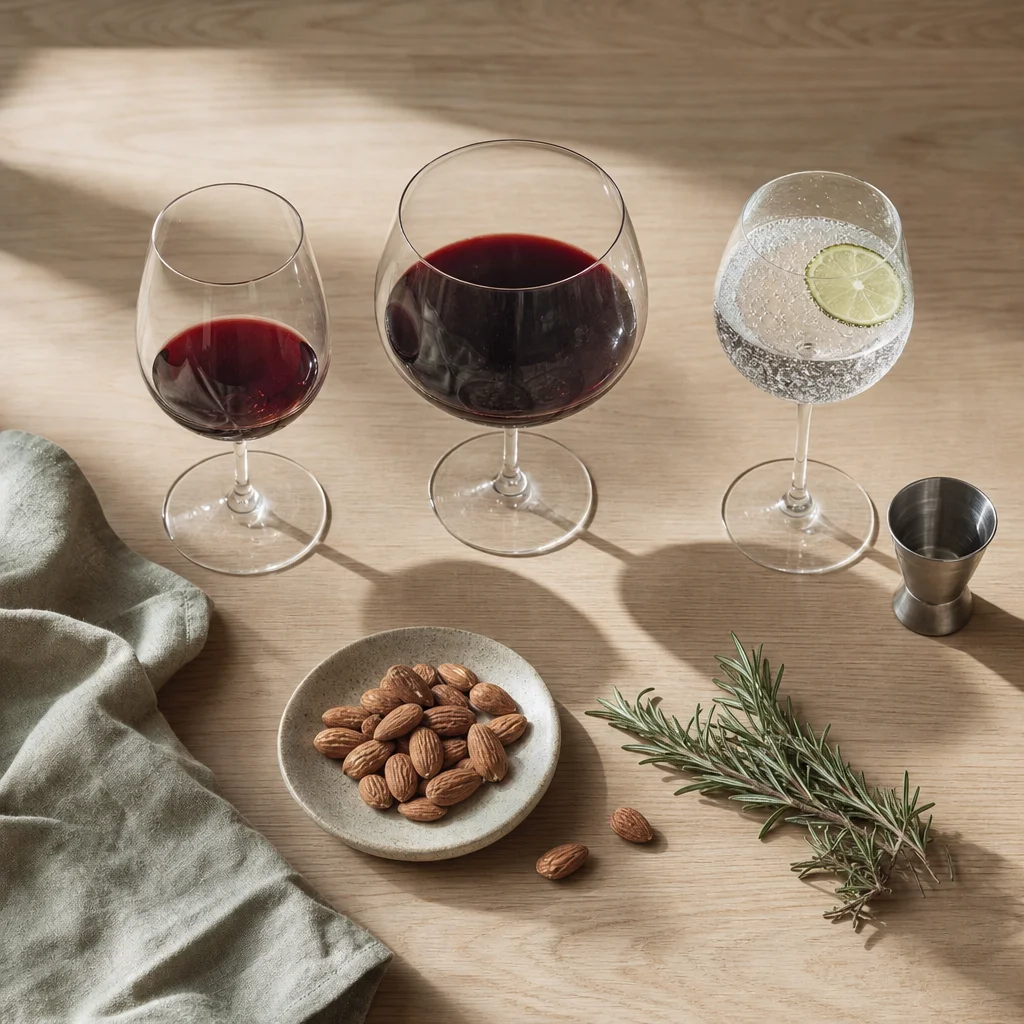
Picture this. You fill a big wine glass two-thirds of the way up. That is likely closer to two standard drinks than one. Two of those, four nights a week, is meaningfully more alcohol than most people would guess. Tracking honestly for one week is often the single most useful step you can take.
How to Lower Your Risk Without Going Dry
You do not need to quit to reduce harm. In fact, these risks respond well to small, sustainable changes. Frequency matters as much as quantity — sometimes more.
First, count your drinking days rather than your drinks. Four small glasses across four nights is a different pattern than four glasses on one night. Next, add two alcohol-free nights each week. Choose the nights you would miss least.
Then shrink the pour. Use a smaller glass or switch to a lower-alcohol option. Also, try keeping the ritual and dropping the alcohol. Sparkling water with lime in the same glass works better than you’d expect. Furthermore, eat before you drink and alternate with water. Both slow you down without relying on willpower.
Finally, change your home default. If no open bottle sits on the counter, you will drink less without deciding anything. Most people find the moderate drinking risks easier to manage by adjusting their environment than by relying on discipline.
Who Should Be Especially Careful
Some people should treat alcohol more cautiously than general guidance suggests. This is not about shame. It’s about matching advice to your body and your history.
- Anyone pregnant, trying to conceive, or possibly pregnant — no known safe amount exists.
- People with a personal or strong family history of breast cancer.
- People with liver disease, pancreatitis, or hard-to-control blood pressure.
- Anyone taking medications that interact with alcohol — ask your pharmacist.
- People using alcohol to manage stress, sleep, or anxiety.
If any of these apply, the moderate drinking risks are not abstract. A short conversation with your clinician is worth more than another round of internet reading.
What to Ask Your Doctor at Your Next Visit
Bring specifics. Vague questions get vague answers. These four work well:
- Given my family history, is there a level of drinking you’d advise me to stay under?
- Do any of my medications interact with alcohol?
- My sleep has changed — could alcohol be part of that?
- What’s the simplest change you’d suggest first?
The National Institute on Alcohol Abuse and Alcoholism has plain-language resources on how alcohol affects the body. They are a solid starting point before your appointment.
Common Questions, Answered
Is one glass of wine a day safe?
“Safe” is the wrong word. It is low-risk for most healthy adults, but it is not risk-free. The moderate drinking risks are smaller at one drink a day than at three. However, they do not disappear.
Is red wine better than beer or spirits?
No meaningful difference. The cancer risk comes from ethanol itself, not from the type of drink. Red wine’s resveratrol content is far too low to offset that.
Do I have to quit completely?
Not necessarily. Fewer drinking days and smaller pours both lower risk. Quitting removes the alcohol-related risk entirely, which is why some clinicians recommend it for people at higher baseline risk.
Does alcohol really affect sleep?
Yes. It can help you fall asleep faster, then fragment sleep later in the night. Many people notice better rest within the first couple of weeks of cutting back — our guide to cinnamon and warm water before bed is a good alcohol-free wind-down to try.
The Bottom Line
The heart-health halo around moderate drinking has faded. What’s left is a clearer, more honest picture. Alcohol carries small risks at low levels and larger risks as intake rises. Those risks include cancer, and for women the breast cancer link is the one to take seriously.
Here’s the encouraging part. You don’t need a dramatic overhaul. One or two alcohol-free nights, a smaller glass, and an honest week of tracking can meaningfully shift your exposure. The moderate drinking risks are not a reason to panic. They are a reason to make one small, sensible change this week — and then keep going.
The Centers for Disease Control and Prevention and the National Cancer Institute both publish plain-language summaries if you want to read the primary guidance for yourself.
Where This Evidence Comes From
- ScienceDaily — Even moderate drinking linked to cancer and early death, major study finds (news report of the study)
- World Health Organization — Alcohol Fact Sheet
- National Cancer Institute — Alcohol and Cancer Risk
- NIAAA — Alcohol’s Effects on the Body
- International Agency for Research on Cancer — Alcoholic beverage consumption (Group 1 classification)
- Centers for Disease Control and Prevention — Alcohol and Public Health