

10-Minute Mediterranean Diet Lunch, No Recipe Needed
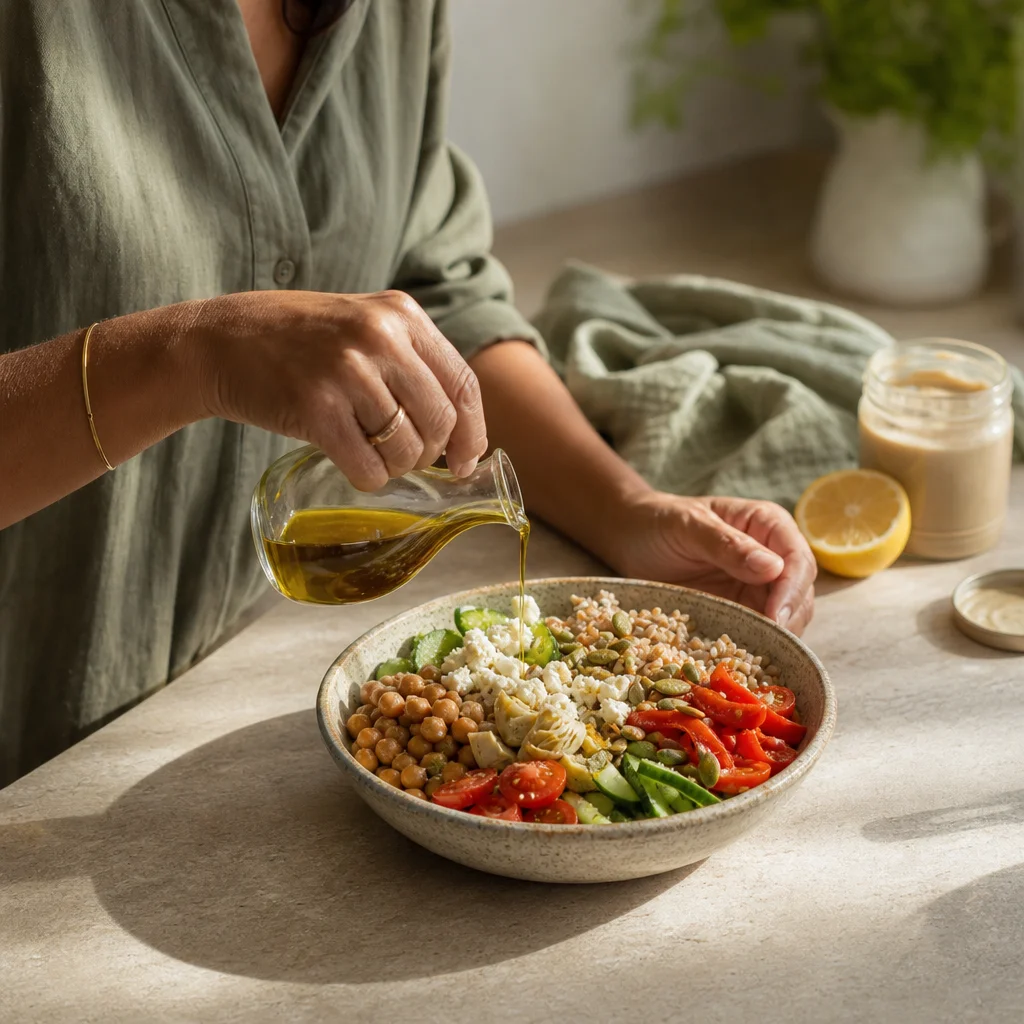
Key Takeaways
- Four parts build a Mediterranean diet lunch: a whole grain, a protein, plenty of vegetables, then olive oil with something crunchy.
- Aim for a generous protein anchor and roughly 8 to 10 grams of fiber so lunch carries you to dinner.
- Canned beans, canned fish, frozen vegetables, and pre-cooked grains do the heavy lifting. Buy no-salt-added versions and rinse what you can.
- The eating pattern is tied to fewer strokes and fewer heart events. It is not automatically cheap, so the pantry staples matter.
It’s 12:40. You have a call in twenty minutes, and the fridge offers half a lemon and a jar of olives. This is the moment most healthy eating plans quietly fall apart. A Mediterranean diet lunch does not have to be a project, though. It can be four things tossed into one bowl in less time than it takes to boil a kettle.
No recipe. No oven. No second trip to the store. Below you’ll find a four-step formula you can memorize, the protein and fiber numbers that keep you full, and a pantry list you can shop once. You’ll also get the parts most guides skip: sodium, iron, calcium, and the honest answer about cost.
Quick Answer: What Does a Mediterranean Lunch Look Like?
One whole grain, one protein, a pile of vegetables, then olive oil plus something crunchy. That’s it. Roughly ten minutes, and no cooking required. The pattern behind it is one of the best studied ways to eat, and the speed is what helps people stay with it.
Why a Mediterranean Diet Lunch Is Worth Ten Minutes
Here’s the thing about a Mediterranean diet lunch: it is not a trend and it is not a cleanse. It sits inside one of the most studied eating patterns on earth.
A Cochrane review examined 30 randomized trials covering 12,461 people. The reviewers found moderate-quality evidence that this pattern lowers stroke risk, and blood pressure dipped slightly too.
The size of that effect is worth sitting with. In the largest trial included in that review — PREDIMED — stroke risk fell from 24 per 1,000 people to 14 per 1,000. That is a real change from diet.
The PREDIMED trial followed 7,447 adults at high risk of heart disease for a median of 4.8 years. Those assigned to a Mediterranean pattern had roughly 28 to 31 percent fewer major heart events than those advised to follow a reduced-fat diet.
That low-fat comparison is the interesting part, and we break it down further in Mediterranean diet benefits versus low-fat eating.
Now the honest part. Reviewers rate the evidence on living longer as weaker and less certain. So the fair claim is better heart outcomes, not a promise that lunch prevents disease.
And here is the gap between a trial and your kitchen. PREDIMED gave people years of coaching plus free olive oil or nuts. Nobody sticks with a plan that demands fresh fish and a hot oven at 12:40.
Convenience is not the opposite of healthy. It is the thing that makes healthy last.
The Four-Step Formula for a Mediterranean Diet Lunch
Think of a Mediterranean diet lunch as a template, not a dish. Federal patient guidance describes the pattern as plant-based meals built on whole grains, beans, nuts, fish, and olive oil as the main fat. MedlinePlus lays it out simply.
Here is the four-step version you can memorize. Add them in order and the bowl balances itself.
Step 1: Start With a Whole Grain
Whole grains bring fiber, some protein, and a slow release of energy. Reach for cooked quinoa, farro, brown rice, or bulgur. Short on time? Whole-grain pita, wraps, and crispbread count. Cook a pot on Sunday and keep it in the fridge.
Step 2: Add a Real Protein
Beans and lentils are the backbone here. Canned chickpeas, white beans, and lentils are cheap and ready in seconds. Round them out with canned tuna or salmon, rotisserie chicken, Greek yogurt, tofu, or a boiled egg.
Step 3: Pile On Vegetables
Volume is the point. Cucumber, cherry tomatoes, peppers, arugula, spinach, and shredded cabbage all work raw. Jarred roasted red peppers and artichoke hearts add depth with zero cooking. Frozen edamame or peas are fine, too. Thaw them under warm water.
Step 4: Finish With Fat, Acid, and Crunch
This is the step people skip, and it is the one that makes the meal taste Mediterranean. Whisk olive oil with lemon or vinegar. Add a small handful of nuts or seeds. A little feta or olives brings salt and richness.
Four steps, one bowl, about ten minutes. The formula works cold, packs well, and survives a commute.
If you want a few one-for-one changes to make before you start, try these Mediterranean diet swaps.
Protein and Fiber: What a Lunch That Lasts Needs
Most lunch guides tell you what to eat and skip how much. That is a problem, because a plain salad can leave you raiding the snack drawer by three.
Our working target is roughly 25 to 30 grams of protein per lunch. That is a practical rule of thumb, not a figure taken from a trial. The most reliable way to get there is to pair two sources. Beans plus fish, yogurt plus seeds, lentils plus feta.
Want the week mapped out for you? Our high-protein Mediterranean diet meal plan builds lunches that hit that range.
Fiber is where the research gets firm. A Lancet analysis of 185 studies and 58 trials found that 25 to 29 grams of fiber a day is the range tied to the biggest risk reductions. Higher fiber intake was linked to 15 to 30 percent lower all-cause and heart-related mortality.
So a lunch contributing 8 to 10 grams covers roughly a third of that daily target. Two easy routes: beans and a whole grain in the same bowl.
Build a Mediterranean diet lunch around a real protein anchor and 8 to 10 grams of fiber, and many people find it holds them to dinner better than a sandwich does.
One caution about carbs. Low-carb and low-glycemic labels sound scientific, but the evidence for fiber and whole grains is much stronger. Choose the better carbohydrate rather than counting it.
Stock the Pantry Once, Eat Well All Week
This is where a Mediterranean diet lunch becomes possible on a Tuesday. The method runs on shelf-stable staples, not on fresh fish.
Here is the shopping list that makes the formula work:
The Ten-Minute Pantry List
- Grains: quinoa, farro, bulgur, brown rice, whole-grain pita, wraps, crispbread
- Protein: canned chickpeas, white beans, lentils, canned tuna, canned salmon, sardines, eggs, Greek yogurt, tofu
- Vegetables: jarred roasted red peppers, artichoke hearts, hearts of palm, frozen edamame, frozen peas, bagged arugula or spinach
- Finish: extra-virgin olive oil, red wine vinegar, lemons, tahini, almonds, walnuts, pumpkin seeds, feta, olives
Buy the no-salt-added versions where you can. We’ll get to why in a moment.
Then use your leftovers. Building lunch from what is already cooked is the oldest shortcut there is. Roast a tray of vegetables on Sunday and it becomes Monday’s bowl, Tuesday’s pita filling, and Wednesday’s salad topper.
One short prep session can cover most of a week’s lunches. Cook grains, rinse two cans of beans, chop a cucumber, shake a jar of dressing. Done.
Sodium, Iron, and Calcium: The Parts Most Guides Skip
Canned and jarred staples are convenient. They also carry salt. The FDA notes that over 70 percent of the sodium Americans eat comes from packaged and prepared foods, not from the shaker.
The daily value for sodium is less than 2,300 milligrams. Americans average about 3,400. So a glance at the label is worth those two seconds.
Two quick rules. On the Nutrition Facts panel, 5 percent daily value or less is low, and 20 percent or more is high. And rinse canned beans, tuna, and vegetables in a colander. The FDA says that removes some of the sodium.
MedlinePlus flags three more things. Iron can run lower when you eat less red meat. Calcium can drop if you cut back on dairy. And olive oil and nuts are calorie-dense, so portions matter.
All of that is fixable. Pair plant iron with vitamin C: beans with peppers, lentils with lemon. Keep yogurt, feta, or a fortified alternative in rotation. Ask your clinician whether a calcium supplement makes sense. Then measure the oil, at one to two tablespoons per lunch plus a small closed handful of nuts.
One more. Wine is traditional in the Mediterranean, but nobody should start drinking for health. Federal guidance is clear that some people should avoid alcohol entirely, including anyone pregnant or at higher risk of breast cancer.
Is It Really Cheaper? The Honest Answer
Almost every article on this topic calls the Mediterranean diet affordable. The evidence is more interesting than that.
A 2026 review of 24 economic studies found two things at once. From a health-system view, the pattern is cost-effective. From a household view, eating this way costs more, and that extra cost lands hardest on lower-income families.
So no, it is not automatically cheap. The gap closes fast when you build from lentils, canned fish, frozen vegetables, and batch-cooked grains instead of fresh salmon and specialty cheese.
We dug into that gap in our guide to the Mediterranean diet on a budget.
That is the real argument for the formula. A Mediterranean diet lunch built from pantry staples costs less than one built on fresh fish, and it comes together in ten minutes rather than in the time a cooked meal would take.
Fresh produce still belongs on the plate. Buy what is in season, and lean on frozen when it isn’t.
Twelve Combinations to Steal
Every line below is a complete Mediterranean diet lunch. Read each one as a set of components you can swap. Mix and match without overthinking it.
- Quinoa base: chickpeas, cucumber, cherry tomato, feta, lemon and olive oil
- Lentil and bulgur base: arugula, cherry tomato, crushed pistachios, red wine vinegar
- Whole-grain pita: canned salmon, baby kale, tomato, a touch of balsamic, lemon
- White bean base: canned tuna, red onion, celery, olive oil, lemon, no mayo needed
- Greek yogurt base: cucumber, tomato, pumpkin seeds, cracked black pepper
- Black bean base: corn, shredded cabbage, avocado, lime, cumin
- Mashed white bean toast: sardines, parsley, lemon, whole-grain bread
- Whole-grain wrap: mozzarella, tomato, basil, arugula, measured olive oil
- Farro base: jarred roasted red peppers, artichoke hearts, chickpeas, tahini
- Farro and chicken base: rotisserie chicken, roasted vegetables, olives, lemon
- Chickpea and cucumber salad: tahini-lemon dressing, pumpkin seeds, chopped parsley
- Fridge-forage bowl: whatever grain, bean, and vegetable you have, plus oil and crunch
Rotate three or four of these in a week and you will not need a recipe again.
Prefer to follow a recipe instead? These easy Mediterranean lunch recipes are ready in 15 minutes.
Make It Work for Your Body
Your Mediterranean diet lunch can flex to almost any need. Start with the four steps, then shift the parts.
Dairy-free: skip the feta and yogurt. Use tahini, avocado, olive oil, and fortified plant yogurt. Get calcium from fortified foods and leafy greens, and ask your clinician about a supplement.
Fish allergy: you can still do this. Build protein from beans, tofu, eggs, and chicken. The omega-3 fats in fish are a different type from the ones in plants. Use flax, walnuts, chia, and hemp seeds as your plant sources. Then ask your clinician whether an algal omega-3 supplement is worth considering.
Higher protein: add a second protein source. Yogurt plus chickpeas, or tuna plus white beans, gets you to the top of the range with no extra effort.
Lower sodium: rinse everything canned, choose no-salt-added, and lean on lemon, vinegar, garlic, and herbs instead of salt.
Quick Questions
Do I need to count calories?
No. Build the bowl from the four steps and let volume and fiber do the work. If you are managing a specific condition, follow your care team’s plan instead.
Can I make this ahead?
Yes, and it holds up well. Keep the dressing and anything crunchy separate, then add them the morning you plan to eat.
What if I have no fresh vegetables?
Use jarred roasted peppers, artichoke hearts, hearts of palm, or frozen edamame. A bowl built entirely from the pantry still works.
The Bottom Line
You do not need a recipe, a meal-prep marathon, or a bigger grocery budget. A Mediterranean diet lunch is four parts and ten minutes.
The pattern behind it is genuinely well supported. Trials show fewer heart events and fewer strokes. The evidence on living longer is softer, so treat this as one good habit rather than a guarantee.
Movement matters too. A 2026 analysis found that diet and regular physical activity were each linked to better outcomes in people with heart disease. Eating with someone else doesn’t hurt either.
Start with one lunch this week. Grain, protein, vegetables, oil and crunch. Then do it again tomorrow.