

Ultra-Processed Foods and Depression: What the Science Says
Key Takeaways
- People with depression scored lower on depression and anxiety surveys after they cut ultra-processed food intake sharply.
- The study was tiny — 20 people joined and 19 finished — so the results are hopeful, not final.
- Ultra-processed foods are factory-made products. Think soda, packaged snacks, candy, hot dogs, and pastries.
- Canned beans, frozen vegetables, oats, and plain yogurt are processed and still good for you.
- Food can help your mental health. It never replaces therapy, medicine, or care from a doctor.
Could your mood be partly written on your grocery list? That sounds like a strange question. Yet research on ultra-processed foods and depression keeps pointing somewhere worth a closer look.
A small study came out in September in JAMA Psychiatry. It found something striking. When people with depression cut back hard on ultra-processed foods, their depression scores dropped. So did their anxiety scores.
Now, here’s the thing. This was a very small study. So let’s walk through what the team found. Then we’ll talk about what you can do with it.
Quick Answer: Do Ultra-Processed Foods Cause Depression?
No single food causes depression. This study cannot prove cause and effect. Still, a growing pattern of research links heavy ultra-processed food intake with higher depression risk. In this trial, cutting UPF intake by more than 85% came with much lower depression scores. The practical takeaway is simple. Shift your overall eating pattern toward more whole foods. You do not need a perfect diet.
The Link Between Ultra-Processed Foods and Depression: What the Study Found
Here’s what makes this ultra-processed foods and depression research different. Most studies just watch people over time. This one asked people to change what they ate.
So let’s start with who took part. The study included 20 adults between 18 and 80 years old. Every one of them had a depression diagnosis. Each also scored at least 5 on the PHQ-9, a standard depression survey. And each reported at least one metabolic issue. Think high blood pressure, high cholesterol, or insulin resistance.
People also agreed to one key rule. They would not change their medicine, therapy, exercise, or sleep during the study. That choice helps the team isolate diet as the main change.
Of the 20 people who joined, 19 finished. Their average age was 44. Each person followed their usual diet at one point and a low-UPF diet at another. The order of those two phases was random.
Now for the results. People cut their ultra-processed food intake by more than 85%. On the PHQ-9, average scores fell from 8.68 during the usual diet to 5.53 during the low-UPF phase. That is a shift from clear mild symptoms toward the very low end of that range.
Just as important, people found the low-UPF diet doable. A diet nobody can stick with helps nobody. Taken together, the ultra-processed foods and depression results were promising. They were also far from final.
The Study at a Glance
- 20 adults with depression plus at least one metabolic issue
- 19 finished the full study; average age 44
- Two diet phases: usual diet versus low-UPF diet
- UPF intake dropped by more than 85% during the low-UPF phase
- Average PHQ-9 score: 8.68 on the usual diet, 5.53 on the low-UPF diet
Processed vs. Ultra-Processed: Why the Difference Matters
Ultra-processed foods and depression is a topic where the labels matter. Most headlines skip this part. That pushes people to fear the wrong foods.
Processing itself is not bad. Canned beans, frozen vegetables, canned fish, oats, tofu, and plain yogurt are all processed in some way. Yet they give you fiber, protein, vitamins, and minerals your body needs.
Ultra-processed foods are a different group. The widely used NOVA classification defines them as factory-made products. They are made mostly from substances taken from foods. They often contain additives you would not find in a home kitchen.
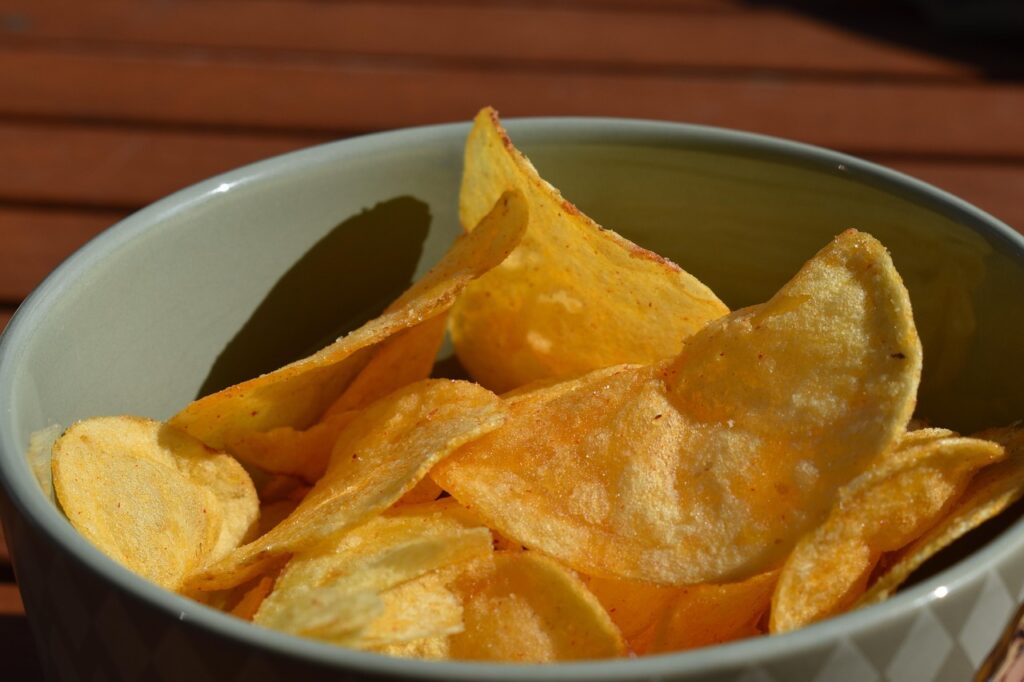
Common examples include soft drinks, packaged snacks, candy, sausages, hot dogs, and pastries. Notice the pattern. These foods tend to be low in fiber. They are also low in the nutrients that support brain health.
Processed Foods That Still Belong on Your Plate
Frozen vegetables, canned beans, canned fish, oats, tofu, plain yogurt, and pre-washed salad greens all count as processed. They are also fast, cheap, and full of nutrients. A packaged food can still carry real nutrition. The better question is what role that food plays in your overall pattern.
How Ultra-Processed Foods Might Affect Mood
Scientists studying ultra-processed foods and depression point to several possible paths. None is proven on its own. Together, though, they form a plausible picture.
1. Nutrient gaps
UPFs tend to be low in fiber, vitamins, and minerals, according to a review in Nutrition Reviews. Those nutrients play direct roles in brain health. So when UPFs crowd them out, your brain may feel the difference. Fiber, vitamins, and minerals all do real work in the brain. Cutting UPFs can help you get more of them — especially high-fiber foods like beans, oats, and vegetables.
2. The gut and your mood
Your gut bacteria may also play a role. Some ingredients common in UPFs, including artificial sweeteners such as aspartame, may affect gut bacteria. That matters because your gut helps make serotonin. The gut is a major site of serotonin production, though estimates of how much it adds vary. Serotonin is a brain chemical that helps shape mood. So when gut bacteria get thrown off, that process may suffer.
3. Swelling and cell damage
Diets heavy in UPFs often leave less room for antioxidant-rich foods like fruits and vegetables. Research suggests people with depression tend to have lower antioxidant levels. Other work keeps exploring how inflammation connects diet and mood.
4. Metabolic health
Metabolic health is another piece. UPF-heavy diets track with insulin resistance, high blood pressure, and high triglycerides, which helps explain why ultra-processed foods cause weight gain. Researchers are still figuring out how those conditions shape mood and energy.
The Honest Limits of Ultra-Processed Foods and Depression Research
Let’s be honest about the weak spots. This study had 20 people. That is very small. Small studies can hint at something real. They cannot confirm it.
People also knew which diet they were on. So expectation effects cannot be ruled out. In other words, some of the lift may have come from simply hoping to feel better.
The diet data was self-reported too. People do not always remember what they eat. So the diet measures may be imperfect.
There is a bigger unknown as well. The team cannot say which part of the change mattered. Was it fewer additives? More fiber? Less added sugar? Better overall nutrition? Nobody knows yet.
On top of that, the ultra-processed foods and depression link is still observational in most research. Observational studies reveal patterns, not causes. A 2025 review found an association — not proof of cause — between heavier UPF intake and higher risk of depression and anxiety.
Some experts also wonder whether the benefit came from foods people added, not just the ones they removed. That is a fair point. When UPFs leave the plate, something has to take their place.
The team itself called for larger trials. That is the honest state of the science today. Hopeful, but unfinished.
Small Swaps That Actually Stick
So what do you do with all this? You are not going to rebuild your kitchen tonight. And honestly, you do not need to.
The practical side of the ultra-processed foods and depression talk is simpler than it sounds. Start with the foods you eat most often.
Find one or two common UPF sources in your week. Then ask what you could swap in. Maybe your daily soda becomes sparkling water. Maybe your afternoon chips become fruit, nuts, or plain yogurt. Try pairing the swap with a habit you already have. That way it sticks without much willpower.
Cooking at home helps too, especially with whole ingredients. Build meals around vegetables, fruits, whole grains, and lean proteins. When you shop, look for shorter ingredient lists.
Here’s the part people forget. Easy food is not the enemy. Frozen vegetables, canned beans, canned fish, oats, and tofu are quick, cheap, and truly good for you.
Above all, aim for a slow shift instead of a perfect record. One swap you keep beats five you quit.
When to Talk to a Doctor — and What Food Cannot Do
Here is the most important line in this article. The ultra-processed foods and depression research does not mean food replaces care.
Depression is a real medical condition — and depression warning signs are worth knowing early. Therapy, medicine, and care from a doctor remain the base for many people. Diet can support that work. It cannot stand in for it.
So never stop or change medicine on your own. If your mood is getting worse, or if you have thoughts of harming yourself, reach out right away. In the United States, you can call or text 988 to reach the Suicide and Crisis Lifeline at any hour.
Also talk with your doctor first if you live with diabetes, kidney disease, or a past eating disorder. Strict eating can be risky for some people, even with good intent.
And if you are already in care, bring this up. Ask whether your diet could become part of your plan.
The Bottom Line
The ultra-processed foods and depression story is still being written. This latest chapter is small, but genuinely interesting.
Here is what we can say with confidence. Eating patterns built around whole, nutrient-dense foods support both body and brain. Here is what we cannot say yet. Cutting back on UPFs will not cure depression on its own. It may help, and it is unlikely to hurt.
So start small. Pick one swap this week and keep it for two weeks. Then add another. That is a healthy habit your grocery list can actually deliver.