

Make-Ahead Stuffed Peppers: Freeze Now, Dinner Later
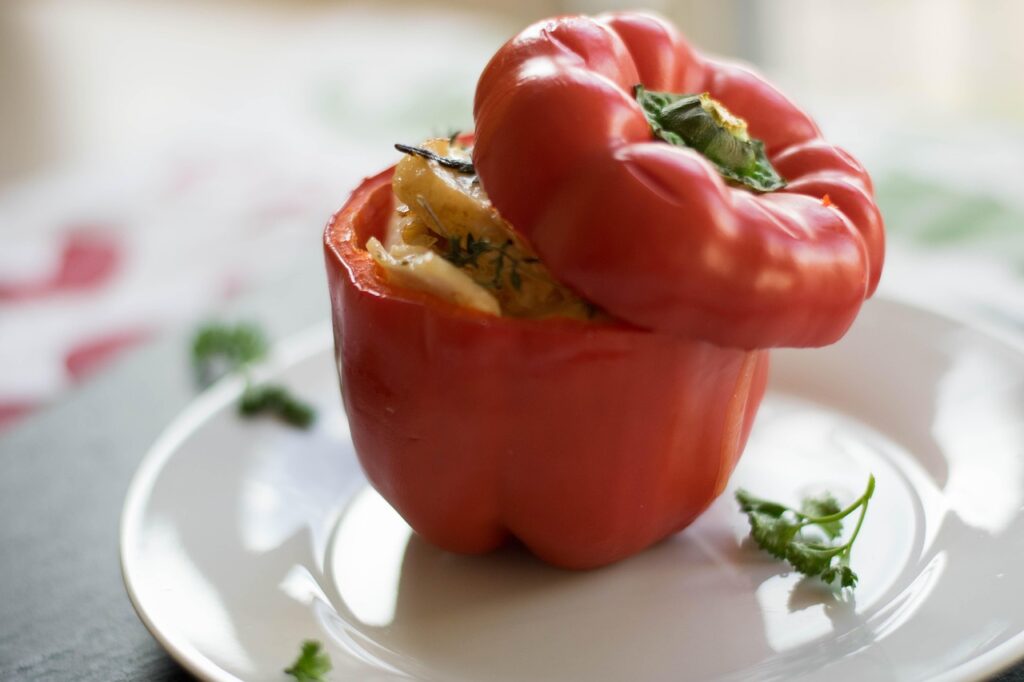
Key Takeaways
- A bag of frozen vegetable fried rice plus frozen edamame turns this dinner into a 15- to 20-minute assembly job.
- Frozen vegetables hold onto vitamin C, riboflavin, and vitamin E about as well as fresh ones do.
- Cool the rice filling fast in shallow containers, refrigerate within 2 hours, and reheat to 165 degrees F.
- Soy sauce, chile-garlic sauce, and the frozen rice blend drive most of the sodium.
- Fiber and protein are the benefits you can count on here. Antioxidant claims are shakier.
It’s 6:40 p.m., you’re hungry, and the last thing you want to do is cook. That is exactly the moment make-ahead stuffed peppers are built for. Picture a baking dish you filled on Sunday, now about 25 minutes from dinner.
Here’s the thing. Plenty of recipes call themselves make-ahead stuffed peppers and then hand you a fifty-minute project. Others promise make-ahead and mean only that the filling keeps for two days.
This guide fixes that. You’ll get the freezer shortcut that actually works. We’ll also cover a sturdier filling, honest storage times, and a sodium plan that keeps the flavor.
Quick Answer: Are Make-Ahead Stuffed Peppers Worth It?
Yes, with one condition. You can assemble them in 15 to 20 minutes and freeze them for 3 to 4 months. But the payoff depends on how you cool, store, and reheat them. Get those three steps right and you have a satisfying, high-fiber dinner any night of the week.
Why Make-Ahead Stuffed Peppers Beat Takeout on a Tuesday
The real case for make-ahead stuffed peppers shows up in two large studies. In a Harvard-led analysis of nearly 100,000 adults, one pattern stood out. People who ate 11 to 14 home-cooked meals a week had a 14 percent lower risk of type 2 diabetes.
Researchers partly credited less weight gain over time. Meanwhile, a study of more than 40,000 adults found that people who planned meals ahead had better diet quality. They also ate a wider variety of foods.
On the flip side, neither study tracked what anyone actually cooked. A home-assembled meal can still be salty and heavily processed. So the recipe matters as much as the habit.
That is the honest promise behind make-ahead stuffed peppers. Batch cooking helps when the thing you made ahead is worth eating — the same logic behind our anti-inflammatory make-ahead dinner recipes.
Frozen Fried Rice Is the Shortcut That Actually Works
Frozen vegetable fried rice is the quiet hero of this dish. It is already cooked, already seasoned, and already mixed with vegetables. You do not need to thaw it first.
Pair it with frozen shelled edamame and you add plant protein and fiber with almost no prep. The bell pepper brings vitamin C, vitamin A, folate, and fiber to the plate.
Are frozen vegetables a compromise? A University of California, Davis analysis of eight fruits and vegetables says no. Vitamin C showed no meaningful difference between fresh and frozen in five of eight crops. In the other three, the frozen versions actually scored higher.
Here is the catch, though. Beta-carotene dropped sharply in some frozen vegetables, including peas, carrots, and spinach. So frozen is comparable, not automatically better.
One more caveat. That study measured plain frozen vegetables. Frozen fried rice with added sauce and oil is a different product entirely.
How to Build a Sturdier, Higher-Protein Filling
Filled peppers fail in two ways. The filling turns mushy, or it is too light to hold you until morning.
Start with the base. Use one 16-ounce bag of frozen vegetable fried rice, one 12-ounce bag of frozen shelled edamame, and a cup of sliced scallions.
Then add protein. Shredded rotisserie chicken, cooked shrimp, crumbled tofu, or rinsed black beans all work well. Keep the total near one cup, or the peppers will not close.
Filling a pepper is a forgiving template, and once you have the ratio down you can point it at almost anything — our stuffed vegetable recipes run the same play with zucchini, eggplant, and tomatoes.
Texture matters too. Spoon the filling in gently instead of packing it down. Air in the mix keeps the rice from turning gluey.
Edamame brings real value to the filling. It supplies protein and fiber with almost no prep.
There is a cholesterol angle too, though the evidence needs context. A 2026 meta-analysis of 32 randomized trials looked at high-quality proteins, including soy. It found they lowered LDL cholesterol by about 3.45 mg/dL and total cholesterol by about 5.70 mg/dL.
However, that effect is small, and it weakened once researchers removed lower-quality studies. Two more caveats matter too. That evidence comes from studies of isolated protein powders, not whole edamame. A separate 2026 review of 29 trials found no real difference between plant and animal protein.
So think of edamame as solid plant protein and fiber first. It is not a cholesterol treatment.
Make-Ahead Stuffed Peppers: Storage, Freezing, and Reheating
This is where most recipes get vague, so let’s be specific.
Cool fast, not slow. USDA Food Safety and Inspection Service guidance says to divide warm food into shallow containers and refrigerate it within two hours. Do not leave the rice filling on the counter until it reaches room temperature. That advice is everywhere, and it is also unnecessary.
Cooked rice deserves extra care here. Rice has a well-documented link to Bacillus cereus, a bacterium with heat-resistant spores. A 2024 review of rice safety research found that improper cooling and storage during cooking, cooling, and reheating is the main cause. Reheating does not reliably destroy toxins that have already formed.
Treat make-ahead stuffed peppers the way you would treat any cooked protein. They are perishable, and they do not sit out.
Your Make-Ahead Timeline at a Glance
- 0 to 2 hours: Cool the filling in shallow containers, then refrigerate. Never leave it out longer than 2 hours.
- Days 1 to 4: Refrigerated filling or baked peppers keep 3 to 4 days.
- Up to 3 to 4 months: Freeze for best quality. Longer is still safe, just drier.
- 165 degrees F: The internal temperature your leftovers need to reach.
Freeze them baked or freeze them unbaked. Unbaked peppers hold their texture better, but they need a full bake on serving day. Baked peppers are true reheat-and-eat, though they soften more the second time around.
For busy households, freezing baked usually wins. Portion them individually so you can pull out one dinner instead of a whole tray — the same bake-one-freeze-one habit behind our make-ahead black bean enchiladas.
Finally, reheat to 165 degrees F in the center of the filling, not the pepper wall. Peppers are mostly water and heat faster than rice does. A quick-read thermometer settles the question in three seconds.
The Sodium Problem Hiding in Your Filling
There is one more thing make-ahead stuffed peppers hide in plain sight, and it is sodium. A serving of the frozen-fried-rice version lands near 669 milligrams. That is roughly 29 percent of the daily value.
The FDA counts anything at 20 percent of the daily value or higher as a high-sodium food. So this dish qualifies, and that is worth knowing.
Here is why the number climbs so fast. Most of the sodium Americans eat comes from packaged and prepared foods, not the salt shaker. The FDA puts that share at over 70 percent. Average intake sits above 3,300 milligrams a day, and the recommended limit is under 2,300 milligrams, according to the CDC.
If you have high blood pressure or are salt-sensitive, the target is lower. A 2026 multi-society consensus recommends under 1,500 milligrams a day for that group. Check with your clinician about your own number.
In this dish, the levers are soy sauce, chile-garlic sauce, the frozen rice blend, any canned tomato, and cheese. The pinch of salt you sprinkle inside the pepper is not the problem.
The payoff is bigger than most people expect. A 2026 multi-society expert consensus on sodium reduction found a clear pattern. Its authors include the Taiwan Hypertension Society and the Taiwan Society of Cardiology. Each extra gram of sodium per day tracked with about 6 percent higher cardiovascular risk. Cutting one gram a day lowered systolic blood pressure by roughly 3 mmHg in people with hypertension.
These are population-level estimates from an East Asian consensus, not a personal risk prediction. Treat them as a sense of scale, not a diagnosis.
How to Dial Back the Sodium Without Losing the Flavor
Cutting sodium does not mean eating bland food. It means moving the flavor somewhere else.
Start with swaps. Choose reduced-sodium soy sauce, which the FDA defines as at least 25 percent less sodium than the regular version. Also look for no-salt-added tomato products and frozen vegetables without a sauce packet.
Then lean on acid and aroma. Rice vinegar, lime juice, toasted sesame oil, fresh ginger, garlic, and scallions carry a surprising amount of flavor. Acid is the most underused tool in a low-sodium kitchen.
Above all, taste before you salt. Prepared sauces vary enormously between brands, so your palate is a better guide than the recipe card.
Sodium Swaps That Keep the Flavor
- Regular soy sauce to reduced-sodium: at least 25 percent less sodium by label definition.
- Regular canned tomato to no-salt-added: the gap can run over 1,000 milligrams per cup.
- Seasoned frozen rice to plain frozen rice plus aromatics: you control the salt.
- Extra cheese to a smaller amount of a sharper cheese: more flavor in every gram.
One honest note. This version will taste different from the salty original. Give your taste buds about a week. They adjust faster than you would guess.
What This Dish Actually Delivers Nutritionally
Let’s be honest about the health claims. You will see stuffed peppers described as antioxidant powerhouses. Some sources say they boost immunity and fight inflammation. That framing is not supported by evidence.
What is supported is simpler: fiber and protein. A 2025 study on cooked and frozen broccoli found that its fiber survived cooking, freezing and digestion largely intact. Phenolic compounds, the antioxidant group, dropped by 65 to 88 percent during digestion.
In plain terms, the fiber benefit is reliable and the antioxidant benefit is overstated.
So here is the honest pitch. A serving of this dish brings roughly 17 grams of protein and 8 grams of fiber. It also supplies about 65 percent of your daily vitamin C, most of it from the pepper.
It is not a weight-loss miracle, and no single meal is. But it fits comfortably into a balanced eating pattern. It also brings 8 grams of fiber to the table, which is a lot more than most takeout dinners deliver — the same label-first approach we take with high fiber pasta brands worth buying.
Frequently Asked Questions
Do I Need to Cook the Peppers Before Stuffing Them?
Yes, and about 15 minutes at 400 degrees F does it. Par-baking keeps the pepper tender without drying out the filling. Skip this step and you get a firmer, crunchier pepper. That is a texture preference, not a safety issue.
Can I Freeze Them With the Cheese Already On?
You can, but the texture suffers. Most freezer versions skip the cheese and add it during the final few minutes of reheating so it melts fresh.
Do Make-Ahead Stuffed Peppers Need to Be Thawed First?
No. USDA guidance confirms you can reheat frozen leftovers without thawing them. It simply takes longer, and the center heats less evenly. Check for 165 degrees F either way.
How Long Do Leftovers Last in the Fridge?
Three to four days, according to USDA guidance. Importantly, that clock starts when the food is cooked, not when you pack it up.
The Bottom Line
Make-ahead stuffed peppers are one of the better weeknight bets you can keep in your freezer. Assembly is genuinely fast, and the nutrition holds up.
Three habits make the difference. First, cool the filling quickly and refrigerate it within two hours. Next, freeze it in single portions for up to three to four months. Finally, reheat it to 165 degrees F every single time.
Then do the sodium math once. Choose reduced-sodium soy sauce and no-salt-added tomato, and let vinegar, citrus, and aromatics do the rest. You will not miss the salt as much as you think.
So start with one batch this weekend. Fifteen to twenty minutes of assembly now buys you four dinners you will actually be glad to eat.