

Spirulina Vitamin B12: What Plant-Based Women Need to Know
Key Takeaways
- You may have heard spirulina vitamin B12 is a vegan win. The science says otherwise.
- Most spirulina holds a B12 look-alike your body can’t use.
- Lab tests can count that look-alike as real B12. Labels may not tell you the whole truth.
- In 2024, a light-grown spirulina showed active B12 at beef levels. It’s promising, but not for sale yet.
- For plant-based women today, the sound picks are fortified foods and a daily B12 pill.
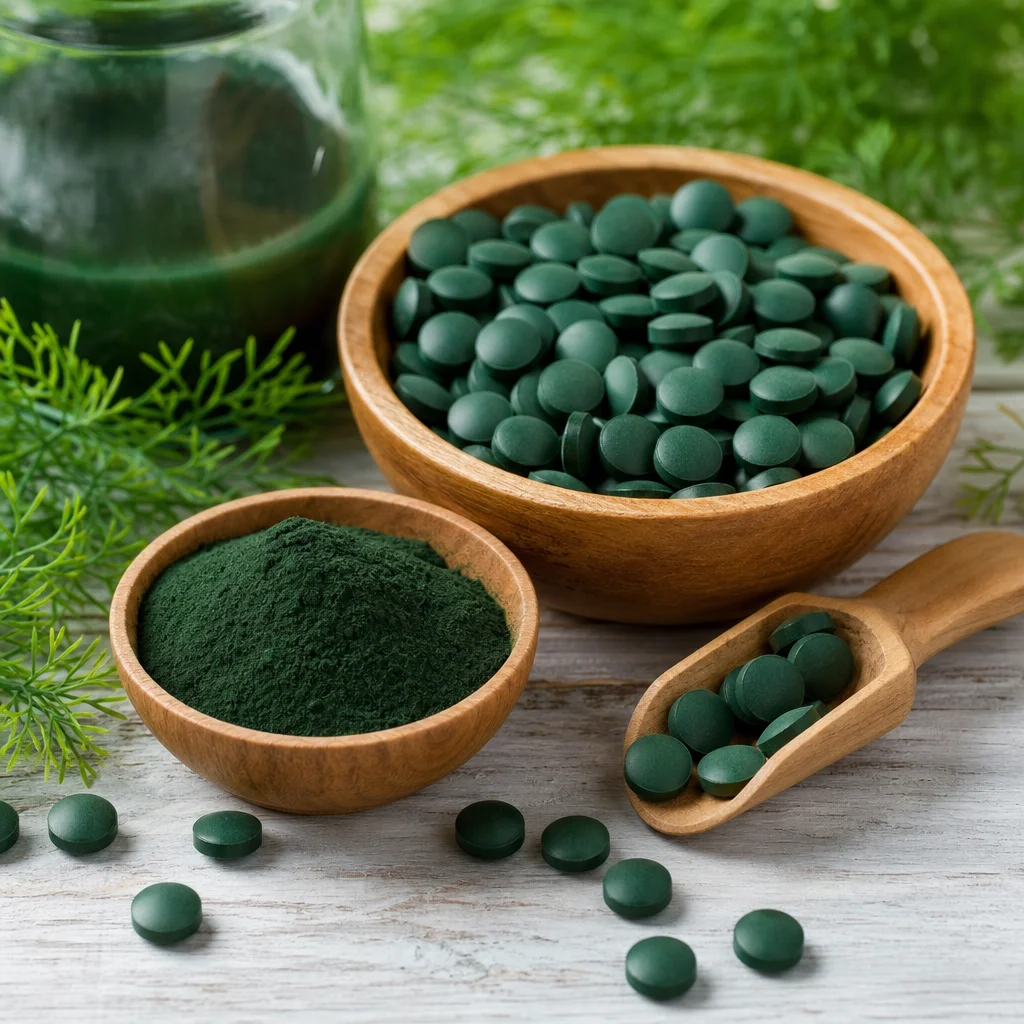
Picture this: You’re scooping green powder into your morning smoothie. The jar says spirulina is a great vegan source of vitamin B12. It feels like a smart, natural choice. Here’s the catch with spirulina vitamin B12: most of what’s inside is a form your body can’t use.
That surprise trip to the supplement aisle is more common than you’d think. If you’re vegan, vegetarian, or just trying more plant meals, you may have trusted that powder for B12. Let’s look at what the science says. We’ll cover the 2024 breakthrough, too. And you’ll learn how to get the B12 your body needs today. You don’t have to give up spirulina. Just stop using it for B12.
Quick Answer: Is spirulina a real B12 source for vegans?
Not the spirulina sold today. Regular spirulina holds mostly pseudovitamin B12, an inactive look-alike your body can’t use. A new, light-grown version may change that someday. For now, it’s still in the lab. The long answer is worth your time, so keep reading.
The truth about spirulina vitamin B12
Regular spirulina does have B12-like compounds. But there’s a gap between lab findings and what your body can use.
Lab tests can count B12 look-alikes as vitamin B12. That’s one reason some brands make B12 claims. When scientists isolated the B12 in spirulina and looked closely, the story changed.
A 2002 study on edible algae found that spirulina tablets hold mostly pseudovitamin B12. “Pseudo” means false. It looks like B12, but its shape is a bit different. The authors were clear: spirulina tablets are not a good B12 source, most of all for plant-based eaters.
So here’s the deal. The spirulina vitamin B12 you can buy today won’t deliver what plant-based shoppers need.
Label decoder: what does a B12 claim really mean?
See a spirulina vitamin B12 claim on a label? Read it with care. That claim may only echo a lab test. And tests can pick up inactive forms. Look for names like cyanocobalamin or methylcobalamin instead. For now, fortified foods and B12 pills are the sound plant-based routes.
Why your body can’t use the B12 in spirulina
The real issue with spirulina vitamin B12 is how your body takes it in. It’s not just what the powder holds.
Here’s how B12 works. Your stomach makes a protein called intrinsic factor. That protein grabs true B12 and carries it into your small intestine. Your body’s uptake system evolved to pick active B12. Pseudo-B12 doesn’t fit that system well.
So even when spirulina shows “B12” on paper, your body may not use it. This isn’t just chemistry talk. A 2013 review of vitamin B12 in foods found that most blue-green algae carry inactive pseudo-B12.
Human proof goes back further. In a 1991 study, researchers gave algae, including spirulina, to children with low B12. Their blood B12 numbers rose. But blood health markers didn’t improve. Some got worse. Small amounts of fish or a B12 pill helped. The team said it’s not fair to offer algae as a safe B12 source.
What does that mean for you? A better lab number is not the same as a well-fed body. That matters if you’re plant-based and want to protect your energy, nerves, and red cells.
A 2024 breakthrough that could change things
Now for the exciting part. In August 2024, a research team in Iceland grew spirulina in closed tanks. They used carefully tuned lights. They call the result “light-controlled spirulina.”
What did they find? Over 98% of the B12 in this new spirulina was the active form. It held about 1.64 mcg of active B12 per 100 grams. Beef holds about 0.7 to 1.5 mcg per 100 grams. So this spirulina landed right in beef’s range.
The process is also carbon-neutral. That’s a big win for greener food systems — and a theme we explore in our sustainable diet guide. But please read the next part slowly.
The 2024 study in Discover Food is an early lab result. It’s not a human trial. No one has shown yet that eating this spirulina raises B12 in people. The authors even said that eating 100 grams a day isn’t realistic. They added that B12 pills and fortified foods work just as well. If scaled up, the team says it could meet the B12 needs of millions of young children.
So will spirulina vitamin B12 become a real plant-based source one day? Maybe. But that day isn’t here yet. And the powder on your shelf today is not this new kind.
What about chlorella and nori?
Not all algae are the same. Most articles skip this point. Let’s dig in.
Dried purple laver, the seaweed sold as nori, holds true B12 in useful amounts. Chlorella has some, too. A 2014 survey found dried purple laver is the most suitable plant-based source of true B12 for vegetarians.
But here’s the caveat. Processing can break down B12. Amounts differ among brands. Human studies on algae B12 are mixed. So see nori and chlorella as tasty extras for now — not your main B12 plan.
Your plant-based B12 checklist
Let’s make this easy to use. The NIH Office of Dietary Supplements says vitamin B12 is not found naturally in plant foods. Most adults need 2.4 mcg each day. That need rises to 2.6 mcg in pregnancy and 2.8 mcg while nursing.
Here’s your checklist:
- Fortified nooch (nutritional yeast). Yeast makes no B12 on its own. It counts only when the label shows added B12.
- Fortified plant milks and cereals. Soy, oat, and almond milks often get added B12. Read the carton. Some brands skip it.
- A daily B12 pill. Pick one listing cyanocobalamin or methylcobalamin. Ask your doctor or a dietitian about the dose.
- Spirulina for other perks. Keep it for protein and iron. Just never count on it for B12.
Why the fuss? B12 does big jobs in small amounts. It helps your body make red blood cells. It keeps nerves healthy. It supports DNA — with folate, as our folic acid brain development guide explains. When levels slip, tiredness can follow.
One more tip. “B12 added” on a package is what you want to see. If a plant food doesn’t say it, it likely doesn’t have it.
If you eat dairy and eggs, you get some B12 from food. Vegetarian meals can still fall short. So make a clear plan and stick with it. For more support, our guide to the best iron supplement and our roundup of high-protein vegetarian dinners cover the nutrients and meal ideas plant-based eaters ask about most.
Who needs extra care with B12
B12 is very safe. The NIH notes there’s no upper limit. Still, some people need extra care.
Older adults often make less stomach acid, which can lower B12 uptake. People on metformin for blood sugar may run low, too. So can long-term users of acid-reducing drugs. An international expert group adds that plant-based women of child-bearing age are a key group to protect.
Don’t wait for clear signs. Constant tiredness? Tingling in your hands or feet? Brain fog or low mood? These can all point to low B12. If that sounds like you, see your doctor. Ask for a B12 blood test. A green smoothie isn’t a treatment plan.
Quick answers to common B12 questions
Can I keep taking spirulina? Yes, if you love it. Just don’t use it for B12. Spirulina still brings protein, iron, and a green glow to your meals. Treat it as a food, not a fix.
Will spirulina vitamin B12 be a real option later? Maybe. The 2024 lab results are a true step forward. Watch for human trials and labels that name active B12. Until then, lean on fortified foods and a daily pill.
I’m vegetarian. Do eggs and dairy cover me? They give you real B12. Still, many vegetarians don’t get enough. Pair those foods with fortified picks or a daily pill.
The Bottom Line
Here’s the simple truth. Regular spirulina isn’t a sound B12 source for plant-based women. Most of its B12 is inactive. Your body knows the difference.
The 2024 light-grown spirulina is truly exciting. One day, it could give us a green, carbon-neutral B12 source that rivals beef. Until human trials are done and real products reach stores, keep your B12 plan simple. Use fortified foods and a daily pill. Add a doctor’s advice when you want personal guidance.
That’s not a compromise. It’s the smartest, kindest choice you can make for your body.