

Is Hemp Milk Healthy? Protein, Calcium & Recipe
Key Takeaways
- Hemp seeds hold only tiny traces of THC, so hemp milk cannot cause a high.
- Plain, unsweetened hemp milk from a carton has about 60 calories and 3 grams of protein per cup.
- Hemp hearts are the protein star: about 10 grams per 3-tablespoon sprinkle.
- Calcium appears only in fortified versions. Always check the word “fortified” on the carton.
- Homemade hemp milk takes five minutes and delivers roughly 8–9 grams of protein per cup.
Walk past the almond and oat milks, and you will likely spot it: hemp milk. Quiet. Creamy. Easy to overlook. Maybe you have wondered what it is — or whether it connects to marijuana.
Here’s the thing: hemp milk is one of the more interesting drinks in the plant-based aisle. It offers omega-3 fats that most other milks lack. It’s also naturally free of dairy, soy, nuts, and gluten.
So what does the science say? Below, we’ll sort out hemp milk nutrition, the honest benefits, the calcium catch, and a quick homemade version. No soaking. No fancy equipment.
Quick Answer: Is Hemp Milk Healthy?
Yes — for most people, hemp milk is a healthy, allergy-friendly pick. It’s low in calories and offers fats most milks don’t. Two honest caveats: typical plain versions have about 3 grams of protein per cup. And calcium only counts if the label says “fortified.” Choose unsweetened, and you’re set.
What is hemp milk, and is it actually healthy?
Let’s answer the question at the back of your mind. Hemp milk is not marijuana milk. It cannot get you high.
Commercial hemp milk is made from hemp seeds and water. Hemp seeds come from Cannabis sativa, the same plant species as marijuana. However, THC, the compound behind a high, lives mainly in the flowers. Seeds hold only tiny traces.
According to the University of Florida, commercial hemp seed holds far too little THC for any mind-altering effect. A 2010 review in the journal Nutrition & Metabolism said the same. So pour a glass. It won’t change how you feel or think.
What will you notice instead? Flavor. Hemp milk tastes earthy and nutty, with a creamier body than almond milk. It shines in coffee, overnight oats, and smoothies.
Hemp milk protein: why the numbers confuse everyone
Here’s the thing about protein in this seed milk: the numbers vary wildly. Three grams per cup? Five grams? Sometimes “nearly 10”? They can all be right.
It depends on what is in your glass.
Stanford Lifestyle Medicine’s breakdown shows a typical plain commercial hemp milk lands near 3 grams of protein per cup. Cow’s milk delivers about 8 grams. Fortified soy comes closer to dairy at about 7 grams. So the carton version won’t rival dairy for protein.
Why the confusion? Because hemp hearts are impressive. These hulled seeds are roughly one-third protein. A 3-tablespoon serving gives you about 10 grams. In fact, a 2026 study in Frontiers in Nutrition measured hulled hemp seeds at about 34 percent protein, with strong digestibility.
Hemp also contains all nine essential amino acids — a rare feat for plants. That said, one amino acid, lysine, is limiting. And hemp’s protein-quality scores fall below soy and dairy, according to protein-quality research on hemp seed. Translation: enjoy hemp’s protein, and mix in beans, lentils, or whole grains during the day too.
Here is the nutrition picture at a glance (per 1 cup unless noted):
| Drink | Calories | Protein | Calcium | Quick Note |
|---|---|---|---|---|
| Cow’s milk, 2% | ~120 | ~8 g | ~300 mg | The nutrition benchmark |
| Soy milk, unsweetened, fortified | ~80–100 | ~7 g | ~250–300 mg | Closest plant match to dairy |
| Hemp milk, store-bought, unsweetened | ~60 | ~3 g | ~20% DV if fortified | Omega-3s; allergy-friendly |
| Hemp milk, homemade | — | ~8–9 g | Almost none | 5 minutes; no soaking |
| Hemp hearts, 3 tbsp | — | ~10 g | Minimal | The protein-dense seed form |
The calcium caveat: why “fortified” matters
Here is a fact that surprises people: hemp milk is naturally very low in calcium.
Some brands add it back. Others do not. That is what “fortified” means — nutrients are added during processing. A fortified glass can deliver calcium close to cow’s milk, roughly 300 mg. An unfortified glass offers little to none.
Registered dietitian Julia Zumpano, with Cleveland Clinic, says plant milks differ widely from product to product. Her advice is simple: choose unsweetened, check for fortification, and keep the ingredient list short.
Mayo Clinic notes that dairy milk naturally supplies about 300 mg of calcium per cup, plus over 8 grams of protein. Plant milks, then, should be judged on protein, calcium, and added sugar. And sugar matters here. Some sweetened hemp drinks pack more than 20 grams of carbs per cup, nearly all from added sugar. Worth skipping.
Your 3-Second Label Check
- Does it say “fortified” with calcium and vitamin D?
- Is it “unsweetened”?
- Is the ingredient list short and familiar?
Yes to all three? Enjoy your carton.
The good fats that make it different
Hemp milk’s biggest nutritional strength is its fat profile. Most of its fat is unsaturated. And unlike almond or oat, it contains alpha-linolenic acid (ALA), a plant-based omega-3.
That’s rare. Stanford Lifestyle Medicine notes this is one of the few plant milks that brings both omega-3 and omega-6 fatty acids. Most other options simply do not have them.
Why care? Swapping saturated fats for unsaturated fats supports heart health. That is the pattern behind most heart-healthy eating guidance. And hemp fits it well.
Hemp hearts also bring magnesium. A sprinkle adds a little, but small amounts add up. Many of us fall short on this mineral, which supports calm, strong bones, and steady energy.
The skin and heart claims, honestly weighed
Read any hemp milk benefits list, and you will see skin and heart claims. Let’s look at them with clear eyes.
The skin story traces to a small 2005 study in the Journal of Dermatological Treatment. In it, 20 people with eczema took hempseed oil daily for 20 weeks. Skin dryness and itch improved. But note what they took: oil, not milk.
A later Cochrane review looked at all dietary supplements for eczema, including hempseed oil. Its conclusion: no convincing evidence of benefit. And no study has tested hemp milk for skin. So treat the skin hype with caution.
Heart claims need nuance too. Hemp’s unsaturated fats fit heart-healthy patterns. However, the University of Florida points out that the seed’s special compounds are diluted in the milk. Expect a smart everyday swap — not a heart cure.
How to make your own at home in 5 minutes
Picture this: you’re out of milk, the store is far, but you have a bag of hemp hearts. Blend. That’s it. No soaking. No straining required.
5-Minute Homemade Hemp Milk
Ingredients: 3/4 cup hemp hearts, 4 cups cold water, pinch of salt, and optional 1–2 tablespoons maple syrup plus 1 teaspoon vanilla extract.
Steps:
- Put the hemp hearts and 2 cups of water in a blender. Start on low, then blend on high for about 1 minute.
- Add the remaining water, salt, and any sweetener. Blend again until silky.
- Pour into a jar. Refrigerate up to 4 days. Shake well before each glass.
Tip: keep it cold. Chilled hemp milk tastes smoother and less grassy.
Want variations? Blend in 2–3 tablespoons of cocoa powder for chocolate milk. Try 1/2 teaspoon of cinnamon for a warm-spice note. Or swap part of the water for coconut milk for extra creaminess.
With this seed-to-water ratio, one glass gives roughly 8–9 grams of protein. That is more than double store-bought hemp milk. However, homemade versions are not fortified. Calcium, vitamin D, and B12 must come from other foods. Keep that in mind if you drink it daily.
Who should think twice before switching
Hemp milk suits most people. But it is not ideal as a child’s sole milk. Pediatric guidance suggests plant milks for kids over 2 should provide at least 6 grams of protein per serving. Commercial hemp milk, at about 3 grams, misses that mark. If your child drinks plant milk, talk to your pediatrician about nutrition needs.
The same logic applies to adults with higher protein needs. If you rely on milk for protein, pair hemp with other protein-rich foods. On the flip side, hemp is a win for allergy-prone households. It is not one of the top eight food allergens, so it suits dairy, soy, and nut avoiders. True hemp allergy is rare but possible; stop if you notice hives or a rash.
Quick answers for the plant-milk aisle
Does hemp milk get you high?
No. Hemp seeds contain only trace THC, far too little to affect the brain. You can drink it freely.
Is hemp milk better than almond milk?
It depends on what you need. Hemp has more protein and omega-3s. Almond has fewer calories. Compare labels for calcium, sugar, and protein, then choose based on your goals and taste.
How long does homemade hemp milk last?
About 4 days in the fridge. Shake before pouring. If it smells off, make a fresh batch — it takes five minutes anyway.
The Bottom Line
If you take one thing from this guide, let it be this: hemp milk deserves a fair spot in your plant-milk rotation.
It will never be a protein shake. It should not be your only calcium source — unless the label says fortified. But it brings omega-3s, creaminess, and allergen-friendly freedom that few milks can match.
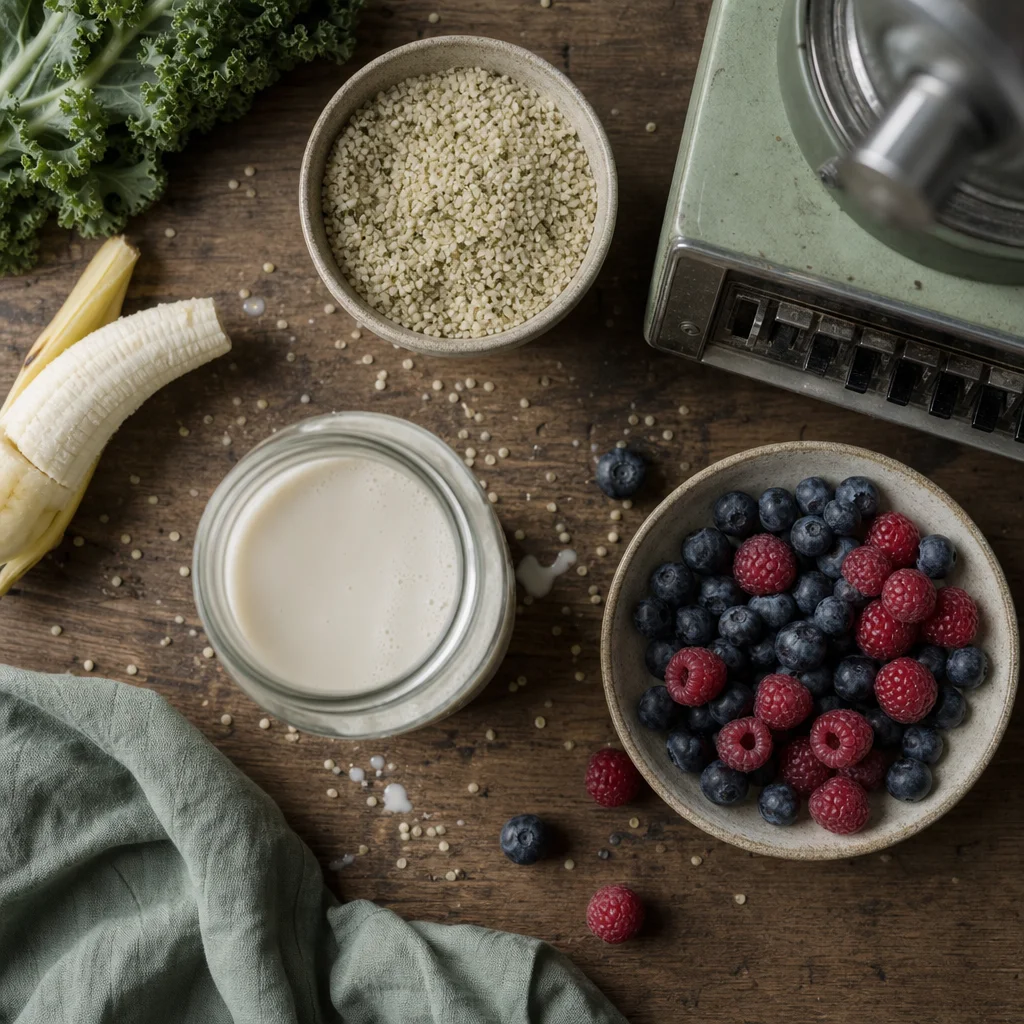
The easiest place to start? Tomorrow’s smoothie. Blend berries, a banana, and greens with a splash of hemp milk — or browse our berry breakfast recipes for more ideas. Then add 3 tablespoons of hemp hearts for about 10 grams of protein. They blend right in. And that tiny habit may be the healthy boost you were looking for.