

Chia Seeds for Constipation: The Safe Way to Use Them
Key Takeaways
- Two tablespoons of chia seeds deliver about 10 grams of fiber — roughly a third of many women’s daily target.
- Chia’s gel-forming soluble fiber is the type a 2026 meta-analysis linked to easier stool passage.
- Soaking chia and drinking enough water is non-negotiable. Dry chia can worsen constipation or cause a blockage.
- Start with 1 teaspoon a day. Build up slowly to avoid gas and bloating.
- Results vary by person. Some notice a difference within a few days of consistent, well-hydrated use. Others need more time or more total fiber.
- See a doctor for blood, severe pain, or constipation lasting over three weeks.
Picture this: you’ve been feeling backed up for days. Coffee didn’t do it. Extra walks didn’t help either. Now you’re staring at the jar of chia seeds in your pantry, wondering if chia seeds for constipation actually work.
Let’s be honest — you’ve probably heard mixed messages. Some people swear chia works like magic. Others say it makes things worse. Both can be true, and the difference comes down to one word: water.
Here’s what the science actually says, plus a safe step-by-step plan to use chia the right way. You’ll also get easy high-fiber recipes that make the whole thing delicious.
Quick Answer: Can Chia Seeds for Constipation Really Help?
Yes — for most people. Chia seeds are packed with gel-forming soluble fiber, the type that softens stool and makes it easier to pass. But they only work if you soak them first and drink enough water. Without hydration, the same seeds can make constipation worse.
Why Chia Seeds for Constipation Work So Well
Here’s the thing about chia seeds: they’re fiber machines. Just 2 tablespoons deliver about 10 grams of fiber. That’s about a third of the 22 to 34 grams most adults need each day. At the low end, it’s closer to 40%. The NIDDK’s fiber and fluid guidance sets that target.
But the amount isn’t the only story. The type of fiber matters just as much. Chia seeds are rich in soluble fiber — the kind that absorbs water and turns into a thick gel. That’s why soaked chia looks like tiny tapioca pearls.
That gel does three things in your gut. It adds bulk to your stool (your poop). It holds water in your colon, which softens hard, dry stool. And it helps everything glide along more easily.
This isn’t just theory. A 2026 network meta-analysis in Food & Function looked at 17 randomized trials with 1,423 adults. The researchers found that gel-forming soluble fibers — exactly the type in chia — eased trouble passing stool.
That was a stronger effect than placebo, with high certainty in the results. Stool consistency and stool frequency also improved compared with placebo, though the certainty there was moderate.
That makes chia seeds for constipation a genuinely practical choice. To get close to the same fiber (about 8 to 10 grams), you’d need roughly 2 cups of cooked oatmeal. Or 4 slices of whole-wheat bread. Chia gives you a meaningful dose in one small serving.
Let’s Be Honest About the Evidence
Now, a moment of honesty. No study has tested chia seeds for constipation directly in humans. The British Dietetic Association’s 2025 dietary guidelines for chronic constipation endorse kiwifruit, prunes, rye bread, and psyllium. They were built from 75 randomized trials. Chia didn’t make the list, simply because no one has run that specific study yet.
Here’s the honest truth about chia seeds for constipation: the case is strong but indirect. Chia is basically a whole-food version of the gel-forming fiber that the best research supports. Think of it as an evidence-adjacent fix — and one you can feel good about.
The Golden Rule: Chia Needs Water
So why do some people say chia seeds for constipation backfired? Here’s the paradox: the same fiber that softens stool can pack things in tighter. Fiber works by pulling water into your gut. Eat a lot of fiber without enough fluids, and it can bind things up instead of loosening them.
The NIDDK is clear on this: fiber needs liquids to soften stool and make it easier to pass. Water is what lets chia’s gel do its job. The same way liquid turns dry oatmeal soft, it turns chia into a gentle lubricant for your colon.
The TEOHL Hydration Rule
A simple rule of thumb? Drink at least 1 cup (8 ounces) of liquid for every tablespoon of chia. It’s the same ratio used in chia water recipes. Using 2 tablespoons? That’s 2 cups minimum. When in doubt, drink more.
The NIDDK notes that fiber only works well when paired with plenty of fluids. The key to using chia seeds for constipation without side effects is simple: never skip the water.
Soak Times: From Safe to Pudding-Thick
5 minutes — the bare minimum for safety. Dry chia can swell in your throat or food pipe and cause a blockage, so never eat it dry by the spoonful.
30 minutes — long enough for a drinkable gel, like the lemon chia tonic below.
4+ hours or overnight — best for puddings and overnight oats.
How Much Chia Per Day? A Gentle Ramp-Up Plan
If you’re not used to a high-fiber diet, don’t start with 2 tablespoons. That’s a fast track to gas and bloating. Instead, give your gut about a week to adjust.
Your First Week with Chia
Days 1–3: 1 teaspoon soaked chia once a day (about 2 grams of fiber).
Days 4–7: 1 tablespoon once a day (about 5 grams of fiber).
Day 8 onward: up to 2 tablespoons once a day (about 10 grams of fiber). This is a solid maintenance dose.
Most adult women need roughly 25 to 30 grams of fiber a day. However, most Americans fall short of that. Chia is a helpful boost — not the whole solution.
The right dose of chia seeds for constipation isn’t one-size-fits-all. Some people feel relief with 1 tablespoon. Others need the full 2. What matters is consistency and plenty of water.
What about results? Chia isn’t a laxative, so don’t expect overnight action. Give it several days of consistent use with adequate fluids before you judge. If nothing changes after a few days at 2 tablespoons, revisit your water intake first.
Troubleshooting: When Chia Isn’t Working
Bloated or gassy? Drop back to a smaller dose and drink more water. Add fiber slowly so your gut can adapt.
Still stuck after several days? Check fluids first. Then add other fiber-rich foods like prunes, pears, or kiwifruit — see our guide to the best vegetable for constipation for more options. If things still aren’t moving, talk with your doctor.
Easy High-Fiber Chia Recipes (With Fiber Math)
The best way to use chia is to soak it into something you already love. These five recipes turn chia into breakfasts and snacks you’ll look forward to. Fiber counts are approximate, and most come from the chia itself. Looking for a simple way to use chia seeds for constipation that doesn’t feel like a chore? These recipes have you covered. For even more ideas, browse our gut-healthy chia seed breakfast recipes.
1. The 2-Minute Lemon Chia Tonic
Stir 1 tablespoon of chia seeds into 8 ounces of water with a squeeze of lemon. Let it sit for 30 minutes, or stir every few minutes if you’re in a hurry. You get about 5 grams of fiber and a full cup of hydration in one glass. It’s the simplest evening ritual for a smoother morning.
2. Overnight Berry Chia Pudding
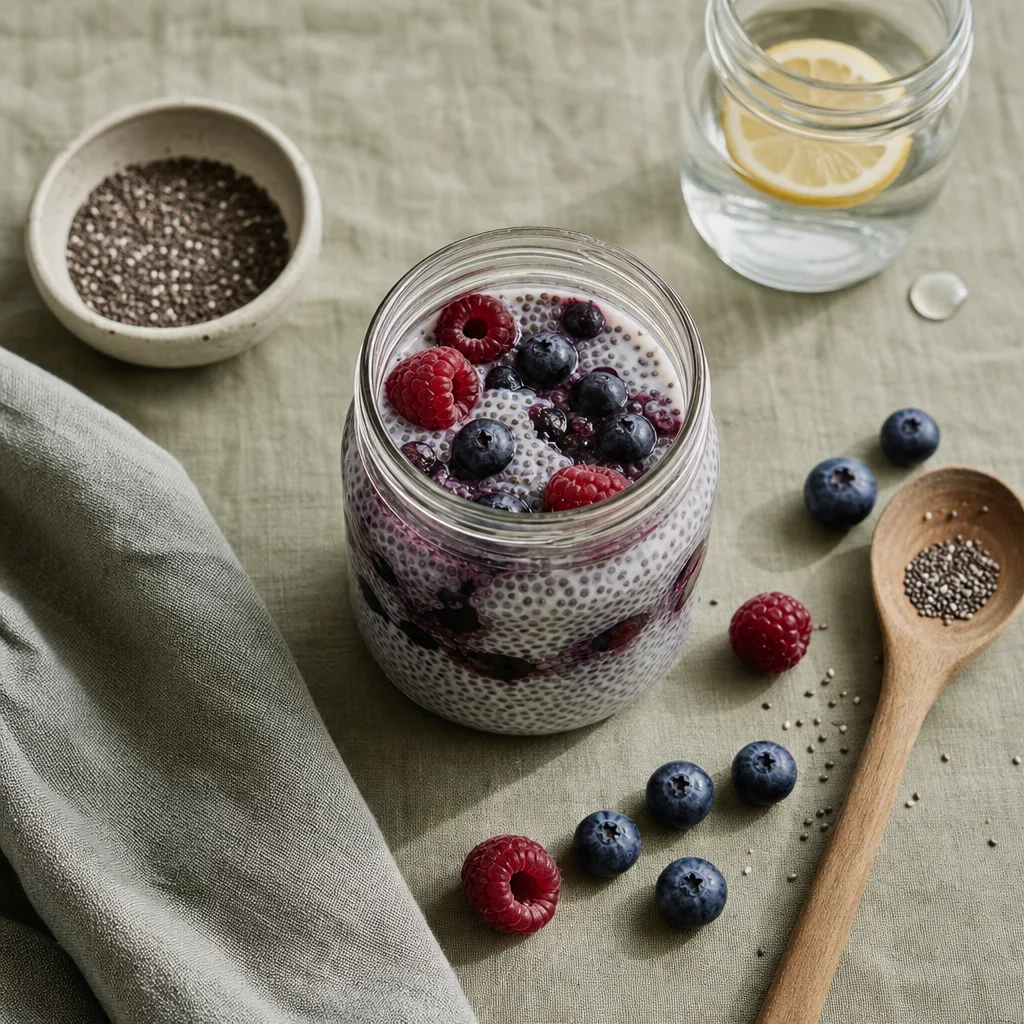
In a jar, stir together 2 tablespoons of chia seeds, ½ cup of milk or plant-based milk, and ½ cup of berries. Cover and refrigerate overnight. The chia alone adds about 10 grams of fiber. The berries bring more, plus natural sweetness. Top with peanut butter if you want extra staying power.
3. Berry-Peach Chia Smoothie
Blend 1 cup of frozen peaches, 1 cup of frozen berries, 1 cup of almond milk, and 1 tablespoon of chia seeds. Let it sit for 5 minutes after blending so the seeds can swell. You’ll get about 5 grams of fiber from the chia, plus more from the fruit.
4. Overnight Oats with Chia
Mix ½ cup of rolled oats, 1 tablespoon of chia, ½ cup of milk, and a handful of chopped fruit in a jar. Refrigerate overnight. The chia adds about 5 grams of fiber on top of the oats’ own fiber. Grab it and go on busy mornings.
5. Peanut Butter Chia Energy Bites
Stir together 1 cup of oats, 2 tablespoons of chia, ½ cup of peanut butter, and 2 tablespoons of honey. Roll into 6 balls and chill. Each bite carries roughly 2 to 3 grams of fiber — partly from the chia, partly from the oats.
Chia vs Flax vs Psyllium: Which Fiber Is Best?
If you’re weighing your options, here’s a quick field guide. Psyllium is the best-studied soluble fiber supplement, and clinical guidelines for chronic constipation include it. It’s reliable and concentrated, but it’s a supplement rather than a food.
Flaxseeds are also rich in fiber and omega-3s. Whole flax can pass through undigested, so ground flax is the better choice for constipation. Chia, on the other hand, forms its own gel without any grinding.
Chia also brings bonus nutrients. A 2023 background review of chia seeds notes their omega-3s, calcium, magnesium, and antioxidants. That makes chia the whole-food winner for most people.
You don’t have to pick just one though. Many people rotate chia and ground flax through the week. The best fiber is the one you’ll eat consistently.
Safety First: Who Should Be Cautious
Chia seeds for constipation are safe for most people. But a few groups should take extra care.
- Blood sugar or blood pressure medication: Chia can lower both. Combining it with these medications could cause dips. Check with your doctor.
- Blood thinners: The omega-3s in chia may affect clotting. A quick pharmacist check is worth it.
- Irritable bowel syndrome (IBS): Good news — chia is low in FODMAPs (the fermentable carbs that can trigger IBS symptoms), so it’s often well tolerated. Go slow and track your symptoms.
- Pregnancy: Chia can help with pregnancy-related constipation. Just keep your fluids up.
- Trouble swallowing: Skip dry chia entirely. Only eat it well-soaked in puddings or smoothies.
- Allergies: Rare, but real. Watch for vomiting, diarrhea, or itching after eating chia. Get help right away if your throat feels tight.
One more note: fiber can slow how quickly your body absorbs minerals like iron and zinc. That’s one reason food-based fiber beats supplements. High-fiber foods like chia bring their own minerals to the table.
When Chia Isn’t Enough: Know the Red Flags
Constipation is common, and chia is a great first step. But some symptoms need medical attention. Mayo Clinic advises seeing a doctor if you have any of these:
- Constipation that lasts longer than three weeks
- Blood in your stool or on the toilet paper
- Black or tarry stools
- Unexplained weight loss
- Stomach pain that doesn’t stop
- Symptoms that make daily activities difficult
Also worth knowing: fewer than three bowel movements a week can count as constipation, according to MedlinePlus. But some healthy people go less often. What matters most is a change from your usual pattern.
Frequently Asked Questions
Do chia seeds cause constipation or cure it?
Both — it depends on how you use them. Soaked chia with plenty of water helps soften stool. Dry chia, or large amounts without enough water, can worsen constipation. Hydration is the deciding factor.
How fast will chia seeds work?
Timing varies. Chia works gently by adding bulk and softness to stool. Many people notice a difference within a few days, but it’s not a stimulant laxative. Results depend on hydration and your baseline fiber intake.
Can I eat chia seeds every day?
Yes. One to two tablespoons a day is reasonable for most healthy adults. Ramp up gradually and keep your water intake high.
Can I use chia seeds for constipation during pregnancy?
Yes — many women use chia for pregnancy-related constipation. Just soak the seeds and drink plenty of fluids. Run it by your clinician if you have any concerns.
The Bottom Line
Your 3-Step Start Plan
Step 1: Soak 1 teaspoon of chia in liquid tonight. Step 2: Drink at least 8 ounces of water with it. Step 3: Add one chia recipe this week and build from there.
So, do chia seeds for constipation actually work? For most people, yes — when used the right way. Soak them. Pair them with water. Start small and build up. Give it a few days.
Chia won’t fix chronic constipation on its own. But as a food-first tool in a fiber-rich, well-hydrated routine, it’s one of the smartest choices in your kitchen. Start tonight with a simple overnight pudding. Your gut — and your morning routine — will thank you.
For more fiber-rich meal ideas, explore TEOHL’s high-fiber breakfast and digestive health guides.