

Mediterranean Diet Swaps: 6 Easy Changes to Start Today
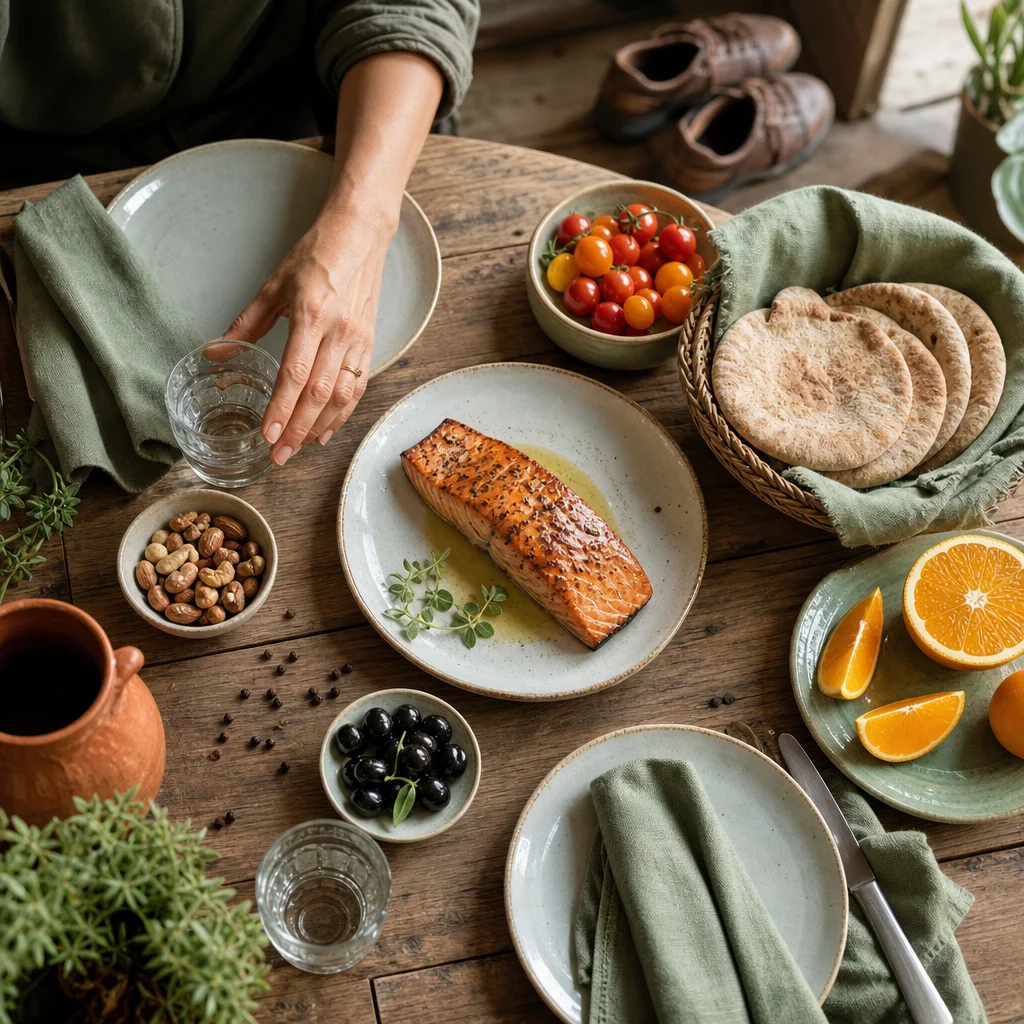
Key Takeaways
- Mediterranean diet swaps don’t have to mean a full kitchen reboot.
- Six small changes: whole grains, fish, smart snacks, extra virgin olive oil, shared meals, and after-dinner walks.
- Every swap includes a practical target and an evidence grade.
- Start with one swap this week. Consistency beats perfection.
You don’t need a kitchen overhaul to eat the Mediterranean way. In fact, the most realistic Mediterranean diet swaps are small, practical changes you can make one at a time. Maybe it’s choosing whole grain bread tomorrow. Maybe it’s swapping one meat dinner for salmon. Those small moves add up.
Here’s the thing: Mediterranean-style eating is one of the most well-studied patterns for heart health, blood sugar, and everyday well-being. It’s flexible by design. No calorie counting. No forbidden foods. Just a set of guiding principles that work together.
Quick Answer: What Counts as a Mediterranean Diet Swap?
A swap is any small, realistic change that moves a meal closer to the traditional pattern. That means more vegetables, whole grains, legumes, nuts, olive oil, and fish. The best Mediterranean diet swaps are the ones you’ll actually repeat.
How to make Mediterranean diet swaps without a kitchen overhaul
You might be thinking, ‘Do I really need to redo my grocery list?’ The answer is no. Experts agree that gradual changes are the sustainable path. The phrase ‘Mediterranean diet swaps’ sounds simple. But many guides still make it feel like a meal-plan reboot.
Here’s what’s actually happening. The people who stick with this pattern change one thing at a time. Does that pay off? Yes. A 2024 review in Current Problems in Cardiology pooled four clinical trials. It found that Mediterranean-style eating cut the odds of major heart events roughly in half. Benefits build with consistency.
The 6 Mediterranean diet swaps worth starting with
All swaps aren’t created equal. That’s why we graded each one: strong, moderate, or lifestyle. Strong means large studies or clinical trials back it. Moderate means solid observational research supports it. Lifestyle means it’s part of traditional Mediterranean living linked to well-being, though harder to test in a lab. Pick the easiest one first.
Swap #1: Whole grains for white bread
Evidence grade: strong. A 2016 BMJ review of 45 studies found that whole grains matter. Each 90 grams per day — about three servings — was tied to a 22% lower risk of heart disease. It was also tied to a 17% lower risk of early death. Refined grains didn’t show the same link.
How much? Aim for about three servings a day. Look for ‘100% whole grain’ on the label. Try whole wheat pita, oats, barley, farro, or brown rice. Our high-fiber Mediterranean breakfast guide has simple ideas.
Budget tip: oats, barley, and brown rice are budget-friendly staples. They also cook quickly in bulk. For more savings, see our Mediterranean diet on a budget guide.
Swap #2: Fish for meat
Evidence grade: strong. The American Heart Association recommends one to two seafood meals per week. That helps lower risk of heart failure, heart disease, and stroke. The benefit is strongest when fish replaces red or processed meat. Mayo Clinic suggests two to three servings a week. One serving is around 3 to 5 ounces.
Fatty fish like salmon, sardines, mackerel, and anchovies are rich in omega-3s — healthy fats that support heart and brain health. Mediterranean diet swaps like this one are among the most powerful you can make. Not a fish lover? Try walnuts, ground flaxseed, or chia seeds for plant-based omega-3s. Swapping one meat meal for beans or lentils also counts.
Safety note: if you’re pregnant or breastfeeding, choose low-mercury fish. Canned sardines are a budget-friendly pick.
Swap #3: Fruit and nuts for processed snacks
Evidence grade: strong. Cleveland Clinic’s serving goals put fruit at about three servings a day. Nuts should appear at least three times a week. One serving of nuts is about a quarter cup. A 2026 review of 60 studies looked at over 1.1 million people. It linked Mediterranean-style eating with a lower risk of type 2 diabetes and obesity.
A simple way to make snacking work for you: design your kitchen so the healthy option is the easiest one to reach. Set a bowl of fruit on the counter. Pre-portion nuts into small snack bags. Choose unsalted or lightly salted nuts. If you have a nut allergy, seeds like sunflower or pumpkin work well.
Budget tip: frozen berries and frozen mango cost less than fresh. They work great in yogurt, oatmeal, or on their own.
Swap #4: Butter and refined oils to extra virgin olive oil
Evidence grade: strong. Of all the Mediterranean diet swaps out there, this one may matter most. A 2026 analysis of the PREDIMED trial found a 25% lower risk of major heart events. That was in people with the highest extra virgin olive oil intake. Regular olive oil didn’t show the same independent link.
Why the difference? Extra virgin olive oil keeps polyphenols — natural plant compounds with antioxidant effects. Use it for saut\u00e9ing, roasting, and dressings. Regular olive oil is still better than butter. But extra virgin is the gold standard.
How much? Cleveland Clinic suggests one to four tablespoons a day. Budget tip: a large bottle of mid-priced extra virgin olive oil is more affordable per serving than you think. Store it in a cool, dark place.
Swap #5: Eating with others instead of alone
Evidence grade: lifestyle. Traditional Mediterranean living treats meals as connection. A growing research field called ‘commensality’ — the simple act of eating together — links shared meals to well-being. This research review on eating together explains the cultural weight of shared meals.
Eating alone isn’t bad. But sharing a meal is a real feature of this lifestyle. It’s also free. Invite a friend over for dinner. Eat lunch with a coworker. Target: one shared meal this week. The goal is pleasure, not pressure.
Swap #6: A short walk after dinner instead of TV
Evidence grade: strong. This lifestyle swap has real science behind it. A 2022 review in Sports Medicine found that light walking breaks after meals help lower post-meal blood sugar and insulin. Compared with sitting, the effect was clear. Some articles say two minutes is enough. Here’s the honest version: the research used repeated short walking breaks during prolonged sitting. It wasn’t a single two-minute stroll.
Even a few minutes counts. Target: a 10 to 15 minute walk after dinner. Put on a podcast, walk around the block, and let your body do its thing.
Two bonus mini-swaps: beans and seasoning
These bonus Mediterranean diet swaps cost almost nothing. Beans, lentils, and chickpeas are a Mediterranean backbone. They’re cheap, high in fiber, and easy to add. Try swapping one meat dinner each week for a lentil or chickpea dish. Our Mediterranean chickpea meals are a great place to start.
Herbs, spices, and lemon can replace a lot of salt. Oregano, thyme, cumin, and smoked paprika add flavor without the sodium. It’s a tiny swap your heart will thank you for.
Which swap should you start with?
If you’re tempted to do all six this week, don’t. Dietitians consistently recommend one swap at a time. Long-term consistency is what the research rewards. The best Mediterranean diet swaps aren’t the perfect ones. They’re the ones you can repeat without stress.
Choose the easiest swap for this week. If you already cook with olive oil, start with whole grains. If snacks are your weakness, start with fruit and nuts. If you sit after dinner, start with the walk.
A 2026 review of 54,000 people with heart disease found something encouraging. People who followed the pattern more closely had a 26% lower risk of early death. Every swap counts.
Your one-swap action plan
Here’s how to make it stick:
- Pick one swap for the next 7 days. Write it down.
- Make it tiny. ‘I’ll eat salmon on Tuesday.’ Or ‘I’ll walk 10 minutes after dinner on weekdays.’
- Set up for success. Keep fruit in sight, pre-portion nuts into snack bags, and leave walking shoes by the door.
- Track it. Put a checkmark on your calendar each day you do it.
- Add more when ready. Once one swap feels normal, choose another.
Need meal ideas? Our 7-day high-protein Mediterranean meal plan turns these swaps into a full week of dinners.
Safety and sensible swaps
A few safety notes
Mediterranean-style eating is safe for most people. However, it’s not one-size-fits-all. If you have kidney disease, a medical condition, or food allergies, talk to your healthcare team or a dietitian first. Pregnant and breastfeeding women should choose low-mercury fish.
Wine is optional. If you don’t drink, don’t start. If you do drink, keep it to one glass with a meal. No need to buy every ingredient at once. A swap should feel like a win, not a chore.
Frequently asked questions
How many Mediterranean diet swaps should I try at once?
Start with one. Once it feels normal, add another. This keeps the change realistic and stress-free.
Do I need to count calories?
No. This eating pattern focuses on food quality and regular meals.
What if I don’t eat fish?
Use walnuts, flaxseed, chia seeds, eggs, and beans. Legume-based meals count as a win.
Is red wine required?
No. It’s optional. If you don’t drink, don’t start.
The bottom line
Start where you are. Mediterranean eating isn’t a finish line. It’s a pattern you build meal by meal. Mediterranean diet swaps add up over time. One swap this week. One more next week if it feels right. The evidence is clear: small, consistent choices move the needle for heart health, blood sugar, and everyday well-being. Pick your swap. This week is enough.