

High Protein Lunch Ideas That Beat the 3 PM Slump
Key Takeaways
- A lunch with 20-30 grams of protein clearly reduces hunger and keeps you full for hours.
- Protein lowers ghrelin — the “I’m hungry” hormone — and raises fullness signals like GLP-1.
- Use the simple formula: 20g protein + fiber + healthy fat.
- Protein protects muscle during weight loss, so you lose fat — not strength.
- Calories still count. Protein supports weight loss; it doesn’t replace it.
It’s 3 p.m. The snack drawer is calling your name. You ate lunch a few hours ago. Yet here you are, hungry again. The right high protein lunch ideas can fix that.
Here’s the thing: that afternoon hunger isn’t a willpower problem. It’s a lunch problem. When your midday meal is light on protein, your blood sugar spikes and crashes. Your hunger hormones start talking — loudly.
The fix is simpler than you think. A 20-gram protein target can keep you full. It steadies your energy, too. And it makes weight loss feel less like a battle.
In this guide, you’ll get the science behind the 20-gram lunch. You’ll also find a mix-and-match formula, a protein cheat sheet, and fast builds from pantry staples.
Quick Answer: What Makes a Lunch “High Protein”?
A high protein lunch delivers 20-30 grams of protein from whole foods — eggs, Greek yogurt, chicken, canned fish, beans, or tofu — paired with fiber and healthy fat. That combo keeps you full, steadies blood sugar, and takes the edge off afternoon cravings.
High Protein Lunch Ideas That Keep You Full
Let’s start with why this works. A 2020 review of 49 acute randomized trials (plus 19 longer-term trials) found that eating protein clearly suppresses hunger. It also increases fullness and shifts the hormones that control appetite.
Here’s the key part. Protein lowers ghrelin — your body’s “I’m hungry” signal. It also raises CCK and GLP-1, two chemicals that tell your brain you’re satisfied. In fact, GLP-1 is the same fullness signal that some newer weight-loss medications target.
The payoff shows up in real life. In a study in healthy women, a 24-gram protein snack delayed dinner by nearly an hour. Imagine that effect at lunch. A protein-rich midday meal can push the 3 p.m. snack attack right off your schedule.
How Much Protein Should Your Lunch Really Have?
You don’t need an extreme amount. Mayo Clinic recommends 15-30 grams of protein at each meal. On the flip side, more than 40 grams at one sitting adds no extra benefit.
Daily needs matter, too. Cleveland Clinic suggests 1.2 to 1.6 grams of protein per kilogram of body weight. For a 170-pound woman, that’s at least 92 grams daily. A 20-30 gram lunch fits neatly into that picture.
Most of us load protein at dinner and skimp at breakfast or lunch. Experts say spreading protein across the day supports weight management. It cuts hunger and cravings. Your lunch is a prime spot for that shift. In fact, an analysis of national health data in adults 50-85 found a clear pattern. People who ate one or two meals with 30+ grams of protein had greater muscle and strength.
Choose Your Lunch Number
- 20-25 grams: a solid target for general health and fullness.
- 25-35 grams: helpful when weight loss or muscle preservation is your goal.
- 40+ grams: no added benefit at one meal — spread protein across the day instead.
The 20-Gram Lunch Formula
High protein lunch ideas don’t need to be complicated. Every satisfying one follows the same formula: 20 grams of protein + fiber + healthy fat.
Protein keeps you full and protects muscle. Fiber steadies blood sugar and supports digestion — see our high fiber lunch ideas for more. Healthy fat adds flavor and keeps you satisfied. Together, they carry you through the afternoon.
Here’s the formula in practice. A 3-ounce chicken breast — about the size of a deck of cards — provides 21 grams of protein. Add a half-cup of rice and a half-cup of vegetables, and Mayo Clinic notes you have a 25-gram lunch. That’s it. Protein, fiber, fat.
Your Protein Cheat Sheet
MedlinePlus gives us an easy rule for building high protein lunch ideas. Most protein foods provide about 7 grams per ounce-equivalent. In plain terms, each of these portions delivers roughly 7 grams:
- 1 ounce of meat, chicken, or fish
- 1 large egg
- ¼ cup of tofu
- ½ cup of cooked beans or lentils
Do the math, and three portions hit about 21 grams. That’s your 20-gram lunch in basic units. No protein powder required.
| Food | Portion for ~21g |
|---|---|
| Chicken or turkey breast | 3 ounces |
| Canned tuna or salmon | 3 ounces |
| Eggs | 3 large |
| Tofu | ¾ cup |
| Cooked beans or lentils | 1½ cups |
Mix and match to make the math work for you. Two eggs (14g) plus a half-cup of beans (7g) equals 21 grams. A quarter-cup of tofu (7g) plus a cup of beans (14g) also lands at 21 grams. Once you know these numbers, high protein lunch ideas become fast math you can do anywhere.
7 High Protein Lunch Ideas You Can Build in Minutes
These high protein lunch ideas follow the formula and rely on pantry staples — see our high protein meal prep guide for batch ideas. No recipe required. Just combine, season, and go.
Seven Fast Builds to Try
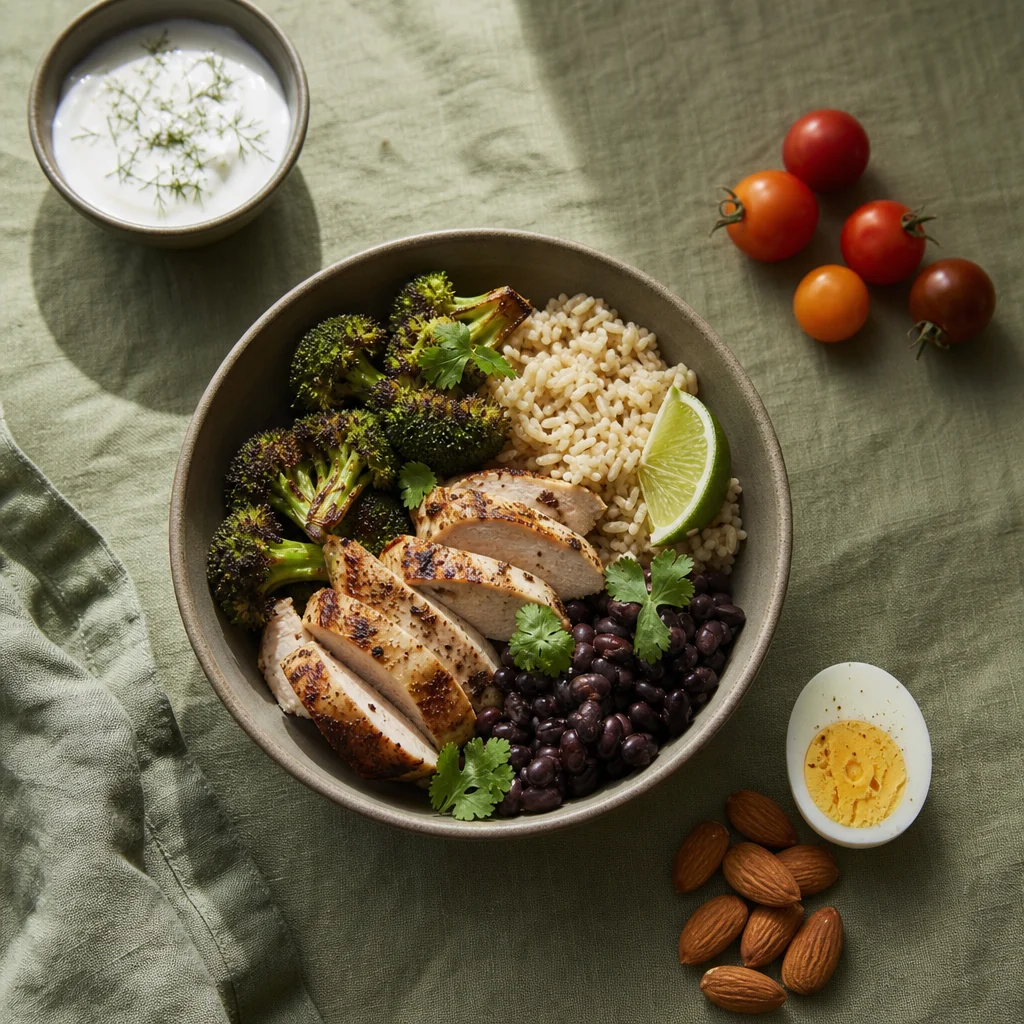
- The Chicken Rice Bowl (25g): 3 ounces of chicken, a half-cup of rice, and a cup of vegetables. Add salsa or a squeeze of lime.
- The Egg & Bean Burrito (28g+): scrambled egg, beans, and cheese in a whole-grain tortilla — add a glass of milk on the side to push it past 30g.
- The Yogurt, Banana & Egg Bowl (19g + nuts): Greek yogurt, a sliced banana, and a hard-boiled egg. Add a handful of nuts to pass 20g.
- The Tuna & Chickpea Plate (28g): 3 ounces of canned tuna, a half-cup of chickpeas, and greens. Drizzle with olive oil and lemon.
- The Tofu Bowl (21g): ¾ cup of tofu, brown rice, and broccoli. Finish with soy sauce, ginger, and sesame.
- The Three-Egg Scramble (28g): 3 eggs, spinach, and a half-cup of black beans. Serve with whole-grain toast.
- The Salmon Plate (21g): 3 ounces of canned salmon, whole-grain crackers, and cucumber. Add Greek yogurt mixed with dill.
Think of these as templates, not strict recipes. Swap chicken for turkey. Swap tuna for salmon. Swap tofu for beans. Keep the structure — protein, fiber, fat — and it works.
The Honest Part: Protein Is Not a Magic Bullet
Let’s be honest. Even the best high protein lunch ideas won’t melt fat by themselves. In an 8-week randomized trial with 121 women, higher protein didn’t beat normal protein for weight loss. The weight loss — about 7.5 kg (16 pounds) — came from eating fewer calories.
However, protein still matters for what you lose. In a 12-week randomized trial in women, the higher-protein group gained 1.5 kg more muscle. They also lost more body fat and more inches around their waist. That’s the difference between losing weight and losing the right weight.
So think of protein as your support system. It keeps you full. It protects muscle. And it helps you stick with a healthy plan. Calories are still in charge.
Safety and Balance
Are high protein lunch ideas safe? For healthy people, yes. Mayo Clinic confirms that high-protein diets don’t appear to cause health problems in healthy adults.
The key is choosing well. Pick fish, lean poultry, beans, lentils, nuts, low-fat dairy, and soy. Go easy on processed meats like deli turkey and bacon. They raise heart disease risk.
One caution matters. If you have kidney disease or diabetes, talk to your provider before increasing protein. Your kidneys filter protein waste. Extra protein can overwork kidneys that are already struggling.
Quick Myth-Busting
- “Will protein hurt my kidneys?” Not in healthy people. The caution applies mainly to existing kidney disease.
- “Are eggs bad for my cholesterol?” Current guidance includes eggs as a healthy protein source. Enjoy them.
- “Do I need protein powder?” No. Whole foods come first — that’s what experts recommend.
Frequently Asked Questions
Will 20 grams at lunch really stop my 3 p.m. cravings?
Yes, according to the research. In one study, a 24-gram protein snack delayed the next meal by nearly an hour. A 2020 review of 49 trials also found that protein lowers hunger and boosts fullness. High protein lunch ideas aren’t a myth — they’re measurable.
I don’t eat meat or dairy. Can I still hit 20 grams?
Absolutely. Tofu, beans, lentils, and eggs (if you eat them) all count. Three portions — like ¼ cup of tofu with a cup of beans — get you to 21 grams. Or simply ¾ cup of tofu alone (three ¼-cup portions) gets you to 21 grams. Plant proteins work beautifully.
Is more protein always better?
Not at one meal. Mayo Clinic says more than 40 grams at a sitting offers no added benefit. Aim for 20-30 grams at lunch. Spread the rest across your day.
Do I need protein powder?
No. Whole foods come first — that’s what experts recommend. A 20-gram lunch is reachable with everyday foods. Powder is fine when you’re truly in a rush, but it’s not required.
The Bottom Line
You don’t need another endless list of high protein lunch ideas. You need a system — and now you have one. Hit 20-30 grams of protein. Pair it with fiber and healthy fat. Keep total calories in mind.
Start with one lunch this week. Maybe the chicken rice bowl. Maybe the egg and bean burrito. Or follow our 7-day high protein meal plan for women. Small changes add up. Your 3 p.m. self will thank you.
Sources
- Kohanmoo et al., Physiology & Behavior (2020) — protein and appetite in 49 randomized trials
- Douglas et al., Appetite (2013) — high-protein snacks and appetite in women
- Lim et al., Nutrients (2022) — high-protein diets and weight loss
- Haghighat et al., British Journal of Nutrition (2020) — protein and body composition in women
- Loenneke et al., Clinical Nutrition (2016) — per-meal protein and muscle
- Mayo Clinic Health System — Are you getting too much protein?
- Mayo Clinic — High-protein diets: Are they safe?
- Cleveland Clinic — How much protein do you need daily?
- MedlinePlus — Protein in diet