

Nuts and Blood Pressure: What a Daily Handful Can Do
Key Takeaways
- The science connecting nuts and blood pressure keeps getting stronger. A new analysis found a 20% lower risk of developing high blood pressure for each daily ounce of nuts.
- The benefit peaks at about 30 grams a day — a small handful. Eating more doesn’t add extra protection.
- How nuts are prepared may matter more than which kind you pick. Unsalted or lightly salted wins.
- Nuts are one part of a heart-healthy eating pattern, not a magic fix.
Picture this: it’s mid-afternoon, and you’re staring into the pantry looking for a snack that won’t wreck your momentum. You grab a small handful of almonds. Good instinct. In fact, the link between nuts and blood pressure is stronger than most of us realize.
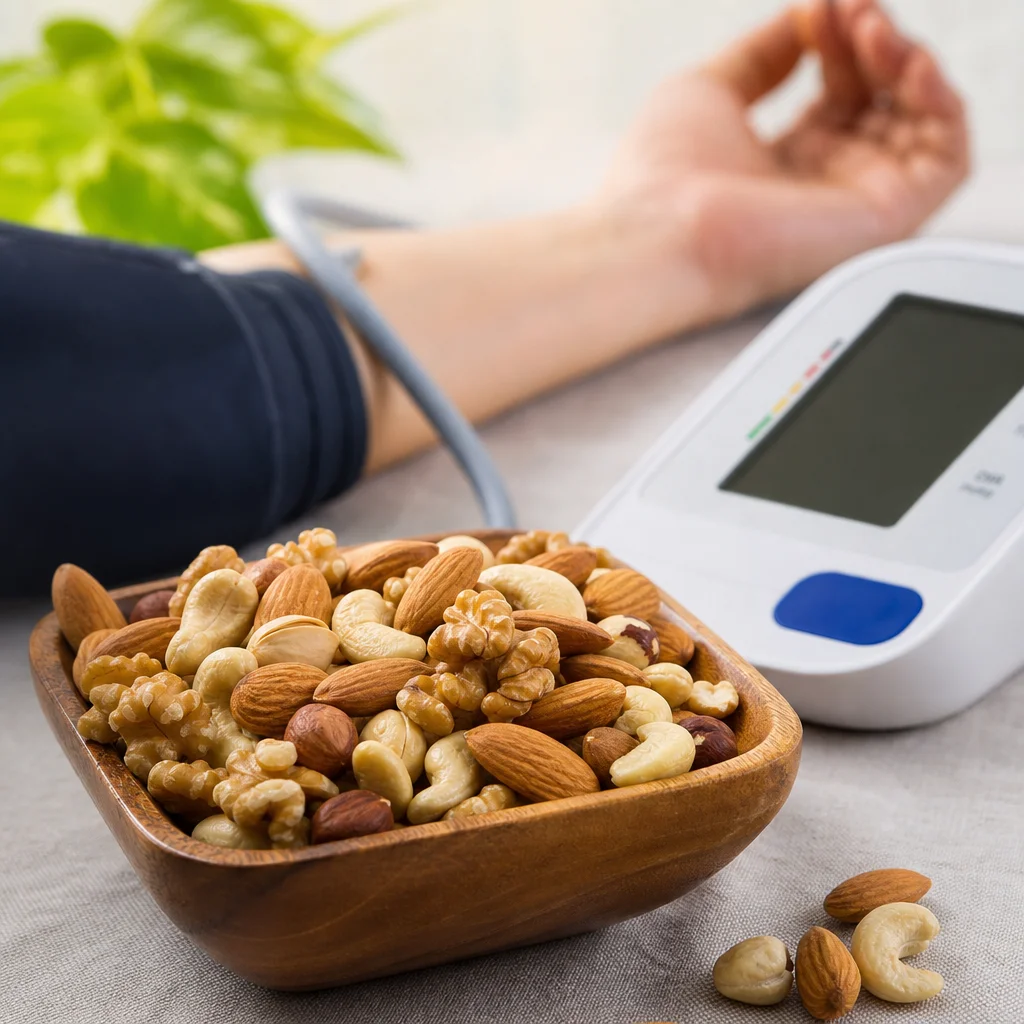
New research suggests that a daily handful of nuts comes with a 20% lower risk of developing high blood pressure. That’s exciting news for anyone who wants to protect their heart without a big diet overhaul. Here’s what the science really shows, which nutrients are doing the work, and how to snack smarter starting today.
Quick Answer: Can a Handful of Nuts Help Lower Blood Pressure?
Research suggests yes — with nuance. The new analysis pooled results from eight studies. Research tied each daily 1-ounce serving of nuts to a 20% lower risk of developing high blood pressure. Because the studies were observational, we can’t say nuts directly cause lower blood pressure. But as part of an overall heart-healthy eating pattern, they’re a simple, evidence-backed choice.
What Research Says About Nuts and Blood Pressure
The findings come from a systematic review and meta-analysis published in the British Journal of Nutrition. A meta-analysis combines results from many smaller studies. This one pooled data from eight prospective studies — research that follows groups of people over time.
In total, the analysis included 143,380 adults. During follow-up, 20,665 people developed high blood pressure. When researchers compared the biggest nut eaters with the smallest, they found a 16% lower risk.
Here’s the headline number. Each additional daily serving of nuts — about 28 grams — came with a 20% lower risk of developing hypertension. Hypertension is the medical term for high blood pressure.
The benefit also seemed to peak. People who ate about 30 grams a day had a 26% lower risk than people who ate no nuts. Beyond that, the analysis found no evidence of further risk reduction. So a small handful really is enough.
What does this mean for you? If you already snack on nuts, keep going. If you don’t, start with one small handful a day. The benefit comes from a daily habit, not an occasional big bowl.
Now for the honest caveat. These were observational studies, not controlled experiments. They can show a link between nuts and blood pressure, but they can’t prove nuts directly cause lower blood pressure. People who eat nuts regularly may also have other healthy habits. That’s why experts describe nuts as a helpful part of a heart-healthy eating pattern, not a standalone fix.
The findings also add to previous research linking nut consumption to a lower risk of heart disease. Earlier studies on blood pressure showed mixed results. Now the evidence is stronger.
Why Nuts and Blood Pressure Are Linked: The Nutrients at Work
So what’s behind the nuts and blood pressure connection? Nuts are packed with nutrients that support heart health. These include fiber, unsaturated fats, magnesium, potassium, vitamins E, K, and C, B vitamins, and plant-based protein. Here’s how each one helps.
Magnesium: A Natural Calcium Channel Blocker
Magnesium acts as a natural calcium channel blocker. In plain terms, it helps blood vessels relax and widen. That process is vasodilation. When blood vessels open up, blood flows more easily. Plus, blood pressure can drop.
Potassium: The Sodium Balancer
Potassium helps in two key ways. First, it reduces the effects of sodium. Second, it eases tension in blood vessel walls. Most of us get too much sodium and too little potassium. Nuts can help close that gap — and our guide to fixing your potassium balance digs deeper.
L-Arginine: A Bonus for Blood Vessels
Walnuts, peanuts, and almonds contain higher amounts of L-arginine. This amino acid — a building block of protein — acts as a vasodilator. Translation: it helps open blood vessels. That may support healthy blood pressure.
What About Pistachios?
Pistachios deserve a special mention. Research on pistachios suggests they may modestly lower systolic blood pressure — the top number in a reading. Their potassium, unsaturated fats, fiber, and antioxidants likely do the work.
However, here’s the honest truth. There’s no single “best” nut. The best choice is the one you’ll actually eat regularly — as long as it’s prepared well.
A mix of nuts also gives you a wider range of nutrients. So rotate your favorites. One day almonds. The next day walnuts. Then pistachios. Your taste buds — and your heart — will appreciate the variety.
How to Choose Nuts for a Heart-Healthy Diet
When it comes to nuts and blood pressure, preparation may matter more than the variety. Here’s your simple field guide.
What to Look For
• Unsalted or lightly salted — this keeps sodium in check.
• Raw or dry-roasted — no extra oil needed.
• Plain — no sugar or candy coatings.
• Single-serving packs — they make portion control easy.
What to Skip or Limit
• Sugar-coated or candy-coated nuts.
• Heavily salted or honey-roasted varieties.
• Processed snack mixes that pair nuts with pretzels, crackers, or other high-sodium ingredients.
• Eating straight from the bag — it’s too easy to lose track.
Reading labels takes five seconds. Look for the words “unsalted” or “lightly salted” on the front. Then flip the package over. The ingredient list should show just nuts — maybe with salt. If you see sugar, syrup, or artificial flavorings, put it back.
Portion size matters, too. Nuts are calorie-dense, so a little goes a long way. Aim for about 1 ounce — a small handful — at a time. Avoid grazing on multiple handfuls through the day.
One more note. If you have a tree nut or peanut allergy, nuts aren’t the right choice for you. Seeds offer similar nutrients without the risk. Talk to your clinician about what fits your needs.
Simple Nut Swaps You Can Try Today
You don’t need to overhaul your kitchen to make nuts and blood pressure work in your favor. Small swaps add up fast.
- Swap pretzels for lightly salted almonds at your afternoon snack break.
- Add walnuts to your morning oatmeal instead of sugary granola.
- Trade croutons for a sprinkle of pistachios on your salad.
- Reach for a small handful of peanuts when you want something crunchy and savory.
- Keep a single-serving pack of unsalted nuts in your bag for emergency hunger.
Each swap adds fiber, healthy fats, and minerals. It also replaces a processed snack with something your heart actually uses. That’s the kind of pattern that adds up over time.
Frequently Asked Questions
How many nuts should I eat per day?
About 30 grams, or 1 ounce — a small handful. The research found the biggest benefit at this amount. More didn’t help further.
Are salted nuts okay?
It’s best to choose unsalted or lightly salted. Sodium raises blood pressure. So heavily salted nuts can undo the benefit you’re going for.
What’s the best nut for blood pressure?
The research doesn’t crown a single “best” nut. Walnuts, almonds, and peanuts offer L-arginine. Pistachios show promise for systolic pressure. The common thread is choosing unsalted, uncoated nuts you enjoy.
Can nuts replace my blood pressure medication?
No. Nuts are a food, not a medicine. Never stop or change prescribed medication without talking to your clinician. Think of nuts as one helpful tool in a broader plan. That plan includes movement, sleep, stress management, and regular check-ups.
Your Simple Plan for Heart-Healthy Snacking
Here’s how to put it all together. Keep a container of unsalted or lightly salted nuts somewhere visible. Measure one small handful into a bowl instead of eating from the bag. Pair your nuts with fruit or veggies for a more filling snack.
Try a handful of almonds with an apple. Or walnuts with a few berries. The fruit adds fiber and natural sweetness.
Remember the bigger picture. Nuts work best as part of an overall heart-healthy eating pattern. That pattern is rich in vegetables, fruits, whole grains, and lean proteins. For more ideas, check out our guide on heart-healthy eating patterns. Small, consistent choices are what move the needle.
The Bottom Line
A handful of nuts a day is one of the simplest, most evidence-backed snack choices you can make for your heart. The new analysis adds to a growing body of evidence on nuts and blood pressure. But the real win comes from consistency and smart preparation.
Choose unsalted. Keep portions to about an ounce. Let nuts be one delicious part of a healthy lifestyle. That lifestyle also includes movement, good sleep, and regular check-ups. And if you have questions about your blood pressure, talk to your clinician. Your heart will thank you.