

Cholesterol Misconceptions Cardiologists Want You to Drop
Key Takeaways
- Cholesterol misconceptions — like low-fat is best — keep people stuck on habits that don’t move their numbers.
- The type of fat you eat matters more than how much fat you eat.
- Fish oil and other supplements are not proven stand-ins for heart treatment.
- Genetics can keep LDL high even when you do everything right. That’s not your fault.
- Get tested, get moving, and talk to your doctor about your full risk picture.
Maybe you’ve been trying so hard to lower your cholesterol. You swapped eggs for egg whites, picked low-fat everything off the shelf, or added fish oil to your morning routine. And yet that number on your blood test barely moved. If that sounds like you, you’re not doing it wrong. You’re navigating outdated cholesterol misconceptions — and it’s time to clear them up.
Here’s the good news: fat is not the enemy, and neither are you. Cardiologists say three habits people trust the most often do very little. Let’s look at what the research actually shows and what to do instead.
Quick Answer: Should You Go Low-Fat or Load Up on Supplements to Fix High Cholesterol?
No. A low-fat diet is not the best approach, and over-the-counter supplements are not proven to lower heart risk. The evidence points to smarter fat choices, fiber, regular movement, blood testing, and — when your doctor recommends it — medication.
The 3 Biggest Cholesterol Misconceptions Cardiologists Want You to Drop
Let’s tackle the cholesterol misconceptions one by one. Each one sounds reasonable. But each one can quietly keep you stuck on things that don’t work.
Misconception #1: A Low-Fat Diet Is the Best Way to Lower Cholesterol
Back in the 1980s, low-fat was the golden rule. But decades of research flipped that advice. The American Heart Association explains that your liver makes all the cholesterol your body needs. The extra cholesterol comes from animal foods. The real problem is saturated and trans fats — not fat in general.
Here’s the thing: swapping saturated fats for unsaturated fats works. A 2025 meta-analysis of randomized trials on dietary fat found that replacing saturated fat with unsaturated fat lowered LDL by about 10 mg/dL overall. When the swap was direct, LDL dropped closer to 16 mg/dL. That’s real progress. But it’s not about cutting fat. It’s about choosing better fat.
What about eggs? For most people, eggs are fine in moderation. The bigger issue is what you serve with them — bacon, butter, and white toast. Shift the plate instead of fearing the yolk.
Misconception #2: Supplements Can Handle It
Walk down the supplement aisle and you’ll see bottles promising heart support. Here’s where cholesterol misconceptions about supplements take root. The evidence does not support most of the promises.
A 2026 meta-analysis of omega-3 supplementation trials looked at 25 randomized trials with 25,578 people. Combined EPA and DHA — the omega-3s in fish oil — did not significantly reduce major cardiovascular events. A separate 2026 review of prescription-grade EPA versus fish oil found that only a 4-gram daily prescription dose of purified EPA was linked to fewer events. That’s a medicine. It’s not the fish oil in your cabinet. We dig into why in our guide to omega-3 supplementation.
Some supplements may help around the edges. Plant sterols can lower LDL by about 5 to 10 percent when used alongside other changes. Garlic? The evidence is mixed. Neither replaces diet, exercise, or medication when it’s needed.
A Quick Safety Note
Supplements are not a substitute for medical care. Tell your doctor about every supplement you take, especially if you are pregnant, nursing, or managing another health condition. And never stop a prescribed medication in favor of a supplement.
Misconception #3: If You Do Everything Right, Your Numbers Will Cooperate
Here’s the most freeing of all cholesterol misconceptions: that your cholesterol is totally in your hands. It isn’t. Your liver makes the cholesterol your body needs. Some people inherit a tendency to make too much.
The CDC’s cholesterol myths and facts page explains that familial hypercholesterolemia — an inherited condition that causes very high LDL from a young age — often needs medication, even with a perfect diet. A small 2024 study on familial hypercholesterolemia and lifestyle found something similar. Children without FH lowered LDL by 18.5 percent with lifestyle changes alone. Children with confirmed FH could not lower LDL without medication.
That’s not a reason to feel defeated. It’s a reason to let go of guilt. If your numbers don’t move, biology may be at work. The right next step is a conversation with your doctor, not another round of self-blame.
What to Do Instead: A Cholesterol Reset That Works
Walk past the cholesterol misconceptions about perfect eating. You’re aiming for better, not perfect. Here are the habits that research and cardiologists actually support.
Swap, Don’t Subtract
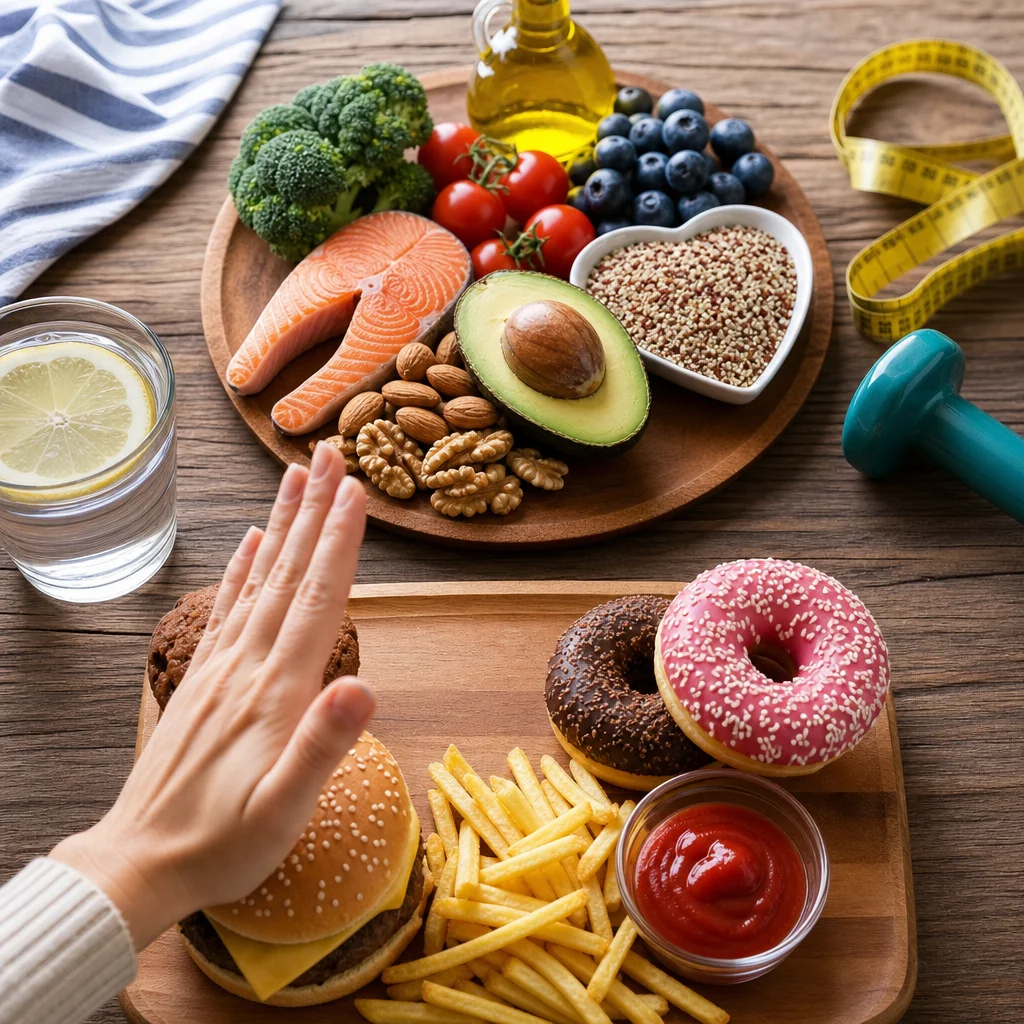
- Olive or avocado oil instead of butter
- Nuts or seeds instead of chips
- Ground chicken or turkey instead of ground beef
- Salmon, beans, or lentils instead of bacon or sausage
- Oats, barley, and beans instead of white bread and pastries
Move Your Body
The CDC recommends 150 to 300 minutes of moderate physical activity each week. That’s about 30 minutes on most days. Brisk walking, dancing, or cycling all count. Think of movement as medicine for your heart.
For more small wins, see our guide to evening cholesterol habits.
Eat More Fiber
Soluble fiber — the kind in oatmeal, beans, barley, and apples — helps your body clear LDL. The CDC suggests building meals around fiber-rich foods like oatmeal and beans. Oats at breakfast, beans at lunch, fruit for snacks. Small additions add up.
Need lunch ideas? Try our cholesterol-lowering lunch recipes.
Get Tested and Track Your Progress
High cholesterol has no symptoms. You can’t feel it. So testing is the only way to know where you stand. The CDC advises testing at least every five years. If high cholesterol or early heart disease runs in your family, you may need tests sooner. Ask your doctor.
When Medication Is the Right Call
Some people fear statins more than they fear heart disease. Let’s be honest: that fear is often based on myths.
Mayo Clinic physicians note that muscle symptoms happen in about 2 to 10 percent of people taking statins. Of those, 90 percent can tolerate a different statin. That changes the story. Side effects are real, but they are not the norm.
If you get muscle aches, tell your doctor. Do not just stop the pill. Your doctor can lower the dose or switch medications. Statins have decades of evidence behind them. For many people, they are the difference between a heart attack and a healthy future.
Medication options keep evolving — here’s what to know about the newly approved cholesterol pill.
Questions to Ask at Your Next Visit
A basic cholesterol test gives four numbers: total cholesterol, LDL, HDL, and triglycerides. Mayo Clinic lists general targets of total under 200, LDL under 100, HDL at 60 or higher, and triglycerides under 150. Your personal targets may differ, so use these as conversation starters.
Bring These Questions With You
- What does my cholesterol panel actually tell you about my risk?
- Should we try lifestyle changes first, or do I need medication now?
- What are my personal targets for LDL and HDL?
- Does my family history mean I should ask about extra tests, like Lp(a), an inherited risk factor?
- If I have side effects from a statin, what are my options?
Frequently Asked Questions
Is a low-fat diet the best way to lower cholesterol?
No. The type of fat matters more than the amount. Swap butter for olive oil, chips for nuts, and processed meats for fish or beans.
Will fish oil lower my cholesterol?
Not in a way that prevents heart attacks. If your triglycerides are high, your doctor may suggest a specific omega-3 product. That’s a medical decision, not a supplement gamble.
Can high cholesterol be genetic?
Yes. Conditions like familial hypercholesterolemia cause very high LDL from a young age. If close family members have high cholesterol or early heart disease, ask your doctor about earlier or more frequent testing.
Do I need to give up eggs?
There are plenty of cholesterol misconceptions about eggs. For most people, the answer is no. What matters more is what you eat with them — skip the bacon and butter, and add vegetables or whole grains instead.
The Bottom Line
Let the old cholesterol misconceptions go. Keep the numbers from your blood test instead. Make one swap this week. Take a walk today. Book that checkup. And if your doctor recommends medication, see it for what it is: smart prevention, not failure.
Fat is not the enemy. And neither are you.