

Avocado and Mango: Heart-Healthy, Blood-Sugar-Friendly Pair
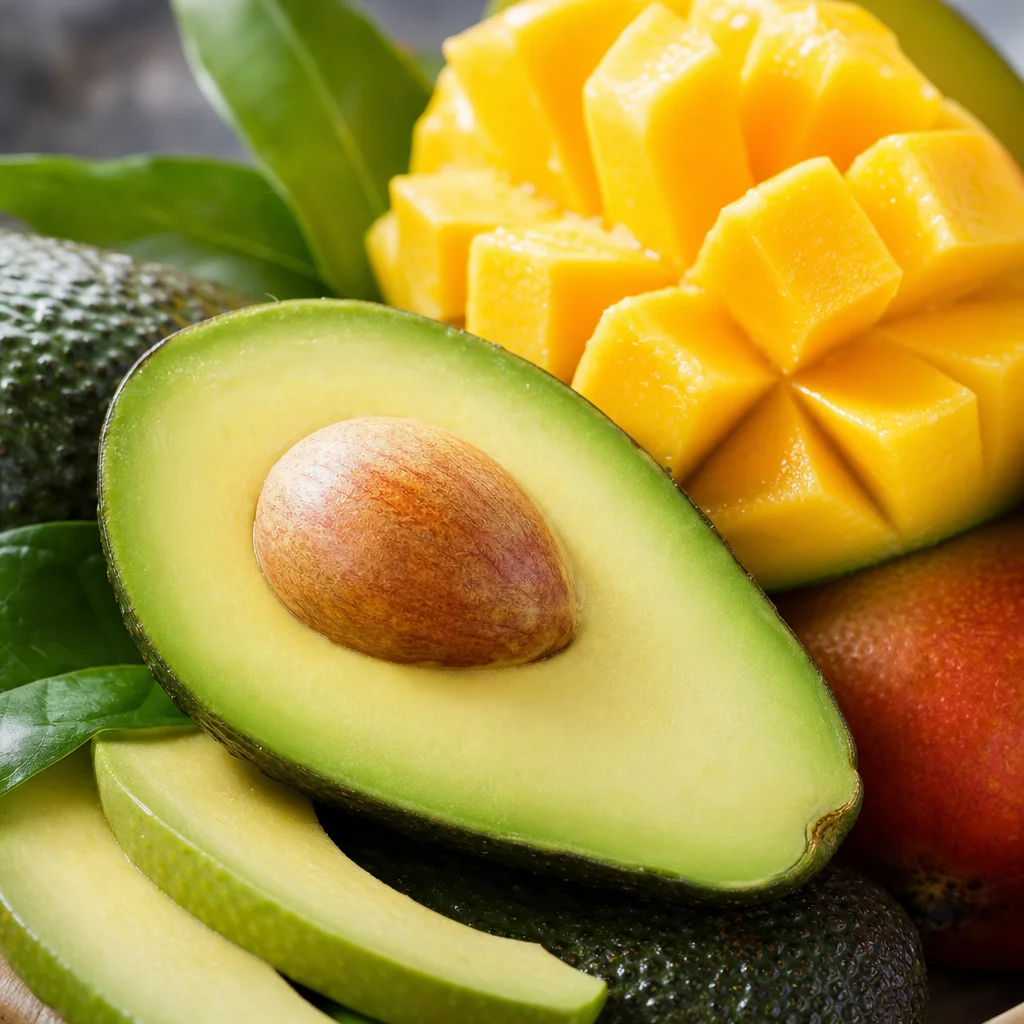
Key Takeaways
Here’s what you need to know about avocado and mango for heart health: the pairing may support blood vessels, and it can fit into a blood-sugar-friendly day.
- The study: adults with prediabetes who ate one avocado and one cup of mango daily for 8 weeks improved blood vessel function compared with a control group.
- Blood sugar stayed steady: whole mango paired with avocado did not raise fasting blood sugar or insulin in the trial.
- Why it likely works: avocado’s fat and fiber slow how quickly mango’s sugars enter the bloodstream.
- Try this: start with 1/3 to 1/2 an avocado and 1/2 to 1 cup of mango, used as a swap for a less nutrient-dense snack.
If you’ve been skipping mango because it’s “too sweet,” this may surprise you. New research on avocado and mango suggests the pair may actually support heart health — without sending blood sugar soaring. And this matters: the CDC estimates that nearly 1 in 3 U.S. adults has prediabetes, and most people don’t know it.
Quick Answer: Can You Eat Mango if You Watch Your Blood Sugar?
Yes — in whole-fruit form, in a sensible portion. Pair it with avocado or another source of fat and fiber, and the sugars are absorbed more slowly. Skip the juice and fruit drinks; that’s where blood-sugar trouble usually starts.
What the Avocado and Mango Study Found
Let’s start with the research making headlines. The findings come from an 8-week randomized trial published in the Journal of the American Heart Association. Researchers split adults with prediabetes into two groups: one ate one Hass avocado plus one cup of fresh mango daily, while the other ate calorie-matched, low-fiber carbohydrate foods instead.
The Main Result
The main measure was flow-mediated dilation (FMD) — a test that shows how flexibly blood vessels open when blood flows through them. The avocado and mango group improved to 6.7%. The control group dropped to 4.6%. The difference was statistically significant (P=0.008), meaning it’s unlikely to be due to chance.
The Blood Pressure Story
Blood pressure readings were more nuanced. Diastolic blood pressure — the bottom number — stayed steady in the avocado and mango group while rising in the control group. The effect was driven mainly by men. Systolic blood pressure did not change, and women did not see the same shift. See our guide to hydration and blood pressure.
What Didn’t Change
Here’s an important detail. Fasting blood sugar, insulin, triglycerides, and inflammatory markers did not change. So the combo didn’t lower blood sugar in this trial. It also didn’t make it worse.
During the 8 weeks, fruit intake jumped from under one cup to about three cups a day. Fiber and vitamin C roughly doubled, and potassium climbed. Weight stayed neutral. An accompanying editorial in the Journal of the American Heart Association called the result a credible vascular signal and connected it to “food is medicine” efforts.
One more piece of context: the study received funding from the National Mango Board and the Hass Avocado Board. The funders did not design the study or interpret the results, but it’s still worth knowing. Independent evidence supports the broader pattern.
Why the Fat + Fiber Pairing Helps Blood Sugar
Here’s the mechanism most headlines skip. Mango is a sweet fruit, and its sugars enter the bloodstream fairly quickly on their own. Add fat and fiber, and the story changes: avocado’s monounsaturated fat slows stomach emptying, while fiber in both fruits slows sugar absorption. The result is a gentler blood-sugar curve.
This exact combo wasn’t tested for post-meal spikes in this study, so let’s be honest about that. The physiology is still well grounded. A 2025 clinical trial on mango and insulin sensitivity found that daily mango improved insulin sensitivity — how well your cells respond to insulin — in adults with overweight and low-grade inflammation. Another 24-week randomized trial on daily mango intake found mango improved fasting glucose and kept HbA1c — a longer-term blood-sugar marker — stable in people with prediabetes.
Avocado brings its own evidence. An umbrella review of avocado and lipid research found avocado lowered LDL cholesterol in people with elevated cholesterol. A 2024 meta-analysis of avocado and cardiometabolic health found similar results, and noted avocado did not cause weight gain.
Think of it this way: fruit and fat are a team. The creamy avocado helps your body handle the sweet mango. And yes — you get to eat both.
Does Mango Raise Blood Sugar? The Evidence Says Not So Fast
If you’ve been told to avoid mango, you’re not alone. Many people hear “sweet” and assume “sugar spike.” But whole fruit is not the same as added sugar. Mango has fiber, water, and a natural structure that changes how your body processes it.
That’s why the American Heart Association recommends eating whole fruit, not avoiding it. The American Heart Association’s fruit and vegetable recommendations call for about two cups of fruit a day. They also advise limiting 100% juice to about half a cup and skipping fruit drinks entirely. See our guide to coffee and heart health.
Whole Mango vs. Mango Juice vs. Fruit Drink
Whole mango: keeps its fiber and water, so natural sugars are released more slowly. 100% juice: loses fiber and packs more sugar per cup; keep portions small. Fruit drink or cocktail: often has added sugar — this is the one to skip.
The takeaway: if you have prediabetes or simply watch your blood sugar, mango is not the villain. Portion and form matter more than the fruit itself.
How to Make Avocado and Mango a Realistic Daily Habit
The study used one whole avocado plus one cup of mango a day. That’s roughly 350 calories — a generous snack, not a side dish. Participants swapped these foods in for less nutrient-dense calories. They didn’t stack them on top of an already full diet.
For everyday life, you don’t need the exact study dose. Start with one-third to one-half of an avocado and half to one cup of mango, a few times a week. Use the pairing as a swap.
Simple Ways to Eat the Pair
Need ideas? Avocado and mango are more flexible than they look:
- Avocado-mango salsa. Dice both, add red onion, jalapeño, cilantro, and lime. Serve over fish, chicken, or beans.
- Tropical smoothie. Blend frozen mango, half an avocado, spinach, and unsweetened milk. Add protein powder for staying power.
- Toast with a twist. Mash avocado on whole-grain toast, top with mango slices and a pinch of chili flakes.
- Grain bowl. Brown rice, black beans, shredded chicken, and the salsa above makes a quick lunch.
Frozen mango works well in smoothies and is often more affordable than fresh. That means the habit can be budget-friendly and low-effort.
Who Should Be Careful With This Fruit Pairing
Avocado and mango are whole foods, but a few people should check in with a clinician first.
Kidney issues. Both fruits provide potassium. If you have chronic kidney disease or follow a potassium-restricted diet, talk to your healthcare team about portions.
Allergies. Mango and avocado allergies are uncommon but real. If you notice tingling, itching, or swelling after eating either one, stop and talk with your doctor.
Diabetes medication. If you take insulin or other glucose-lowering medication, adding more fruit can change your blood-sugar patterns. Check your levels and consult your diabetes care team.
This isn’t a reason to avoid the pairing. It’s a reason to make it part of a thoughtful, personalized eating pattern.
The Bottom Line: Add, Don’t Subtract
Here’s what I want you to remember. The avocado and mango research is not a green light to eat unlimited fruit. It’s a reminder that small, delicious additions can matter. The study was short, industry-funded, and measured a surrogate marker — a stand-in for real-world heart events — but that doesn’t erase the finding.
What’s the practical move? Make mango a regular whole-fruit choice again. Pair it with a fat source like avocado, nuts, or seeds. Swap it for a processed snack.
Watch portions and skip juice. Now, you might be thinking, “Is it really that simple?” Sometimes healthy eating is. The fruit you cut out may be the one that helps your heart, and you can start small at your next meal.