

How to Make Fermented Carrots: 5-Ingredient Beginner Guide
Key Takeaways
- Fermented carrots need just five ingredients — and no special equipment.
- Most store-bought “pickles” are vinegar-brined, not fermented. They have no live cultures.
- A 2 percent salt ratio by weight is the safety sweet spot for a crisp, tangy batch.
- Cloudy brine and bubbles mean the good bacteria are working. Fuzzy mold means toss the jar.
- Research suggests fermented foods may support gut diversity and lower inflammation — but they’re a food, not a medicine.
Picture this: You’re craving something crunchy and tangy. You open the fridge and reach for a jar of pickles — then pause. Are these actually fermented? For most store-bought pickles, the answer is no. That’s where fermented carrots come in. They give you that same salty crunch, but with live lactic acid bacteria that vinegar-brined pickles simply don’t have.
In this guide, we’ll cover why fermented carrots make the perfect first fermentation project. You’ll get the exact salt ratio that keeps a batch safe. There’s also a simple five-ingredient recipe and a clear guide to what’s normal versus spoiled. Plus, we’ll look at what the research actually says.
Quick Answer: Are Fermented Carrots Good for You?
Yes — as a food, not a medicine. Fermented carrots keep the fiber and vitamin A of fresh carrots, add live lactic acid bacteria, and research links fermented foods with better gut diversity and lower inflammation. They are salty, though, so keep portions sensible.
Why Fermented Carrots Are the Perfect First Ferment
Let’s be honest: fermentation can feel intimidating. Jars, weights, airlock lids, and scary mold stories make a simple process seem complicated. Here’s the thing — fermented carrots are one of the most forgiving foods to ferment. They’re naturally sweet, they stay crisp, and they skip the bold cabbage funk that turns some people away from sauerkraut.
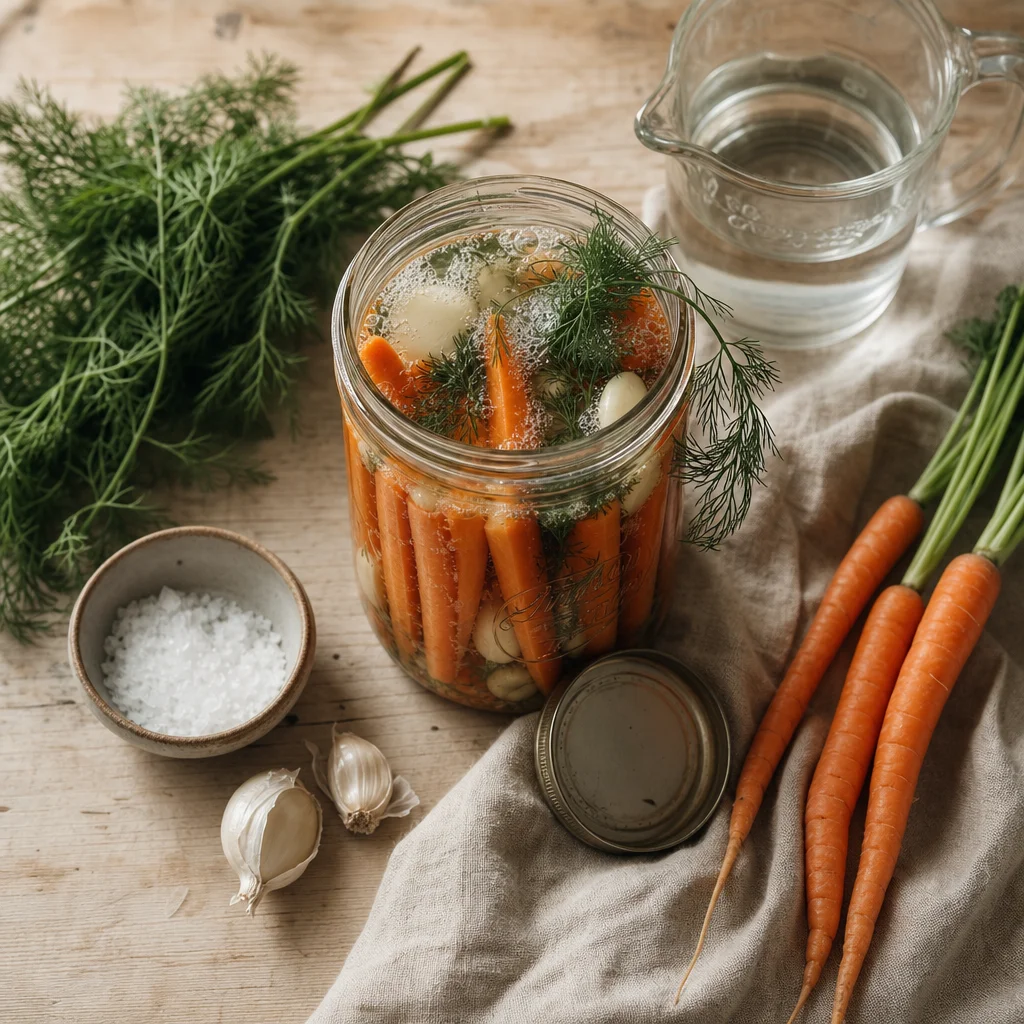
You only need five ingredients: carrots, water, salt, garlic, and dill. Most are probably in your kitchen right now. The cost is hard to beat, too. A pound of carrots and a spoonful of salt cost about two dollars. Compare that to a bottle of probiotic supplements.
One note before we start: the “lacto” in lacto-fermentation refers to lactic acid, not lactose. No dairy or whey needed. The friendly bacteria doing all the work are already living on the carrots themselves.
Fermented Carrots vs. Pickles: The Store-Bought Myth
Here’s a misconception that surprises most people: the pickles in your grocery store are probably not fermented. They’re made with vinegar and heat-processed so they can sit on shelves for months. That processing kills any live bacteria. You get tang, but zero live cultures.
Real fermented carrots follow a different path. Submerged in saltwater, the lactic acid bacteria already on the vegetables multiply. They turn the carrots’ natural sugars into lactic acid, which creates the tang and preserves the batch. The international consensus definition of fermented foods describes them as foods “made through desired microbial growth and enzymatic conversions of food components.”
Why does the difference matter? Because the live bacteria and the compounds they create are the parts linked to gut health. Vinegar pickles taste similar but miss those extras. When you shop for fermented vegetables, look for “raw,” “unpasteurized,” or “naturally fermented” on the label. Check that the jar sits in the refrigerated section. Shelf-stable jars are almost always pasteurized.
The Salt Ratio That Keeps Your Batch Safe
Salt does more than add flavor. In fermented vegetables, it’s a safety ingredient. It creates an environment where beneficial bacteria thrive and unwanted organisms struggle. That’s why USDA’s National Center for Home Food Preservation warns against cutting back on the salt a recipe requires.
For fermented carrots, the sweet spot is 2 to 2.5 percent salt by weight. That means the combined weight of the vegetables and the water. Here’s the easy version: a quart jar takes about 18 grams of salt, or roughly one tablespoon of fine sea salt. A pound of carrots plus two cups of water weighs about 900 grams, so that lands right at 2 percent.
Do you need fancy salt? No. Plain sea salt, kosher salt, or pickling salt all work. And let’s clear up a myth: iodized table salt will not kill your ferment. The iodine level is far too low to matter. Still, plain salt gives the cleanest flavor and clearest brine, so it’s the better everyday choice.
Water matters, too. Chlorine can slow the good bacteria, so use filtered or spring water. No filter? Boil tap water, let it cool, and you’re set.
How to Make Your First Batch at Home
Ready to try it? This recipe fills one quart jar. Prep takes 20 minutes. The waiting takes a few days.
The 5-Ingredient Base
- 1 pound (about 450g) fresh carrots
- 1 tablespoon (about 18g) fine sea salt
- 3 garlic cloves, smashed
- 2 to 3 fresh dill sprigs, or 1/2 teaspoon dried dill
- 2 cups filtered or spring water
- 1 clean quart-size glass jar with a lid
The 20-Minute Method
- Wash and trim the carrots. Peel them only if the skin is thick or bitter.
- Cut the carrots into sticks that fit the jar with about an inch of headroom.
- Stir the salt into the water until it dissolves. That’s your brine.
- Drop the garlic and dill into the jar. Pack the carrot sticks in tightly, standing them on end.
- Pour the brine over the carrots until they’re fully submerged. If any float, weigh them down with a small clean glass object.
- Screw the lid on loosely — the ferment needs to release gas. Set the jar on a small plate to catch overflow.
- Keep it at room temperature, out of direct sunlight. Check daily and press floaters down.
- Start tasting on day 3 with a clean fork. When the tang hits your sweet spot — usually day 4 to 7 — tighten the lid and refrigerate.
How long it takes depends on your kitchen. Warm rooms speed things up; cool rooms slow them down. Carrots are denser than cabbage, so they ferment a little slower and stay crunchier. Taste, don’t clock-watch.
Normal or Spoiled? How to Tell
When your jar starts working, you may wonder if something went wrong. Most of the time, it hasn’t. Here’s the quick guide.
Normal — the good stuff
- Cloudy brine
- Tiny bubbles, plus a little fizz when you open the lid
- A thin white film on top (kahm yeast — harmless)
- A pleasantly sour, pickle-like aroma
- Carrots that stay crunchy
Spoiled — toss the batch
- Fuzzy mold in any color: green, blue, black, or pink
- A putrid, rotten, or “off” smell
- Slimy brine or mushy, slippery carrots
- When in doubt, throw it out. A fresh batch costs a dollar or two.
Mushy carrots are the most common letdown. They usually mean the jar sat somewhere too warm, fermented too long, or the salt ratio fell short. Stick to the 2 percent rule and taste often.
What the Science Actually Says
Let’s talk evidence, because fermented foods come with plenty of hype. Here’s the honest picture.
So what does the science say about fermented carrots specifically? The strongest study so far is a 17-week randomized trial from Stanford, published in Cell in 2021. Researchers found that a diet rich in fermented foods increased gut microbiome diversity and lowered markers of inflammation in healthy adults. Fermented vegetables were part of that diet.
A newer 2025 trial of fermented pickles in women tested daily servings of about 50 grams in 230 participants. The results were encouraging but specific. Carrot pickles lowered some inflammation-linked blood markers. Other vegetable pickles boosted gut diversity more. The lesson? Not all ferments work the same way, so variety beats relying on one jar.
To stay honest: a 2019 review of fermented foods and digestive health found limited clinical evidence for most individual ferments. But that review came out before the newer trials, and the field is moving fast. A 2024 review of fermented fruit and vegetable benefits found these foods are rich in phenolics, vitamins, and organic acids. Those compounds carry real antioxidant and anti-inflammatory potential.
One language note: these carrots contain live lactic acid bacteria, but experts stop short of calling them “probiotics.” That term means specific, measured strains like a supplement. Think of them as a gut-supporting food, not a dose of anything.
How to Start Eating Fermented Vegetables (Without the Bloat)
First, portion size. Stanford Medicine’s science-based guide to fermented foods notes there’s no official serving size yet. A sensible start is a small handful, about two to four carrot sticks, once a day.
Second, expect some bloating at first. It’s the most common side effect when people add ferments to their diet. In the 2025 pickle trial, about 15 percent of the carrot group reported it. Start small, increase slowly, and let your gut adjust. For many people, it settles down as their gut adapts.
Third, rotate your ferments. Research linking a variety of fermented foods with better cardiometabolic markers suggests that diversity — not any single jar — is what the science rewards. Keep a jar of fermented carrots going alongside sauerkraut or kimchi, and your gut gets a wider range of microbes.
The easiest way to eat them? Straight from the jar. Beyond that, chop them into salads and grain bowls. Stack them on sandwiches and wraps in place of pickles. Or arrange them on a snack board with hummus, cheese, and olives. They also make a bright, tangy side for eggs or roasted chicken.
Who Should Be Cautious
Homemade fermented vegetables aren’t right for everyone. Public health guidance advises that people who are pregnant or have weakened immune systems should avoid homemade ferments. That includes anyone on chemotherapy, immunosuppressant drugs, or living with chronic illness. If that’s you, choose reputable, regulated commercial products instead. Fermented vegetables are also high in sodium. If you have high blood pressure or follow a sodium-restricted diet, count those sticks like you would pickles. And if fermented foods consistently trigger headaches, flushing, or stomach upset, you may be sensitive to histamines. Listen to your body and skip them.
Frequently Asked Questions
How long do fermented carrots last?
Several months in the fridge — most guides say up to six. The tang deepens and the texture softens slowly. As long as they stay submerged and smell fresh, they’re good to eat.
How many fermented carrots should I eat per day?
Start with two to four sticks once a day. Increase gradually as your digestion adjusts. There’s no official serving size yet, and more isn’t better — these are salty foods.
Do I need special equipment?
No. A glass jar with a loose lid is enough. Weights and airlock lids are nice extras, not requirements.
Can I use baby carrots or different spices?
Baby carrots are pre-cut and often treated, so they tend to turn out soft. Regular carrots are the safer bet. Spice swaps are wide open: try thyme, rosemary, peppercorns, chili flakes, or ginger.
Will they taste like dill pickles?
Similar vibe, different personality. Fermented carrots are tangy, garlicky, and naturally sweet — but they skip the sharp vinegar bite of regular pickles.
The Bottom Line
Fermented carrots are the rare health habit that’s cheap, simple, and genuinely delicious. Five ingredients, zero special equipment, and a few days of patience deliver a crunchy snack with live bacteria and fermentation-made nutrients. The science is young but promising — and the cost of finding out is about two dollars and one clean jar.
Here’s your first step: buy a pound of carrots, some sea salt, and fresh dill this week. Make one jar. Taste it on day four. Your future self — and your gut — will thank you.