

High-Protein Vegetarian Lunch Bowls: The 5-Part Formula
Key Takeaways
- You can hit 25 to 30 grams of protein at lunch with a vegetarian bowl — no meat required.
- The reusable formula: protein base + whole grain + vegetables + healthy fat + flavor boost.
- Beans, lentils, and chickpeas are proven to steady blood sugar and keep you full.
- Pair plant iron with vitamin C — think lemon, peppers, and tomatoes.
- Prep components ahead. Stored right, bowls stay fresh for 3 to 4 days.
Picture this: it’s noon, you’re hungry, and you want a lunch that’s healthy, fast, and actually filling. You’re also eating less meat — but will a vegetarian meal really hold you until dinner? Here’s the thing. The right vegetarian lunch bowls can match any chicken salad for protein and satisfaction. The secret isn’t one magical recipe. It’s a simple five-part formula you can use all week.
In this guide, we’ll cover how much protein you need at lunch and share a simple formula for building a satisfying bowl. We’ll also walk through the science of why beans and grains keep you full. Plus, we’ll cover the women’s health details most articles skip — like iron. You’ll leave with confidence and a plan for the week.
Quick Answer: Can Vegetarian Lunch Bowls Keep You Full?
Yes — when you build them with intention. A bowl with beans or lentils, a whole grain, and a protein-rich topping easily reaches 25 to 30 grams of protein. Recent studies show plant protein is just as filling as animal protein when the amounts match.
How Much Protein Do Vegetarian Lunch Bowls Really Need?
Let’s start with the number that matters most. The RDA for adult women is about 46 grams of protein per day. That’s the baseline for preventing deficiency. However, many experts suggest aiming higher and spreading protein across your meals.
Here’s how to find your own lunch target: multiply your weight in pounds by 0.18. For a 150-pound woman, that’s about 27 grams. This aligns with research on how much protein your body can use in one meal. That research suggests about 0.4 grams per kilogram of body weight per meal.
Now, a quick reality check. Some recipe sites label a lunch “high protein” at just 15 grams. That’s a floor, not a target. Honestly, most recipe roundups sell vegetarian lunch bowls short with that number. Most women feel better with 20 to 30 grams at lunch. You’re not alone if you’ve wondered whether a meatless lunch is enough.
Your Quick Protein Target
Your weight in pounds × 0.18 = a helpful per-meal protein target. For most women, that lands between 20 and 30 grams. Remember: this is a practical guide, not a strict rule. Your needs shift with activity, age, and health goals.
The 5-Part Formula for Vegetarian Lunch Bowls That Keep You Full
Now for the fun part. Here’s the formula that makes vegetarian lunch bowls easy, delicious, and reliably filling. It has five parts. Once you learn it, you won’t need another recipe list. Let’s build one.
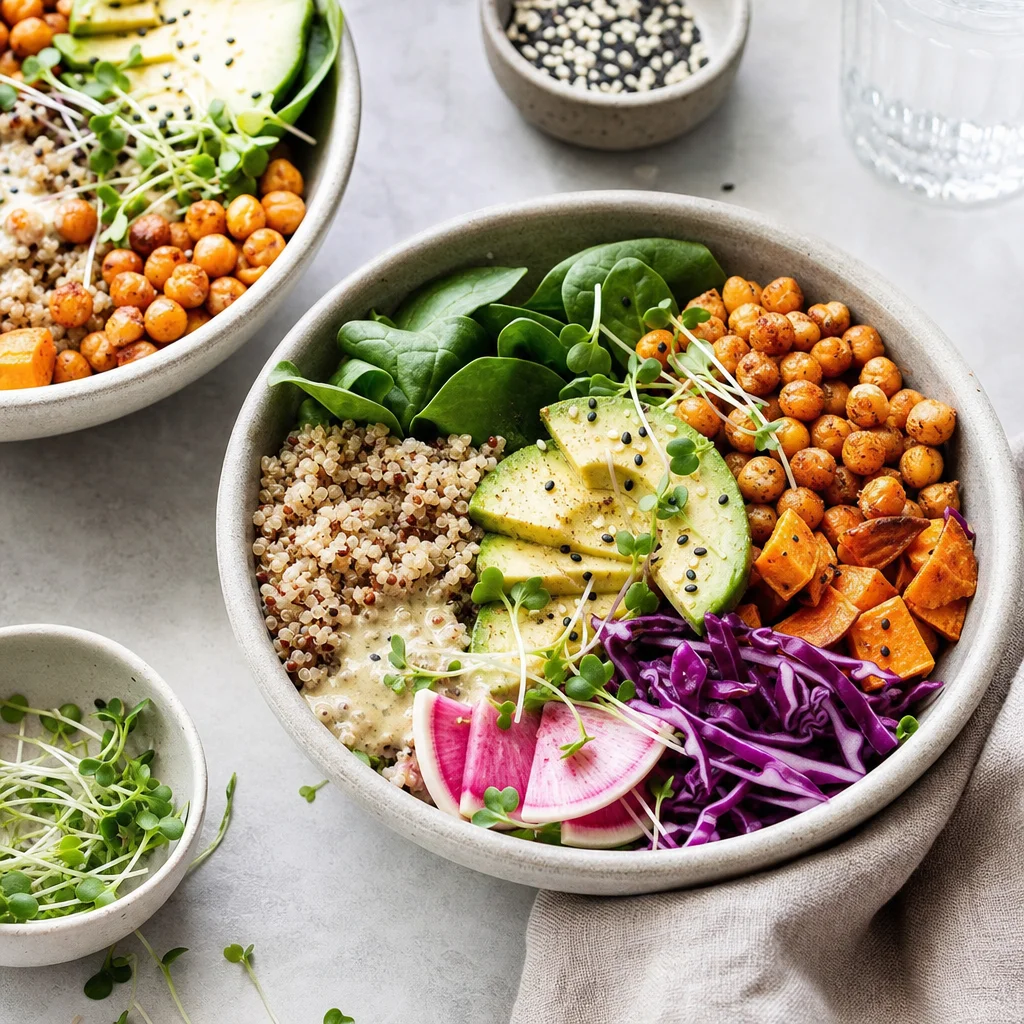
- Protein base (1/2 to 1 cup): beans, lentils, chickpeas, tofu, tempeh, edamame, or 2 eggs.
- Whole grain (1/2 to 3/4 cup cooked): quinoa, farro, brown rice, bulgur, barley, or sorghum.
- Vegetables (1 to 2 cups): raw, roasted, or pickled. Use what’s in season.
- Healthy fat (about 1/4 avocado or 1 to 2 tablespoons of seeds, nuts, or olive oil).
- Flavor boost: a sauce, herbs, citrus, or pickled onions. This is what makes you want the bowl again.
Keep the formula in your back pocket. Then let the grocery store guide you. Canned beans and frozen vegetables are budget-friendly shortcuts. Whatever grain looks good, whatever vegetable is on sale — that’s your bowl.
Protein Power Players
Not sure which protein to choose? Here are common bowl ingredients and their approximate protein grams.
- 1 cup cooked lentils: about 18 g
- 1 cup cooked chickpeas: about 14 g
- 1/2 cup tempeh: about 15 g
- 1/2 cup firm tofu: about 10 g
- 1 large egg: 6 g
- 1/2 cup Greek yogurt: about 11 g
- 1 cup cooked quinoa: about 8 g
- 3 tablespoons hemp seeds: about 9 g
Notice the pattern: beans, grains, seeds, and soy add up fast. For example, a bowl with 1 cup of chickpeas and 1 cup of quinoa gives you about 22 grams. Add 3 tablespoons of hemp seeds, and you’re at roughly 31 grams. That’s before you add a single vegetable.
Why a Bean-and-Grain Bowl Beats the 3 P.M. Slump
Here’s the biggest myth about plant-based lunches: they leave you hungry an hour later. The evidence says otherwise — when you build the bowl right, as our high-fiber lunch ideas show.
A 2025 systematic review of pulses, blood sugar and satiety in Nutrition Reviews analyzed 40 human studies. It focused on beans, lentils, and chickpeas. In most of those studies (28 of 40), pulse-based meals led to smaller blood-sugar rises than refined starches. Also, in three of five studies that measured hunger, people felt less hungry after eating them.
Another trial gave people either a 30-gram plant-based protein drink or a 30-gram animal-based breakfast. The study comparing plant and animal protein satiety measured fullness hormones. Both produced a significantly greater fullness-hormone response than a low-protein, high-carb option. In fact, plant protein suppressed appetite even more than the high-carb meal.
So where did the myth come from? It usually comes from an unfair comparison. Think of a sad side salad versus a hearty chicken bowl. When protein grams match, plant and animal protein are equally filling. The myth that vegetarian lunch bowls leave you hungry just doesn’t hold up.
Protein Quality: Do You Need to Combine Foods at Every Meal?
You may have heard that you must eat beans and rice together to form a “complete” protein. That advice is outdated. A complete protein simply has all the building blocks your body needs.
The Academy of Nutrition and Dietetics’ position on vegetarian diets confirms something important. Eating a variety of plant foods across the day provides all the protein you need. Mayo Clinic agrees. Same-meal combining is a bonus, not a requirement.
Still, one amino acid deserves attention: leucine. It’s the key that helps your body build muscle. A 2024 randomized crossover study on plant protein quality and muscle synthesis found something useful. Plant blends with enough leucine supported muscle building about as well as whey. Soy is naturally complete. Eggs and dairy make quality easy if you eat them.
Practical takeaway: vary your proteins. Include soy, eggs, or Greek yogurt in a few bowls each week. The bowl formula already does the heavy lifting. You just show up and eat.
3 Bowl Builds to Try This Week
Ready to put the formula to work? Here are three original combinations to get you started. Each one lands in the 25 to 30 gram protein range. You’ll find vegan swaps below.
Mediterranean White Bean Bowl — about 28 g protein
1 cup cooked white beans, 1 cup cooked farro or bulgur, chopped cucumber and tomatoes, olives, and a lemon-tahini yogurt drizzle. Vegan swap: use a dairy-free lemon-tahini dressing, and add 2 tablespoons of hemp seeds.
Southwestern Black Bean-Quinoa Bowl — about 25 g protein
1 cup black beans, 1 cup quinoa, corn, bell peppers, shredded cabbage, and avocado with a lime crema. Vegan swap: replace the crema with hummus thinned with lime juice. Add pumpkin seeds for extra crunch.
Thai Peanut Tofu Bowl — about 30 g protein
1/2 cup pan-seared tofu, 1 cup brown rice, 1/2 cup edamame, shredded carrots and cabbage, and a peanut-lime sauce. Vegan swap: use tempeh instead of tofu, or add a soft-boiled egg.
Flavor inspiration: borrow ideas from bowls you love. Try a green goddess dressing over chickpeas. Add pickled onions to a taco-style bowl. Or top any bowl with a soft fried egg. These little touches keep the rotation exciting. You’ll find even more inspiration in our Mediterranean lunch recipes.
The Iron Note Every Woman Should Know
Now for the women’s health detail that most bowl guides miss: iron. Your body doesn’t absorb iron from plants as easily as from meat. In fact, Mayo Clinic’s vegetarian nutrition guide notes that vegetarians’ iron needs are nearly double those of non-vegetarians.
The fix is simple. Pair iron-rich foods with vitamin C at the same meal. Think chickpeas with lemon juice. Black beans with tomatoes and peppers. Kale with a citrus dressing. Vitamin C helps your body grab more iron.
On the flip side, tea and coffee can block iron absorption. Consider enjoying them an hour away from your meal. This matters most if you’re eating vegetarian lunch bowls several days a week. These are easy habits, not a reason to worry.
Nutrients to Watch on a Plant-Forward Plate
MedlinePlus lists protein, iron, calcium, zinc, and vitamin B12 as the nutrients vegetarians should keep in mind. Eggs and dairy cover most of these if you eat them. For vegan meals, choose fortified plant milks and nutritional yeast. And if you’re unsure about supplements, talk with your clinician.
Here’s a bonus from the research. A 2026 study on plant-based meals, appetite and iron in women enrolled women of reproductive age with low iron stores. Participants ate plant-based and animal-based meals. Fullness was similar between the two. The researchers found that improving iron status — not the protein source — was related to appetite and satiety. Another reason to build iron-smart bowls.
Make-Ahead Bowls: Safe Storage and Smart Prep
Cook once, eat for days. That’s the real magic of bowls. On Sunday, cook a big batch of grain and a batch of beans or lentils. Roast some vegetables and whip up one sauce. Then assemble your vegetarian lunch bowls in about five minutes each morning.
Here’s what you need to know about keeping those bowls safe and fresh. Cooked grains, beans, and roasted vegetables keep for 3 to 4 days in airtight containers. Store dressing separately, and add it right before eating. That keeps greens crisp. Add avocado fresh each morning. A squeeze of lime helps it last.
Smart layering prevents sogginess. Put grain at the bottom. Add protein, then sturdy vegetables, with greens on top. Freeze extra grains and beans for up to three months. Thaw them in the fridge overnight. Reheat beans with a splash of broth to keep them creamy.
Need a truly no-cook option? Use canned beans, pre-washed greens, and pre-cooked grains from the store. Assemble and go — lunch takes five minutes, tops.
Frequently Asked Questions
Are vegetarian lunch bowls actually high in protein?
Yes. A bowl with 1 cup of beans, 1 cup of quinoa, and 3 tablespoons of hemp seeds adds up to about 30 grams. The Academy of Nutrition and Dietetics confirms that well-planned vegetarian eating is nutritionally adequate for adults.
How much protein do I need at lunch?
A practical target is about 0.4 grams per kilogram of body weight. For most women, that’s 20 to 30 grams. Multiply your weight in pounds by 0.18 for a personal estimate.
Do I need to combine grains and beans at every meal?
No. Current guidance says variety across the day is enough. The bowl makes combining automatic anyway — a nice bonus.
Can I make bowls ahead for the whole week?
Cooked components last 3 to 4 days in the fridge. Keep dressing and avocado separate. Freeze extra grains and beans for later weeks.
What if I’m vegan?
Swap in tofu, tempeh, or seitan for eggs and dairy. Add hemp seeds for extra protein and fortified nutritional yeast for both protein and vitamin B12. If you’re unsure about supplements, talk with your clinician.
The Bottom Line
So here’s what I want you to remember. You don’t need a new recipe every week. You need one formula and a few ingredients you love. Start with one bowl — maybe the black bean-quinoa one. Notice how you feel at 4 p.m. That’s the real test.
Once you learn the formula, vegetarian lunch bowls become your easiest healthy habit. They’re fast, flexible, and backed by real science. And you’ll never wonder whether they’re “enough” again. For more healthy lunch inspiration, keep exploring TEOHL. Happy building.
Sources
- Academy of Nutrition and Dietetics position paper on vegetarian diets (2025)
- Mayo Clinic: Vegetarian diet — how to get the best nutrition
- MedlinePlus: Vegetarian Diet (NIH)
- Schoenfeld & Aragon: Protein per meal for muscle building (JISSN, 2018)
- Pulses and cardiometabolic health: systematic review (Nutrition Reviews, 2025)
- Plant vs animal protein and satiety (European Journal of Nutrition, 2025)
- Plant protein quality and muscle synthesis (Current Developments in Nutrition, 2024)
- Plant-based meals, appetite, and iron in women (Journal of Nutrition, 2026)