

Why You Shouldn’t Cook with Hot Tap Water
Key Takeaways
- Hot tap water can carry more lead, metals, and microplastics than cold water from the same faucet.
- Boiling won’t remove lead that’s already in the water — and it can even concentrate it.
- The fix is free: always start with cold water, then heat it yourself.
- Flush your tap, clean your aerator, and drain your water heater once a year.
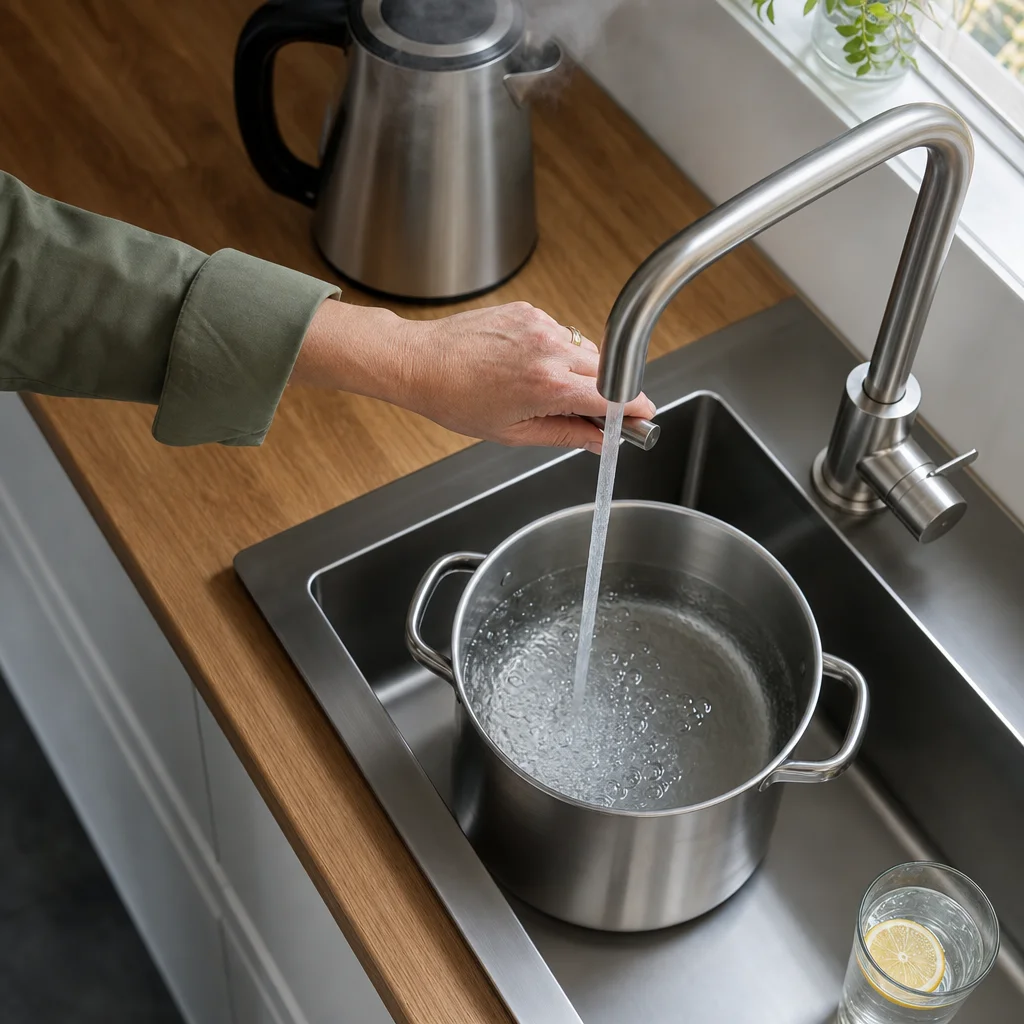
Picture this: it’s Tuesday night, and you’re filling the pot with hot tap water to speed up pasta night. It seems harmless — and who doesn’t love saving a few minutes? But here’s the thing: health experts say this shortcut can quietly add lead, metals, and even microplastics to your food. The good news? The fix costs nothing and takes about 30 seconds.
In this guide, we’ll look at what the research says about hot tap water. We’ll also cover where contaminants come from, who should be most careful, and the simple swaps that protect your family.
Quick Answer: Is Hot Tap Water Safe to Cook With?
No. Public health agencies advise never using hot tap water for drinking, cooking, or making baby formula. Hot water dissolves lead faster than cold water — so start with cold, then heat it yourself.
Why Hot Tap Water Carries More Lead and Metals
But here’s what’s actually happening. Your water leaves the treatment plant clean. The problem starts inside your home plumbing. Heat changes how much material leaches out of pipes, fittings, and fixtures. Hot water dissolves metals faster than cold water — that’s basic chemistry, not a guess.
Here’s a fact that surprises many cooks. Andrew Whelton, Ph.D., is a Purdue professor who studies plumbing safety. He explains that hot water from building plumbing isn’t tested the same way. Pipes, connectors, and water heaters are only certified for cold-water ingestion. So the water flowing from your hot tap has more chances to pick up unwanted material.
The EPA’s guidance is blunt. Never use water from the hot tap for drinking, cooking, or making baby formula. The agency explains that hot water dissolves lead more quickly than cold water. Because of this, it’s more likely to contain higher lead levels.
The CDC gives the same advice: drink and cook only with cold tap water. Water that comes out warm or hot can have higher levels of lead. And here’s the part that surprises people: boiling won’t fix it. The CDC states that boiling does not reduce the amount of lead in water.
Where the lead actually comes from
Lead usually doesn’t arrive from your utility. According to Denver Water, the risk starts inside home plumbing. The EPA and CDC note that the most common sources are lead pipes, brass faucets, and lead solder — and homes built before 1986 are most likely to have them.
Your water heater adds another layer. Over time, tanks collect sediment and metals that settle at the bottom. Chemical safety experts point to another potential source inside many tanks. It’s called a sacrificial anode, a rod designed to corrode in place of the tank. If that rod is zinc-based, it could introduce lead, since zinc is sometimes contaminated with trace lead. That said, this is expert opinion rather than a peer-reviewed field finding.
Even newer plumbing isn’t automatically risk-free. Brass and bronze fittings can contain lead. Chemical-safety expert Tom Neltner notes that limits on lead leaching from new faucets were only tightened in 2024.
The Microplastics Question: Does Heat Make It Worse?
Lead isn’t the only concern. Emerging research points to microplastics — tiny plastic particles that shed from plastic materials. However, heat appears to speed up that shedding.
A 2025 meta-analysis of studies on everyday plastic containers found that warmer water triggers more particle shedding. Polyethylene cups, for example, released roughly a third more microplastic particles when the water warmed from 41°F to 140°F. So here’s the takeaway for your kitchen. Hot water moving through aging plastic pipes may pick up more particles than cold water would.
In fact, this concern has real-world support. A study of drinking water pipes found microplastics in every tap water sample tested. Levels spiked in slow-flow and stagnant zones. That backs up a simple habit: flush your tap after water has sat overnight.
One honest caveat: no study has directly compared hot and cold tap water from the same home for microplastics. This is an emerging area of research. For now, it’s a reason to be cautious — not alarmed.
Does Boiling Fix the Problem?
Let’s be honest: this is where most advice gets oversimplified. In fact, boiling does not remove dissolved lead. Full stop. As water evaporates, lead can even become more concentrated.
But microplastics are a different story. They’re particles, not dissolved chemicals. Research on boiling tap water found it reduced microplastic levels by more than 70% — with the biggest reductions in hard water. The mechanism is limescale. When you boil hard water, that calcium buildup traps the particles and pulls them out.
Here’s the catch: the particles don’t disappear. They settle at the bottom of the pot. So if you boil water, pour gently and leave the last bit behind.
Here’s the honest bottom line. Boiling kills germs, concentrates dissolved lead, and may trap some microplastics in hard-water scale. But it never makes contaminated water clean. That’s why public health experts say: start with cold.
Who Should Be Most Careful?
Everyone gains from the cold-water habit. But some people have the most to gain. As a result, formula-fed infants sit at the top of the list. They drink a lot of water relative to their body size. The EPA’s warning about hot tap water specifically calls out baby formula.
Parents, here’s the right workflow. First, boil cold tap water. Then let it cool to room temperature. Mix the formula after it cools. Never mix formula with water straight from the hot tap. This simple sequence protects your baby from unnecessary lead exposure.
Beyond infants, pregnant women and young children are priority groups. There is no known safe level of lead in a child’s blood. The EPA notes that drinking water can make up 20% or more of a person’s total lead exposure. For formula-fed infants, that share can reach 40 to 60%.
Older homes raise the stakes too. If your house was built before 1986, lead solder or lead pipes may be part of your plumbing. Not sure? Ask your local water utility about lead service lines. Many utilities now keep public inventories. However, a simple water test can also take the guesswork out of your kitchen routine.
Simple Swaps That Protect Your Family
The best part? You don’t need filters, special equipment, or a plumber. Plus, these five habits cost nothing and take seconds. And here’s some reassurance: your municipal water is tested and treated to high standards. The goal isn’t to fear your tap — it’s to avoid what your home plumbing adds to hot water.
Start with cold water
So make this your default. Fill the pot or kettle from the cold tap, then heat it yourself. This one change avoids the water heater tank and reduces metal leaching. Plus, an electric kettle is a great speed fix — it often boils faster than the stove.
Flush the tap after water has sat
If water has been sitting in your pipes for a few hours, run the cold tap a moment. Let it flow until you can feel it get colder. This matters most first thing in the morning. Stagnant water picks up more contaminants, including lead and microplastics.
Clean your aerator
That small mesh screen at your faucet’s tip traps sediment and stray particles. Unscrew it a few times a year and give it a rinse. It’s a two-minute job that keeps your water cleaner.
Drain your water heater once a year
Draining the tank through its valve removes sediment and settled metals. Check your water heater’s manual for step-by-step instructions. This habit also helps your heater run more efficiently. So it’s a win for your water and your energy bill.
Choose your kettle wisely
So if you’re shopping for an electric kettle, pick glass or stainless steel. A 2025 study in the journal npj Emerging Contaminants found that new plastic kettles release microplastics into boiled water. Already own a plastic kettle? Don’t panic. Particle release is highest during the first few boils. It falls sharply with each one. So boil and discard the first couple of batches.
Is Hot Tap Water Safe for Bathing and Showering?
This question comes up a lot — and the answer is reassuring. Yes, bathing and showering in hot tap water is safe for adults and children. Your skin does not absorb lead from water. The risk comes from swallowing it, not touching it.
So go ahead and enjoy that hot shower. Just don’t fill your glass or pasta pot from the same tap. And yes — try to keep little ones from drinking the bathwater.
Quick Questions, Straight Answers
What if I have a tankless water heater? The warning still applies. Even without a tank, hot water dissolves metals from pipes and fixtures faster than cold water. Use cold for drinking and cooking.
Can I make tea or coffee with water from the hot tap? No — same rule, even for warm wellness drinks like cinnamon water. Instead, use cold water in your coffee maker or kettle.
Does a filter fix hot tap water? No. Filters are certified for cold water only. Instead, filter the cold line first, then heat the filtered water yourself.
The Bottom Line
So here’s your takeaway. The minutes you save with hot tap water aren’t worth what they add to your food. Start with cold. Then heat it yourself. Flush the tap when it’s been sitting. Clean your aerator. Drain your water heater yearly.
In short, these tiny habits add up to real protection — less lead, fewer metals, and fewer microplastics on your plate. Tonight’s pasta can wait an extra 60 seconds. Your health is worth it.