

Plastic Wrap Alternatives: 6 Foods to Store Differently
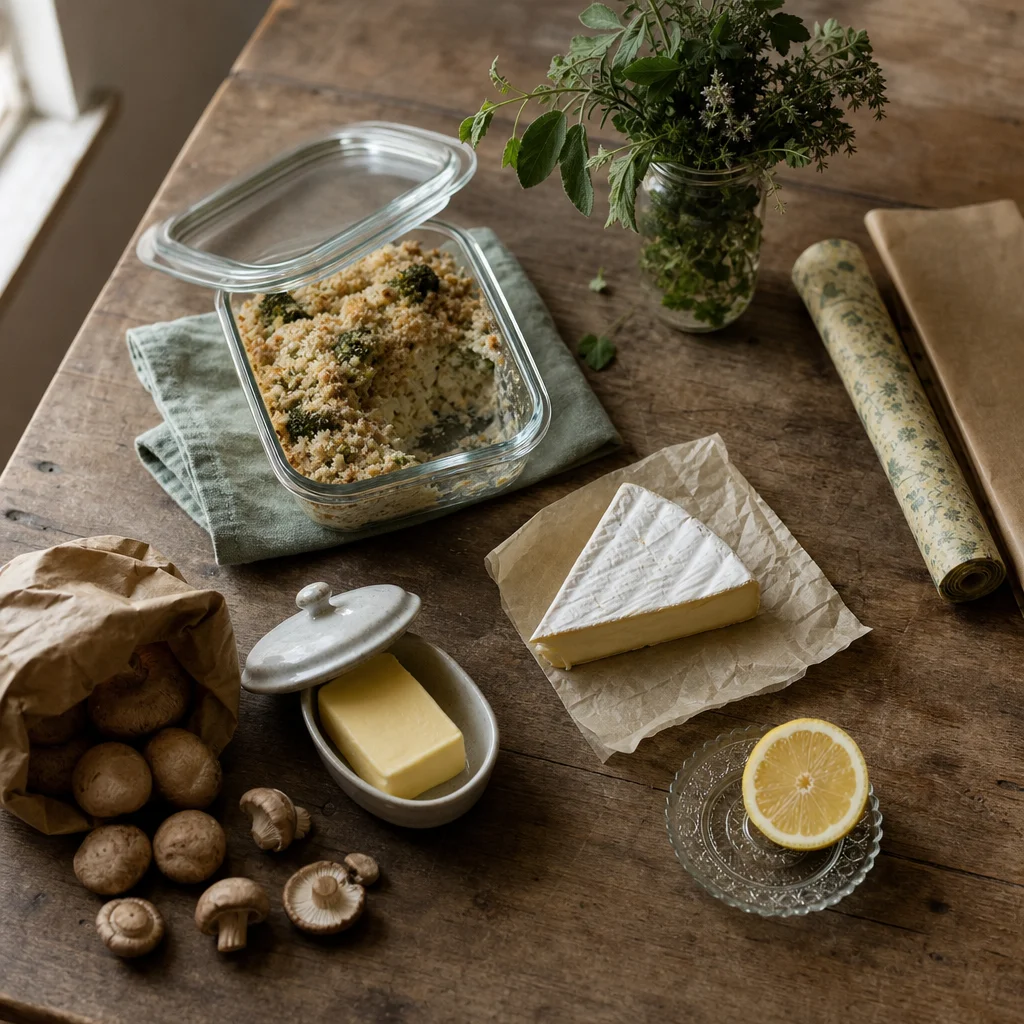
Key Takeaways
- Six foods keep better without plastic wrap: hot leftovers, soft cheeses, butter, herbs and leafy greens, mushrooms, and cut citrus.
- High-fat foods like butter may interact with plastic additives during prolonged contact, especially wraps not labeled phthalate-free.
- Wrapping hot food traps heat in the 40–140°F danger zone, where bacteria multiply quickly.
- Food-grade plastic wrap is safe when used as directed — the goal is using the right wrap for the right food.
- Simple swaps like glass, parchment, beeswax wraps, and paper bags keep food fresher and cut plastic waste.
Picture this: dinner is done, and the leftover casserole is still steaming. Your hand reaches for the plastic wrap out of habit. But here’s the thing about plastic wrap alternatives: some foods stay fresher and safer when they skip the plastic.
Let’s be clear: plastic wrap isn’t the villain. Food scientists confirm that food-grade wrap is safe when used as directed. The real message is practical — use the right wrap for the right food.
Some foods need airflow. Others react with plastic. A few simple swaps keep food fresher for longer — and trim everyday plastic exposure.
We’ll walk through the six foods that shouldn’t touch plastic wrap. You’ll learn the science behind why — and the easy swaps that work better. No scare tactics, just smarter kitchen storage.
Quick Answer: Which Swaps Work Best?
It depends on the food. Use glass for hot leftovers and cut citrus. For fatty foods like butter, reach for parchment, beeswax wraps, or glass.
For mushrooms, herbs, and leafy greens, paper bags or breathable produce bags work best. For short-term storage of cool foods, regular plastic wrap is still fine.
Plastic Wrap Alternatives: Why Some Foods Need Them
Why does hot food top the list? It comes down to food safety. The USDA identifies the danger zone between 40°F and 140°F. In that range, bacteria can multiply quickly.
Wrapping hot leftovers traps heat and moisture, which slows cooling. Because of that, food stays in the danger zone longer. That’s why plastic wrap alternatives matter: slower cooling means more time for bacteria to grow.
The fix is simple. Let food cool completely before storing it. Then use a glass container, and leave the lid off until it’s fully chilled. Your leftovers cool faster — and stay safer.
Now for the second surprise: butter. Here’s what’s actually happening. A 2023 systematic review in Comprehensive Reviews in Food Science and Food Safety found that fat content can increase migration of certain plastic additives. Fatty foods were the most critical food type for several of them.
That risk mainly comes from prolonged, direct contact with wraps that are not labeled phthalate-free. Many modern food-grade wraps are BPA-free and phthalate-free. The FDA regulates food-contact substances and considers them safe when used as directed.
Still, many food scientists prefer to avoid long-term plastic contact with very fatty foods. That’s where plastic wrap alternatives come in. Parchment paper, beeswax wraps, or a glass butter dish all work beautifully.
The 6 Foods That Call for Plastic Wrap Alternatives
Here are the six foods where plastic wrap alternatives win. Each one stores better with a simple swap.
Hot leftovers. As we covered above, this one’s worth repeating. Cool them first, then use glass. The same rule applies to any dish you just cooked.
Soft cheeses. Brie, camembert, blue cheese, and goat cheese all need airflow. Tight plastic traps excess moisture, which speeds up spoilage and dulls flavor. Wrap them loosely in parchment or cheese paper. Then tuck them into a container that lets air move.
Butter. Butter is a high-fat food, and fat can interact with plastic additives over time. A glass butter dish is the simplest fix. Or wrap your butter in parchment and store it in a covered dish. Either way, your butter stays fresh.
Herbs and leafy greens. Fresh produce keeps ‘breathing’ after harvest. That process — called respiration — means your greens release moisture. Peer-reviewed postharvest research shows this is normal. Plastic wrap traps that moisture and speeds up spoilage.
Instead, store greens in a reusable container with a dry paper towel. For herbs, wrap them in a damp paper towel first, then use a reusable container or bag.
Mushrooms. Just like greens, mushrooms need to breathe. Sealed in plastic, they turn slimy and spoil fast. A plain paper bag is the perfect swap — it absorbs excess moisture while letting air flow. The darker storage also helps them last longer.
Cut citrus. Lemons, limes, oranges, and grapefruit are highly acidic. Food scientist Jessica Gavin notes that acid may affect the quality of the plastic and the flavor of the fruit over time. Plastic wrap is fine for a day. For longer storage, use glass or food-safe silicone.
When Plastic Wrap Is Still the Right Choice
Now, you might be thinking: do I have to toss every roll of plastic wrap? Not at all. Food scientists say plastic wrap is a great tool for certain jobs.
It’s ideal for covering proofing bread dough or wrapping a sandwich for lunch. It also works well for storing cool leftovers for a day or two. Plus, it stops odors from transferring and keeps foods from drying out.
However, plastic wrap alternatives aren’t necessary for every situation. For short-term storage of cool foods, good-quality food-grade wrap works just fine. The key is matching the wrap to the task.
Plastic Wrap Mistakes to Avoid
Even when plastic wrap is the right choice, a few common mistakes cause problems. Here’s what to skip.
Don’t use it with hot food. Never use plastic wrap in the oven, on the stovetop, or over boiling food. High heat can melt the wrap and release chemicals into your food.
Don’t rely on it alone in the freezer. In the freezer, plastic wrap’s grip loosens, leaving food exposed to freezer burn. Use it to portion individual items, then add foil or an airtight freezer bag.
One smart trick: place a sheet of plastic wrap on open ice cream, then snap the lid on. It keeps ice crystals away.
Don’t microwave it unless labeled safe. Some plastic wraps are microwave-safe — the box will say so with a microwave icon. The FDA regulates food-contact substances. Even then, keep the wrap vented and leave space between it and the food. Also, skip it for high-fat or high-sugar dishes, which can get hot enough to melt the wrap.
Don’t use it for long-term storage. Plastic wrap is made for hours or days, not weeks. For long-term storage, glass is the better choice. It’s nonporous, so it won’t hold onto stains, odors, or bacteria. It’s also safe for acidic and fatty foods.
Easy Swaps for a Healthier Kitchen
You don’t need to overhaul your kitchen overnight. Start with one or two plastic wrap alternatives and build from there. Here are the easiest swaps to keep on hand:
- Glass containers with lids — the all-rounder for leftovers, cut citrus, and anything acidic or fatty.
- Beeswax wraps — pliable, reusable covers for cheese, produce, and bowls. They mold with the warmth of your hands.
- Parchment paper — a simple barrier for butter and soft cheeses.
- Silicone lids — stretch over bowls and cut produce.
- Paper bags — the best home for mushrooms.
- Breathable produce bags — keep herbs and greens fresh without trapping moisture.
Over time, small changes add up. You’ll waste less food, use less plastic, and enjoy produce that actually tastes fresher. That’s a healthy habit worth building. Curious about your cookware, too? Here’s what the science says about nonstick pans.
FAQ
Is it safe to use plastic wrap on food?
Yes. Food-grade plastic wrap is designed to be safe when used as directed. That means keeping it away from high heat and avoiding long-term contact with fatty or acidic foods. Use it for short-term, cool-food storage, and you’re good.
Can I microwave food with plastic wrap?
Only if the package is labeled microwave-safe. Keep the wrap vented so steam can escape, and make sure it doesn’t touch the food. Skip it for foods high in fat or sugar — they can get hot enough to melt the wrap.
What’s the best way to store mushrooms?
A plain paper bag. It absorbs excess moisture while letting mushrooms breathe. Plastic traps moisture and makes them slimy.
Do beeswax wraps actually work?
Yes, for many foods. They mold around cheese, produce, and bowls with the warmth of your hands. With proper care, you can reuse them again and again.
The Bottom Line
The bottom line on plastic wrap alternatives is simple: match the wrap to the food. Hot leftovers, soft cheeses, butter, herbs and leafy greens, mushrooms, and cut citrus all keep better with a different storage method. But plastic wrap still has a place for short-term, cool-food tasks. Start with one swap this week — a paper bag for mushrooms or a glass dish for leftovers. Small changes make a healthier kitchen, one meal at a time.
Sources
- USDA Food Safety and Inspection Service — The Danger Zone
- FDA — Food Contact Substances
- Peer-reviewed postharvest research (PubMed)
- da Costa et al. (2023). Systematic review on plastic additive migration. Comprehensive Reviews in Food Science and Food Safety. PMID 36988015.