

Cilantro Lime Sauce: 10-Minute Healthy Copycat Recipe
Key Takeaways
- This 10-minute cilantro lime sauce recipe brings restaurant flavor home with real, whole ingredients.
- Swap sour cream for plain Greek yogurt: more protein, less saturated fat, same creamy texture.
- Homemade means you control the salt: about 75 mg per serving — a fraction of one restaurant drizzle. You hold the salt spoon.
- A charred jalapeño adds smoky depth without adding fat. No flame? Canned fire-roasted works great.
- Make it ahead: it keeps 3 to 5 days in the fridge and freezes well in small portions.
Picture this: it’s taco night, and you’re building the perfect bowl. Rice, beans, chicken, salsa — all good. But something’s missing. That creamy, bright, slightly spicy drizzle that makes every bite pop. If you’ve tried Chipotle’s new cilantro lime sauce, you already know the pull. Here’s the thing: you don’t need a drive-thru to get it.
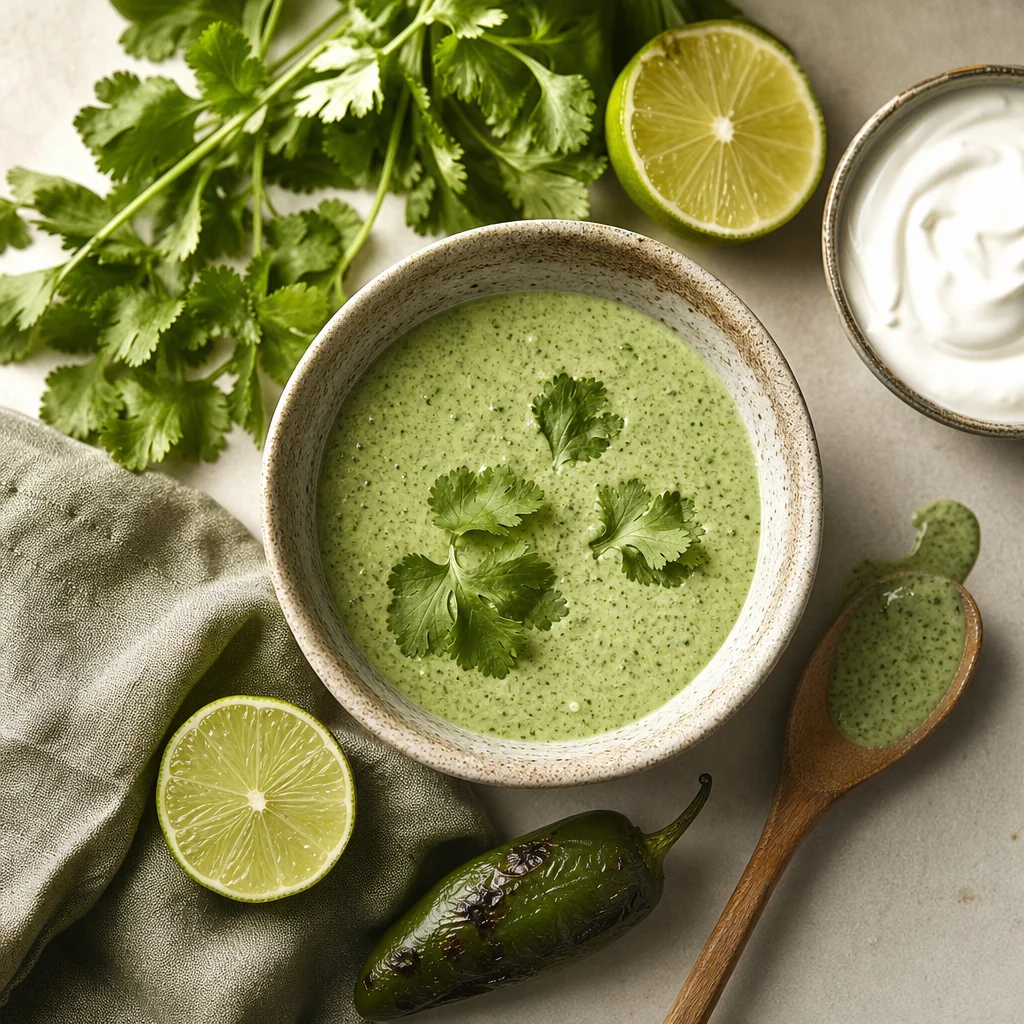
This homemade cilantro lime sauce comes together in 10 minutes with seven simple ingredients. You choose the fat, the salt, and everything that goes in. Seven simple ingredients, none of them a mystery. Just fresh cilantro, lime, creamy yogurt, and a charred jalapeño for real depth.
Let’s explore why this sauce is worth making at home, how to build it your way, and what the science says about the good stuff in your blender.
Quick Answer: Can you make Chipotle’s new sauce healthier at home?
Yes — in about 10 minutes. This homemade cilantro lime sauce is creamy, fresh, and bold, with far less sodium than a fast-food order. Swap sour cream for Greek yogurt, and you get more protein with less saturated fat. Same flavor. Better math.
Why Homemade Cilantro Lime Sauce Beats the Drive-Thru
Let’s be honest: restaurant sauces taste amazing for a reason. They’re built on cream, salt, and convenience. But you can’t control the portions, and you can’t see what’s being added behind the counter. When you make sauce at home, you hold every ingredient in your hand. That’s the healthy-living payoff — and it takes about 10 minutes.
Here’s my honest take: the healthiest cilantro lime sauce is the one you make yourself. Because you’re the one holding the salt spoon. You decide how much sodium goes in. You pick the dairy. You skip the additives. Small win? Sure. But it adds up every single week.
The Best Cilantro Lime Sauce Base: Greek Yogurt vs. Sour Cream
Now, you might be thinking: “But won’t Greek yogurt taste totally different?” Fair question. It’s thicker and tangier than sour cream. And that’s exactly why it works so well in this sauce.
Here’s the science. According to Harvard Health Publishing, Greek yogurt packs about twice the protein of regular yogurt. That’s 15 to 18 grams per 6-ounce serving, depending on the fat content. The straining process concentrates the protein. It also cuts carbs by about half. Choose plain, and you skip the added sugars hiding in flavored cups.
Whichever base you choose, your cilantro lime sauce comes out creamy, tangy, and bold. Here’s how the two most popular bases compare per 2-tablespoon serving:
| Base (2 tbsp) | Calories | Protein | Saturated fat |
|---|---|---|---|
| Sour cream | ~50 | <1 g | ~3 g |
| Whole-milk Greek yogurt | ~30 | ~3 g | ~1 g |
| Nonfat Greek yogurt | ~20 | ~3 g | ~0 g |
Values are approximate and based on USDA nutrient data. Brands vary.
My advice? Match the base to your goals. Want the closest match to Chipotle? Use sour cream or whole-milk Greek yogurt. On the flip side, want extra protein with less saturated fat? Go nonfat. Dairy-free? Unsweetened plant-based yogurt works. Just taste and adjust the lime and salt, since brands differ.
The 10-Minute Restaurant-Style Recipe
This cilantro lime sauce comes together faster than delivery. It makes about 1 cup — roughly eight 2-tablespoon servings. Double it if you’re meal-prepping for the week.
The Base Recipe
Ingredients
- 1 cup plain Greek yogurt (whole-milk or nonfat) or sour cream
- 1 cup packed fresh cilantro, leaves and tender stems
- 1 medium jalapeño — charred, canned fire-roasted, or fresh
- 1 tablespoon fresh lime juice (from about 1 lime)
- 1 small garlic clove, roughly chopped
- 1/4 to 1/2 teaspoon salt, to taste
- 1/8 teaspoon ground cumin
Method
- Char the jalapeño (optional but worth it). Turn it with tongs directly over a gas flame until the skin blackens — roughly a minute per side. No gas flame? Blister it in a dry cast-iron skillet over medium-high heat. Either way, let it rest in a covered bowl for 10 minutes, then rub off the burnt skin. Shortcut: use canned fire-roasted jalapeños straight from the jar.
- Blend. Add everything to a blender or food processor. Blend until smooth and light green, with tiny flecks of cilantro.
- Taste and adjust. More lime for brightness. More salt for depth. More jalapeño for heat.
- Chill for 30 minutes. The flavors meld and the garlic mellows. Then drizzle away.
Spice ladder (pick your heat). Charred jalapeño is the mellow, smoky route — closest to the restaurant version. Fresh jalapeño is hotter and brighter, so start with half a pepper and blend in more. No jalapeño at all? The sauce stays creamy and fresh, just less complex. You’re in control either way.
Make It a Meal-Prep Habit
Blend a double batch on Sunday while you prep lunches. Store it in a jar with a tight lid. Then use it all week: on grain bowls, grilled chicken, roasted veggies, and salads. One sauce, five dinners, no drive-thru detours.
Why Cilantro Earns Its Spot
Cilantro does more than make the sauce pretty. According to Cleveland Clinic, cilantro is rich in antioxidants — compounds that help protect your cells — plus vitamins A, C, and K. Plus, it brings folate, potassium, and manganese. A quarter-cup has less than one calorie. The flavor comes essentially free.
You’ll see bold headlines about cilantro’s potential health benefits: lowering blood sugar, calming anxiety, fighting foodborne bacteria. Here’s the reality: most of those claims rest on animal or lab studies. Human research is still needed, however. The lab work is genuinely interesting, though. One study in Phytotherapy Research tested dodecanal, a compound found in coriander-family leaves. It stopped Salmonella growth in a petri dish. That’s promising science — not a food-safety promise.
So enjoy cilantro for what it is: a near-zero-calorie herb that makes healthy food taste better, and that can help you use less salt. One more thing: if cilantro tastes like soap to you, that’s genetics. A specific smell-related gene makes some people perceive it that way. You’re not alone. Just swap in flat-leaf parsley and move on.
One caution: cilantro may lower blood sugar in some people. If you have low blood sugar or take diabetes medication, it’s fine to enjoy this sauce in normal amounts — just pay attention to how you feel, and don’t treat it like medicine.
Sodium Reality Check: You’re in Control
Here’s the part most recipe sites skip. Most of the sodium we eat comes from processed and restaurant foods, according to the CDC. The average American takes in more than 3,300 mg of sodium daily. That’s well above the federal recommendation of less than 2,300 mg. Too much sodium raises blood pressure. It also raises the risk of heart disease and stroke.
Now the good news: your kitchen math is different. One teaspoon of table salt contains about 2,400 mg of sodium. If your whole batch of cilantro lime sauce uses just 1/4 teaspoon, that’s about 600 mg across eight servings. Roughly 75 mg per serving. Compare that to a restaurant sauce, where one serving can easily land in the hundreds of milligrams of sodium. Same drizzle. Totally different math.
My tip: start with 1/4 teaspoon of salt, blend, and taste. Add more only if it truly needs it. An extra squeeze of lime adds brightness without adding sodium.
Ways to Use It Beyond Tacos
The beauty of this cilantro lime sauce is how many meals it upgrades — not just tacos and burrito bowls. Think of it as your new weeknight secret weapon:
- Drizzle over grilled chicken, salmon, or steak — like a lighter chimichurri.
- Swirl into grain bowls with rice, black beans, corn, and avocado.
- Thin it with lime juice or water for a creamy salad dressing.
- Use it as a dip for roasted veggies, tortilla chips, or crispy potatoes.
- Add a spoonful to black bean soup or tortilla soup.
Keep a jar in the fridge, and dinner upgrades itself all week long.
Storage, Make-Ahead, and Freezing
Made a big batch? Smart. Store it in an airtight container in the fridge. Dairy-based versions keep 3 to 5 days. Most recipe testers land on day 5 as the safe ceiling. If you add avocado for a richer version, use it within 1 to 2 days. The lime helps slow browning, but avocado still ages faster than dairy.
Can you freeze it? Yes. Spoon the sauce into an ice cube tray. Freeze, then pop the cubes into a freezer bag. Thaw overnight in the fridge and stir well. The texture may soften slightly. So frozen sauce works best in cooked dishes, not as a fresh garnish.
Food-safety note: when in doubt, throw it out. If the sauce smells off, looks watery, or shows any mold, don’t taste-test it. Three to five days is the sweet spot.
Make-ahead bonus: this sauce actually tastes better after 30 minutes in the fridge. The garlic mellows. The lime settles. Everything blends together. Make it the night before taco night. You’ll taste the difference.
Frequently Asked Questions
How long does cilantro lime sauce last in the fridge?
Dairy-based versions keep 3 to 5 days in an airtight container. Avocado versions are best within 1 to 2 days. When in doubt, toss it.
Can I make it without sour cream?
Yes. Plain Greek yogurt is the best swap — it adds protein and cuts saturated fat. For dairy-free, use unsweetened plant-based yogurt, then adjust lime and salt to taste.
Why does cilantro taste like soap to me?
Blame your genes. A specific smell-related gene makes cilantro taste soapy to some people. It’s completely normal. Use flat-leaf parsley instead and keep the lime.
Is this sauce spicy?
It has a gentle kick, not a blaze. Charred jalapeño is mellow. Fresh jalapeño is hotter — start with half and blend in more if you want.
Can I freeze it?
Yes. Ice cube trays work perfectly. Freeze, pop out, store in a freezer bag, and thaw overnight in the fridge.
The Bottom Line
A great sauce shouldn’t require a trip through the drive-thru. This recipe delivers the creamy, bright, slightly spicy flavor you crave. Made your way, in about 10 minutes, with ingredients you can pronounce.
Here’s what I want you to remember: homemade doesn’t mean boring. It means you’re in control. Control the salt. Pick the protein-rich base. Char the pepper if you want real depth. Then drizzle it over everything — because you’ve earned it.