

Noise and Brain Health: What Everyday Noise Does
Key Takeaways
Wondering if everyday noise is affecting your brain? Here’s what you need to know about noise and brain health — and what actually helps.
- Long-term traffic noise is linked to a modestly higher risk of dementia. It’s a link, not a proven cause.
- Noise reaches the brain through four pathways: stress, hearing, sleep, and heart health.
- Newer research suggests effects may begin around 45 decibels — quieter than you’d think.
- Earplugs may protect sleep better than sound machines, per a 2026 study.
- Small daily habits — movement, green breaks, hearing checks — build resilience.
Picture this: You’re pouring your morning coffee while traffic rumbles past your window. Honks, brakes, and idling engines barely register anymore. But here’s the thing — your brain is always listening, even when you tune it out. That matters, because the research on noise and brain health keeps getting stronger. Studies now link long-term traffic noise with a modestly higher risk of cognitive decline. And the effects may start at levels you’d never think twice about.
If you live in a city or near a busy road, you can’t simply move away from the sound. So this guide covers the evidence, the four ways noise reaches your brain, and the steps that actually help.
Quick Answer: Can Everyday Noise Really Affect Your Brain?
The short answer on noise and brain health: yes, it matters. However, the risk is modest, and it builds over years, not weeks. The strongest evidence points to nighttime noise. The good news? You can’t always control the noise. But you can protect your sleep, your hearing, and your stress levels. That’s where your power lies.
What the Science Says About Noise and Brain Health
Let’s start with what the evidence actually shows. Here’s what the major studies on noise and brain health say so far. A 2026 systematic review examined eight long-term studies on road traffic noise and dementia. The researchers found a modest but consistent pattern. People exposed to higher noise levels, especially above 50 decibels, had a higher risk of cognitive decline.
The study that stands out
The largest study is hard to ignore. It followed 1.94 million Danish adults aged 60 and older. Over that time, 103,500 people developed dementia. So those with the highest long-term noise exposure had a higher risk of Alzheimer’s disease. In some comparisons, the risk was up to 27% higher. That’s the takeaway from the Danish national study published in the BMJ.
A 2022 dose-response meta-analysis adds another layer. For every 25-decibel increase in noise, dementia risk rose by roughly 16% to 19%. A 2025 umbrella review also listed chronic noise among just nine environmental factors linked to higher dementia risk.
The honest caveat
Now, you might be thinking: does noise cause dementia? Not exactly. Here’s what’s actually happening. These studies show a link, not proof of cause. One Swedish cohort found no link between road traffic and cognitive decline. Here’s a twist: aircraft and railway noise did show effects in that study.
Also, traffic makes both noise and air pollution, and they travel together. In the Danish Nurse Cohort, the noise link weakened once researchers accounted for air pollution. Let’s be honest: the science is still settling. But the pattern is consistent enough that the World Health Organization treats noise as a real public health concern.
Four Ways Noise Reaches Your Brain
So how does a sound outside your window get inside your head? Researchers describe four main pathways. Each one matters alone. Together, they compound.
The stress pathway
Your brain treats sound as a potential threat. It keeps listening even while you sleep. Constant noise keeps your stress response switched on. As a result, you produce more cortisol, the stress hormone, along with more inflammation. Over time, this can overactivate microglia — your brain’s immune cells. When they stay inflamed, they become less effective at protecting and repairing tissue. Research on the stress pathway shows this chain of events clearly.
The hearing pathway
Here’s where noise and brain health connect most directly. Loud sounds damage the hair cells in your inner ear. These cells translate sound waves into signals your brain can read. The problem? Human hair cells don’t regenerate. Sounds at or above 85 decibels can cause permanent hearing loss, says the National Institutes of Health. Heavy city traffic often sits in that range.
Hearing loss matters for your brain, too. Experts now rank untreated hearing loss among the most impactful changeable risk factors for dementia. If you’re turning up the TV more than usual, you’re not alone. This is completely normal — but worth checking. Protecting your ears today is brain care for tomorrow.
The sleep pathway
Night noise may be the strongest noise and brain health link of all. The World Health Organization’s night-noise guidelines recommend under 30 decibels in bedrooms for good sleep. Many city bedrooms sit far above that. Noise fragments deep sleep. That’s when your brain clears waste through the glymphatic system, its built-in cleanup network. In the Danish study, nighttime noise showed some of the strongest dementia associations.
The heart pathway
Your brain depends on healthy blood vessels. Noise can strain them. The World Health Organization concluded that long-term road traffic noise is a risk factor for heart disease. A 2025 meta-analysis of over 8.4 million people adds supporting detail, linking road traffic noise to a higher risk of heart attack and stroke. That matters because your heart feeds your brain the oxygen it needs to repair itself.
Decibels Decoded: How Loud Is Your Daily Life?
To understand your risk, it helps to know the numbers. The WHO’s long-term guideline for road traffic noise is 53 decibels, averaged over a full day — quieter than a typical conversation. For nighttime noise outside your bedroom, the guideline drops to 40 decibels. Indoors at night, the WHO recommends under 30.
Here’s the catch. A 2025 analysis suggests some heart and cognitive effects may begin at 32 to 45 decibels — below those guidelines. So ordinary urban noise could matter more than we thought.
Everyday Sounds, Measured in Decibels
- Quiet bedroom: 30 dB
- Refrigerator hum: 40 dB
- Normal conversation: 60–70 dB
- Busy street traffic: 70–85 dB
- Motorcycle, power tools: 80–110 dB
- Concerts, headphones at max volume: 94–110 dB
- Sirens: 110–129 dB
- Fireworks: 140–160 dB
Notice where most of daily life lands. Most everyday sounds sit well above the WHO’s bedroom target. And prolonged exposure at 85 decibels is where hearing damage becomes a real concern.
Sound Machines vs. Earplugs: What Actually Protects Sleep
If you live on a noisy street, you’ve probably tried a sound machine. Pink noise — steady, deep, rain-like sound — has been a popular fix. However, 2026 research is challenging that advice.
In a small lab study, 25 healthy adults slept for seven nights under different conditions. Researchers linked pink noise at 50 decibels to nearly 19 fewer minutes of REM sleep. That’s the dream stage that supports memory and mood. Meanwhile, aircraft noise cut deep sleep by about 23 minutes. Earplugs, on the other hand, largely prevented that deep-sleep loss.
Here’s the thing. This was one small, short-term study. Sound machines still help many people. But the findings suggest we should use them thoughtfully, not automatically.
Smarter Sound-Machine Rules
- Keep the volume low — below 50 decibels if you can.
- Use a timer, so the sound stops after you fall asleep.
- Place the machine across the room, not beside your pillow.
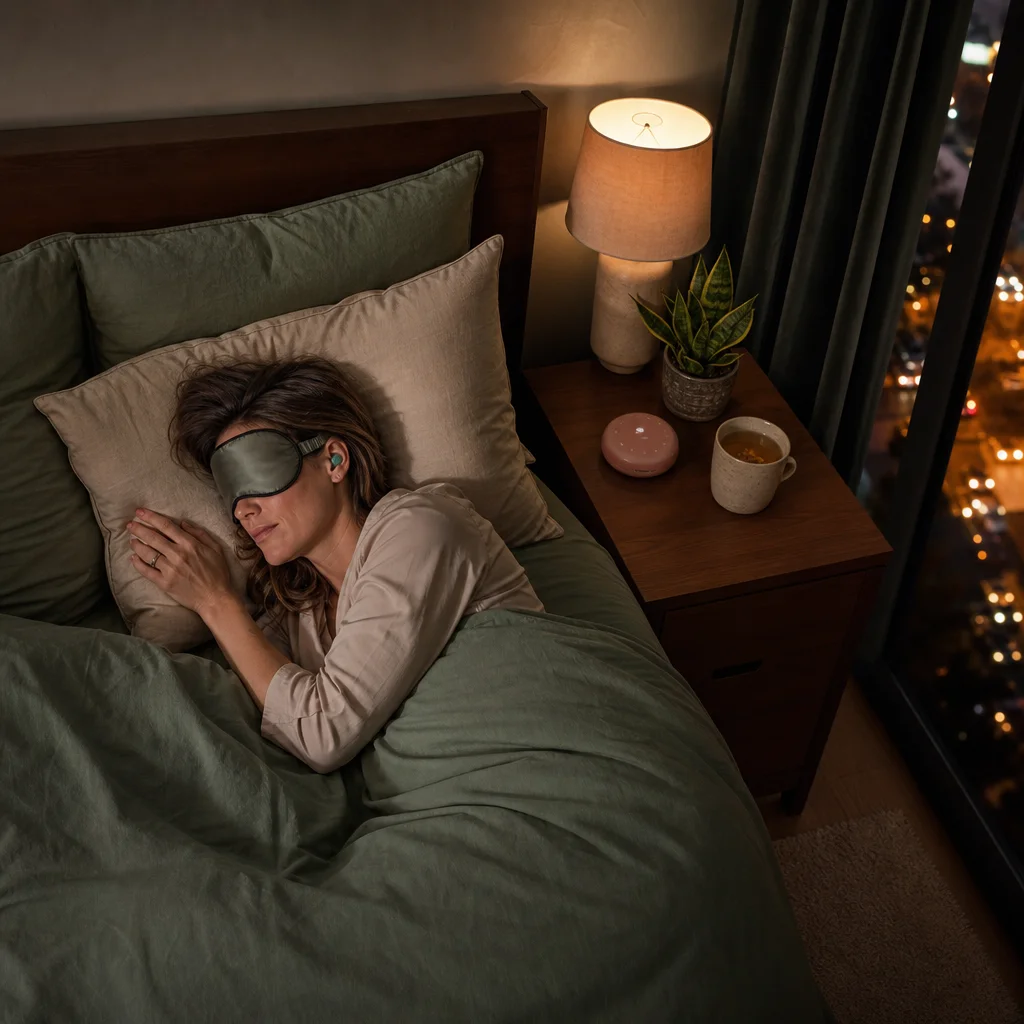
- Try earplugs first. Foam or musician’s earplugs block noise without adding sound.
- Clean or replace earplugs regularly to avoid earwax buildup.
Your Everyday Noise-Protection Plan
The good news? When it comes to noise and brain health, small changes add up. Here’s a plan you can start today.
Quiet your sleep space
Your bedroom is priority one. Move your bed away from the noisiest wall. Use heavy curtains, a rug, and weatherstripping on windows and doors to muffle sound. Also, keep a consistent bedtime. Regular, deep sleep helps your brain reset its stress response.
Take green breaks
Even brief time in nature lowers stress. In a randomized study, even five minutes of virtual green space lowered blood pressure and stress markers — and real-world time in parks is linked to lower dementia risk. So aim for 10 minutes in a park or on a tree-lined block. A 2025 umbrella review also found that neighborhood greenness is linked to lower dementia risk.
Protect and check your hearing
Hearing loss often creeps in quietly. If you find yourself asking people to repeat themselves, get a hearing test. Ringing in your ears? That’s another sign. Treating hearing loss is one of the most protective things you can do for long-term brain health. And wear ear protection at concerts, when mowing, or around power tools.
Move your body
Exercise is brain medicine. In the Danish Nurse Cohort, physically active nurses didn’t show the air-pollution–dementia link. Movement improves blood flow and lowers stress. Even a daily 20-minute walk counts.
Stay connected and eat well
Loneliness is a known risk factor for cognitive decline. Regular contact with people you care about supports memory and mood. Pair that with a nutrient-rich diet — vegetables, whole grains, fish, and olive oil — to give your brain steady fuel.
When to Get a Hearing Test
Consider a hearing test if you:
- Often ask people to repeat themselves
- Turn up the TV louder than others prefer
- Hear ringing or buzzing in your ears
- Notice sounds feeling muffled
Also talk to your doctor if noise disrupts your sleep most nights or causes lasting stress.
Common Questions About Noise and Brain Health
Is it the noise or the air pollution that’s the problem?
Both. Traffic makes both, and they travel together. In the Danish Nurse Cohort, air pollution was independently linked to dementia risk. The noise link weakened once researchers adjusted for pollution. So reduce both where you can. And stay active — exercise seemed to buffer the risk.
Why does the same noise bother my partner but not me?
Individual sensitivity is a big part of the noise and brain health story. Annoyance is the key. If a sound bothers you, your body is more likely to mount a stress response. If you barely notice it, the effect is smaller. Personality and current stress levels both play a role.
Is it too late to protect my brain?
Not at all. Your brain responds to protective habits at any point. Sleep, movement, hearing care, and time in nature all build resilience. So start with one change this week.
The Bottom Line: Your Brain Can Grow Stronger Than the Noise
Here’s the honest takeaway. Everyday noise isn’t something to fear — it’s something to work around. The evidence points to a clear pattern: long-term noise, especially at night, is linked to modestly higher dementia risk. But the same science shows that protective habits matter. Guard your hearing. Protect your sleep. Move your body. Take green breaks. You can’t always escape the noise. However, you can make your brain more resilient to it. That’s a healthy-living win you can start today.