

Romaine Lettuce Pasta: The 10-Minute Nutrition Win
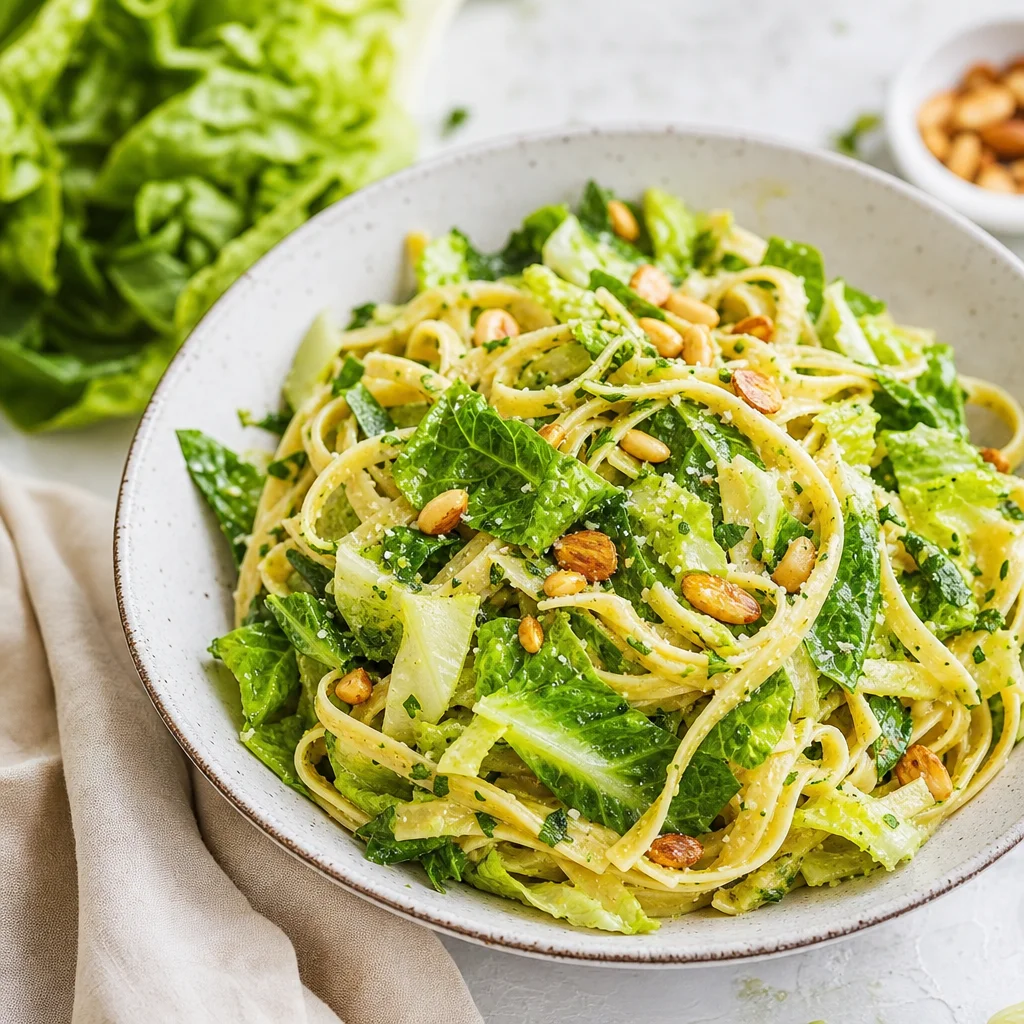
Picture this: it’s 6:30 p.m., you’re tired, and dinner needs to happen fast. You open the fridge and spot a head of romaine lettuce. Salad again? Not tonight. The romaine lettuce pasta trick turns that crisp green into a warm, saucy dinner — fresh, vibrant, and never watery.
That’s the idea behind this 10-minute dinner. You wilt the lettuce at the very end so it stays bright and crisp-tender. It’s a clever way to add a leafy green to your plate when you’re too tired to make a salad. Here’s how to make it work, plus the nutrition science that makes this trick genuinely worth trying.
Quick Answer: Can you make romaine lettuce pasta?
Yes — and it’s delicious. The secret: dry the leaves well, chop them, and stir them in during the final minute of cooking. The residual heat gently wilts the romaine without turning your sauce watery. It’s a mild, nutrient-packed green that works perfectly in romaine lettuce pasta.
The Simple Technique: How to Make Romaine Lettuce Pasta
Let’s be honest — adding lettuce to a hot pan sounds like a recipe for soggy sadness. Here’s the thing: it’s all about water control. Romaine is about 95% water, so if you toss in wet leaves and let them simmer, you’ll water down your sauce.
The fix is simple. After washing, dry the leaves well — a salad spinner works great, or pat them dry with a kitchen towel. Then chop into bite-size pieces and stir them in at the very end, right after you add the pasta. Let the heat of the pan and the sauce wilt the leaves for about 30 to 60 seconds. That’s it.
Now, you might be thinking, “Why not just use spinach?” Romaine is a great choice if you find darker greens too bitter. The flavor is mild and fresh, and it holds its texture beautifully when slightly wilted. Some chefs say it tastes better than spinach in this kind of dish — and the crisp ribs keep some crunch, which is a lovely contrast to soft pasta.
Romaine Lettuce Pasta: The Nutrition Payoff
Let’s talk about why this trick is more than just a fun idea. Romaine is one of the most underrated greens in the produce aisle. According to USDA FoodData Central’s nutrient profile for romaine lettuce, a single cup of shredded romaine (about 47 grams) delivers:
What 1 Cup of Shredded Romaine Gives You
- Vitamin K: about 48 mcg — roughly 40% of the daily value
- Vitamin A: about 205 mcg RAE — close to a quarter of your daily target
- Folate: about 64 mcg — 16% of the daily value
- Lutein + zeaxanthin: about 1.1 mg — nutrients that support eye health
- Calories: just 8, with about 1 gram of fiber
A generous two-cup handful wilted into your pasta adds up fast. It’s an easy way to get closer to your daily vegetable goals without much effort. The NIH’s folate fact sheet lists romaine at 16% of the daily value per cup — a meaningful amount. That matters for cell growth, and it’s especially important for women of childbearing age. And the Cleveland Clinic points out that lettuce is often underestimated — it’s a legit leafy green, not just water and crunch.
The Science: Why the Butter and Oil Matter
Here’s the part I find genuinely fascinating. Romaine’s star nutrients — vitamin A and vitamin K — are fat-soluble. That means your body absorbs them much better when you eat them with some fat. The olive oil and butter already in this pasta dish do exactly that job.
Research backs this up. Research on how fat boosts absorption of vitamins from vegetables, published in the American Journal of Clinical Nutrition, found that as the amount of oil in a meal increases, so does absorption of these vitamins. Another study on vitamin K absorption from romaine lettuce, in the Journal of Nutrition, found that vitamin K from romaine is absorbed just as well as from spinach or broccoli — and modest fat is enough to help.
So the butter and oil in this dish aren’t just for flavor. They’re helping your body actually use the nutrients in the lettuce. Here’s what the NIH’s vitamin K fact sheet explains: eating vegetables with some fat improves absorption of vitamin K. It’s a nutrition win hiding in plain sight.
Now, about quick wilting vs. boiling: the brief, gentle heat at the end of cooking causes far less nutrient loss than boiling greens for a long time. Raw romaine does contain more nutrients per gram, but the fat in this dish helps your body absorb more of what’s there. Both things are true — and together they make this pasta a smart choice.
Romaine vs. Spinach vs. Kale: Which Green Wins?
Some people genuinely don’t like the strong taste of darker leafy greens. If that’s you, you’re not alone. Here’s how romaine stacks up so you can pick your green with confidence.
| Green | Taste | How It Cooks | Best For |
|---|---|---|---|
| Romaine | Mild, fresh, slightly sweet | Wilts quickly, keeps its crunch | Light wilting into pasta |
| Spinach | Can taste bitter and earthy | Melts down quickly | Saucy dishes where it disappears |
| Kale | Strong, peppery, chewier | Needs more cooking time | Hearty soups and braises |
Spinach and kale do pack more vitamin K per cup. But the best green is the one you’ll actually eat. If a big bowl of kale makes you cringe, romaine is a perfectly respectable way to get your greens. And because the pasta already contains fat, your body absorbs romaine’s vitamin A and K well.
How to Make This Pasta Work for You
The classic version of this dish uses pancetta and butter. Delicious? Absolutely. Balanced? It can be, with a few simple tweaks. Here’s how to build a healthier plate.
Choose a fiber-rich pasta. Whole-grain or legume-based pasta (like chickpea or lentil) adds protein and fiber that regular white pasta doesn’t have. This matters because romaine itself isn’t a fiber powerhouse — about 1 gram per cup. Your pasta choice is where the real fiber comes in.
Add extra vegetables. Peas are classic here, but you can toss in cherry tomatoes, asparagus, or broccoli florets. More plants, more color, more nutrients.
Go vegetarian without losing flavor. Swap the pancetta for chickpeas or cubes of smoked tofu. Sauté them with the garlic until golden, and you get that savory, satisfying bite without the meat. For a vegan version, use olive oil instead of butter and add a spoonful of miso or nutritional yeast for umami. Or try our easy 5-ingredient pasta sauce for a shortcut.
The 10-Minute Romaine Lettuce Pasta Recipe
This recipe is adapted so you can actually make it tonight. Gather your ingredients first — it really does come together in about 10 minutes once the water is boiling.
Pea, Pancetta & Romaine Lettuce Pasta
Ingredients
- 8 oz (about 2/3 box) whole-grain or legume pasta
- 2 oz pancetta, diced (optional — or 1 cup cooked chickpeas)
- 1 tablespoon olive oil
- 1 tablespoon butter
- 3 cloves garlic, thinly sliced
- 1 cup frozen peas
- 4 cups chopped romaine, well dried
- Salt, pepper, and fresh lemon juice to finish
Directions
- Boil a large pot of salted water. Cook the pasta 1 minute shy of the package directions. Reserve 1/2 cup of pasta water before draining.
- While the pasta cooks, warm the olive oil and butter in a large skillet over medium heat. Add the pancetta (or chickpeas) and garlic. Cook until the garlic is golden and the pancetta is crisp, about 3 minutes.
- Add the peas and a splash of pasta water. Cook for 1 minute.
- Add the drained pasta and toss to coat. Remove the pan from the heat.
- Stir in the chopped romaine. Let the residual heat wilt it for about 30 seconds. Add more pasta water if the sauce needs loosening.
- Finish with salt, pepper, and a squeeze of lemon. Serve immediately.
The key step is number 5. Adding the romaine off the heat — not while bubbling away — keeps the leaves vibrant and crisp-tender instead of sad and limp. If you’re using regular pasta, this dish serves about 3 to 4 people. With legume-based pasta, it’s a satisfying one-bowl meal with protein and fiber built in.
Food Safety and a Note on Blood Thinners
Romaine has been linked to E. coli recalls in the past, so it’s worth mentioning: wash your leaves well, buy from reputable sources, and keep it refrigerated. One nice bonus — cooking the lettuce, even briefly, further reduces any microbial risk compared to eating it raw in a salad.
If You Take Blood Thinners, Read This
Romaine is rich in vitamin K, which plays a role in blood clotting. If you take warfarin or another blood thinner, the NIH advises keeping your vitamin K intake consistent — sudden big increases or decreases can affect how the medication works. That doesn’t mean avoid this dish. It means keep your leafy green intake steady from day to day, and mention any major diet changes to your clinician.
The Latest Science: Why Leafy Greens Deserve a Spot in Your Dinner
Beyond the vitamins, there’s a bigger picture. Diets rich in leafy greens are consistently linked to better heart health. A 2020 meta-analysis of 81 cohort studies — involving about 4 million people — found that green leafy vegetables ranked among the vegetable groups with the strongest association with lower cardiovascular risk. Another large dose-response meta-analysis found that each additional 200 grams of fruit and vegetables per day was associated with lower risk of heart disease, stroke, and premature death.
This doesn’t mean romaine is medicine. It means small, repeatable habits — like wilting a handful of greens into your weeknight pasta — genuinely add up over time. That’s the kind of healthy change that fits real life.
Frequently Asked Questions
Does cooking romaine destroy its nutrients?
Brief wilting causes minimal nutrient loss, especially compared to long boiling. And because this dish includes butter or olive oil, your body absorbs romaine’s fat-soluble vitamins — A and K — very well. Raw has more per gram, but the fat here helps you absorb what’s there.
Can I use iceberg or butter lettuce instead?
Romaine is ideal because its sturdy ribs hold up to heat. Soft lettuces like bibb or butter lettuce will turn limp quickly. Iceberg can work in a pinch, but it has far fewer nutrients. Stick with romaine for the best texture and nutrition.
Why doesn’t the sauce get watery?
Because the leaves are dried well and added off the heat. The romaine wilts from residual heat, releasing very little liquid. If you simmered it for minutes, it would release water and thin the sauce. The technique is everything.
The Bottom Line
The romaine lettuce pasta trick is simple, fast, and backed by real nutrition science. Dry the lettuce well. Stir it in at the very end. Let the buttery sauce and residual heat do the work. What you get is a bright, mild, nutrient-dense green that even picky eaters will enjoy.
Make it tonight with whole-grain pasta and peas. Swap the pancetta for chickpeas if you want a vegetarian version. Add a squeeze of lemon and enjoy the fact that dinner — and a good helping of leafy greens — is done in 10 minutes.