

Omega-3 Deficiency Guide: Signs, Fixes & New CDC Data
Key Takeaways
- 98% of Americans fall short: New CDC data shows only 2% of US adults have optimal omega-3 levels (Omega-3 Index above 8%). Over half are in the high-risk zone below 4%.
- It matters for how long you live: Higher blood DHA levels are linked to 17-21% lower risk of death from all causes, heart disease, and cancer.
- You can test your levels at home: Finger-prick tests measure your Omega-3 Index directly, so you know exactly where you stand.
- Food first, but supplements fill the gap: Fatty fish twice a week is the target. Most people also need a daily supplement with at least 1,000 mg combined EPA and DHA to reach optimal levels.
Here’s a number that stopped me in my tracks: only 2% of Americans have optimal omega-3 levels. That’s according to new data from the CDC that measured what’s actually in people’s blood — not just what they remember eating. Even dietitians, the people who literally study nutrition for a living, are falling short. So if you’ve been vaguely aware that omega-3s are “good for you” but aren’t sure if you’re getting enough, you’re not alone. The real question is: what do you do about it? Let’s walk through what an omega-3 deficiency actually means, how to know if you have one, and exactly how to fix it with food and smart supplementation.
What the New CDC Data Actually Shows About Omega-3 Deficiency
Here’s the thing — for years, articles have told you that omega-3 deficiency is “rare” in the US. And technically, they weren’t wrong about one thing: full-blown clinical deficiency (the kind that causes scaly skin rashes) is uncommon. But that’s not the real story.
The real story comes from the CDC’s first-ever nationally representative measurement of Americans’ Omega-3 Index. Instead of asking people what they ate (which they often misremember), researchers measured the actual amount of EPA and DHA in red blood cells. The results? Fifty-four percent of Americans have an Omega-3 Index below 4%, which researchers classify as “undesirable” and high-risk. Only 2% have levels above 8%, which is considered optimal for heart health.
An omega-3 deficiency in the way most experts now think about it isn’t about avoiding a rash. It’s about living at a level that leaves you vulnerable to inflammation, heart disease, and faster cognitive decline. The distinction matters — and it’s one most articles don’t make clearly.
Why This Matters for Your Longevity
Now, you might be thinking: “Okay, so my levels are probably low. Does it actually affect my health?” The short answer is yes — and the evidence is stronger than you might expect.
A massive 2024 analysis from the FORCE Consortium and Mayo Clinic looked at over 160,000 people and found that those with the highest blood levels of DHA (a key omega-3) had a 21% lower risk of dying from any cause compared to those with the lowest levels. That included a 21% lower risk of cardiovascular death and a 17% lower risk of cancer death. The link was dose-related — meaning the higher your levels, the lower your risk.
This doesn’t mean popping a fish oil pill guarantees you’ll live longer. But it does suggest that maintaining optimal omega-3 levels is one of the more impactful things you can do for your long-term health. And given that 98% of us aren’t there, it’s also one of the most overlooked.
Globally, the picture isn’t much better. A 2024 world map study in Progress in Lipid Research analyzed 342,864 people across 48 countries and found that most nations have low to very low Omega-3 Index values. Only a few countries, like Finland and Iceland, approach the optimal range. Low omega-3 status is a population-wide problem, not an individual failing.
5 Signs You Might Have an Omega-3 Deficiency
Let’s be honest: most of the research on omega-3 deficiency symptoms comes from studies that gave people supplements and watched what improved. That’s a roundabout way to spot a deficiency, but it’s the best data we have. If several of these sound familiar, your omega-3 intake might need attention.
1. Dry, irritated skin. This is the most consistent sign. A true deficiency causes rough, scaly skin. But even suboptimal intake can leave your skin looking dull and feeling dry, since omega-3s help regulate oil production and reduce inflammation.
2. Dry, tired eyes. Your eyes need omega-3s to produce healthy tears. Research suggests omega-3s can improve dry eye symptoms by supporting tear production and reducing inflammation.
3. Brain fog and low mood. DHA is a major structural fat in the brain, playing a key role in cognitive function. When levels drop, your brain notices. Research suggests omega-3 supplements with at least 60% EPA at a dose of 1 gram or more per day can help reduce symptoms of depression, especially when used alongside other treatments.
4. Achy, stiff joints. Omega-3s are natural anti-inflammatories. Several studies have found that people with joint pain and stiffness, particularly those with rheumatoid arthritis, experience less discomfort and better grip strength after adding omega-3s to their routine.
5. Dry, brittle hair and peeling nails. Some early research suggests omega-3s may support hair and nail health through their anti-inflammatory properties, though more studies are needed to confirm this.
A Note on These Signs
These symptoms can also come from other causes — dehydration, allergies, thyroid issues, or simply dry weather. They aren’t a definitive diagnosis of omega-3 deficiency. But if you’re experiencing several of them and you don’t eat fatty fish regularly, it’s a good reason to look more closely at your omega-3 intake. For a deeper look at each of these signs, check out our guide to 5 subtle signs of omega-3 deficiency and how to recognize them in your daily life.
How to Fix an Omega-3 Deficiency: A Step-by-Step Protocol
Here’s where we get practical. Fixing low omega-3 levels isn’t complicated, but it does require intentional choices. Here’s exactly what to do.
Step 1: Know your number
The most definitive way to check for an omega-3 deficiency is to test your Omega-3 Index. You can do this at home with a finger-prick kit. The test measures the percentage of EPA and DHA in your red blood cell membranes. Your target: 8% or higher. If you’re below 4%, you’re in the high-risk zone. Between 4% and 8%, you have room to improve. The test costs around $50 to $100 and gives you a clear baseline.
Step 2: Prioritize food sources
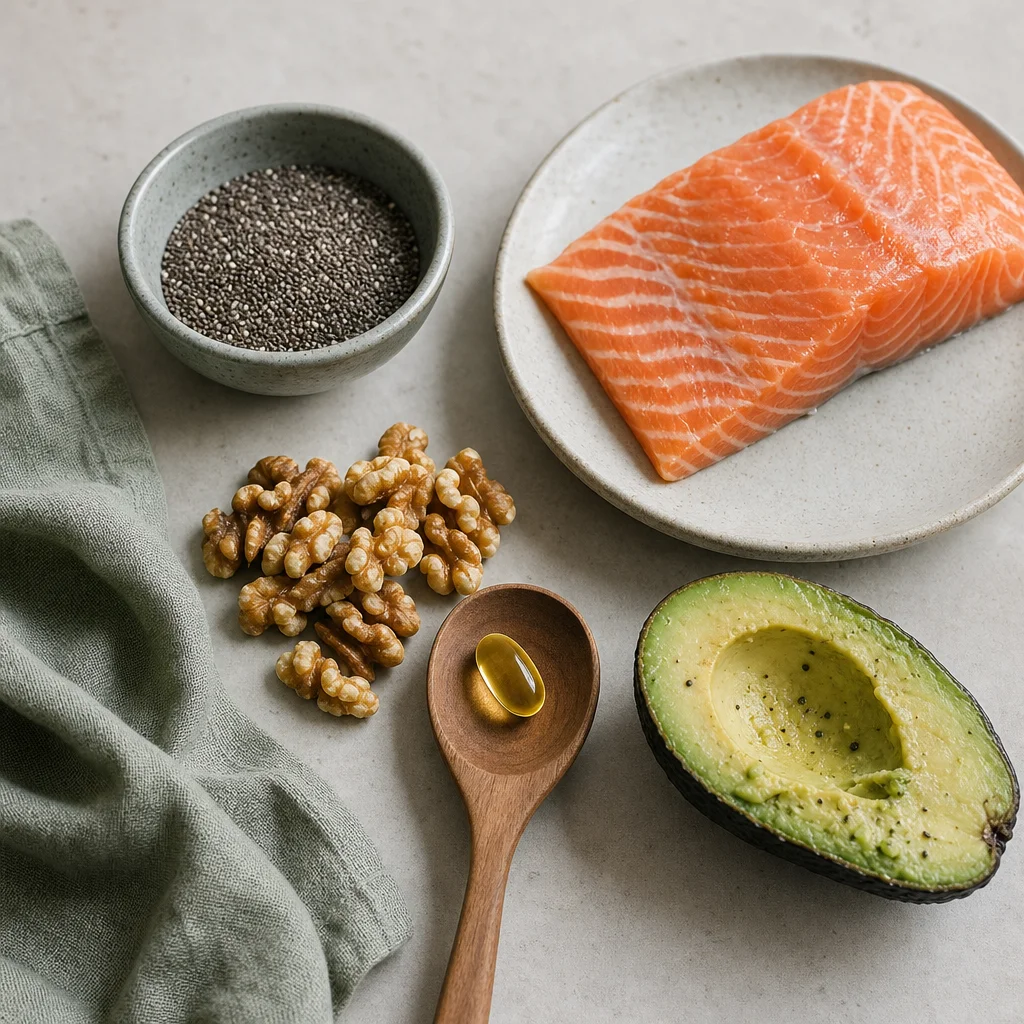
Fatty fish is your best bet. Salmon, mackerel, sardines, herring, and anchovies are packed with ready-to-use EPA and DHA. The goal is two servings per week (about 6 to 8 ounces total). A single 3-ounce serving of wild salmon delivers roughly 1,200 to 1,800 mg of combined EPA and DHA.
Plant sources like walnuts, chia seeds, flaxseeds, and hemp seeds provide ALA, a different type of omega-3. But here’s the catch: your body converts less than 15% of ALA into the forms your body actually uses (EPA and DHA). So while these foods are healthy, they can’t fully correct an omega-3 deficiency on their own.
Step 3: Add a smart supplement
If you’re like most people and don’t eat fatty fish multiple times a week, a supplement bridges the gap. Look for one that provides at least 1,000 mg of combined EPA and DHA per serving. While there’s no official daily requirement for EPA and DHA, many experts suggest aiming for 1,000 to 2,000 mg combined daily for optimal health. The FDA considers up to 3,000 mg daily safe. If you know your levels are very low (or you’re addressing a specific health concern like high triglycerides), you may need more — talk to your healthcare provider about dosing.
How long does it take to raise your levels? It depends on your starting point, dose, and supplement form. Some research shows meaningful increases within weeks, while for others it may take several months of consistent use.
How to Choose the Right Omega-3 Supplement
Not all omega-3 supplements are created equal. Here’s a quick guide to what matters.
What to Look For on the Label
- Check the EPA + DHA amount, not the total fish oil — many brands advertise 1,000 mg of fish oil but only deliver 300 mg of combined EPA and DHA.
- Look for the triglyceride form — natural fish oil comes as triglycerides (TG or rTG on labels), which your body absorbs better than the ethyl ester (EE) form.
- Third-party testing matters — look for certifications from IFOS, USP, or NSF to ensure purity and potency.
- If you’re vegan, choose algal oil — it provides DHA directly without fish, and some versions also include EPA.
For most people, a high-quality fish oil in triglyceride form, delivering 1,000 to 1,500 mg of combined EPA and DHA, is the right choice. Krill oil is another option — it’s absorbed well and contains phospholipids, but you may need more capsules to reach the same EPA+DHA dose. The NIH Office of Dietary Supplements notes that omega-3 supplements are generally safe at doses up to 3,000 mg daily, with the most common side effects being mild digestive issues or a fishy aftertaste.
Safety note: If you take blood thinners, talk to your doctor before starting a supplement. High doses (above 3,000 mg daily) should only be taken under medical supervision.
Omega-3s and Women’s Health: What the Latest Research Says
A 2026 meta-analysis of 24 randomized controlled trials found that omega-3 supplementation has specific benefits for women’s metabolic health. On average, women who took omega-3s saw their LDL cholesterol drop by about 11 mg/dL, their triglycerides drop by about 17 mg/dL, and their HDL increase. The researchers noted that the benefits were especially pronounced in women and those with PCOS, a condition where metabolic and inflammatory markers are often elevated.
For brain health, a 2026 UK Biobank study of over 162,000 participants found that omega-3 fatty acids play a key role in the protective relationship between vitamin D and dementia risk. In other words, maintaining healthy omega-3 levels may help support cognitive function as you age, especially when combined with other healthy habits.
Frequently Asked Questions About Omega-3 Deficiency
Can a blood test detect omega-3 deficiency?
Yes. The Omega-3 Index test measures the percentage of EPA and DHA in your red blood cell membranes. It’s the most accurate way to assess your status. At-home finger-prick kits are available and reasonably affordable.
Is an omega-3 deficiency the same as not eating enough fish?
Mostly, yes. Since the body can’t efficiently convert plant-based ALA into EPA and DHA, your levels depend heavily on direct intake from fish, seafood, or algae. If you rarely eat fatty fish, your levels are almost certainly suboptimal.
Can you get enough omega-3s from plants alone?
Not really — at least not for optimal levels. The conversion of ALA (from flax, chia, walnuts) to EPA is less than 15%, and to DHA it’s even lower. If you’re vegan or vegetarian, algal oil supplements are your best bet for direct DHA.
How much omega-3 do I need per day?
There’s no official daily requirement for EPA and DHA, but most experts recommend 1,000 to 2,000 mg of combined EPA and DHA per day for optimal health. The FDA considers up to 3,000 mg daily safe.
The Bottom Line
The new CDC data makes one thing clear: suboptimal omega-3 levels aren’t a niche concern. They’re the norm. But here’s the encouraging part — unlike some health metrics that feel out of your control, your Omega-3 Index is remarkably responsive to what you eat and supplement.
You can test your levels. You can add fatty fish to your weekly rotation. And if needed, you can take a high-quality supplement and know, within a few months, that your levels are moving in the right direction. An omega-3 deficiency isn’t something you have to live with — it’s one of the most fixable nutritional gaps in the modern diet. And fixing it might just be one of the most impactful things you do for your long-term health this year.