

Best Snacks for Sleep That Science Supports
Key Takeaways
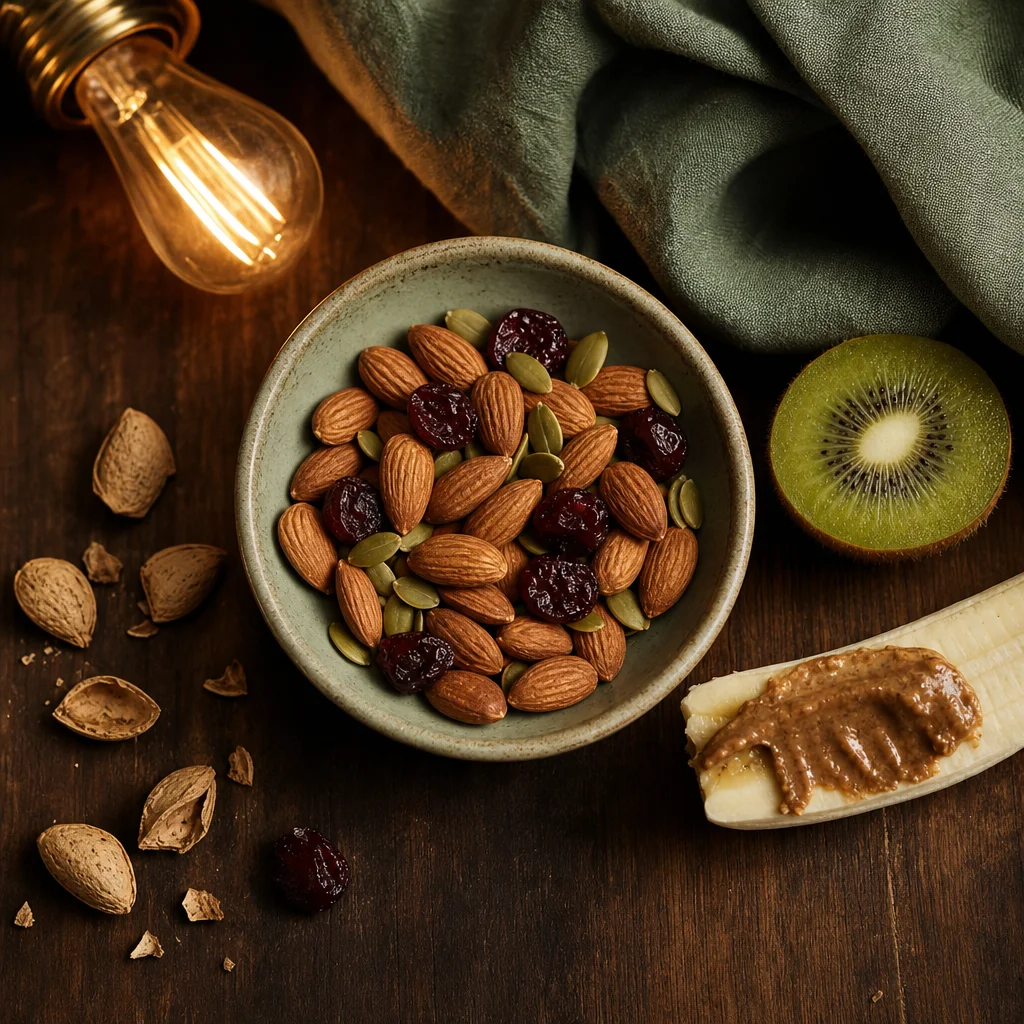
- Nuts, particularly almonds and pistachios, are among the foods with the highest natural melatonin content according to a 2023 systematic review of 31 studies.
- The best snacks for sleep combine melatonin, magnesium, and tryptophan — almonds, tart cherries, kiwi, and pumpkin seeds are top evidence-backed options.
- Timing matters. Eat your snack 1 to 2 hours before bed and keep it under 200 calories for the best results.
- Food sources of sleep nutrients are safer than supplements, which have inconsistent quality and labeling according to the NIH.
You have tried the sleep masks and the white noise apps. You have cut out caffeine after noon. But what if better sleep starts with something as simple as what you eat before bed? That is the idea behind snacks for sleep — and new research suggests it may actually work. A handful of almonds, a couple of kiwis, or a small bowl of tart cherries all contain nutrients that help your body prepare for rest. Let us explore what the science says about using food to support a good night sleep.
The connection between what we eat and how we sleep is real. Certain nutrients — melatonin, magnesium, tryptophan, and serotonin — play direct roles in helping the body relax and prepare for rest. The simplest way to get them? A well-chosen bedtime snack. Here is what works, what does not, and how to build a snacks for sleep routine that fits your life.
Quick Answer: Do Bedtime Snacks Actually Help You Sleep?
Yes — when you choose the right ones. The best snacks for sleep are small (under 200 calories), nutrient-dense, and eaten 1 to 2 hours before bed. Foods rich in melatonin, magnesium, and tryptophan — like almonds, tart cherries, kiwi, and pumpkin seeds — have clinical evidence supporting their ability to improve sleep quality, reduce the time it takes to fall asleep, and increase total sleep time. Heavy, sugary, or spicy foods close to bedtime can do the opposite.
Why Almonds Are Top Snacks for Sleep
Let us start with the humble almond — one of the most well-researched snacks for sleep you can reach for. What makes them so special? Three key nutrients, all in one small package.
Melatonin. A 2023 systematic review of 31 studies found that nuts are among the foods with the highest natural melatonin content. Almonds, along with pistachios and walnuts, contain measurable amounts of this sleep-regulating hormone. The NIH explains that melatonin acts as the bodys biological nighttime signal, helping prepare you for sleep.
Magnesium. A single ounce of almonds (about 23 nuts) delivers 77 milligrams of magnesium — roughly 20 percent of your daily needs. A 2021 systematic review and meta-analysis found that oral magnesium reduced the time it takes to fall asleep by about 17 minutes. The NIH also notes that magnesium may help with sleep, particularly for people who have trouble falling asleep.
Tryptophan. Almonds contain 209 milligrams of tryptophan per 100 grams. This amino acid converts to serotonin and then to melatonin — the same pathway that makes turkey dinner feel so soothing.
This combination of nutrients makes almonds a natural fit for a sleep-supportive diet. The broader evidence — including the Grao-Cruces 2023 systematic review on melatonin-rich foods and the Mah and Pitre 2021 meta-analysis on magnesium and sleep — already provides strong support for almonds as a smart bedtime choice.
The Sleep Nutrients That Make These Snacks Work
Before we get to the full list, let us talk about why certain foods help with sleep. Three key nutrients matter most:
Melatonin. This is your bodys nighttime signal. Your brain produces it naturally when it gets dark, telling your body it is time to wind down. Certain foods contain melatonin that can support this process. These natural melatonin sources provide a much gentler signal than supplements. According to the NIH, supplement quality is inconsistent — a 2017 study found 71 percent of melatonin supplements did not match their label claims. That gentle signal is actually what you want for natural, steady sleep support.
Magnesium. This mineral helps relax your muscles and calm your nervous system. The 2021 review mentioned above found that magnesium can help you fall asleep faster. Food sources like almonds, pumpkin seeds, and spinach are excellent ways to get more magnesium in your diet.
Tryptophan and serotonin. Tryptophan is an amino acid your body converts into serotonin, which then converts into melatonin. Foods that combine tryptophan with healthy carbohydrates help shuttle it to your brain more effectively.
Top Snacks for Sleep Backed by Science
Here are the most evidence-supported snacks for sleep, ranked by the strength of the research behind them. Each one offers a unique combination of sleep-supportive nutrients.
1. Almonds (1 ounce, about 23 nuts)
Nutrients: 77mg magnesium, 209mg tryptophan per 100g, natural melatonin. Evidence: Identified as a high-melatonin food in a 2023 systematic review. Aim for one ounce as an evening snack.
2. Tart Cherries (1 cup or 1 ounce dried, unsweetened)
Nutrients: Natural melatonin, antioxidants. Evidence: A double-blind, placebo-controlled study found tart cherry juice significantly increased melatonin levels and improved total sleep time and sleep efficiency. Whole cherries are better than juice — they have fiber and less sugar.
3. Kiwi (2 fruits, eaten 1 hour before bed)
Nutrients: Serotonin, antioxidants, folate. Evidence: A clinical study found that eating two kiwis an hour before bed for four weeks improved sleep quality scores by 42.4 percent and reduced sleep onset latency by 35.4 percent. It is one of the simplest and lowest-calorie options at just 84 calories total.
4. Pumpkin Seeds (1 ounce, about a handful)
Nutrients: 168mg magnesium per ounce (one of the richest sources), tryptophan, zinc. Pumpkin seeds are a great option for anyone with nut allergies. Pair them with a banana for added potassium and natural sweetness.
5. Banana with Almond Butter (1 small banana + 1 tablespoon almond butter)
Nutrients: Potassium and magnesium from the banana, plus magnesium and tryptophan from almond butter. The carbohydrate in the banana helps shuttle tryptophan to your brain. This combo is about 180 calories — perfect for a bedtime snack.
How to Build Your Perfect Bedtime Snack Routine
Now you know the foods. But knowing what to eat is only half the equation. Getting the timing and portions right matters just as much.
Timing: Eat your snack 1 to 2 hours before bed. This gives your body enough time to start digesting while keeping the sleep-supportive nutrients available as you drift off. If you have acid reflux, lean toward the 2-hour mark.
Portion size: Keep it under 200 calories. A true snacks for sleep strategy uses small portions — roughly one ounce of nuts, one piece of fruit, or a small bowl of berries. You are not trying to fill up. You are giving your body specific nutrients it can use.
Listen to your body: Here is a question worth asking yourself. Are you actually hungry? Or are you eating out of habit or boredom? The NIH suggests that relaxation techniques and good sleep habits are the foundation of healthy sleep — and snacking should support that, not replace it. If you are not truly hungry, try a cup of herbal tea first.
A Simple 7-Day Snack Plan for Better Sleep
Here is a practical weekly plan to get you started. Each snack takes under five minutes to prepare and falls within the 150-to-200-calorie range.
Monday: 1 ounce almonds (about 23 nuts) + 2 dried tart cherries
Tuesday: 2 kiwis, peeled and sliced
Wednesday: 1 small banana + 1 tablespoon almond butter
Thursday: 1 ounce pumpkin seeds + a small handful of dried tart cherries
Friday: 1/2 cup plain Greek yogurt + 1 tablespoon chopped almonds
Saturday: 1 ounce walnuts + 2 dried tart cherries
Sunday: 1 small apple + 1 tablespoon almond butter
Notice a pattern? Most of these pair a melatonin-rich food with a magnesium-rich one. That synergy matters. Each combination delivers multiple sleep-supportive nutrients at once.
Snacks to Skip Before Bed
Just as some foods help you sleep, others can keep you awake. Here is what to avoid in the hours before bed:
- Anything with caffeine. Coffee, black tea, soda, and even dark chocolate can interfere with sleep hours after you consume them.
- Sugary treats. Cookies, ice cream, and candy cause blood sugar spikes that can wake you up in the middle of the night.
- Spicy or heavy foods. These can cause indigestion and acid reflux, making it hard to fall asleep or stay asleep.
- Alcohol. While it may make you feel drowsy at first, alcohol disrupts your sleep cycle and reduces sleep quality.
- Large meals. Eating a big meal within 2 to 3 hours of bedtime forces your body to focus on digestion instead of rest.
The rule of thumb is simple: if your grandmother would not recognize it as food, it is probably not a good choice for a bedtime snack.
Frequently Asked Questions About Snacks for Sleep
Can I eat these snacks if I have a nut allergy?
Absolutely. Pumpkin seeds, sunflower seeds, and tahini are excellent nut-free alternatives that provide magnesium and tryptophan. Tart cherries and kiwi are also nut-free options with strong evidence for sleep support.
How long until I notice a difference?
Most clinical studies show improvements within 1 to 4 weeks of consistent consumption. The kiwi study saw results after 4 weeks. Give it at least two weeks before deciding if a particular snack works for you.
Are supplements better than food-based snacks for sleep?
For general sleep support, food sources are the safer choice. According to the NIH, melatonin supplements are not regulated as strictly as medications, and their quality varies widely — a 2017 study found 71 percent of supplements did not match their label claims. Whole foods deliver sleep nutrients in natural amounts alongside fiber, antioxidants, and other beneficial compounds.
Can I combine multiple sleep-supportive foods in one snack?
Yes, and that is actually the most effective approach. Pairing a melatonin-rich food (tart cherries, almonds) with a magnesium-rich food (pumpkin seeds, almonds again) creates synergy. The 7-day plan above is built on this idea — each snack combines at least two sleep-supportive nutrients.
The Bottom Line
Here is what I want you to take away from all this. Snacks for sleep are not a magic bullet. They will not fix chronic insomnia or replace good sleep hygiene. But they are one of the simplest, most natural, and most evidence-supported tools you can add to your sleep routine. For more on how nutrition supports restful sleep, check out our sleep nutrition tips for additional strategies.
Start with one change this week. Maybe it is a handful of almonds an hour before bed. Or two kiwis after dinner. Or a banana with almond butter instead of that bowl of ice cream. Small shifts, done consistently, add up.
The science is clear: what you eat before bed matters. Choose foods that work with your bodys natural sleep signals, not against them. Your sleep — and your morning self — will thank you.