
Build the Perfect Protein Yogurt Bowl in 5 Minutes
Key Takeaways
- A protein yogurt bowl can deliver 25–40g of protein in under 5 minutes — enough to keep you full and focused until lunch
- Greek yogurt packs roughly twice the protein of regular yogurt (15–18g per 6-ounce serving) plus probiotics and key nutrients like phosphorus and B12
- Adding fiber and healthy fats to your protein base creates the satiety trifecta that stabilizes blood sugar all morning long
- Collagen adds extra protein but is not a complete protein — pair it with Greek yogurt or whey for the full amino acid profile
- Plain Greek yogurt is the healthiest base; flavored varieties add 11–14g of sugar per serving that you don’t need
You know that 10:30 a.m. feeling. The one where your energy dips, your stomach starts growling, and suddenly that bag of pretzels in your desk drawer looks like a five-star meal. It happens because breakfast didn’t deliver what your body actually needed to make it to lunch. A well-built protein yogurt bowl changes that entirely. And the best part? It takes five minutes to throw together — one of the most satisfying quick high protein meals you can make.
Here’s what we’re covering: what makes a protein yogurt bowl work (the science, not just the recipe), how much protein you actually need at breakfast, which protein powder to choose, and seven flavor combinations that will keep your mornings interesting. Let’s build your perfect bowl.
Quick Answer: What Is a Protein Yogurt Bowl?
A protein yogurt bowl is a high-protein breakfast built on a Greek yogurt base (15–18g protein), boosted with protein powder, collagen, or additional dairy (another 15–25g), and topped with fiber-rich fruits, healthy fats from nuts or seeds, and optional crunch. The formula is simple: protein + fiber + fat = sustained energy until lunch. No mid-morning crash required.
The Formula for a Perfect Protein Yogurt Bowl
Think of your yogurt bowl as a formula rather than a recipe. That way you never get bored — you just swap ingredients. Here’s the blueprint:
- Protein base (15–18g): ¾–1 cup plain Greek yogurt. This is your foundation. A 6-ounce serving delivers roughly twice the protein of regular yogurt, according to Harvard Health’s guide to Greek yogurt.
- Protein boost (10–25g): One scoop of protein powder or collagen, or an extra dollop of yogurt. This gets you into the satiety sweet spot.
- Fiber (5–10g): Fresh or frozen fruit, chia seeds, flax meal, or a sprinkle of oats. Fiber slows digestion and keeps blood sugar even.
- Healthy fats (5–15g): Nuts, seeds, nut butter, or a drizzle of coconut cream. Fat adds staying power and makes the bowl genuinely satisfying.
- Flavor (optional): Cocoa powder, cinnamon, vanilla extract, or a pinch of sea salt. These add zero sugar but plenty of enjoyment.
That’s it. Pick one from each category and you have a different breakfast every day of the week.
Why Greek Yogurt Is the Perfect Base
Greek yogurt earns its reputation. A standard 6-ounce serving delivers 15 to 18 grams of protein — roughly double what you get from regular yogurt. It also provides calcium, phosphorus, magnesium, and vitamins A and B12. Some calcium is lost during the straining process, but Greek yogurt still contributes meaningfully to your daily needs.
Then there’s the probiotic bonus. Yogurt with live active cultures supports gut microbiome diversity, which research links to better digestion and immune function. A 2025 Harvard study found that regular yogurt eaters had lower rates of colorectal cancers — though researchers note this may reflect overall diet patterns rather than yogurt alone.
Greek Yogurt vs Regular Yogurt: Protein at a Glance
- Plain Greek yogurt (6 oz): 15–18g protein, 0g added sugar
- Plain regular yogurt (6 oz): 6–8g protein, 0g added sugar
- Flavored Greek yogurt (6 oz): 12–15g protein, 11–14g added sugar
- Skyr (Icelandic yogurt) (6 oz): 17–20g protein, 0g added sugar
Bottom line: Choose plain. You control the sweetness, not the manufacturer.
Here’s something most recipe blogs don’t tell you: Greek yogurt also produces a significantly better blood sugar response than non-dairy alternatives. A 2020 randomized crossover study in Applied Physiology, Nutrition, and Metabolism found that when young women ate Greek yogurt with granola, their post-meal blood glucose was 52 percent lower compared to a cultured coconut product with the same granola. That’s a meaningful difference — and it likely comes from the higher protein content and the insulin response dairy triggers.
Why Protein at Breakfast Matters for Blood Sugar
Let’s talk about what happens when you eat a carb-heavy breakfast. Think toast with jam, a granola bar, or sugary cereal. Your blood sugar spikes quickly. Your pancreas releases a surge of insulin to bring it back down. Then your blood sugar drops below baseline — and that drop is what causes the mid-morning energy crash, the cravings, and the desperate search for snacks.
Protein changes that picture completely. Harvard Health nutrition experts explain that protein is digested slowly, which helps keep blood sugar steady and extends the feeling of fullness for hours. Think of protein as a speed bump for digestion — it slows everything down, gives your body time to process the meal evenly, and prevents the glucose roller coaster.
A 2024 study in the Journal of Dairy Science tested this directly. Researchers gave 30 young women either a high-protein dairy breakfast, a low-protein high-carb breakfast, or no breakfast at all. The high-protein group reported significantly more fullness and less hunger — and they scored 3.5 percentage points higher on a cognitive concentration test compared to those who skipped breakfast. That’s the difference between powering through your morning meeting and staring blankly at your screen.
Here’s the nuance, though. The same study found that the high-protein breakfast didn’t reduce total calorie intake for the rest of the day. So the main benefit isn’t automatic weight loss — it’s better satiety, steadier energy, and clearer thinking. If those sound worth having, a protein yogurt bowl is one of the simplest ways to get them.
How Much Protein Do You Actually Need at Breakfast?
The National Institutes of Health recommends that healthy adults get 10 to 35 percent of their daily calories from protein. The RDA for women is 46 grams per day, but the acceptable range is 10 to 35 percent of total calories — roughly 45 to 175 grams for most women. A practical daily target for many is 46 to 75 grams. The RDA itself Harvard Health notes you could get from just one serving of Greek yogurt, a 4-ounce chicken breast, and a bowl of cereal with skim milk.
But here’s the thing about protein timing. Most people eat a small amount at breakfast, a moderate amount at lunch, and a large amount at dinner. Research increasingly suggests that spreading protein more evenly across meals — a strategy our protein intake guide explores in depth — may be better for satiety and muscle maintenance. A protein yogurt bowl that delivers 25 to 35 grams of protein covers roughly half to three-quarters of a woman’s daily needs in one meal. That’s not excessive — it’s smart distribution.
The 2018 study from the Journal of Dairy Science that Harvard reported on found that 28 grams of protein at breakfast produced significantly better appetite control than 12.4 grams. That suggests the satiety sweet spot is somewhere around 25 to 35 grams. Your protein yogurt bowl, with Greek yogurt plus a protein boost, hits that target easily.
Should You Add Collagen or Protein Powder?
This is where things get interesting. You have three main options for boosting the protein in your yogurt bowl, and each works differently.
Protein Powder Options Compared
Whey protein: The gold standard for muscle health. It’s a complete protein (contains all essential amino acids) and mixes smoothly into yogurt. Expect about 20–25g protein per scoop. Whey protein also triggers a notable insulin response (dairy proteins are known to be insulinogenic), which may enhance the blood sugar benefits of your bowl.
Collagen peptides: Not a complete protein — it lacks adequate leucine and other essential amino acids needed for muscle protein synthesis. That means it shouldn’t be your only protein source. However, collagen does add protein (about 10–15g per scoop) and new research from the British Journal of Nutrition suggests it may modestly reduce subsequent food intake. Pair it with Greek yogurt for the best of both worlds.
Plant-based protein (pea, soy, or rice): Most blends are complete or nearly complete proteins. They tend to make yogurt thicker than whey does — some people love that texture, others find it chalky. Pea protein blends generally perform best in yogurt. Look for a blend that provides 15–20g protein per scoop.
Our take? Whey is the superior choice for nutrition and texture. Collagen is a fine addition if you already have it in your routine — just don’t rely on it as your only protein source. Plant-based options work well for those avoiding dairy, but pay attention to texture and ingredient quality.
Build Your Perfect Bowl: 7 Flavor Combinations
Here’s where the formula comes to life. Each of these bowls follows the same blueprint: Greek yogurt + protein boost + fiber + healthy fats. The flavor profiles are completely different, but the nutrition is consistently excellent.
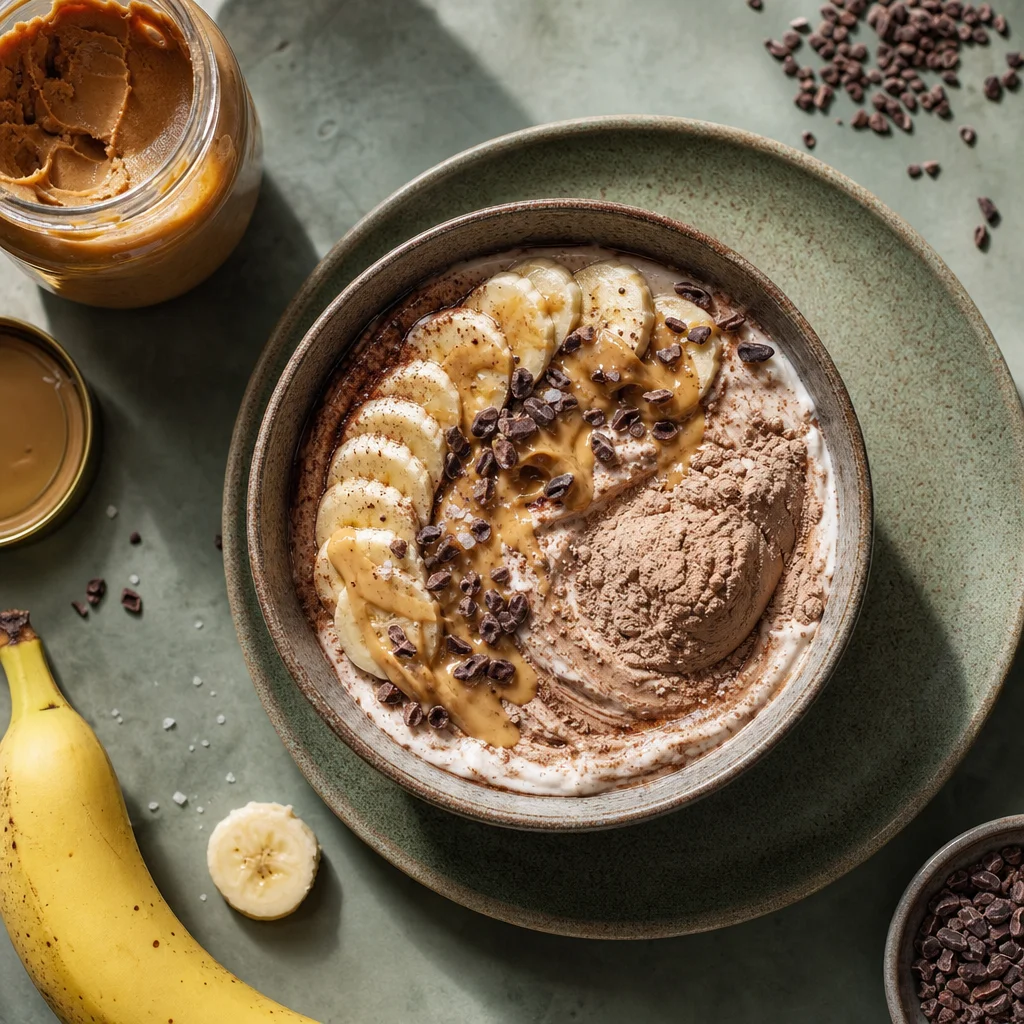
- Chocolate Peanut Butter Dream: Plain Greek yogurt + chocolate whey protein + 1 tbsp peanut butter + sliced banana + cacao nibs. Tastes like dessert. Delivers about 38g protein.
- Tropical Mango Coconut: Plain Greek yogurt + vanilla collagen + cubed mango + unsweetened coconut flakes + macadamia nuts. Bright, fresh, and satisfying. About 32g protein.
- Berry Acai Bowl: Plain Greek yogurt + unsweetened acai puree (or powder) + mixed berries + hemp seeds + a drizzle of honey. Antioxidant powerhouse. About 30g protein.
- Apple Pie: Plain Greek yogurt + vanilla plant protein + diced apple sautéed with cinnamon + chopped walnuts + a sprinkle of oat flour. Tastes like fall in a bowl. About 33g protein.
- Lemon Blueberry Cheesecake: Plain Greek yogurt + vanilla whey + lemon zest + fresh blueberries + crushed almonds. Bright, creamy, and protein-packed. About 35g protein.
- Chunky Monkey: Plain Greek yogurt + chocolate plant protein + sliced banana + chopped dark chocolate (70%+) + walnuts. A classic combo for a reason. About 34g protein.
- Savory Herb Bowl: Plain Greek yogurt (no protein powder) + cucumber + cherry tomatoes + fresh dill + pumpkin seeds + a drizzle of olive oil and za’atar. Unexpected, refreshing, and about 22g protein. Perfect for when you’re tired of sweet breakfasts.
Pro tip: For the chocolate variations, use cocoa powder plus a zero-sugar sweetener (like monk fruit or stevia) instead of flavored protein powder. That way you control both the sweetness and the protein source independently.
Dairy-Free and Low-Lactose Options
Greek yogurt is lower in lactose than milk because the straining process removes some of the whey (where most of the lactose lives). The NIH notes that many people with lactose intolerance can tolerate yogurt without symptoms — and Greek yogurt even more so than regular.
If dairy doesn’t work for you, here are your best options:
- Sheep milk yogurt: Even lower in lactose than cow’s milk yogurt. Creamy, rich, and typically 8–10g protein per serving.
- Unsweetened soy yogurt: The best dairy-free option for protein — typically 6–8g per serving. Pair with a scoop of pea protein powder to reach the 25g target.
- Coconut or almond yogurt: Much lower in protein (1–3g per serving). You’ll definitely need a protein powder boost, plus consider nut butter or hemp seeds for extra protein and fat.
Pro Tips for the Best Texture
Stir protein powder into yogurt at the bottom of the bowl first, before adding toppings. This prevents clumps and ensures even distribution. For collagen, use a fork rather than a spoon — collagen tends to clump less when whisked briefly.
If your bowl turns out too thick, add a splash of milk (dairy or unsweetened almond) and stir again. If it’s too thin, a tablespoon of chia seeds or ground flax will thicken it naturally in about 5 minutes while adding fiber and omega-3s.
Frequently Asked Questions
Can I meal prep protein yogurt bowls for the week?
Yes. Mix the yogurt and protein powder base and store it in individual containers for up to three days. Keep toppings separate — especially crunchy ones like nuts and granola — and add them just before eating. Frozen berries can go directly into the container; they’ll thaw by morning if stored in the fridge.
Is 40g of protein too much for one meal?
For most healthy women, no. Research suggests the body can effectively use 25–40g of protein per meal for muscle synthesis and satiety. If you’re active, aiming for the higher end is perfectly reasonable. If you’re sedentary or have kidney concerns, stick closer to the 25g range and consult your healthcare provider.
Can I make a protein yogurt bowl without protein powder?
Absolutely. Use 1.5 cups of Greek yogurt instead of 1 cup (that’s about 23–27g protein). Add hemp seeds (3 tbsp = 10g protein), chopped almonds, and a poached egg on the side if you want a savory-leaning breakfast. You can still hit 30g without any powder at all.
Will a protein yogurt bowl help me lose weight?
It may help indirectly. The evidence clearly shows that a high-protein breakfast improves satiety and reduces hunger throughout the morning. Some people naturally eat less later in the day as a result, but not everyone does. What a protein yogurt bowl will definitely do: keep your blood sugar stable, improve your morning focus, and provide a nutrient-dense start to your day. Weight loss depends on your overall eating pattern, not any single meal.
The Bottom Line
A protein yogurt bowl is more than a trendy breakfast photo. It’s a practical, evidence-backed strategy for starting your day with stable energy, fewer cravings, and a meal that actually tastes good. The formula is simple: Greek yogurt + protein boost + fiber + healthy fats. The variations are endless. And the five minutes it takes to make one might be the most valuable five minutes of your morning.
Start with the Chocolate Peanut Butter Dream if you want something that feels indulgent. Go with the Berry Acai Bowl if you prefer fruity and light. Or build your own using the formula above. The only rule? Choose plain Greek yogurt, add enough protein to hit 25 grams or more, and include at least one source of fiber and one source of healthy fat. Your 10:30 a.m. self will thank you.