12 High-Protein Pasta Dinners That Are Creamy & Satisfying
You want a creamy, satisfying pasta dinner. You also want it to be good for you. These two things do not have to be opposites. The idea that comfort food and healthy eating live on different planets is one of the most persistent myths in nutrition. A high protein pasta dinner can deliver the same rich, soothing flavors you crave while actually supporting your energy, muscle health, and digestion. The trick is building the dish with intention — choosing the right protein source, weaving in vegetables and fiber, and being smart about your pasta base. Here is what that looks like, with 12 of the best recipes organized so you can find your perfect weeknight meal.
Key Takeaways
- Aim for 15+ grams of protein — this supports muscle health, keeps you full, and stabilizes your energy after dinner.
- Chicken, shrimp, tofu, and beans all work beautifully in creamy pasta sauces — your protein choice is a flavor choice, not a compromise.
- Whole-grain or legume pasta adds fiber alongside protein, making the meal more balanced and blood-sugar friendly.
- One-pot and one-pan methods save cleanup time while keeping the starchy pasta water in the dish for extra creaminess.
- Vegetables are not optional — adding spinach, broccoli, zucchini, or mushrooms naturally boosts fiber, vitamins, and volume without extra calories.
Why High Protein Pasta Dinners Actually Work
Here is something I love about the way we eat now. Pasta night does not have to mean a carb-heavy plate that leaves you sluggish an hour later. When you build a high protein pasta dinner with at least 15 grams of protein per serving, you get the comfort you want with the staying power your body needs. Protein helps slow down how quickly your body digests carbohydrates, which means steadier blood sugar and longer-lasting energy. That is a big deal for anyone trying to avoid the after-dinner slump.
The recipes in this collection all hit that 15-gram threshold — some go much higher. And they do it without relying on big portions of meat or complicated techniques. The real secret? Layering. A little chicken plus some cheese. Shrimp plus a creamy sauce made with yogurt or cream cheese. Tofu plus whole-wheat pasta. Each ingredient contributes something, and together they add up to a meal that feels indulgent and nourishing at the same time.
Let’s walk through the best options, organized by the protein source that makes each one shine.
Chicken-Based Pasta Dinners for Steady Protein
Chicken is the most common protein partner for pasta, and for good reason. It is lean, versatile, and takes on the flavor of whatever sauce you build around it. But not all chicken pasta recipes are created equal. The best ones use the whole breast or thigh, shredded or diced, so you get a real bite of protein in every forkful.
Top Picks for Chicken Lovers
- Creamy Basil-Tomato Chicken Pasta Bake — Tender chicken breast bakes with cherry tomatoes and Boursin cheese for a rich, herby sauce. The chicken gets shredded back into the dish with pasta and fresh basil, then topped with fontina and baked until bubbly. This is weeknight comfort food at its finest.
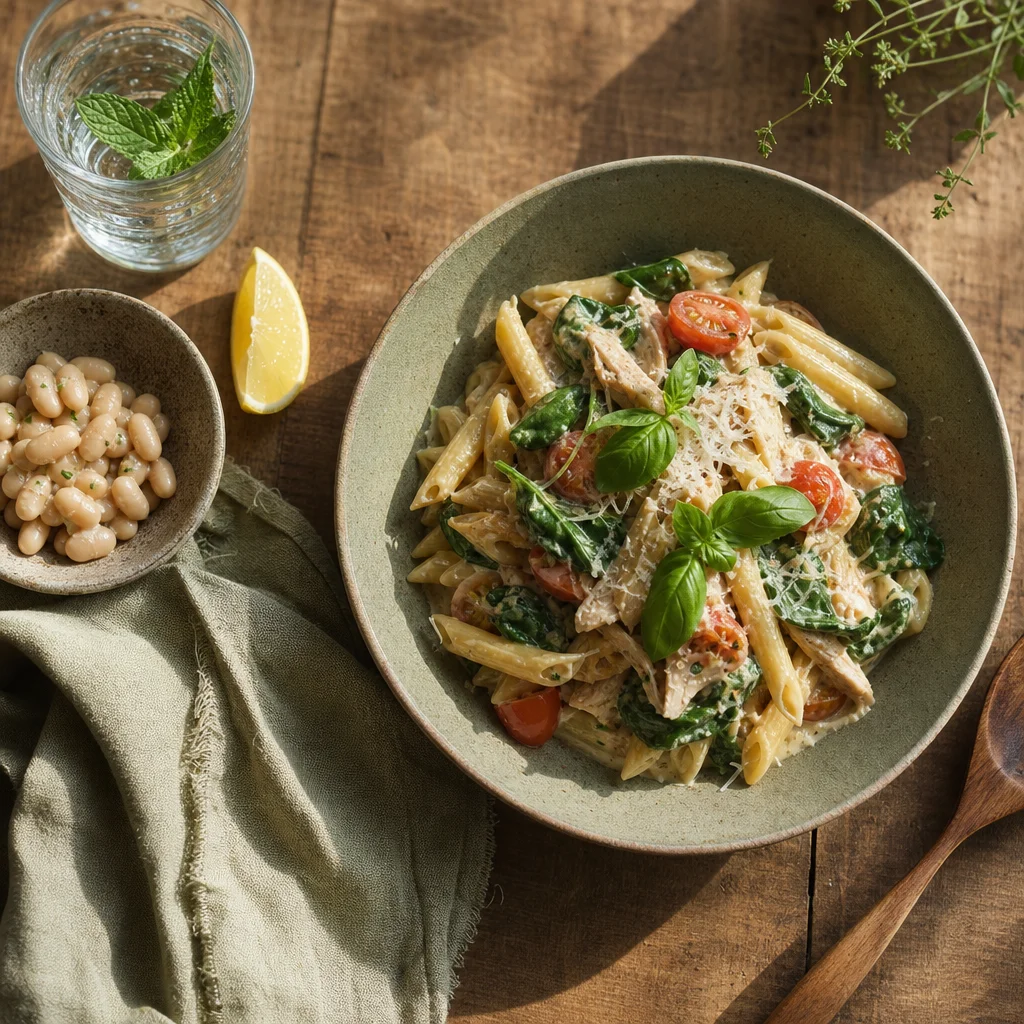
- Creamy Garlic-Parmesan Chicken and Spinach Pasta Bake — Think of this as the dinner version of a warm hug. Tender chicken pieces, fresh spinach, and pasta come together in a garlic-Parmesan cream sauce. You can swap the spinach for any green you have on hand.
- One-Pot Chicken Alfredo — This one is a game changer for busy nights. Everything cooks in one pot, and the starch from the pasta creates a naturally creamy sauce. Cream cheese and Parmesan do the heavy lifting here.
- Cheesy Chicken and Broccoli Alfredo Skillet Casserole — Broccoli adds fiber and crunch while shredded rotisserie chicken keeps prep fast. Pre-shredded Italian cheese blend simplifies the sauce.
What I love about these recipes is how they use the pasta cooking method to build creaminess without heavy cream. When you cook pasta in just the right amount of liquid, the starch stays in the pot rather than going down the drain. That starchy water thickens sauces naturally, so you get that silky texture with less dairy.
Shrimp and Seafood Options for Lighter High Protein Pasta
If you want something that feels a little lighter but still hits the protein mark, shrimp is your best friend. It cooks in minutes, pairs beautifully with creamy sauces, and brings a clean briny flavor that brightens rich dishes.
Top Picks for Seafood Fans
- Creamy Pesto Shrimp with Gnocchi and Peas — This comes together in a single skillet in under 30 minutes. Pillowy gnocchi, tender shrimp, and sweet peas are tossed in a creamy pesto sauce. Substitute broccoli or asparagus for the peas if you prefer.
- Linguine with Lemon Alfredo Shrimp — Inspired by traditional Alfredo but with a fraction of the fat. Reduced-fat cream cheese builds body while Parmesan adds that signature savory note. Lemon brightens everything up.
Shrimp provides about 20 grams of protein per 3-ounce serving, making it one of the most efficient protein sources you can add to pasta. And because it cooks so quickly, it is ideal for nights when you want a high protein pasta dinner without spending an hour in the kitchen.
Plant-Based High Protein Pasta Options That Satisfy
You do not need meat to make a creamy, protein-packed pasta dinner. Plant-based options can be just as satisfying when you combine the right ingredients. Tofu, white beans, cheese tortellini, and legume-based pasta all bring significant protein to the table.
Top Picks for Plant-Based Eaters
- Tofu and Zucchini Piccata — A plant-forward take on the classic piccata. Protein-rich tofu replaces the meat while keeping the bright, lemony caper sauce. Whole-wheat spaghetti and zucchini add fiber. This is proof that plant-based pasta can be just as bold and satisfying.
- Creamy Spinach Pasta with White Beans — Fresh spinach and kale get blended with cream cheese and Gruyère for a luscious green sauce. White beans add protein and creaminess. This is vegetarian comfort food at its best.
- Marry Me Tortellini — Cheese tortellini simmer right in the skillet with a brothy mix of tomatoes, shallots, and garlic, finished with cream. Tortellini are typically filled with ricotta or other cheeses, giving you built-in protein.
- Butternut Squash Mac and Cheese — Roasted squash gets whirled into the cheese sauce with fresh sage. Pre-chopped squash keeps prep minimal. Use whole-wheat or chickpea pasta to boost the protein and fiber even more.
Here is a tip for plant-based pasta nights: choose legume-based pasta (made from chickpeas, red lentils, or black beans) as your base. These pastas deliver 20-25 grams of protein per serving on their own, before you add any other ingredients. That makes it much easier to hit the 15-gram target with a simple vegetable and oil sauce.
How to Boost Protein in Any Pasta Dish
You do not need a specific recipe to make a high protein pasta dinner. Once you know a few simple strategies, you can adapt almost any pasta dish you already love.
Start with the pasta itself. Swap regular semolina pasta for a legume-based or whole-wheat version. Chickpea pasta delivers roughly 20 grams of protein per 2-ounce serving compared to about 7 grams for traditional pasta. That is an immediate upgrade with no extra effort.
Next, add a protein-rich stir-in. White beans, canned lentils, or crumbled tofu blend into tomato sauces and cream sauces seamlessly. You barely notice they are there, but your meal gets a significant protein boost.
Finally, use cheese strategically. A sprinkle of Parmesan, a dollop of ricotta, or a handful of shredded mozzarella adds protein and flavor. A quarter-cup of part-skim ricotta adds about 6 grams of protein. Small additions add up.
Quick Protein-Boosting Add-Ins
Try stirring any of these into your next pasta dish for an easy protein lift:
Canned white beans — 1/2 cup adds about 8 grams of protein. Rinse and stir into the sauce.
Cooked lentils — 1/2 cup adds about 9 grams. Works great in tomato-based sauces.
Greek yogurt — 1/4 cup adds about 6 grams. Stir in at the end for creamy sauces.
Hemp seeds — 2 tablespoons add about 6 grams. Sprinkle on top before serving.
Nutritional yeast — 2 tablespoons add about 8 grams and a cheesy flavor without dairy.
What to Look for in a Balanced Pasta Dinner
Protein is important, but it is not the whole story. A truly balanced pasta dinner also includes fiber from vegetables or whole grains, healthy fats from olive oil or cheese, and enough volume to feel satisfying without overdoing calories. Here is what I look for when choosing or building a high protein pasta recipe:
- At least one vegetable per serving. Spinach, broccoli, zucchini, mushrooms, tomatoes — pick one and build around it. Vegetables add fiber, vitamins, and water volume so you feel full on a reasonable portion.
- A protein source you actually enjoy. There is no wrong choice. Chicken, shrimp, tofu, beans, cheese, and legumes all work. Pick what sounds good to you tonight.
- A sauce that builds creaminess without heavy cream. The best recipes use pasta water, cream cheese, yogurt, or blended vegetables to create a silky texture.
- A reasonable portion size. A balanced pasta dinner is about 1 to 1.5 cups of cooked pasta plus vegetables and protein. Plate it with a side salad or roasted vegetables for extra volume.
One of my favorite things about the recipes in this collection is how naturally they meet these criteria. They were designed with balance in mind, not as an afterthought. The creamy sauces come from real ingredients, not processed shortcuts. The vegetables are woven in, not piled on as an apology.
Frequently Asked Questions About High Protein Pasta
How much protein should a pasta dinner have?
Aim for at least 15 grams per serving for a meal that supports muscle health and keeps you full for several hours. Many of the recipes here deliver 20-30 grams depending on portion size and ingredients.
Is high-protein pasta good for weight management?
Yes — protein increases satiety, meaning you feel fuller for longer after eating. When combined with fiber from vegetables and whole grains, a high-protein pasta dinner can help you eat fewer calories overall without feeling deprived.
Can I make these recipes gluten-free?
Absolutely. Swap the pasta for a gluten-free option like brown rice pasta, chickpea pasta, or lentil pasta. Just check cooking times, as gluten-free pastas often cook faster and need more attention to avoid overcooking.
What is the best pasta shape for creamy sauces?
Shapes with nooks and ridges — penne, fusilli, farfalle, or shells — hold creamy sauce better than long, smooth pasta. For baked dishes, any short pasta works. For skillet dishes, use whatever shape you enjoy.
Can I meal prep high-protein pasta dinners?
Yes, with one caveat. Pasta absorbs sauce as it sits, so it can become dry by day three. Under cook the pasta slightly and store the sauce separately for the best texture. Baked pasta dishes reheat well — just add a splash of milk or broth before warming.
The Bottom Line
Comfort food and healthy eating are not opposites. A high protein pasta dinner proves that every time you sit down to eat. When you choose whole-food ingredients — lean protein, fresh vegetables, quality pasta, and a sauce made with real dairy or plant alternatives — you get a meal that satisfies both your taste buds and your body’s needs.
Start with whatever protein sounds good to you tonight. Add a vegetable you love. Use a cooking method that keeps the starchy pasta water in the dish. And remember that small upgrades — a handful of white beans, a swap to legume pasta, a generous sprinkle of Parmesan — add up to a meal that works for your health without asking you to give up the food you love.
That is the TEOHL way. Real food. Real balance. No trade-offs.