

Levothyroxine Recall 2026: What Women Need to Know
Key Takeaways
- Do NOT stop taking your medication. Stopping levothyroxine suddenly can cause more harm than continuing a slightly weaker dose temporarily.
- Check your lot number. Call your pharmacy and ask for the manufacturer, NDC number, and lot number on file for your last refill.
- This recall proves the system works. Routine quality testing caught the potency issue — that is good news, not a reason to panic.
- Your doctor can test your thyroid levels. A simple TSH blood test can confirm your levels are stable and give you peace of mind.
- Only specific lots are affected. This recall is limited to levothyroxine from one manufacturer — check your prescription details before worrying.
Picture this: You open your medicine cabinet, reach for your daily thyroid pill, and spot a news alert about a levothyroxine recall. Your heart sinks. Is your medication safe? Should you stop taking it? You are not alone in feeling anxious. The levothyroxine recall announced by the FDA in July 2026 has left many women wondering what to do next. Here is the truth: this recall is your quality-check system doing its job. And the most important thing you can do right now is keep taking your medication. This guide walks you through exactly what happened, how to check your prescription, and what steps to take — without the panic.
Quick Answer: Is My Levothyroxine Safe to Take?
Yes, keep taking it. The FDA and medical experts agree: do not stop your thyroid medication. The recall is limited to specific lots from one manufacturer (Lupin Pharmaceuticals), distributed by Major Pharmaceuticals and Cardinal Health. If your prescription is from a different company, you are not affected. If it is one of the recalled lots, talk to your doctor — do not skip a dose. A subpotent pill may deliver less than the full dose, but stopping entirely can trigger symptoms much worse.
What the Levothyroxine Recall Actually Means
On July 17, 2026, the U.S. Food and Drug Administration classified a nationwide levothyroxine recall as Class II. This is not the scariest category — that is Class I, reserved for products that could cause serious harm or death. According to the FDA’s guide to understanding drug recalls, a Class II recall means the product may cause temporary or medically reversible health problems. The chance of serious harm is low.
Here is what happened. Routine stability testing found that certain tablets contained less active ingredient than the label promised. In pharmaceutical terms, they were subpotent. This means you might get a slightly weaker dose than your doctor prescribed. But here is the key: the recall was voluntary. Major Pharmaceuticals caught the issue, reported it, and initiated the levothyroxine recall themselves. That is a sign the system is working, not failing — just like the system that recently caught lead contamination in a separate FDA recall of contaminated cookware.
Which Products Are Affected by This Recall
This levothyroxine recall covers 12 product lines across 7 strengths: 25, 50, 75, 88, 112, 125, and 150 micrograms. The tablets were manufactured by Lupin Pharmaceuticals and distributed by Major Pharmaceuticals (under NDC code 0904) and Cardinal Health (under NDC code 55154). Full details are available in the official FDA enforcement report for the levothyroxine recall.
Recalled Lots — Major Pharmaceuticals Distribution
- 25 mcg: Lot N02212, NDC 0904-6949-61, Exp. 07/2026
- 50 mcg: Lot N02200, NDC 0904-6950-61, Exp. 10/2026
- 75 mcg: Lots N02172, N02296, N02288, NDC 0904-6951-61, Exp. 07/2026 – 12/2026
- 88 mcg: Lot N02310, NDC 0904-6952-61, Exp. 01/2027
- 112 mcg: Lot N02203, NDC 0904-6954-61, Exp. 09/2026
- 125 mcg: Lot N02266, NDC 0904-6955-61, Exp. 11/2026
- 150 mcg: Lot N02167, NDC 0904-6956-61, Exp. 07/2026
Recalled Lots — Cardinal Health Distribution
- 25 mcg: Bag lots N02212A, N02212B (NDC 55154-3558-0); Blister lot N02212 (NDC 0904-6949-61), Exp. 07/2026
- 50 mcg: Bag lots N02200A, N02200B (NDC 55154-3559-0); Blister lot N02200 (NDC 0904-6950-61), Exp. 10/2026
- 75 mcg: Bag lots N02172A, N02172B, N02288A, N02288B (NDC 55154-3560-0); Blister lots N02172, N02288 (NDC 0904-6951-61), various expirations
- 125 mcg: Bag lots N02266A, N02266B (NDC 55154-3562-0); Blister lot N02266 (NDC 0904-6955-61), Exp. 11/2026
- 150 mcg: Bag lot N02167A (NDC 55154-3563-0); Blister lot N02167 (NDC 0904-6956-61), Exp. 07/2026
Some affected lots do not expire until January 2027, so even a relatively new refill could be affected. The recall applies nationwide.
How to Check Your Thyroid Medication
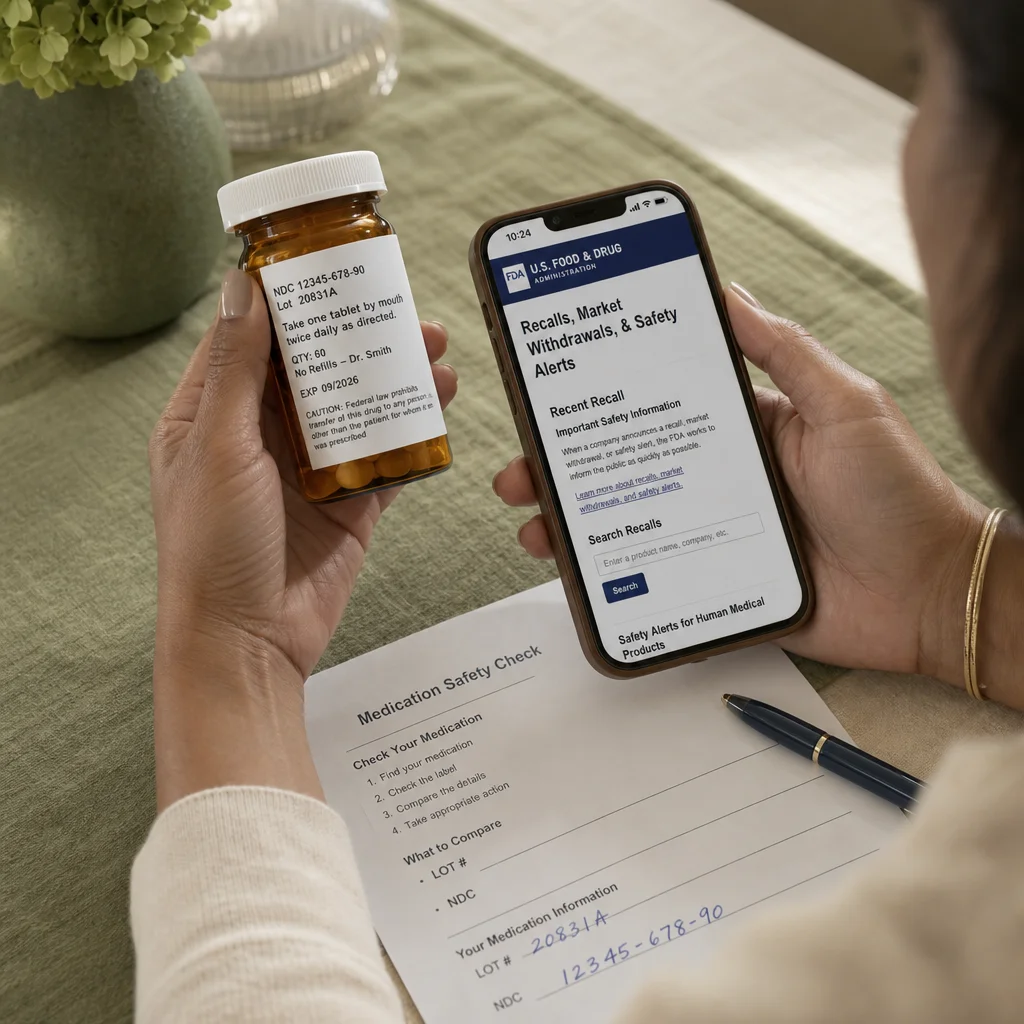
Here is the thing: most pharmacies pour tablets into their own vials. So the lot number and NDC on your bottle may not match the original package. Do not worry. Just follow these steps.
Step 1: Call your pharmacy. Ask for the manufacturer, NDC number, and lot number on file for your last levothyroxine refill. Here is a script you can use:
“Hi, I take levothyroxine and I am checking on the recent recall. Could you please look up the manufacturer, NDC number, and lot number for my last refill? My name is [your name] and my date of birth is [your DOB].”
Step 2: Compare the details. Check the NDC and lot number against the tables above. If they match, your medication is part of the levothyroxine recall. If not, you are in the clear.
Step 3: Talk to your doctor. If your prescription is affected, call your doctor and ask whether you should switch to a different brand or manufacturer. They can write a new prescription for a product not affected by this levothyroxine recall. Do not wait until you run out of your current supply.
Why You Should Keep Taking Your Thyroid Medication
This is the most critical message in this entire article: do not stop taking your levothyroxine. The MedlinePlus levothyroxine drug information states clearly that you should not stop taking this medication without your doctor’s approval. Why? Because your body depends on a consistent supply of thyroid hormone. Stopping suddenly can cause your hypothyroidism symptoms to return — fatigue, weight gain, brain fog, and more. In contrast, a slightly weaker dose may not even be noticeable.
Dr. David Cutler, a family medicine physician at Providence Saint John’s Health Center, put it plainly in his comments on the levothyroxine recall: “You will pick it up before there are any significant adverse effects.” Most doctors monitor thyroid patients with blood tests every three to six months. If your levels start to shift, your doctor will catch it early.
The same advice comes from the manufacturer. The recall letter from Major Pharmaceuticals stated that use of the product “is not likely to cause adverse health effects.” And the FDA itself notes that stopping a recalled medication can sometimes cause more harm than continuing it while you arrange a replacement.
To put it simply: a subpotent dose is a minor concern. No thyroid medication at all is a bigger one. Keep taking your pills until your doctor tells you otherwise.
Symptoms to Watch For
If you are taking a recalled lot, your dose may be slightly lower than prescribed. Some people may notice symptoms of mild hypothyroidism. According to experts, these can include:
- Fatigue or feeling more tired than usual
- Unexplained weight gain
- Constipation
- Hair thinning or hair loss
Other common hypothyroidism symptoms can include feeling cold more often and dry skin, though these are not specific to this recall situation.
Now, here is the thing: most people taking a slightly weaker tablet will not notice any difference at all. The body’s feedback system is fairly forgiving. But if you do notice any of these symptoms, do not panic. Call your doctor and ask for a TSH blood test. That test will tell you exactly where your thyroid levels stand. If they are low, your doctor can adjust your dose or switch you to a different brand.
On the flip side, do not assume every symptom is related to the levothyroxine recall. Thyroid patients experience fatigue, weight changes, and hair loss for many reasons. Let the blood test be your guide.
What to Do Next: Your Action Plan
Let us put it all together into a clear plan you can follow today.
- Check your medication. Call your pharmacy and verify the manufacturer, NDC, and lot number against the recall tables above.
- Keep taking your pills. Do not stop or skip doses. Consistency is key for thyroid health.
- Call your doctor. If your lot is affected, ask about getting a new prescription for a different brand or manufacturer. Your doctor may also want to check your TSH levels for peace of mind.
- Watch for symptoms. Pay attention to fatigue, weight gain, or other hypothyroidism signs. But do not assume you will have any.
- Ask about an early refill. Contact your pharmacy and insurance provider to ask whether an early refill exception is available for recalled medications. Policies vary by plan.
If your medication is not affected, you do not need to do anything differently. Just keep up your normal routine.
Which Medications Are NOT Affected
Here is some reassuring news. This levothyroxine recall is limited to levothyroxine manufactured by Lupin Pharmaceuticals and distributed by Major Pharmaceuticals and Cardinal Health. Levothyroxine from many other manufacturers is not part of this recall — ask your pharmacist which manufacturer produced your prescription.
If you are affected and your doctor wants to switch you, you have plenty of options. Just remember: do not switch brands without your doctor’s approval, because different formulations may have slightly different absorption profiles. Your doctor may need to retest your TSH after the switch.
A Pattern of Potency Recalls
You might be wondering: has this happened before? The answer is yes. Levothyroxine has a history of potency-related issues. The FDA history of levothyroxine potency issues documents 10 recalls for subpotency, content uniformity, and stability between 1990 and 1997. That is before the FDA required formal approval for the drug in August 1997.
More recently, Accord Healthcare recalled some levothyroxine tablets in June 2025 — also for subpotency, also classified as Class II. So this is not an isolated event. But here is the way to think about it: each recall means the testing system caught the problem before it caused widespread harm — the same vigilance that applies to all medications, from thyroid drugs to new ADHD treatments.
Frequently Asked Questions About the Levothyroxine Recall
Should I be worried about this levothyroxine recall?
No. The risk is low. The recall is Class II, which means temporary or reversible effects with a low chance of serious harm. Your doctor monitors your levels regularly and will catch any changes early.
Can I switch pharmacies to get a different manufacturer?
Yes, you can. Call ahead to ask which manufacturer’s levothyroxine they carry. If you switch, let your doctor know so they can monitor your TSH levels after the change.
Will my insurance cover an early refill if my medication is recalled?
Policies vary by plan. Call the number on the back of your insurance card and ask about their policy for replacement fills during a medication recall.
What if I am pregnant and taking levothyroxine?
Do not stop your medication. Call your OB or endocrinologist right away. Thyroid levels are especially important during pregnancy, and your doctor will want to check your TSH and adjust your prescription if needed.
Quick Reference: Is Your Medication Part of the Levothyroxine Recall?
1. Call your pharmacy. 2. Ask for manufacturer, NDC, and lot number. 3. Compare to the tables above. 4. Keep taking your meds. 5. Call your doctor if affected. That is it. You have got this.
The Bottom Line
The levothyroxine recall is a routine quality assurance event that made headlines because so many people depend on this medication. Yes, it is worth checking your prescription. No, it is not worth panicking about. Keep taking your medication, call your pharmacy to verify your lot number, and reach out to your doctor if you have concerns. Your thyroid health matters — and the best thing you can do is stay consistent with your treatment while you get the facts straight.
Remember: the levothyroxine recall happened because the system caught a problem. That is a good thing. You are safe, your medication is still helping you, and you now have a clear plan for what to do next.