

How to Choose Healthy Toddler Foods: A Parent’s Guide
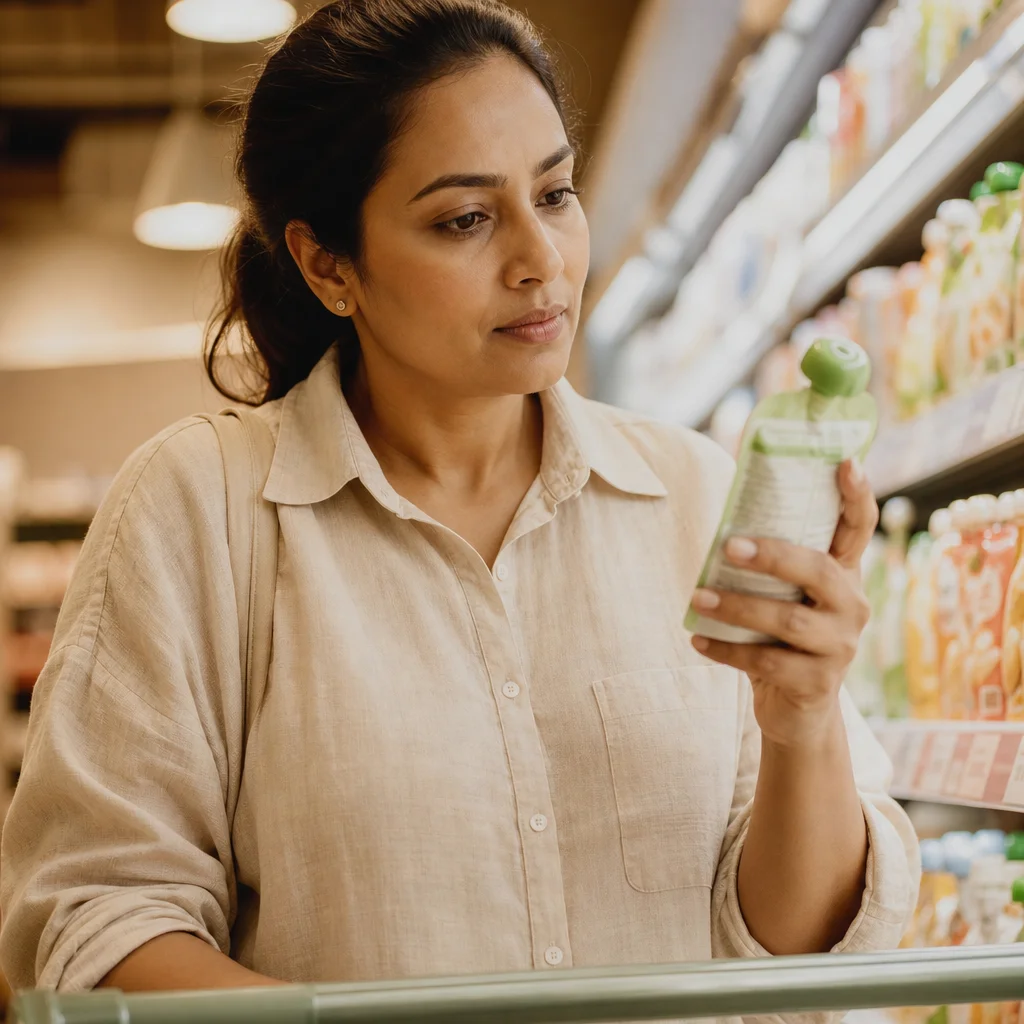
You grab a pouch of “toddler-friendly” yogurt from the shelf, feeling like you’re doing the right thing. Then research drops, and suddenly that little pouch might not seem so innocent. Published studies show that a majority of toddler foods sold in the US are ultra‑processed — up to 71% — and over half fail basic World Health Organization nutrition standards. This article is your survival guide for choosing healthy toddler foods without the guesswork.
I know — it’s overwhelming. You’re already exhausted, and now the food labels are lying to you? Here’s the good news: once you know what to look for, choosing healthy toddler foods becomes a quick habit. In this article, we’ll break down the research, show you a simple traffic‑light system for reading packages, and give you five whole‑food swaps that take zero extra time. A healthy toddler food doesn’t have to be complicated — it just has to be real.
Key Takeaways
- A 2026 study published in Nutrients found 71% of US toddler foods are ultra‑processed. A 2024 study in the same journal found 60% fail WHO nutrient standards.
- Marketing phrases like “organic” or “made with real fruit” don’t mean a product is healthy — research confirms these claims often mislead parents.
- Use a simple rule: the shorter the ingredient list, the better. That’s your quickest clue for real healthy toddler foods.
- Five simple whole‑food swaps — like replacing fruit pouches with mashed banana — trim excess sugar and additives without extra prep time.
- Building a go‑to list of trusted brands and whole foods makes grocery shopping faster and less stressful.
What the Research Tells Us About Healthy Toddler Foods
A 2026 study of US toddler food products, published in the peer‑reviewed journal Nutrients, took a hard look at what’s actually in the toddler aisle. The researchers analyzed products — yogurts, pouches, crackers, snacks, and meals — marketed for kids ages 1 to 4. Their finding: 71% qualified as ultra‑processed, meaning they contain ingredients you wouldn’t find in a home kitchen (think emulsifiers, artificial flavors, and added sugars).
But here’s the twist: a separate 2024 study also published in Nutrients found that 60% of toddler foods failed the World Health Organization’s nutrient profile standards for children. They had too much sugar, too much sodium, too much saturated fat, or too many calories per serving. In other words, many of the products we’re told are “for toddlers” are actually designed to be convenient — not nutritious.
Now, you might be thinking: Is anything in that aisle safe? The answer is yes — but you have to look past the marketing. Let’s explore how to find real healthy toddler foods among all the noise.
Quick Answer: Are most store‑bought toddler foods unhealthy?
According to published research, 7 out of 10 products are ultra‑processed, and 6 out of 10 don’t meet basic nutrient standards. So no, they’re not all healthy — but with a few label‑reading tricks, you can find the ones that are. Focus on short ingredient lists, low added sugar, and whole‑food bases. That’s the foundation of healthy toddler foods.
How to Spot Ultra‑Processed Foods in Seconds
You don’t need a degree in nutrition. You just need a simple rule: the shorter the ingredient list, the better. Ultra‑processed foods usually have long lists packed with things like maltodextrin, soy lecithin, natural flavors (which aren’t always what they sound like), and added sugars under many names — cane sugar, agave syrup, fruit juice concentrate.
Here’s a three‑second test: flip the package over. If you see more than five ingredients and you can’t pronounce some of them, it’s probably ultra‑processed. On the flip side, a healthy toddler food might list just “apples, spinach, and water.” Remember, a healthy toddler food should have a short ingredient list — that’s your quickest clue.
But wait — what about labels that say “organic” or “made with real fruit”? Those are marketing claims, not health guarantees — as Harvard experts explain in our guide to shopping smarter at the grocery store. An organic fruit pouch can still have added sugar and zero fiber. Research published in 2024 found that virtually all toddler food products carry at least one on‑pack claim that would be prohibited under WHO standards — and that “free from” claims can actually make unhealthy foods seem healthier to parents. Always check the ingredients, not the front of the box.
A Simple Way to Think About Toddler Foods
Here’s a practical tip — think of it like a traffic light for quick decisions:
Green light (great choice): 1‑5 whole‑food ingredients, no added sugar, low sodium (under 100 mg per serving). Examples: plain yogurt, whole‑grain crackers with just flour and salt, single‑ingredient fruit pouches.
Yellow light (okay sometimes): 6‑10 ingredients, some added sugar (under 4 g per serving), moderate sodium. Examples: flavored yogurt with live cultures, crackers with seeds.
Red light (skip): More than 10 ingredients, added sugar as one of the first three items, high sodium or trans fats. Most packaged toddler meals and snack mixes fall here.
Individual needs vary, so trust your judgment — this is a general guide, not a strict rule.
Simple Swaps for Healthier Toddler Meals
Let’s be real: no parent has time to make everything from scratch. But a few one‑for‑one swaps can make a big difference without adding minutes to your day. These swaps turn ultra‑processed snacks into healthy toddler foods in seconds.
- Swap fruit pouches for mashed banana or avocado. It’s the same texture, more fiber, and zero added sugar. A ripe banana mashes in 10 seconds.
- Swap sugary yogurt tubs for plain full‑fat yogurt. Mix in a tiny bit of mashed berries for sweetness. You’ll cut the sugar by 75%.
- Swap puffed rice snacks for air‑popped popcorn (for toddlers over 3). Popcorn is a whole grain and has no weird additives — just watch for choking risk with younger toddlers.
- Swap pre‑made toddler crackers for simple oat cakes or rice cakes. Look for ones with just oats, oil, and salt.
- Swap frozen toddler meals for a simple plate of leftover veggies, a protein (like shredded chicken), and a whole‑grain roll. Leftovers often beat the boxed versions in nutrients.
Building Your Go‑To List of Healthy Toddler Foods
Once you know which products pass the quick label test, make a list you can stick on your fridge or keep in your phone. That way, you’re not re‑thinking every trip to the store. Having a go‑to list of healthy toddler foods makes shopping faster and less stressful.
- Fruits & veggies: Fresh or frozen, no added sugar. Apples, bananas, berries, broccoli, sweet potatoes.
- Proteins: Plain yogurt, cottage cheese, eggs, beans, shredded chicken, tofu.
- Grains: Whole‑grain bread (check for 100% whole wheat as the first ingredient), oatmeal, quinoa, brown rice.
- Healthy snacks: Unsalted nut butters (if no allergy), cheese sticks, avocado slices, chia pudding made with milk.
- Brands to trust (check labels anyway): Happy Family, Earth’s Best, Once Upon a Farm, and store brands with short lists.
It’s also okay to include some packaged items that pass the test. The goal isn’t perfection — it’s progress. A healthy toddler food doesn’t have to be homemade. It just has to be a whole food or close to one.
The Bottom Line on Healthy Toddler Foods
The numbers from this research are jarring — 71% ultra‑processed, 60% failing basic nutrition standards. But you have more power than you think. A few simple label‑reading rules and a handful of go‑to swaps can shift your toddler’s diet from ultra‑processed to genuinely nutritious, without adding stress to your day. Focus on real healthy toddler foods with short ingredients, no added sugar, and whole‑food bases.
You’re already doing an amazing job by caring enough to ask these questions. Trust yourself. Pick one swap to try this week. That’s it. Your toddler’s taste buds — and their long‑term health — will thank you.