Stuffed Vegetable Recipes: 8 Healthy Summer Dinners
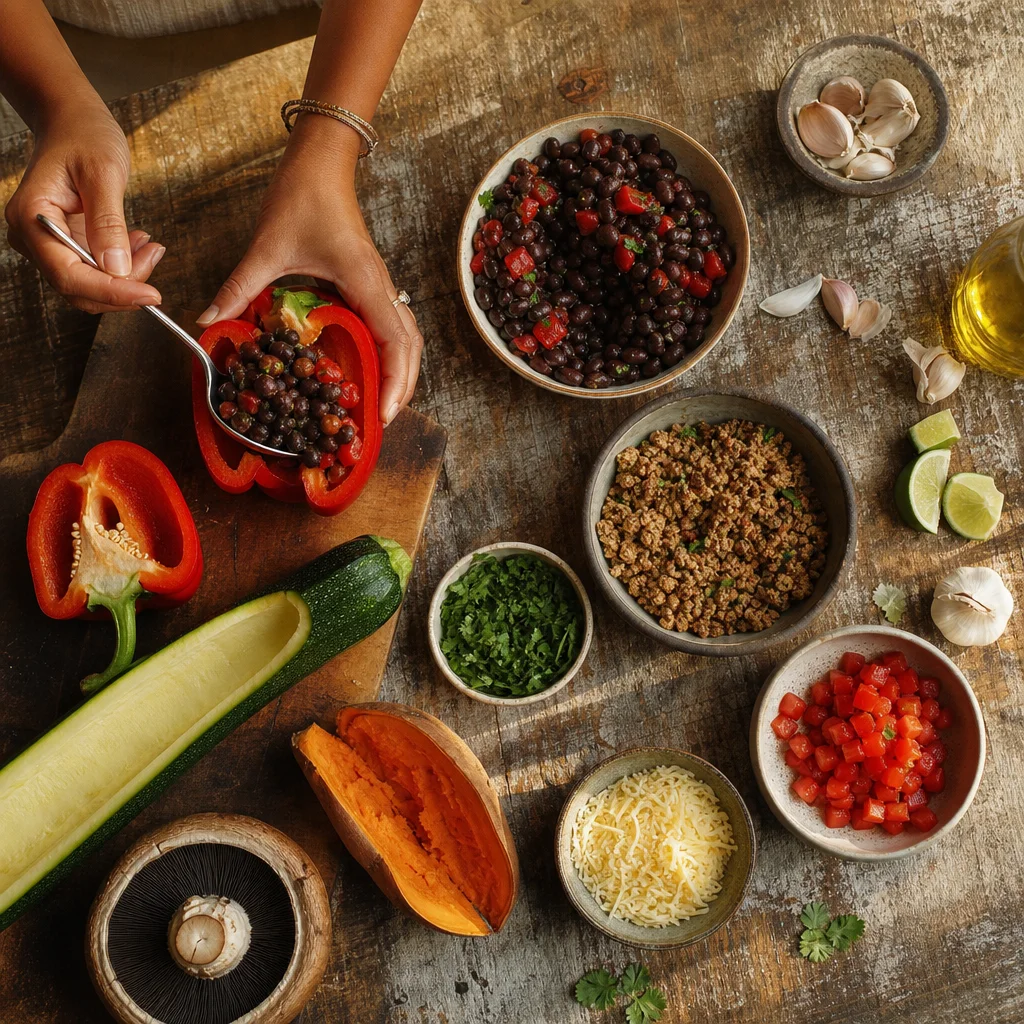
Picture this: it’s mid-July, your farmer’s market bag is overflowing with zucchini, bell peppers, and tomatoes, and you’re wondering how to turn all that fresh produce into a satisfying dinner that the whole family will actually eat. Stuffed vegetable recipes are the answer you’re looking for. They transform humble vegetables into complete, flavor-packed meals — naturally high in fiber, phytonutrients, and endlessly adaptable — much like our summer grain bowls guide. Whether you’re feeding a crowd or meal-prepping for the week, stuffing vegetables is one of the healthiest (and most delicious) ways to make summer produce the star of your plate.
Key Takeaways
- Stuffed vegetable recipes are a complete meal in one dish — combining vegetables, lean protein, whole grains, and healthy fats.
- Choosing the right vegetable base (peppers, zucchini, mushrooms, tomatoes, eggplant, squash) is key for structure and nutrition.
- A simple formula — vegetable + protein + grain + herbs + binder — lets you create endless variations.
- Most stuffed vegetable recipes can be prepped ahead and freeze beautifully for busy weeks.
- Science confirms that a diet rich in vegetables supports heart health, blood sugar control, and healthy digestion.
Let’s be honest: eating more vegetables sounds great in theory, but it’s easy to fall into a salad rut. That’s where stuffed vegetable recipes shine. They’re satisfying, fun to make, and they turn whatever’s in season into a dish that feels special. And the best part? You don’t need to be a gourmet chef to pull them off.
Why Stuffed Vegetable Recipes Deserve a Spot in Your Summer Meal Plan
Here’s the thing: stuffed vegetable recipes aren’t just a clever way to use up your CSA haul. They’re a nutrition powerhouse. The American Heart Association recommends including vegetables at every meal, and stuffing them is one of the easiest ways to do that while also adding lean protein and whole grains.
We’re talking about a single dish that can deliver fiber, vitamins A and C, potassium, and a solid dose of plant-based antioxidants — all wrapped in a naturally portion-controlled package. Research backs this up, too. A recent systematic review of plant-based diets for heart health found that vegetable-rich, high-fiber diets significantly lower blood pressure, improve cholesterol, and support healthy blood sugar levels. That’s the kind of meal you can feel great about serving.
What I find interesting is that most recipe sites skip the health context entirely. They’ll tell you how to make a stuffed pepper, but not why it’s a smart choice. At TEOHL, we believe the “why” matters just as much as the “how.” So let’s explore how to make the best stuffed vegetable recipes — starting with the most important step: choosing your vegetable base.
The Best Vegetables for Stuffing: What Holds Up and Why
Not every vegetable is cut out for stuffing. You need a sturdy structure that can hold a filling without collapsing during baking. Here are the top contenders, along with their nutritional highlights:
Top Stuffer Vegetables at a Glance
- Bell peppers — Classic. Halved or whole, they hold fillings well. High in vitamin C.
- Zucchini — Slice lengthwise and scoop out the center. Low calorie, high in potassium. Ideal for boats.
- Portobello mushrooms — Remove the stem and use the cap as a natural bowl. Rich in selenium and B vitamins.
- Tomatoes — Choose large, firm varieties (beefsteak or heirloom). Scoop out seeds and pulp. Packed with lycopene, a powerful antioxidant that becomes more available when cooked.
- Eggplant — Halve lengthwise, scoop out flesh. Great for Mediterranean-style fillings. High in fiber and rich in antioxidants.
- Acorn or delicata squash — Halved and seeded. Naturally sweet, high in beta-carotene. Perfect for fall-inspired fillings (though available in summer from some farms).
- Sweet potatoes — Bake whole, then split and stuff. Rich in vitamin A and fiber. More calories than non-starchy options, but still nutrient-dense.
A quick note on starchy vs. non-starchy vegetables: the health benefits of vegetables including fiber and antioxidants apply to all types, but if you’re watching your carbohydrate intake, lean toward peppers, zucchini, mushrooms, and tomatoes as your base. If you need more energy (say, after a long hike or workout), sweet potatoes and squash are fantastic options.
The Simple Formula for Any Stuffed Vegetable Recipe
You don’t need a recipe for every single combination. Once you know the basic formula, you can create your own stuffed vegetable recipes on the fly. Here it is:
Vegetable base + Protein + Grain + Vegetables/Herbs + Binder + Topping
- Protein: Ground turkey, chicken, lean beef, cooked lentils, black beans, chickpeas, crumbled tofu, or chopped shrimp.
- Grain: Cooked quinoa, brown rice, farro, couscous, or breadcrumbs (use gluten-free oats if needed).
- Vegetables/Herbs: Chopped onion, garlic, corn, spinach, mushrooms, fresh basil, parsley, cilantro — anything you like.
- Binder: An egg (or flax egg), a bit of cheese, or tomato sauce to hold it together.
- Topping: Shredded cheese, a drizzle of olive oil, breadcrumbs, or a dollop of yogurt or pesto after baking.
This formula is your creative license. Mix and match based on what you have in the fridge. That’s the beauty of stuffed vegetable recipes — they’re incredibly forgiving.
8 Nutrient-Packed Stuffed Vegetable Recipes to Make This Summer
Here’s a curated collection of eight stuffed vegetable recipes that balance flavor, nutrition, and summer freshness. Each one is organized by vegetable type so you can find what you’re looking for fast.
Peppers
Sweet Potato–Black Bean Stuffed Peppers — A vegetarian option that pairs the natural sweetness of roasted sweet potatoes with fiber-rich black beans and brown rice. Top with avocado and a squeeze of lime. High in vitamin A, fiber, and plant protein.
Mushrooms
Fajita-Stuffed Portobello Mushrooms — Roasted portobello caps loaded with sautéed peppers and onions, black beans, and melted cheese. A low-carb, high-fiber dinner that comes together in under 30 minutes.
Caprese Stuffed Portobello Mushrooms — Cherry tomatoes, fresh mozzarella, and basil piled into a portobello cap. Drizzle with balsamic before baking. It’s like a Caprese salad turned into a warm main dish.
Zucchini
Ground Turkey Zucchini Boats — Use long, straight zucchini (similar sizes so they cook evenly). Hollow them, then fill with a mixture of ground turkey, diced peppers, garlic, and the scooped-out zucchini flesh. Top with a little cheese and bake at 400°F for 20 minutes.
Tomatoes
Air-Fryer Buffalo Chicken-Stuffed Tomatoes — Large tomatoes are hollowed and filled with shredded chicken tossed in hot sauce and blue cheese (or a dairy-free alternative). Air-fry or bake until tender. Serve with celery sticks for crunch.
Squash
Baked Feta & Tomato Spaghetti Squash — Roast a spaghetti squash, then fill the center with cherry tomatoes, feta, and a drizzle of olive oil. Return to the oven until the tomatoes burst and the feta softens. A vegetarian showstopper that mimics the viral baked-feta pasta trend.
Sweet Potatoes
Stuffed Sweet Potato with Ground Turkey & Avocado — A complete meal in a potato. Top baked sweet potatoes with seasoned ground turkey, creamy avocado, and a dollop of yogurt. High in protein, vitamin A, and healthy fats.
5 Pro Tips for the Best Stuffed Vegetable Recipes
After testing and tasting, here are five things I’ve learned that make a real difference in stuffed vegetable recipes:
- Don’t over-scoop. Leave a ¼-inch wall of vegetable flesh so the “boat” doesn’t collapse during baking.
- Squeeze out moisture. Vegetables release water as they cook. For zucchini and eggplant, salt the scooped-out flesh, let it sit for 10 minutes, then squeeze dry before adding to the filling. For mushrooms, gently wipe with a damp towel — don’t soak them.
- Par-cook dense vegetables. For peppers and squash, blanch or roast the empty shells for 10 minutes at 400°F before stuffing. This ensures the vegetable is fully tender by the time the filling is done.
- Pre-cook the filling. All components (grains, meat, sautéed vegetables) should be fully cooked before stuffing. The oven time is just to marry the flavors and heat everything through.
- Go easy on the sauce. If you add too much liquid to the filling, the final dish can turn soggy. Instead, serve extra sauce on the side or drizzle it over the top after baking.
Stuffed Vegetable Meal Prep: Make-Ahead & Freezer Tips
One of the best things about stuffed vegetable recipes is how well they work for meal prep — similar to how we recommend prepping summer salad recipes packed with protein and fiber for the week ahead. Here’s how:
- Prep ahead: Hollow and blanch the vegetable shells up to 2 days in advance. Store them in an airtight container in the fridge.
- Freeze unfilled: You can freeze empty blanched shells (peppers, zucchini boats) for up to 3 months. Thaw in the fridge before stuffing.
- Freeze filled (uncooked): Assemble the stuffed vegetables completely, then freeze on a baking sheet. Once solid, transfer to a freezer bag. Bake from frozen at 375°F for 40-50 minutes.
- Freeze cooked: Bake, cool completely, then freeze individual portions. Reheat in the oven or microwave — they’ll be just as good.
- Reheat smartly: For best texture, reheat in a 350°F oven, covered, for 15-20 minutes. Uncover for the last 5 minutes to crisp the top.
Frequently Asked Questions About Stuffed Vegetable Recipes
Are stuffed vegetables healthy?
Absolutely. They’re a great way to eat more vegetables while getting balanced nutrition from protein and whole grains. A typical stuffed pepper or zucchini boat provides a good amount of fiber, vitamins, and minerals with moderate calories. Just watch the cheese and sauce amounts if you’re aiming for a lighter meal.
Can I make stuffed vegetables gluten-free?
Yes. Swap breadcrumbs for cooked quinoa or gluten-free oats. Use tamari instead of soy sauce in the filling, and skip any wheat-based grains. Most stuffed vegetable recipes are naturally gluten-free if you use rice or quinoa as the grain.
What’s the best temperature to bake stuffed vegetables?
Most stuffed vegetable recipes work well at 375°F to 400°F. Lower temperatures (350°F) work but take longer; higher (425°F) can dry out the filling before the vegetable is tender. For a safe bet, bake at 375°F, covering with foil for the first half, then uncover to brown the top.
The Bottom Line
Stuffed vegetable recipes are one of the smartest, most satisfying ways to eat more vegetables this summer. They turn seasonal produce into complete, family-friendly meals that are naturally rich in fiber, vitamins, and antioxidants — exactly the kind of eating that supports long-term health. And with a little advance prep, they can become your go-to for busy weeknights.
So next time you’re staring at a pile of farmers’ market finds, grab your favorite vegetable, whip up a simple filling, and stuff it. Your taste buds — and your body — will thank you.