

PCOS Heavy Periods: Non-Hormonal Treatments That Work
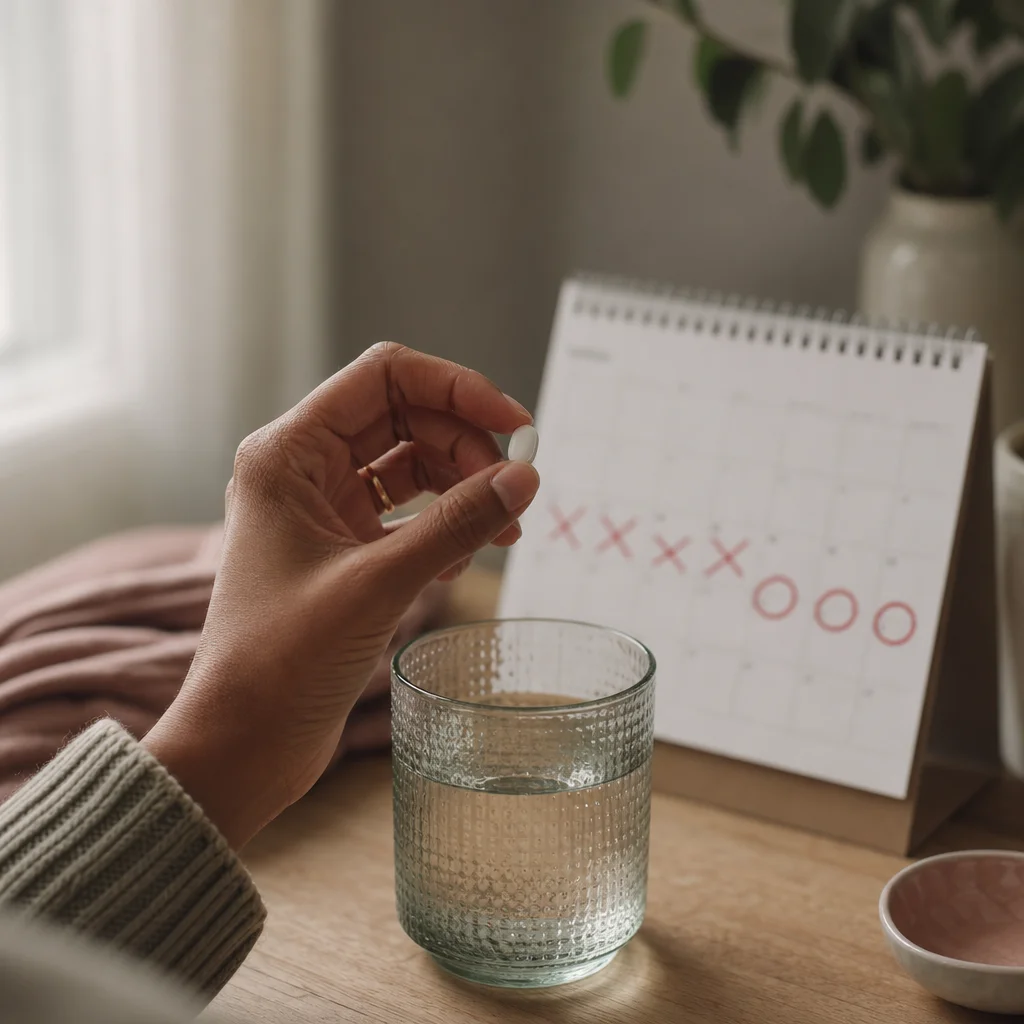
You’re not alone. PCOS heavy periods can feel overwhelming, especially when the standard solution – birth control – isn’t an option because you’re trying to conceive. In this article, we’ll walk through why PCOS causes such heavy bleeding. We’ll explain what’s happening inside your body. And most importantly, we’ll share evidence-based non-hormonal treatments. These can help you manage PCOS heavy periods when you need a different approach.
Key Takeaways
- Validated experience: Extremely heavy, prolonged periods are a common but under-discussed PCOS symptom – you are not alone.
- What causes it: Anovulation leads to unopposed estrogen, thickening the uterine lining, which then sheds heavily and often unpredictably.
- Non-hormonal options exist: Tranexamic acid, NSAIDs, endometrial thinning procedures, iron optimization, and lifestyle changes can help – even when the pill isn’t an option.
- Take action: Talk to your doctor about a custom plan that fits your fertility goals. You deserve care that works for your life.
Why PCOS Heavy Periods Happen
Let’s get clear on what’s actually happening inside. In a typical cycle, ovulation triggers the release of progesterone. This hormone stabilizes the uterine lining. But with PCOS, you often don’t ovulate regularly – or at all. This is called anovulation.
Without ovulation, your body produces estrogen but not enough progesterone. That’s a problem. Estrogen keeps building up the endometrium (the uterine lining) month after month. The lining gets thicker and thicker. When it finally sheds – sometimes after weeks or months of buildup – the bleeding can be extremely heavy, with large clots. It can last for two, three, even four weeks at a time. This is the hallmark of PCOS heavy periods.
You might go five months with no period, then have three weeks of heavy bleeding, then nothing again. The unpredictability is part of the condition. And because the lining is so thick, it doesn’t always shed completely in one go. That’s why bleeding can drag on or restart after a pause.
The Clot Connection
Large blood clots – larger than a quarter – are common with PCOS heavy periods. They happen because the heavy flow outruns your body’s natural anti-clotting factors. While scary, they’re usually normal in this context. However, if you’re soaking through a pad or tampon every hour for several hours, or passing clots larger than a golf ball, that’s a sign to seek medical attention.
Non-Hormonal Options for PCOS Heavy Periods
The birth control pill is the standard treatment for managing PCOS heavy periods. But it’s not the only one. If you’re trying to conceive or simply want a non-hormonal approach, several options have solid research behind them. Let’s break them down.
Tranexamic Acid
Tranexamic acid is a medication that helps your blood clot more effectively. It’s not a hormone – it just reduces bleeding by stabilizing the clots that form in the uterus. You take it only during your period, usually for the first few days of heavy flow. A 2022 Cochrane overview found that antifibrinolytics probably reduce heavy menstrual bleeding (moderate-certainty evidence), and individual studies have measured reductions of 30–50%.
Many women with PCOS find it a game-changer. It doesn’t regulate your cycle – it just makes the heavy days more manageable. Side effects are mild for most people, though you should talk to your doctor if you have a history of blood clots.
NSAIDs (like ibuprofen or naproxen)
Non-steroidal anti-inflammatory drugs can reduce menstrual bleeding by about 20–25%. A 1991 study in the American Journal of Obstetrics and Gynecology measured an average reduction of about 21%. They work by lowering the levels of prostaglandins – chemicals that make the uterus contract and contribute to heavy flow. For best results, start taking them the day before your period is expected. Or start at the first sign of bleeding. Continue for the first 2–3 days.
Ibuprofen also helps with cramps, which often accompany heavy bleeding. Just be mindful of stomach upset – take with food. And if you’re trying to conceive, short-term use during your period is generally considered safe. But always confirm with your doctor.
Endometrial Thinning Procedures
If the bleeding remains unmanageable, a minor procedure called endometrial ablation can reduce or stop heavy periods. It does this by removing or destroying the lining. However, this is not recommended if you plan to have more children. It can impact fertility and future pregnancy. A systematic review in BJOG found that pregnancies after endometrial ablation have high rates of serious complications including preterm delivery, cesarean hysterectomy, and morbidly adherent placenta. A 2025 meta-analysis in Obstetrics and Gynecology also found endometrial ablation is associated with a 20-fold increased odds of placenta accreta spectrum.
A less permanent option is a hysteroscopy and dilation and curettage (D&C). The doctor suctions or scrapes out the thickened lining. This can provide immediate relief. But the lining will regrow without cycle regulation. It’s often used as a diagnostic step or a temporary fix while you work on longer-term solutions.
Iron Optimization and Anemia Prevention
When you lose that much blood month after month, your iron stores take a hit. Fatigue, pale skin, shortness of breath, and dizziness are common signs of iron-deficiency anemia. It’s essential to monitor your iron levels – especially if you’re already taking supplements.
What you can do: Ask your doctor for a ferritin test (iron storage) and a complete blood count. Aim for ferritin above 30 ng/mL as a minimum target. Some experts now suggest optimal ferritin is closer to 50 ng/mL for iron sufficiency (Hematology ASH Education Program, 2023). Work with your doctor to interpret your levels. Pair iron with vitamin C (like a glass of orange juice) for better absorption. Avoid tea or coffee for an hour around your iron dose – they block absorption.
Lifestyle Changes That Help Regulate Cycles
While lifestyle alone won’t always reverse PCOS heavy periods, it can make a meaningful difference over time. It improves ovulation frequency and reduces insulin resistance – a major driver of anovulation.
- Low-glycemic eating: Focus on whole foods – vegetables, lean protein, healthy fats, and fiber. Reducing refined carbs and sugar can lower insulin levels, which may help restart ovulation. A 2010 study in the American Journal of Clinical Nutrition found that 95% of women with PCOS who followed a low-glycemic index diet showed improved menstrual cyclicity. That’s compared to 63% on a conventional healthy diet.
- Consistent sleep: Going to bed and waking up at the same time (even on weekends) supports hormone regulation. This includes the hormones that control your menstrual cycle.
- Moderate-to-vigorous exercise: A 2017 systematic review in Sports Medicine found that exercise helps resume ovulation in women with PCOS. A mix of strength training and cardio for 30–60 minutes a day can improve insulin sensitivity. Extremely high-volume training (over 60 minutes a day) without enough calories may disrupt ovulation in some women. Listen to your body and find the right balance.
- Stress management: Chronic stress raises cortisol, which can throw off your hormone balance. Even 10 minutes of deep breathing or a daily walk can help.
These changes take time – often 3–6 months – to see cycle improvements. They’re not a quick fix, but they complement medical treatments and support overall health.
When to See a Doctor (Red Flags)
Even if you’ve lived with heavy periods for years, some situations require immediate medical attention:
- Soaking through a pad or tampon every hour for more than 2–3 hours
- Bleeding that lasts more than 14 days without any break
- Severe dizziness, fainting, or chest pain (signs of significant anemia)
- Passing clots larger than a golf ball
- Bleeding that soaks through your clothes or bed sheets
These signs warrant a visit to your OB-GYN or a trip to the ER. Don’t minimize your experience. Heavy bleeding that interferes with daily life is a medical issue. It’s not just “something you have to deal with.”
Quick Answer: Can I manage PCOS heavy periods without the pill?
Yes. While the pill is the most common first-line treatment, several non-hormonal options exist. Tranexamic acid, NSAIDs, and lifestyle modifications can reduce bleeding. Endometrial procedures are also available for severe cases. The right plan depends on your health history and whether you’re trying to conceive.
Frequently Asked Questions About PCOS Heavy Periods
Can I get pregnant with heavy periods from PCOS?
Yes, many women with PCOS do conceive. But heavy, irregular cycles often indicate anovulation. This makes getting pregnant harder without medical help. A fertility specialist can guide you through ovulation induction agents like letrozole or clomiphene. These are safe to use while trying to conceive.
Is it dangerous to have such heavy bleeding?
It can become dangerous if it leads to severe anemia or if the bleeding is acute and very heavy. But for most women, PCOS heavy periods are more debilitating than immediately life-threatening. The bigger risk is long-term iron deficiency and the impact on quality of life.
Do supplements like inositol help with heavy periods?
Myo-inositol and D-chiro-inositol are commonly used for PCOS to improve insulin sensitivity and ovulation. Some evidence suggests they may support ovulation, though the data is mixed. A 2022 meta-analysis in Gynecological Endocrinology concluded it is not clear whether inositol usage is adequate for ovulation. The 2023 International PCOS Guidelines note the evidence is limited and inconclusive (Journal of Clinical Endocrinology & Metabolism, 2024). They are not a direct treatment for heavy bleeding. Always discuss supplements with your doctor, especially if you’re trying to conceive.
The Bottom Line on PCOS Heavy Periods
There is no single fix for PCOS heavy periods. But there are many tools in the toolbox. The most important step is finding a healthcare provider who listens. Someone who understands that the pill is not your only option – especially when you’re trying to conceive.
You deserve care that respects your fertility goals. Care that addresses the full picture: the bleeding, the anemia, the fatigue, the emotional toll. Start with a conversation about tranexamic acid or NSAIDs. Get your iron levels checked. Explore lifestyle changes that can support ovulation.
And most of all, know that you are not alone. This community – and this article – is here to remind you that your experience is real. There are paths forward.