
High Protein Breakfast Recipes for Gut Health
Key Takeaways
- Dual-benefit breakfasts — Aim for meals that deliver at least 15g of protein AND support your gut microbiome through prebiotic fiber or probiotics.
- Greek yogurt is a powerhouse — One serving provides 15–18g of protein plus probiotics, making it the ultimate dual-benefit breakfast base.
- Protein quantity beats quality for satiety — Research shows total grams matter more than the source when it comes to feeling full.
- 15 minutes is plenty — Every recipe here takes 15 minutes or less, no cooking skills required.
You want a breakfast that keeps you full until lunch. You also want one that supports your gut health. Why settle for just one? A high protein breakfast can do both — if you know which foods to combine. Most breakfast roundups focus on protein OR gut health, but rarely both. Here’s the thing: the same meal can deliver 15+ grams of protein AND feed your microbiome with prebiotic fiber and probiotics. Let’s dig into how that works, plus eight quick recipes that make it happen in 15 minutes or less.
Quick Answer: What Makes a Breakfast Both High-Protein and Gut-Healthy?
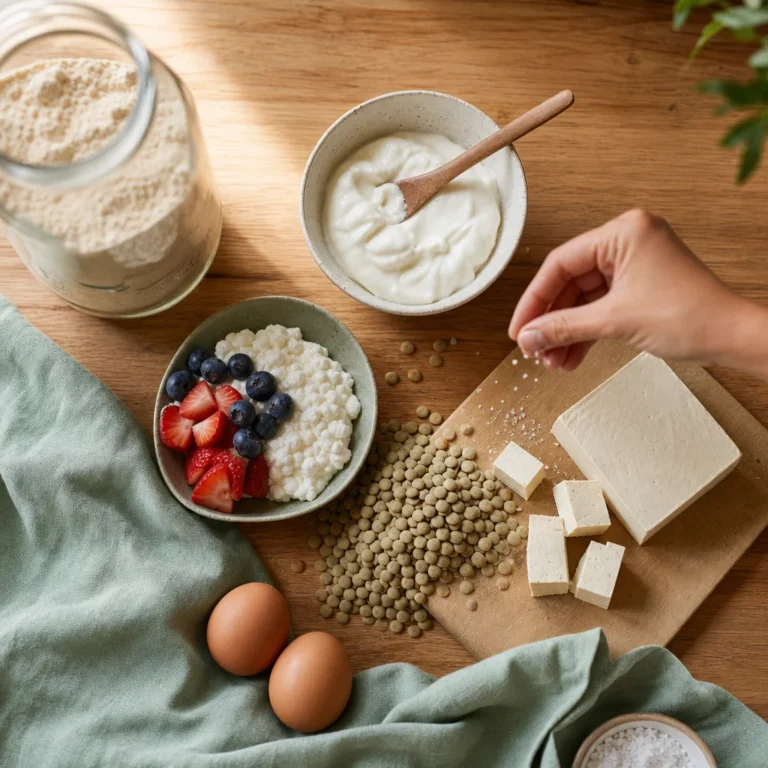
A dual-benefit breakfast combines a protein source (Greek yogurt, eggs, cottage cheese, beans, tofu) with a gut-healthy ingredient. That could be a prebiotic food like oats, beans, or berries that feeds your good bacteria. Or a probiotic food like yogurt or kefir that adds beneficial bacteria directly. Aim for at least 15g of protein plus at least one gut-healthy ingredient per meal.
Why a High Protein Breakfast Matters for Your Health
Let’s start with the protein part. After an overnight fast, your body needs fuel. A high protein breakfast gives your blood sugar a stable boost — not the spike-and-crash you get from sugary cereal or a granola bar. According to Harvard’s healthy breakfast recommendations, protein at breakfast provides staying power because it digests slowly, keeping you full and your blood sugar steady.
There’s also a muscle benefit. A 2022 study in the journal Nutrition found that increasing protein intake at breakfast was linked to better muscle gain from resistance training in women. The effect was strongest in women who typically ate low-protein breakfasts (see the breakfast protein and muscle health study). That means even small upgrades to your morning meal can make a real difference over time.
Now, you might be thinking: “But what about the gut health part?” Here’s where it gets interesting. Many high-protein foods also happen to support your microbiome. Greek yogurt brings probiotics. Eggs pair beautifully with fiber-rich veggies. Beans deliver both protein and prebiotic fiber. The magic is in the combination.
What Makes a High Protein Breakfast Gut-Healthy Too
A truly gut-healthy breakfast does two things. First, it includes prebiotic fiber — the kind that feeds the good bacteria already living in your gut. Think oats, beans, bananas, berries, and flaxseed. Second, it includes probiotic foods — live bacteria that add to your gut’s good population. That’s your yogurt, kefir, and other fermented foods.
Take Greek yogurt, for example. A 6-ounce serving of nonfat plain Greek yogurt delivers 15–18 grams of protein and contains live active cultures (probiotics). According to Harvard Health’s guide to Greek yogurt, regular consumption of probiotic-rich yogurt is linked to better digestive health and immune function. A 2025 Harvard study even linked yogurt consumption to lower rates of some colorectal cancers.
Combine that yogurt with oats or berries, and you’ve got a meal that supports both your muscles and your microbiome. That’s the dual-benefit approach — and it’s surprisingly easy to pull off.
Quick Reference: Key Gut-Healthy Breakfast Ingredients
Prebiotic foods (feed your good bacteria): Oats, bananas, berries, beans, lentils, flaxseed, chia seeds, whole grains.
Probiotic foods (add good bacteria): Greek yogurt, kefir, cottage cheese with live cultures, kimchi, sauerkraut.
Tip: Choose plain yogurt to avoid added sugars. Sweeten with a drizzle of honey or fresh fruit instead.
8 Dual-Benefit Breakfasts in 15 Minutes or Less
Here are eight breakfast ideas that hit the 15g+ protein target AND include gut-healthy ingredients. Like our heart-healthy breakfast recipes, each one takes 15 minutes or less to put together. I’ve included quick swaps for dairy-free or egg-free readers too.
1. Greek Yogurt Parfait with Berries and Oats (~18g protein)
Layer 1 cup plain Greek yogurt with ½ cup fresh or frozen berries and ¼ cup rolled oats. Add a tablespoon of chopped walnuts for healthy fats. The yogurt brings probiotics; the oats and berries bring prebiotic fiber. Dairy-free swap: Use unsweetened coconut or soy yogurt (check for 8g+ protein) and add a scoop of plant-based protein powder.
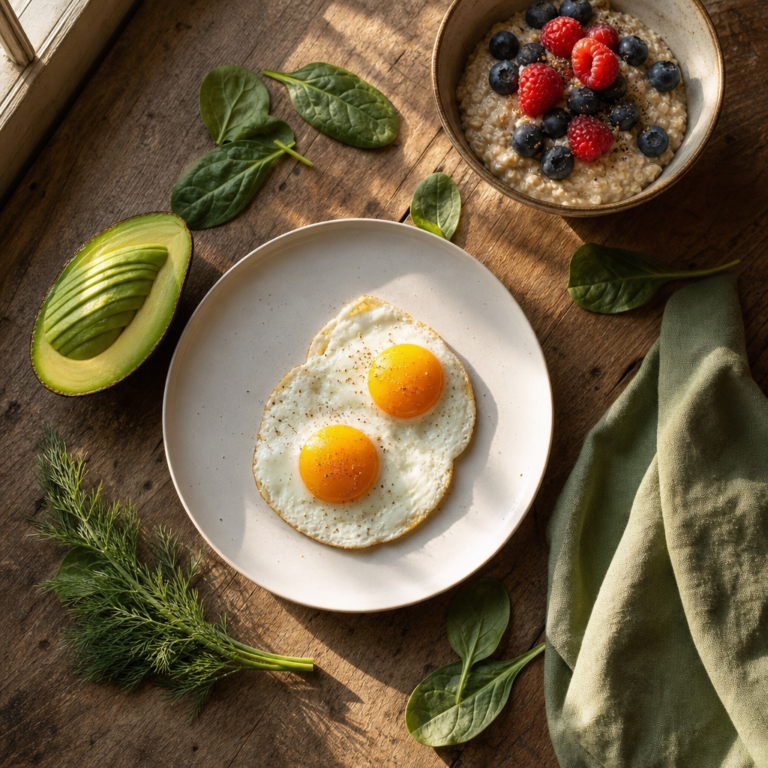
2. Spinach and Egg Scramble with Whole-Grain Toast (~20g protein)
Scramble two eggs with a handful of spinach. Serve on one slice of whole-grain toast. Add a tablespoon of nutritional yeast for extra B vitamins and a cheesy flavor. Eggs deliver high-quality protein; the whole-grain toast provides prebiotic fiber. Egg-free swap: Use ½ block crumbled firm tofu with black salt (kala namak) for an eggy flavor.
3. Black Bean Breakfast Bowl (~18g protein)
Combine ½ cup black beans (rinsed) with ¼ cup plain Greek yogurt and a sprinkle of Monterey Jack or cheddar cheese. Add salsa and avocado. Black beans are a powerhouse of prebiotic fiber, and yogurt adds probiotics. This one proves a high protein breakfast doesn’t need eggs.
4. Chocolate-Banana Protein Smoothie (~25g protein)
Blend 1 cup unsweetened almond milk, 1 scoop (30g) chocolate protein powder, ½ banana (for prebiotic fiber), 1 tablespoon almond butter, and a handful of spinach. For a probiotic boost, swap half the milk for plain kefir. Ready in 3 minutes.
5. Overnight Oats with Greek Yogurt and Chia (~22g protein)
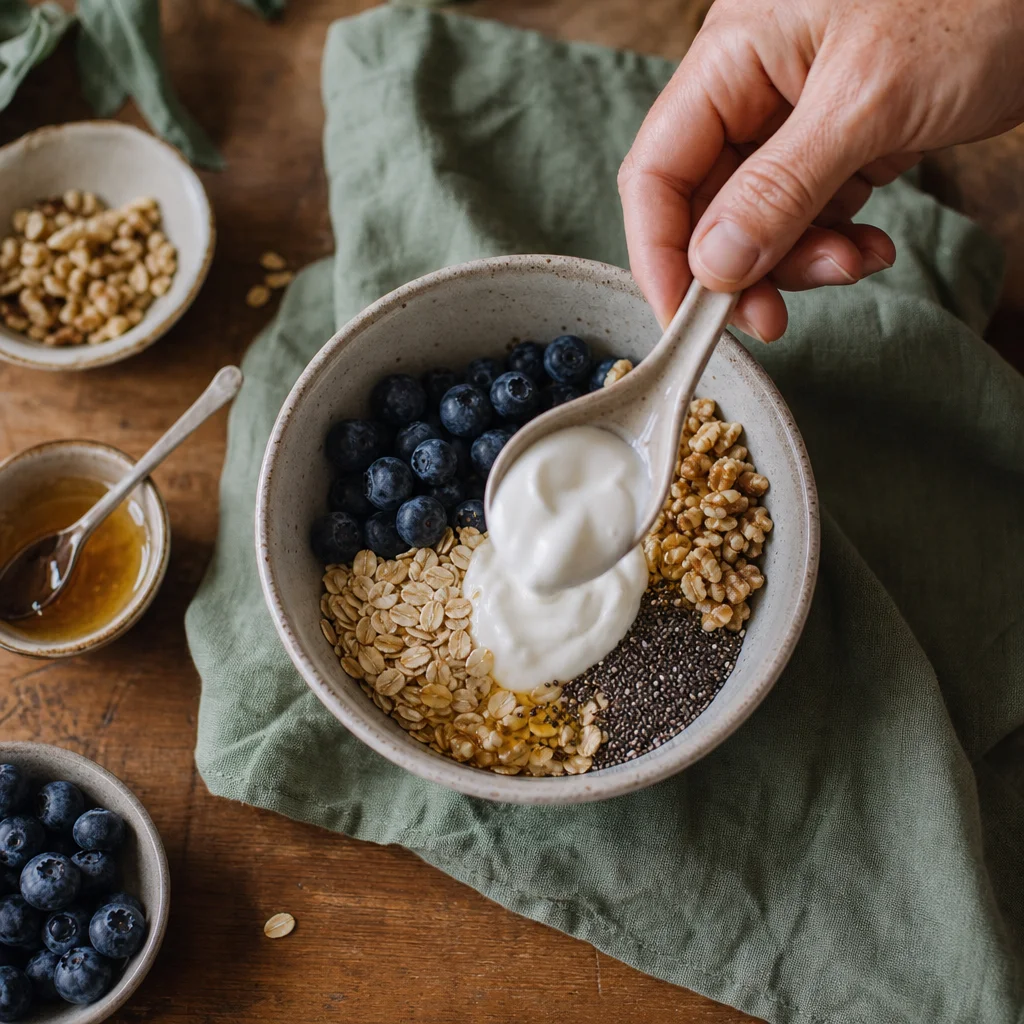
Combine ½ cup rolled oats, ½ cup plain Greek yogurt, ½ cup milk of choice, 1 tablespoon chia seeds, and a dash of cinnamon. Let sit in the fridge overnight. Top with berries in the morning. Oats and chia provide prebiotic fiber; yogurt adds probiotics. Make 4 jars on Sunday for grab-and-go breakfasts all week.
6. Avocado Toast with Cottage Cheese (~17g protein)
Mash ¼ avocado on one slice of whole-grain toast. Top with ½ cup cottage cheese, a pinch of red pepper flakes, and a squeeze of lemon. Cottage cheese delivers casein protein (slow-digesting, great for satiety) and many brands contain live cultures (check labels for “live active cultures”). Whole-grain toast adds prebiotic fiber.
7. Microwave-Poached Egg on Breakfast Beans (~20g protein)
Warm ½ cup canned black or pinto beans (rinsed) in the microwave. Poach an egg in a microwave-safe bowl of water for 60 seconds. Serve the egg over the beans with a sprinkle of cheese or a dollop of Greek yogurt. Beans deliver prebiotic fiber; the egg delivers high-quality protein.
8. Kefir and Berry Bowl (~16g protein)
Pour 1 cup plain kefir into a bowl. Top with ½ cup mixed berries, 1 tablespoon flaxseed, and 2 tablespoons chopped almonds. Kefir is a probiotic powerhouse (more strains than yogurt), and berries and flaxseed contribute prebiotic fiber. Ready in 2 minutes flat.
How Much Protein Do You Actually Need at Breakfast?
Here’s a common question: “How much protein should I aim for?” According to Harvard Health’s protein guidelines, the recommended daily allowance is 0.8 grams of protein per kilogram of body weight. For a 150-pound woman, that’s about 55 grams per day minimum. If you spread that across three meals, you’re looking at roughly 18 grams per meal.
That’s why 15 grams is a solid breakfast target. It puts you on track to meet your daily needs without overthinking it. And here’s some good news: a 2022 study found that when protein grams are equal, the source (egg vs. cereal) doesn’t significantly affect how full you feel overall — though one experiment did find eggs increased fullness slightly, total energy intake later didn’t change (protein quantity vs quality for satiety research). So whether you prefer eggs, Greek yogurt, or a plant-based smoothie, what matters most is hitting that 15g+ target.
Build Your Own High-Protein, Gut-Healthy Breakfast
Don’t want to follow a recipe? Use this simple formula: Protein Base + Gut-Healthy Add-In + Toppings.
Pick your protein base: Greek yogurt (15–18g), cottage cheese (14g per ½ cup), 2 eggs (12g), 1 scoop protein powder (20–25g), ½ cup black beans (7g) plus 1 egg (6g), ½ block firm tofu (20g). For more options, browse our 7-day high protein meal plan for women.
Add a gut-healthy ingredient: ½ cup rolled oats (prebiotic), ½ cup berries (prebiotic), 1 banana (prebiotic), ¼ cup kefir (probiotic), 1 tablespoon chia seeds (prebiotic fiber).
Finish with toppings: Nuts, seeds, a drizzle of honey, a sprinkle of cinnamon. Honey has prebiotic properties — a 2026 study found that honey-sweetened yogurt showed lower levels of one inflammatory marker (IL-33) compared to sugar-sweetened versions.
Safety and Considerations for High-Protein Breakfasts
You might wonder: “Is it safe to eat this much protein?” For most healthy people, yes. According to Mayo Clinic on high-protein diet safety, high-protein diets aren’t known to cause medical problems in healthy people. However, a few things to keep in mind:
- Choose your protein wisely. Skip processed meats. Stick with plant proteins, fish, lean poultry, and low-fat dairy.
- Watch your kidney health. If you have kidney disease, talk to your doctor before increasing protein intake.
- Don’t forget fiber. Very high-protein, low-carb diets can leave you short on fiber — causing constipation and missing the gut health benefits we’ve been talking about.
- Choose plain yogurt. Many flavored yogurts pack 11–14 grams of added sugar per serving. Plain Greek yogurt with a drizzle of honey is a much better choice for your gut.
Frequently Asked Questions
Q: Can I get 15g protein from plant-based breakfasts alone?
Yes. A tofu scramble with veggies delivers 20g. A smoothie with plant-based protein powder hits 25g. Black beans with quinoa and a dollop of soy yogurt also works. The key is to include a concentrated protein source.
Q: Is it OK to eat the same high-protein breakfast every day?
It’s fine from a nutrition standpoint, but variety helps ensure you get a range of gut-healthy fibers. Rotate between yogurt parfaits, egg scrambles, and smoothie bowls to keep your microbiome — and your taste buds — happy.
Q: What if I’m dairy-free or egg-free?
No problem. Use the swaps listed in each recipe above. Key dairy-free protein sources: plant-based protein powder, firm tofu, black beans, lentils, nut butters, and soy yogurt (check labels for protein content — some have as little as 3g per serving).
Q: Can I meal prep these for the week?
Absolutely. Overnight oats keep 4–5 days in the fridge. Pre-portion smoothie ingredients in freezer bags. Make a batch of black beans on Sunday. Prep yogurt parfait jars (without toppings) for grab-and-go mornings.
The Bottom Line
A high protein breakfast doesn’t have to mean a gut-healthy breakfast takes a separate effort. The two goals work beautifully together when you choose the right ingredients. Greek yogurt with berries. Eggs with whole-grain toast. Black beans with a dollop of yogurt. Each of these meals gives your body the protein it needs for satiety and muscle health, while also feeding the trillions of microbes that keep your digestive system running smoothly.
Start small. Pick one recipe from the list above and try it this week. Notice how you feel — fuller, more energized, and ready to take on the morning without a mid-morning crash. That’s the power of a breakfast that works for your whole body.