Cooking with Miso: Chef-Tested Ways + Gut Health Benefits
Key Takeaways
- Miso is a gut-health powerhouse — it’s fermented with Aspergillus oryzae, a beneficial microbe that supports digestive wellness and immune function.
- You can use it in way more than soup. Chefs add miso to marinades, sauces, mashed potatoes, compound butter, salad dressings, and even desserts like caramel and chocolate cookies.
- Match the miso to the dish. White (shiro) miso is mild and sweet — great for delicate foods. Red (aka) miso is bold and salty — perfect for hearty braises and meats.
- Add miso at the end of cooking, off the heat. Boiling kills the beneficial bacteria. Stir it in just before serving for maximum probiotic benefit.
- Watch the salt. Miso is naturally high in sodium (about 634 mg per tablespoon), so taste before you add more salt to your dish.
If you have a tub of miso in your fridge that only comes out for soup nights, you’re not alone. But here’s the thing: cooking with miso opens up a world of flavor and gut-health benefits that go way beyond that one comforting bowl. This fermented soybean paste is packed with probiotic potential, and the chefs who use it daily know it can transform almost anything — from marinades and mashed potatoes to caramel sauce and chocolate desserts.
What I love about miso is that it does double duty. It delivers deep, savory umami to your food while also feeding your gut microbiome with live beneficial bacteria. But most home cooks only scratch the surface. In this guide, you’ll learn chef-tested techniques for cooking with miso, how to choose the right type for each dish, and what the science actually says about the health benefits. Let’s dive in.
Quick Answer: What Is Miso and Why Cook with It?
Miso is a fermented paste made from soybeans, salt, and a mold called koji (Aspergillus oryzae). The fermentation process breaks down the beans into amino acids, fatty acids, and simple sugars, creating that signature salty, earthy, umami flavor. It also produces millions of beneficial microorganisms. Cooking with miso adds depth to nearly any savory dish — and even some sweet ones — while supporting your digestive and metabolic health.
Why Cooking with Miso Supports Your Gut Health
Miso is a fermented food, which means it contains live microbes that can positively influence your gut microbiome. The specific strain used in miso — Aspergillus oryzae — is a beneficial mold that has been used in East Asian cooking for centuries. A 2018 review in Nutrition Reviews found that eating fermented foods is linked to lower risks of type 2 diabetes, metabolic syndrome, and heart disease. The microbes from these foods reach your digestive tract, where they support digestion and immune function.
Now, let’s be honest about the evidence. A 2019 systematic review in Nutrients pointed out that no randomized controlled trials exist specifically testing miso’s effects on gut health. So while it’s very likely that cooking with miso supports your microbiome — based on what we know about fermented foods generally — the miso-specific clinical evidence isn’t there yet. Still, the overall pattern is clear: people who eat fermented foods like miso tend to have better metabolic health and more diverse gut bacteria. When you’re cooking with miso regularly, you’re giving your gut a steady supply of beneficial microbes that may help maintain that diversity.
The Science Behind Miso’s Health Benefits
A 2025 meta-analysis in Food & Function that pooled results from 15 clinical trials found that fermented soy products (like miso) significantly improved several metabolic markers:
• Waist circumference decreased by about 1.5 cm
• Fasting blood sugar dropped by about 6.4 mg/dL
• Total cholesterol decreased by about 5 mg/dL
• Visceral fat showed a meaningful reduction
These effects are modest — miso isn’t a magic bullet. But when you’re already cooking healthy meals, swapping in miso for some of the salt or soy sauce is a simple upgrade that adds up over time.
Chef-Tested Ways to Cook with Miso Beyond Soup
Here is where cooking with miso gets really fun. These five chef-tested approaches to cooking with miso will help you use up that tub in the fridge and discover new favorite dishes. Professional chefs have been using this ingredient in creative ways for years.
1. Make a Quick Marinade
Whisk together 2 tablespoons of pale (white) miso, 1 tablespoon low-sodium soy sauce, 1 tablespoon Dijon mustard, and 1 tablespoon apple cider vinegar. Brush this onto chicken, fish, or hearty vegetables like cauliflower and squash. The balance of savory miso and acid does the work for you — no long marinating needed.
2. Stir It into Comfort Food
A teaspoon or two of miso can transform mashed potatoes, mac and cheese, buttered rice, hummus, or spaghetti sauce. It adds a rich, salty depth without announcing itself. Your family will wonder what’s different — in a good way.
3. Make Miso Compound Butter
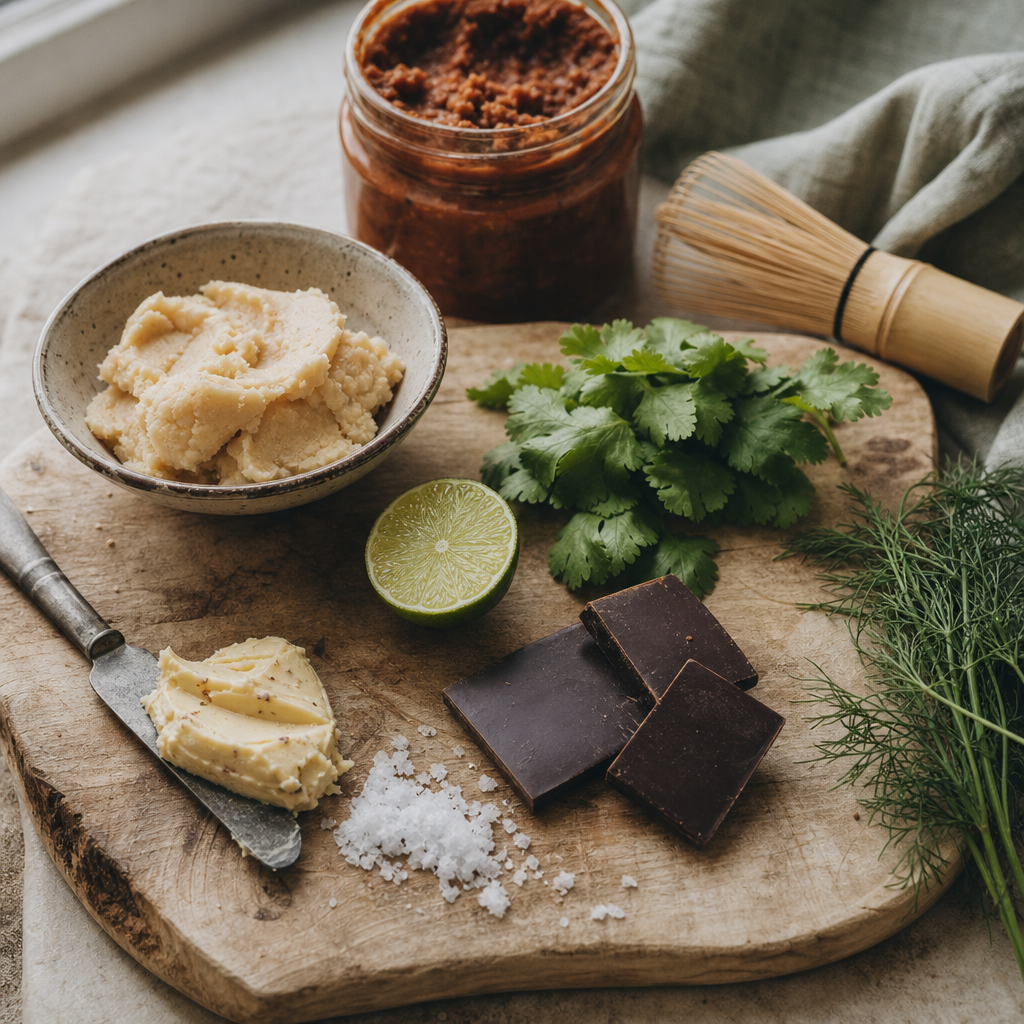
Blend softened butter with a spoonful of miso. This compound butter is incredible on roasted vegetables, grilled corn, steak, or melted over caramelized mushrooms. Just taste before adding extra salt — miso is already quite salty.
4. Use Miso Instead of Butter
Whisk a spoonful of pale miso into a sauce at the end of cooking to finish it in a creamy, rich way — completely dairy-free. It works beautifully in pan sauces, vinaigrettes, and even creamy pasta dishes.
5. Add It to Desserts
Don’t stop at savory dishes. A spoonful of miso in caramel sauce, chocolate desserts, or cookie dough adds a salty-savory edge that makes everything taste more complex. It’s the same principle as salted caramel — just deeper and more interesting.
How to Match Miso Types to What You’re Making
Not all miso is the same. The type you choose affects both the flavor and how it interacts with other ingredients. Here’s a quick guide to the three most common varieties.
Miso Type Comparison
White (Shiro) Miso — Fermented for a few weeks to 2 months. Mild, slightly sweet, delicate. Best for: salad dressings, light marinades, fish, dairy-free sauces, desserts, and any dish where you don’t want miso to dominate.
Yellow (Shinsu) Miso — Fermented a bit longer than white. Mild, earthy, middle-of-the-road. Best for: soups, glazes, and general-purpose cooking with miso where you want some depth without overpowering.
Red (Aka) Miso — Fermented for 1-3 years. Deep, salty, intense, slightly bitter. Best for: hearty stews, braised meats, bold marinades, and any dish that can stand up to a strong flavor.
General rule: Pair lighter miso with lighter foods and darker miso with heavier, richer dishes.
Smart Tips for Cooking with Miso Like a Chef
Here are the key things to know about cooking with miso from the pros. A few simple techniques can make the difference between a dish that’s good and one that’s unforgettable.
Thin it first. Miso is thick, so it can clump if you add it directly to a dish. Whisk it with a little hot water, soy sauce, or mirin first to create a smooth paste. Then stir that into your dish for even distribution.
Add it at the end, off the heat. This is the most important tip. High heat kills the beneficial bacteria in miso. For maximum probiotic benefit, stir miso into soups, sauces, and braises just before serving, after you’ve turned off the stove. If you’re using it in a baked or roasted dish, the probiotics won’t survive — but you’ll still get the flavor and nutritional benefits.
Watch the salt. One tablespoon of miso contains about 634 mg of sodium — roughly a quarter of the daily recommended limit of 2,300 mg. That doesn’t mean you should avoid it. Just taste your dish before adding any extra salt, and build the flavor around something sweet (like rice, carrots, or a touch of honey) instead of piling on more sodium.
Blend two types of miso. Mix a spoonful of white miso with a smaller spoonful of red miso for a more complex flavor. The sweet-and-salty combination works especially well in marinades and glazes.
What Happens to Probiotics When You Heat Miso?
This is one of the most common questions people ask, and the answer is straightforward. Heat does kill live bacteria, including the beneficial Aspergillus oryzae in miso. Prolonged boiling or high-temperature cooking will destroy most of the probiotic content.
But here’s the nuance. A 2018 review in Nutrition Reviews found that live microorganisms from fermented foods do reach the digestive tract, where they help support immune function and digestion. Even if you bake miso into a glaze or stir it into a hot soup, you’re still getting the isoflavones, amino acids, and other nutrients — though the live probiotic benefits will only be preserved if you add miso after cooking, off the heat. The best practice? Add miso at the very end of cooking, off the heat, and reserve about a teaspoon to stir in raw for probiotic benefit if that’s your priority. If you’re using miso raw in a dressing or dip, the probiotics remain fully intact.
Safety and Sodium: What to Know About Miso
Miso is safe for most people, but there are a few considerations to keep in mind.
Low-salt diets: If your doctor has recommended limiting sodium, use miso sparingly. One tablespoon provides about 27% of the daily sodium limit. You can still enjoy it — just be mindful of portions.
Thyroid health: Soybeans contain goitrogens, which can interfere with iodine absorption and thyroid hormone production. The good news is that moderate amounts of soy foods like miso are generally considered safe for most people as part of a balanced diet, according to WebMD. If you take thyroid medication, wait at least one hour after your dose before eating miso.
Blood-thinning medication (warfarin): Miso contains vitamin K, which can interact with warfarin. If you’re on this medication, keep your miso intake consistent and talk to your healthcare provider.
Soy allergy and gluten: Miso is made from soybeans, so it’s not suitable for anyone with a soy allergy. Some varieties use barley (mugi miso), which contains gluten. Check labels if you need gluten-free options.
Frequently Asked Questions About Miso
How long does miso last in the fridge?
Miso can last up to 12 months in an airtight container in the refrigerator. The salt content acts as a natural preservative. Look for any signs of mold (fuzzy spots in colors other than white or green) or off smells. A slight darkening on the surface is normal.
Can I freeze miso?
Yes. Miso freezes well and the texture doesn’t change. Portion it into tablespoon-sized scoops on a baking sheet, freeze, then transfer to a freezer bag. You can use it directly from frozen.
Is store-bought miso as healthy as traditional miso?
Most store-bought miso paste is pasteurized, which means the live probiotics have been killed by heat. You can still get the nutrients and flavor. For probiotic benefits, look for “unpasteurized” or “live” miso in the refrigerated section and check the label for minimal ingredients (soybeans, grain, salt, water).
How much miso should I eat per day?
There’s no official daily recommendation, but 1-2 tablespoons per day is a reasonable amount for most people. This gives you the flavor and potential health benefits without excessive sodium. If you’re watching your salt intake, start with 1 teaspoon and adjust from there.
The Bottom Line
Miso is one of those ingredients that rewards curiosity. The more you experiment with it, the more uses you’ll discover. It adds complexity to simple weeknight meals, supports your gut microbiome with every spoonful, and keeps for months in the fridge so you can always have it on hand.
Start with what you already have in your kitchen. Stir a teaspoon into your next batch of mashed potatoes. Whisk some into a vinaigrette. Or try it in your caramel sauce and see how your world changes. Cooking with miso isn’t about following strict rules — it’s about learning a new flavor language. And your gut will thank you for it.