

Age-Related Muscle Loss: What Causes It and How to Slow It
Key Takeaways
- Age-related muscle loss (sarcopenia) is driven in part by a chemical “rusting” of the muscle-repair protein HGF.
- A newly discovered lab-made compound called LASSS can more than double HGF’s repair ability in early animal studies.
- LASSS is not yet a supplement or treatment — but the science points to why resistance training and protein work so well.
- Combined exercise and nutrition is the gold-standard strategy for slowing age-related muscle loss right now.
- Simple targets: 2–3 resistance sessions per week, 20–35g protein per meal, and adequate vitamin D.
What if the reason your muscles don’t repair as well with age has less to do with wear and tear and more to do with a “rusted key” that no longer fits the lock? That’s the picture emerging from new research on age-related muscle loss — a condition that affects 10–20% of older adults and gradually steals strength and mobility starting as early as your 30s.
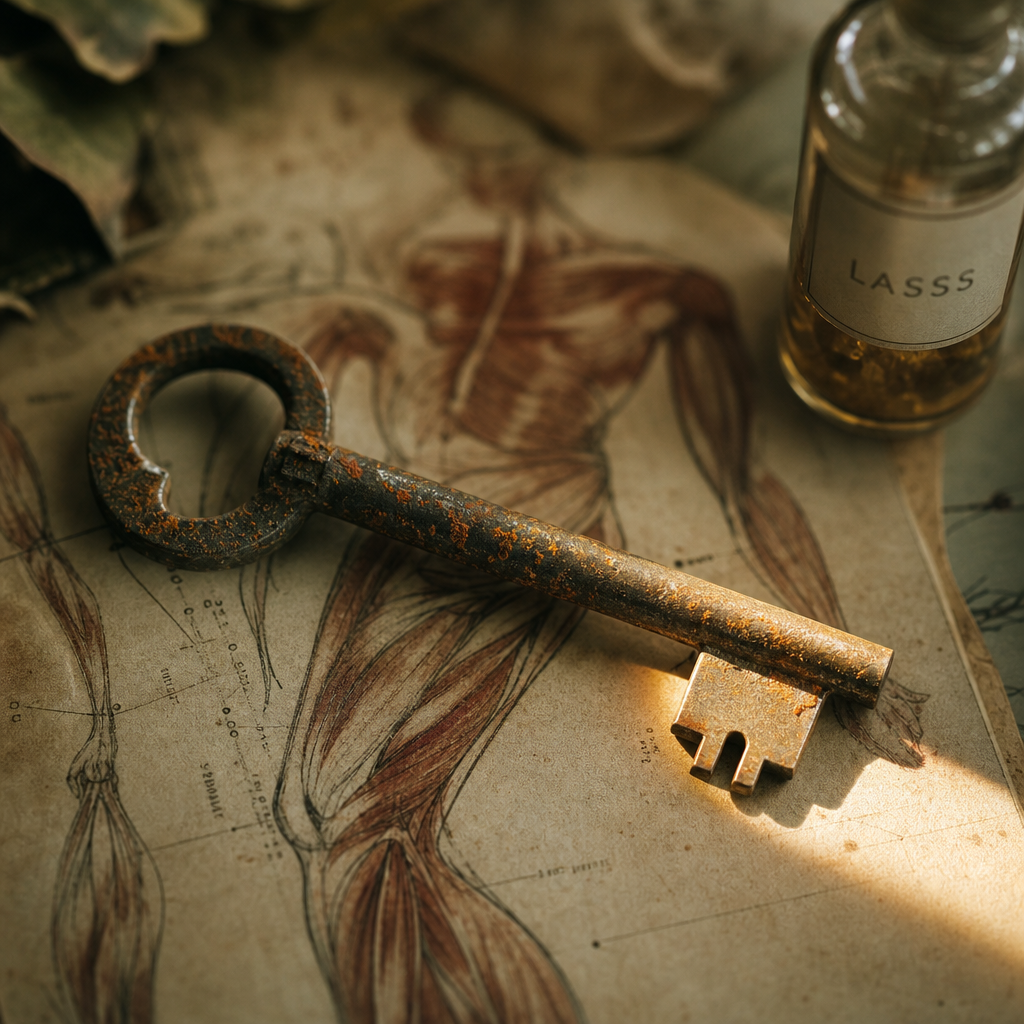
For years, scientists understood that muscle repair slows down with age, but the exact mechanism remained fuzzy. Now a team from Kyushu University has identified a specific chemical change — nitration — that damages a crucial repair protein called HGF. Think of it like a key that gets rusty and no longer turns the lock. The good news? They also found a compound that can “un-rust” it, at least in the lab and in mice.
Let’s explore what this means for you — both the exciting science and the practical steps you can take right now, because age-related muscle loss doesn’t have to be inevitable.
Quick Answer: Can Age-Related Muscle Loss Be Reversed?
Current evidence says yes — but only partially. Muscle loss is reversible through consistent resistance training and adequate protein intake. The new LASSS compound shows promise at the molecular level, but it’s still experimental and not available as a treatment. The best strategy today combines strength training, protein-rich meals, and targeted nutrients like vitamin D and omega-3s.
Understanding Age-Related Muscle Loss
Doctors call it sarcopenia — the gradual loss of muscle mass and strength that comes with aging. The NIH reports that starting around age 30, your body naturally loses 3–5% of its muscle mass every ten years. By age 60, up to 13% of adults have sarcopenia; by age 80, that number climbs to 50%.
But here’s the thing: muscle loss isn’t just about looks or strength. It’s directly tied to how well you move, your risk of falls (research shows sarcopenia increases fall risk by 60–89%), and even your long-term independence. That’s why scientists are so motivated to find new ways to stop it.
Until recently, most explanations focused on things like declining hormones, less physical activity, and lower protein intake. Those are all real contributors. But new research points to a deeper cellular problem — and that’s where the “rust” metaphor comes in.
The “Rusted Key” Problem: How Nitration Blocks Muscle Repair
Your muscles have their own built-in repair system. When a muscle fiber gets damaged (from exercise, daily wear, or injury), a special protein called HGF acts like a key. It fits into a lock (the c-met receptor) on muscle stem cells, telling them to wake up and start repairing the damage.
As you age, reactive molecules called peroxynitrites attack HGF at specific spots (tyrosine sites Y198 and Y250). This chemical change — nitration — is like rust forming on the key. The key no longer fits the lock well, so muscle repair signals grow weaker. The research group at Kyushu University first described this mechanism in a 2024 study in Aging Cell.
The Repair Pathway at a Glance
Healthy muscle damage → HGF acts as a key → Fits into c-met lock → Stem cells activate → Repair happens
Aged muscle damage → HGF gets nitrated (rusted) → Key doesn’t fit → Weak stem cell signal → Slower repair
Understanding this mechanism is a big deal. It explains why simply eating more protein or taking regular walks — while helpful — may not be enough to fully reverse age-related muscle loss at the cellular level.
Enter LASSS: The Compound That Creates “Super HGF”
In July 2026, the same Kyushu team published in Scientific Reports that a lab-made molecule called LASSS (lipoic acid trisulfide) could prevent HGF rusting — and even create a “Super HGF” that binds more than twice as strongly to the c-met receptor. In the lab, when LASSS was mixed with HGF at a precise 1:8000 ratio, the resulting complex resisted nitration and worked better than normal HGF. A similar compound (GSSSG) had no effect.
In mice, those pretreated with LASSS showed significantly less HGF nitration after muscle atrophy from disuse. This means the compound worked in living tissue, not just in a dish.
Now, here’s the critical point: LASSS is not found in any food or plant. It’s created in a lab and is currently an experimental research tool. You cannot buy it as a supplement. It will need years more testing in aging animals and humans before becoming any kind of therapy. But as a proof of concept, it’s powerful. It tells us that the “rusting” process is real and can be targeted.
How to Slow Age-Related Muscle Loss: Evidence-Based Strategies
While science works on compounds like LASSS, you can use the same pathway to support your muscle repair system today. The combination of resistance training and proper nutrition is backed by multiple systematic reviews — a topic we’ve explored in depth in our guide to The 3 Pillars of Muscle Longevity Your Workout Needs — and remains the gold standard.
Resistance Training: The Non-Negotiable
Strength training is the single most effective tool against sarcopenia. Research consistently shows 2–3 sessions per week of progressive resistance exercise significantly increases muscle mass, grip strength, and walking speed. A 2025 review found that resistance training over an average of 23 weeks improved lower-limb strength with large effect sizes.
You don’t need a gym. Home-based elastic band training has been shown to improve physical performance just as well. Start with bodyweight squats, lunges, push-ups (against a wall if needed), and rows with a resistance band. The key is to challenge your muscles — aim for sets where the last few reps feel hard.
Protein: 20–35g Per Meal
The NIH recommends at least 1.2 grams of protein for every 2 pounds of body weight daily (roughly 1.2–1.3 g/kg). But timing matters too. Spreading protein evenly across meals — about 20–35g per meal — appears more effective than eating most of your protein at dinner.
Good sources: a 3-ounce chicken breast (26g), a cup of Greek yogurt (23g), 3 eggs (18g), ½ cup of cottage cheese (14g), or a scoop of whey protein (25g). Leucine-rich foods (whey, soy, fish, eggs, meat) may offer extra benefits for muscle protein synthesis.
Key Nutrients: Vitamin D and Omega-3s
Vitamin D plays a role in muscle function. An umbrella review from 2026 found that ≥700 IU of vitamin D per day reduced falls by 13%. One 2025 systematic review found that when combined with leucine, vitamin D improved grip strength by about 2 kg in older adults. Omega-3 fatty acids (≥2 g/day for at least 6 months) also showed benefits for muscle mass and walking speed, though results are mixed depending on the study.
These supplements are not magic bullets. They work best alongside exercise and protein, not instead of them.
Practical Steps to Protect Your Muscles Starting Today
Your Weekly Muscle Health Plan
- Monday: 30-min resistance band workout (squats, rows, overhead press) + protein-rich breakfast (scrambled eggs with spinach)
- Tuesday: 20-min brisk walk + lunch with 25g protein (grilled chicken salad)
- Wednesday: Bodyweight strength (lunges, push-ups, glute bridges) + dinner with 30g protein (salmon + quinoa)
- Thursday: Active recovery (yoga, stretching, easy walk)
- Friday: 30-min resistance training (different exercises than Monday)
- Saturday: Fun movement — dancing, hiking, biking
- Sunday: Rest
Track your progress: Simple tests like the chair stand (how many times can you stand up from a chair in 30 seconds?) and grip strength (using a home dynamometer or even just how easily you open jars) can help you see improvements. The SARC-F questionnaire — a simple 5-question screen about strength, walking, rising from a chair, climbing stairs, and falls — can alert you to whether you might benefit from a conversation with your healthcare provider.
Common Questions About Age-Related Muscle Loss
Q: Can I reverse muscle loss after 60?
A: Yes. Multiple studies show that older adults can build muscle with resistance training, even into their 80s. The body never loses the ability to respond to strength training.
Q: Is sarcopenia the same as muscle wasting from illness?
A: Not exactly. Sarcopenia is age-related. Muscle wasting from illness (cachexia) is driven by inflammation and disease. Both involve muscle loss, but the causes and treatments differ.
Q: Will the LASSS compound become a supplement?
A: Too early to say. It may eventually lead to a drug or therapy, but it’s years away from human testing. For now, focus on exercise and nutrition.
The Bottom Line
The discovery of LASSS is a meaningful scientific step. It confirms that age-related muscle loss has a specific molecular cause — the rusting of the HGF repair key — and that it can potentially be fixed. But we’re not there yet. In the meantime, you already have a proven strategy: challenge your muscles regularly, feed them enough protein, and keep inflammation in check with nutrient-rich whole foods and an active lifestyle.
Age-related muscle loss doesn’t have to be your story. Every squat, every protein-rich meal, every brisk walk is a step toward keeping your strength — and your independence — for years to come.