Basic Skincare Routine: The Simple 3-Step Plan Backed by Science
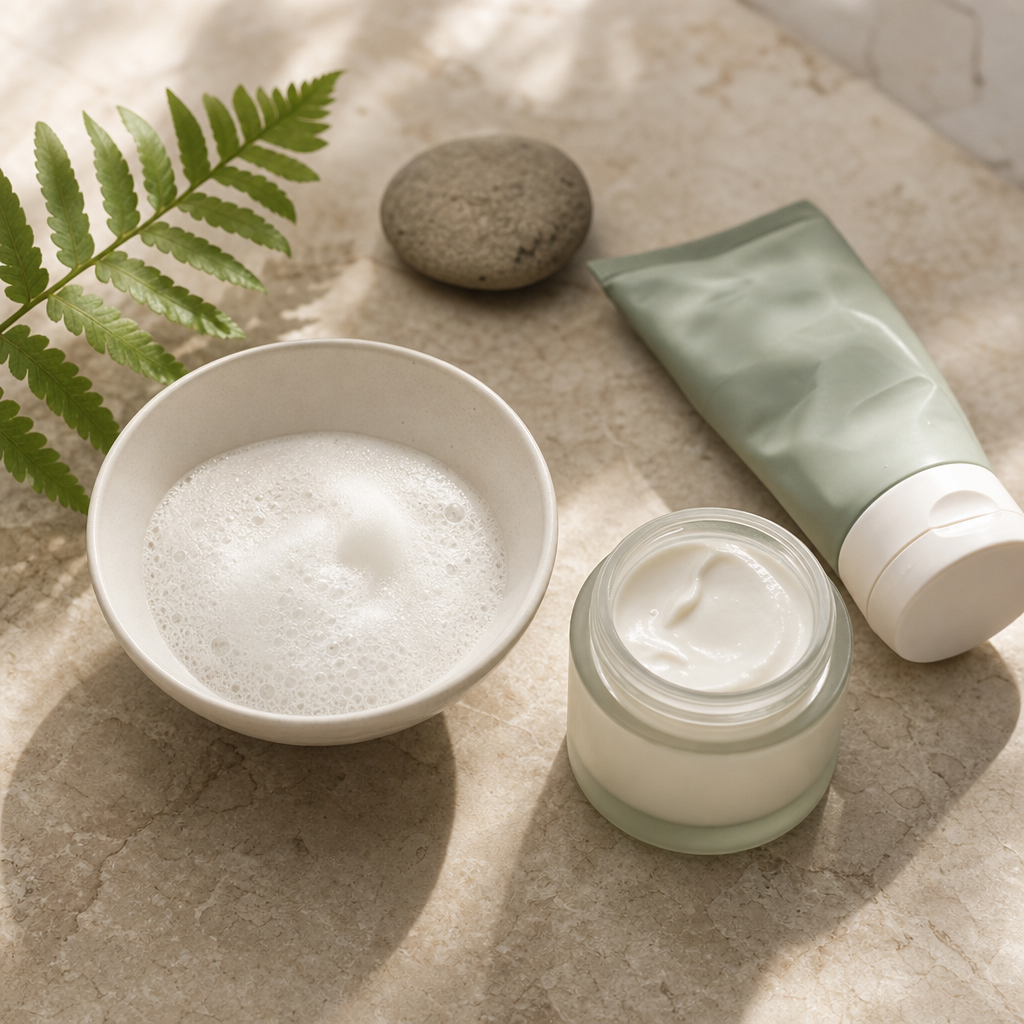
Picture this: You’ve spent hundreds on serums, peels, and fancy treatments for dark spots, acne, or redness. But what if the simplest option was also the most effective? A new 2026 research review reveals that a basic skincare routine — just gentle cleansing, moisturizing, and daily sun protection — may be more powerful than most of us realize.
Here’s the thing. The review, published in Skin Health and Disease and indexed on PubMed, looked at data from over 3,500 people in clinical trials. Across five common skin issues — acne, melasma, dark spots, rosacea, and actinic keratoses — the vehicle group showed real improvements. And these folks were not using any prescription ingredients. Just the basics.
Let me be honest with you. When I first saw these numbers, I had to double-check them. Up to 66% better melasma. A 51% drop in acne lesions. A 27% cut in rosacea redness. All from washing your face, moisturizing, and wearing sunscreen. What the research actually reveals is this: consistency with the basics matters more than complexity. The 2026 peer-reviewed review of placebo-controlled dermatology trials analyzed data from over 3,500 participants across five skin conditions.
Quick Answer: Does a Basic Skincare Routine Really Work?
Yes — and the proof is surprisingly strong. A 2026 review of placebo-controlled trials found that basic skincare alone (gentle cleansing, moisturizing, and sun protection) gave 25% to 66% improvement across five common skin issues. For acne, people saw up to a 51% drop in inflammatory lesions. For melasma, severity got up to 66% better. These results come from the vehicle arms of clinical trials — what researchers use as a baseline. The basics are doing serious work.
Why a Basic Skincare Routine Works Better Than Complex Regimens
The idea that a basic skincare routine could rival prescription treatments seems odd. We are told we need vitamin C serums, retinol, and a dozen other things. But here is what the data actually shows.
Researchers from the University of Lancashire and NHS Trust searched MEDLINE and Embase for trials across five skin conditions. What they found was steady. The vehicle arms — where people got only basic skincare routine products like gentle cleansers, moisturizers, and sunscreens — showed real, measurable gains. The review noted that these vehicle arms often gave more than half the benefit of active treatments. Let that sink in. More than half the benefit of prescription creams, from just washing and moisturizing.
A true basic skincare routine uses gentle, pH-balanced cleansers that do not strip your skin. It uses moisturizers with barrier-supporting ingredients like ceramides. And it includes daily sun protection — every single day, not just when you remember. That level of consistency is rare. And it is exactly what the trial participants did.
On the flip side, complex routines can work against you. Every extra product raises the chance of irritation and barrier damage. I have seen women using seven products at night, wondering why their skin still looks red. Sometimes the answer is not adding more. It is stripping back to a basic skincare routine and letting your skin reset.
The Three Steps of a Basic Skincare Routine
A basic routine has just three must-do steps. Everything else — toners, serums, exfoliants, masks — is optional. Here they are.
Step 1: Gentle Cleansing
Wash your face once a day with a gentle cleanser. Most doctors say do this at night to remove makeup, sunscreen, and daily buildup. In the morning, just rinse with warm water. What matters most is the cleanser itself. Look for sulfate-free, pH-balanced formulas — a pH close to your skin’s natural level is ideal. Stay away from anything that leaves your skin feeling tight. That means it’s stripping your barrier.
Step 2: Moisturize Every Time
Put moisturizer on while your skin is still slightly damp. This locks in hydration. For dry skin, look for creams with ceramides or glycerin. For oily skin, gel or lotion formulas work well. Yes, even oily skin needs moisturizer. Skipping it can actually make oil production worse.
Step 3: Sun Protection Daily
Use SPF 30 or higher, rain or shine. Sun exposure is the top cause of dark spots, wrinkles, and loss of firmness. For darker skin tones, look for tinted sunscreens or ones with iron oxides — these can help prevent dark spots and uneven tone.
What to Look for in a Gentle Cleanser
This is where many routines go wrong. A cleanser that is too harsh damages your skin barrier. This can actually cause more breakouts, more redness, and more oil. Your skin tries to make up for the damage.
Signs your cleanser is too harsh: your skin feels tight after washing, you see flaking, or you feel a strong need to moisturize right away. What to look for instead. Sulfate-free formulas — look for cleansing agents like sodium cocoyl isethionate or cocamidopropyl betaine instead of sodium lauryl sulfate. Research on gentle cleansers and ceramide-based moisturizers for skin barrier health confirms that fragrance-free, pH-balanced options are best. Non-comedogenic labels mean the product will not clog pores.
Choosing a Moisturizer That Supports Your Skin Barrier
Not all moisturizers are the same. The best ones have ingredients that actively support your skin barrier. Ceramides are the most proven. A clinical review of ceramide-containing products found they improve dry skin and barrier function. Glycerin and hyaluronic acid help your skin hold onto moisture. Stay away from heavily fragranced moisturizers if you have sensitive skin, alcohol-heavy gels (they can be drying), and products with long lists of active ingredients.
Sun Protection: Your Most Important Step
If you do nothing else, wear sunscreen every day. A JAAD review of hyperpigmentation care and photoprotection stressed that daily sun protection is essential for preventing and treating dark spots. This is not optional.
The data from the peer-reviewed 2026 study backs this up. People who saw 66% better melasma were all using daily sun protection as part of their basic routine. How to choose: SPF 30 or higher, broad-spectrum (protects against UVA and UVB), and a formula you actually like wearing. For darker skin tones, tinted sunscreens can help prevent dark spots and uneven tone.
A Sample Minimalist Routine to Get Started
Here is what a basic skincare routine looks like in practice. Morning: rinse your face with warm water (or use a gentle cleanser if you have oily skin), then apply moisturizer with SPF. Evening: gentle cleanser, moisturizer, done. That is it.
You can build from there if you want — adding a serum for a specific concern, or an exfoliant once or twice a week. But start here. Give it time. Clinical studies for these conditions often run for a few months, and that gives you a realistic sense of how long it can take to see meaningful changes. Many people see real improvements within that window. Your skin needs time to repair its barrier and find its balance.
How Long Until You See Results?
Consistency matters more than anything. Many people start noticing improvements within a few weeks to a couple of months. Give your skin time to adjust and heal. Missing days delays your progress.
Frequently Asked Questions
Can I use body wash on my face?
Not ideal. Body washes are often harsher and have a higher pH than face cleansers. Your face needs a gentler, pH-balanced product. Stick with ones made for the face.
Do I need separate day and night moisturizers?
Not really. Many people do fine with one good moisturizer used twice a day. The key is that your daytime product should have SPF built in, or you need a separate sunscreen on top.
What if I have acne AND dark spots?
A basic skincare routine helps with both. Gentle cleansing cuts acne irritation. Moisturizing supports barrier repair. And daily sunscreen stops dark spots from getting worse while letting existing ones fade. The 2026 study showed better acne (51% fewer lesions) and lighter dark spots (45% improvement) with the same simple routine.
Can I exfoliate while doing a basic routine?
Yes, but keep it simple. Once or twice a week, swap your gentle cleanser for one with salicylic acid or use a separate chemical exfoliant. Choose chemical over physical scrubs — they are kinder to your barrier. And always follow with moisturizer and sunscreen.
The Bottom Line
Here is the honest truth. The beauty industry wants you to think you need a complex, costly routine with a dozen products. But the research tells a different story. A basic skincare routine — gentle cleansing, moisturizing, and daily sun protection — is genuinely effective. It reduces acne by up to 51%. It improves melasma by up to 66%, and dark spots by up to 45%. It calms redness by up to 27%. And it does this without the cost, time, and irritation of a 10-step plan.
The 2026 peer-reviewed review of placebo-controlled dermatology trials confirms what many skin doctors have known all along: you do not need more products. You need the right ones, used day after day. Start simple. Stay steady. Let your skin do the rest.
Related Articles You Might Enjoy
- Is Salmon Really Healthy? What Women Need to Know About This Superfood — Rich in omega-3s that support skin health and reduce inflammation.
- Why Exercise Is the Most Powerful Tool for Brain Health — Managing stress through exercise benefits both your mind and your skin.