

No-Cook Mediterranean Diet Recipe for Summer Cookouts
Picture this: You walk up to the cookout table. There’s the creamy pasta salad, the baked beans swimming in brown sugar, the potato chips, and the mystery casserole someone’s aunt brought. You want to enjoy yourself. You also want to feel good after you eat. So what do you do?
Here’s the thing — you don’t have to choose between being social and eating well. I’ve been bringing the same mediterranean diet recipe to every summer cookout for years, and it never fails. People love it. I feel great eating it. And I never come home with leftovers.
Let me show you what I bring, why it works, and how you can navigate any cookout spread with confidence.
Key Takeaways
- The Mediterranean diet is one of the most evidence-backed eating patterns for heart health, brain health, and longevity — and it’s perfect for summer eating.
- A No-Cook Chickpea, Beet & Quinoa Salad delivers fiber, plant protein, and anti-inflammatory nutrients with almost zero kitchen time.
- You can build a balanced cookout plate using a simple visual guide: half vegetables, a quarter protein, a quarter starch.
- Hidden sodium and added sugars lurk in many cookout staples — knowing what to watch for helps you make smarter choices.
- Bringing a dish you love to share is a powerful way to align your social life with your healthy lifestyle.
Why the Mediterranean Diet Works for Cookouts
You’ve probably heard that the Mediterranean diet is good for you. But the science behind it is genuinely impressive. Multiple 2026 systematic reviews — including those from the Italian National Guidelines — show that higher adherence to this eating pattern is linked to lower risk of heart disease, stroke, and early death.
One review of 87 studies involving over 1.4 million people found that even a small increase in Mediterranean diet adherence produced measurable heart health benefits. Another review showed that the Mediterranean diet can reduce cardiovascular mortality by 60% in people with existing heart conditions.
And it’s not just about your heart. Emerging research links the Mediterranean diet to improvements in mood and lower depression risk. So that salad you bring? It might just make everyone at the table feel a little better — in more ways than one.
The best part? The Mediterranean diet is built for summer. It’s all about fresh vegetables, legumes, whole grains, olive oil, and herbs — ingredients that thrive in warm weather and require minimal cooking. If you’re looking for more inspiration, our guide to Mediterranean diet benefits explains how this way of eating beats low-fat diets for long-term heart health.
The Mediterranean Diet Recipe I Bring Every Time
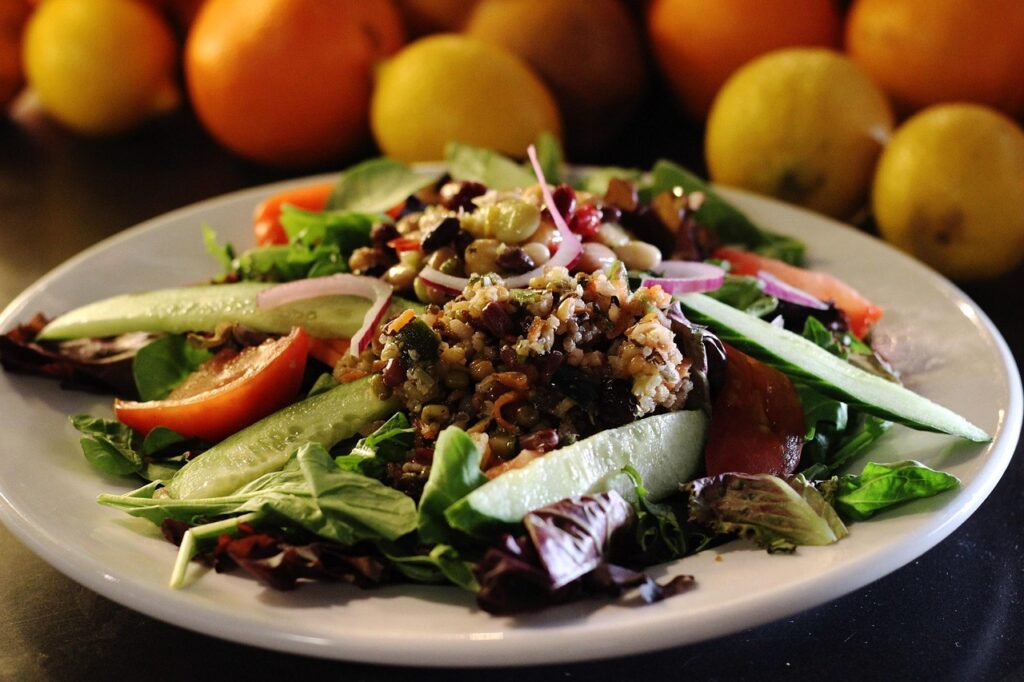
This No-Cook Chickpea, Beet & Quinoa Salad is my go-to. It’s the mediterranean diet recipe that checks every box: nourishing, budget-friendly, almost no cooking, and it travels like a dream.
No-Cook Chickpea, Beet & Quinoa Salad
Serves: 8 | Prep time: 15 minutes | Cook time: 0 minutes (if quinoa is pre-cooked)
Ingredients:
- 1 can (15 oz) no-salt-added chickpeas, rinsed and drained
- 2 cups cooked quinoa (cook a batch earlier in the week)
- 1 cup precooked beets, diced (look for vacuum-packed or refrigerated)
- 2 celery stalks, diced
- 3 scallions, thinly sliced
- 2 cups mixed greens or baby spinach, roughly chopped
- ¼ cup fresh parsley, chopped
- ¼ cup extra-virgin olive oil
- 3 tablespoons fresh lemon juice
- Salt and black pepper to taste
Directions:
- In a large bowl, whisk together olive oil, lemon juice, salt, and pepper.
- Add chickpeas, quinoa, beets, celery, scallions, greens, and parsley.
- Toss gently until everything is well coated.
- Serve at room temperature or chilled.
Nutrition per serving (¾ cup): ~220 calories, 8g protein, 28g carbs, 9g fat (1g saturated), 7g fiber, 166mg sodium, 0g added sugar
TEOHL’s Prep Notes & Swaps
Make it ahead: This salad actually gets better as it sits. The flavors deepen overnight. Make it the night before and store it in the fridge.
Don’t have quinoa? Try farro, bulgur, or even cooked brown rice. Each gives a slightly different texture but works beautifully.
Not a beet fan? Swap in roasted red peppers from a jar (drained) or diced cucumber for a different crunch.
Want more protein? Add a can of drained tuna or some crumbled feta cheese on top.
Dressing variation: Swap half the lemon juice for red wine vinegar for a tangier kick. Or add a teaspoon of Dijon mustard to the dressing for extra depth.
What Makes This Salad So Good for You?
Let’s break down what’s actually in this bowl — because the nutrition story here is pretty impressive.
Chickpeas and quinoa deliver a solid 8 grams of plant-based protein per serving. Protein digests slowly, which helps keep you full longer — especially useful when you’re at a cookout where grazing can go on for hours.
The fiber count hits 7 grams per serving — that’s about a quarter of what most women need in a day. Fiber supports digestion, helps stabilize blood sugar, and feeds the good bacteria in your gut.
Beets bring natural sweetness plus betalains — pigments with antioxidant and anti-inflammatory properties. Beets, along with the chickpeas and greens in this salad, provide folate — a B vitamin your body needs to make and maintain cells.
Extra-virgin olive oil is the star of the Mediterranean diet. It provides heart-healthy monounsaturated fats and polyphenols — plant compounds that help fight inflammation.
And here’s something interesting: research from the PREDIMED study found that eating a wide variety of whole foods is independently linked to lower mortality. This salad alone gives you chickpeas, quinoa, beets, celery, scallions, greens, parsley, and olive oil — that’s eight different plant species in one bowl.
How to Build a Balanced Cookout Plate
Now, let’s talk about the rest of the table. Because even if you bring a healthy dish, you still have to navigate everyone else’s contributions. Here’s a simple visual guide I use.
The Balanced Cookout Plate Formula
Think of your plate in three sections:
- ½ the plate: Vegetables and salads (your Mediterranean salad, grilled veggies, a simple green salad)
- ¼ the plate: Protein (grilled chicken, fish, a burger patty, or a veggie burger)
- ¼ the plate: Starches and grains (corn on the cob, a small scoop of potato salad, a piece of bread)
This isn’t about restriction. It’s about proportions. You can still enjoy the foods you love — just let the vegetables take up the most real estate on your plate.
What to Watch For in Other People’s Dishes
Here’s the honest truth: many cookout staples are loaded with hidden sodium and added sugars. That’s not a reason to avoid them entirely — but knowing what’s in them helps you make intentional choices.
Potato salad and coleslaw from the store or made with bottled dressing can pack upwards of 400-600mg of sodium per cup — that’s a quarter of your daily limit. The homemade version with a simple vinaigrette is a much better bet.
Baked beans often have added brown sugar or molasses. A half-cup can contain upwards of 12-15 grams of added sugar — about 3 teaspoons.
Marinated meats can be a hidden source of both sodium and sugar. A single chicken thigh marinated in a bottled sauce might have 500-700mg of sodium.
The goal isn’t to obsess over every gram. It’s to be aware so you can choose what matters most to you. If you really want the baked beans, take a smaller scoop and load up on the salad. That’s balance.
The Mindset Shift: You Belong at This Table
I want to address something that doesn’t get talked about enough: the social side of eating healthily at gatherings.
Maybe you’ve felt it — that moment when someone eyes your dish and says, “Oh, you brought the healthy thing.” Or when you’re standing at the buffet wondering if people are judging your plate.
Here’s what I’ve learned: the people who matter don’t care what’s on your plate. And the ones who do? That’s their issue, not yours.
Bringing a dish you genuinely love — like this Mediterranean salad — is a way of showing up as yourself. You’re not depriving anyone. You’re sharing something delicious that happens to be good for you. And more often than not, other people will be grateful for a lighter option on the table.
If someone asks about your dish, here’s a simple response: “It’s a chickpea and quinoa salad with a lemon dressing. I love it because it’s fresh and doesn’t weigh me down in this heat.” That’s it. No apology. No explanation about your diet. Just a genuine recommendation.
Make-Ahead Timeline for Cookout Success
One of the biggest barriers to bringing a healthy dish is the last-minute scramble. Here’s a timeline that takes the stress out of it.
The Night Before
- Cook a batch of quinoa (1 cup dry = about 3 cups cooked). Let it cool completely.
- Rinse and drain the chickpeas.
- Dice the beets and celery.
- Whisk together the dressing and store it separately.
- Store all components in separate containers in the fridge.
The Morning Of
- Combine all ingredients in a large bowl.
- Pour the dressing over and toss gently.
- Transfer to your serving container.
- Pack it in a cooler with an ice pack if you’re traveling more than 30 minutes.
At the Cookout
- Keep the salad in the shade or on ice until serving time.
- Give it a quick stir before putting it out — the dressing may have settled.
- Serve with a large spoon and let people help themselves.
Frequently Asked Questions
Can I use canned beets instead of precooked?
Yes, but look for no-salt-added or low-sodium versions. Drain them well before dicing.
How long does this salad keep in the fridge?
About 3-4 days in an airtight container. The flavors actually improve after a day.
Is this salad gluten-free?
Yes, as long as you use certified gluten-free quinoa. All other ingredients are naturally gluten-free.
Can I make this vegan?
It already is! No animal products in the base recipe. If you add feta as a variation, just leave it out for vegan guests.
What if I don’t like lemon?
Swap the lemon juice for red wine vinegar or apple cider vinegar. Use about 2 tablespoons instead of 3.
The Bottom Line
You don’t have to choose between being social and eating well. This mediterranean diet recipe proves that one dish can be both nourishing and crowd-pleasing. It’s the kind of food that lets you show up, enjoy yourself, and feel good about what you’re eating — without making a big deal about it.
The next time you’re heading to a cookout, try this salad. See how it feels to bring something that reflects how you actually want to eat. And remember: you’re not depriving anyone. You’re sharing something delicious that happens to be good for you. That’s a gift — to yourself and to everyone at the table.