
Summer Produce Recipes: 7 Quick 30-Minute Dinners
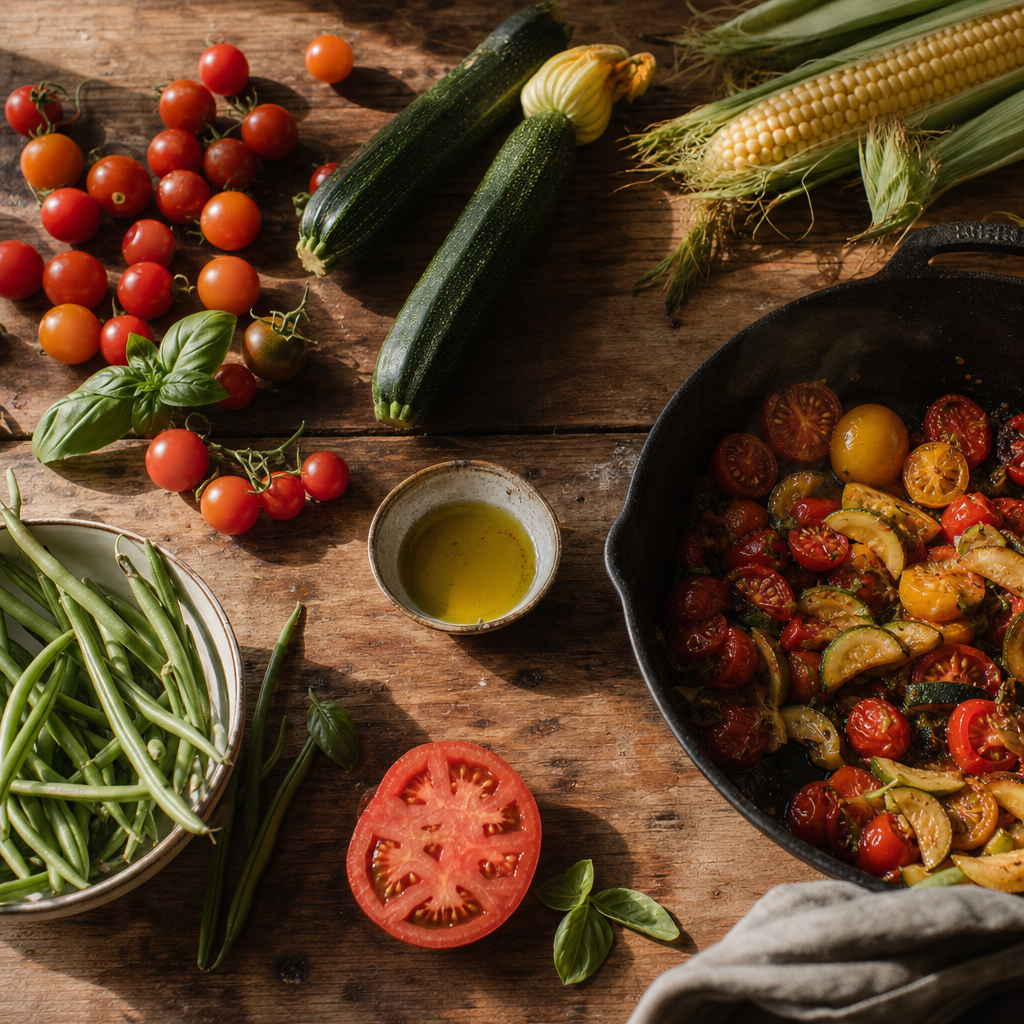
You brought home a gorgeous haul from the farmers’ market. Heirloom tomatoes, sweet corn, tender zucchini, and a bag of green beans. And now you’re wondering: should you slice everything into a salad, or fire up the stove? Here’s the thing: cooking your summer produce isn’t just about cozying up to a warm meal. It’s actually a smart nutritional move. Research shows that cooking certain vegetables can unlock more of their disease-fighting nutrients, making them easier for your body to absorb. This collection of summer produce recipes is designed to help you make the most of the season’s bounty — in 30 minutes or less, with minimal fuss and maximum flavor.
Quick Answer: Why Cook Your Summer Produce?
Cooking summer vegetables like tomatoes, zucchini, corn, and green beans breaks down their tough plant cell walls. This process makes key nutrients — especially carotenoids like lycopene and beta-carotene — significantly more available for your body to absorb. A 2024 systematic review in Comprehensive Reviews in Food Science and Food Safety confirmed that thermal processing can enhance the absorption of beneficial plant compounds. Plus, cooking mellows raw flavors, adds satisfying warmth, and turns a light side into a hearty main. It’s a win-win.
The Science of Cooking Your Summer Produce
Let’s get into the details. Many of us grew up hearing that raw vegetables are the healthiest option. But the truth is more nuanced — and more interesting. Vegetables like tomatoes, carrots, and summer squash are packed with carotenoids, the pigments that give them their vibrant red, orange, and yellow colors. These compounds are powerful antioxidants linked to lower risks of heart disease, certain cancers, and age-related eye problems.
Here’s the catch: carotenoids are locked inside tough plant cell walls made of cellulose. Your body has a hard time breaking those walls down when you eat the vegetables raw. Cooking — whether you’re sautéing, roasting, or simmering — gently breaks those cell walls open, releasing the carotenoids so your digestive system can actually get to them.
The numbers are striking. A study in the European Journal of Nutrition found that cooking carrots increased beta-carotene absorption from 41% to 65% — a jump of more than 50%. For tomatoes, research in Nutrients showed that cooking them into a sauce boosted the bioavailability of lycopene, the antioxidant linked to heart and prostate health. And when you cook tomatoes with a little olive oil? Even better. A clinical trial found that eating cooked tomato sauce with olive oil actually reduced inflammatory markers in the blood.
The Honest Trade-Off
I want to be straight with you. Cooking does reduce some heat-sensitive nutrients, particularly vitamin C. A bell pepper eaten raw delivers more vitamin C than a cooked one. That’s a real trade-off. The smartest approach? Eat a mix. Enjoy your raw bell peppers and fresh herbs for their vitamin C, and cook your tomatoes, zucchini, corn, and carrots to unlock their carotenoids. Both matter for your health.
Summer Produce Recipes: 7 Quick Dinners for Your Farmers’ Market Haul
Now for the fun part. Here are seven of the best summer produce recipes that turn your market finds into satisfying, 30-minute dinners. Each one highlights a different cooking method and a different star vegetable. I’ve included a quick nutrition note for each so you know exactly what cooking does for the ingredients.
1. Skillet Gnocchi with Tomatoes & Spinach
Star vegetable: Cherry tomatoes. Why it works: This five-ingredient wonder uses shelf-stable gnocchi that gets golden and crisp in the pan. The cherry tomatoes break down as they cook, releasing their lycopene-rich juices to create a quick, silky sauce. A dollop of ricotta on top adds creaminess and a dose of calcium. Nutrition note: Cooking the tomatoes in a hot skillet with a bit of oil maximizes lycopene absorption. Serve with a side salad of raw bell peppers for vitamin C balance.
2. Creamy Tomato Salmon Skillet
Star vegetables: Tomatoes and zucchini. Why it works: Salmon fillets cook in just minutes, and the creamy tomato-zucchini sauce comes together in the same pan. The zucchini softens and absorbs the savory flavors, while the tomatoes create a sauce that coats every bite. Nutrition note: Salmon provides omega-3 fatty acids, which are fat-soluble — meaning they help your body absorb the carotenoids from the cooked tomatoes and zucchini even better. This is a textbook example of smart food pairing.
3. Lemon-Garlic Chicken with Green Beans
Star vegetable: Green beans. Why it works: Quick-cooking chicken cutlets and green beans share the same pan, making this a true one-pan meal. The green beans stay tender-crisp, and the lemon-garlic pan sauce ties everything together. Nutrition note: Green beans contain both carotenoids (beta-carotene) and vitamin C. Cooking them briefly preserves much of the vitamin C while making the beta-carotene more available. The key is not to overcook them — 5 to 7 minutes is plenty.
4. Mozzarella, Basil & Zucchini Frittata
Star vegetable: Zucchini. Why it works: This vegetable-studded frittata is one of the quickest meals you can make. Zucchini cooks down quickly in the pan, releasing moisture that keeps the eggs tender. Fresh basil and mozzarella add classic summer flavor. Nutrition note: Eggs provide fat, which helps your body absorb zucchini’s beta-carotene. This is a perfect breakfast-for-dinner option that uses up that zucchini sitting in your crisper drawer.
5. Pork & Green Bean Stir-Fry
Star vegetable: Green beans. Why it works: A quick stir-fry is one of the best ways to cook summer vegetables. The high heat caramelizes the green beans and pork, while a touch of apricot jam balances the savory and spicy flavors without turning the sauce into a sugar bomb. Nutrition note: Stir-frying is a fast cooking method that preserves more nutrients than boiling. The small amount of oil helps with carotenoid absorption. Serve with rice to round out the meal.
6. Lemon Zucchini Pasta
Star vegetable: Zucchini. Why it works: Fresh zucchini blends perfectly with a bright lemony sauce in this 25-minute pasta dish. The zucchini softens as it cooks, absorbing the citrus and garlic flavors. You can swap in summer squash if you have it, and top with fresh herbs like basil or parsley. Nutrition note: Cooking zucchini makes its beta-carotene more available, and the pasta provides energy to fuel your evening. A light, satisfying meal that doesn’t weigh you down.
7. Grilled Vegetable & Black Bean Farro Bowls
Star vegetables: Mixed summer vegetables (zucchini, bell peppers, corn). Why it works: Grilling adds smoky depth to summer vegetables that you just can’t get any other way. Nutty, chewy farro takes the place of rice, and black beans add fiber and plant-based protein. A zesty lime vinaigrette ties it all together. Nutrition note: Grilling is a dry-heat method that concentrates flavors and preserves nutrients well. The black beans and farro provide fiber that supports gut health, and the vegetables deliver a range of antioxidants. These bowls are delicious at room temperature, making them perfect for meal prep.
Best Cooking Methods for Every Summer Vegetable
Not all cooking methods are created equal. Here’s a quick guide to getting the most out of each summer vegetable:
Vegetable-by-Vegetable Cooking Guide
Tomatoes: Sauté, roast, or simmer into sauce. Cooking with a little olive oil boosts lycopene absorption significantly. Zucchini & Summer Squash: Sauté, grill, or roast quickly. Their high water content means they cook fast — 5 to 7 minutes is usually enough. Corn: Grill, roast, or sauté. Grilling adds smoky depth and caramelizes corn’s natural sugars. Green Beans: Blanch, sauté, or stir-fry. Brief cooking preserves vitamin C while making beta-carotene more accessible. Bell Peppers: Eat raw for maximum vitamin C, or roast briefly for a sweeter, more digestible option. Eggplant: Roast or grill. Cooking softens its texture and mellows its flavor. Pair with olive oil to help your body absorb fat-soluble nutrients.
Tips for Making the Most of Your Summer Produce
Shop with a plan. Before you head to the market, think about which cooking methods you’ll use this week. Planning to grill? Grab zucchini, corn, and bell peppers. Making pasta? Tomatoes and summer squash are your friends. This reduces food waste and ensures you actually use what you buy.
Don’t be afraid to cook in batches. Roast a sheet pan of mixed summer vegetables on Sunday, and use them throughout the week in grain bowls, omelets, and pasta dishes. Cooked vegetables keep well in the fridge for 3 to 4 days.
Always add a little fat. Whether it’s olive oil, avocado oil, or a pat of butter, cooking your summer vegetables with a small amount of fat significantly improves your body’s ability to absorb their fat-soluble nutrients (carotenoids, vitamins A, D, E, and K).
Season generously. Summer vegetables love salt, pepper, garlic, and fresh herbs. Don’t be shy. A well-seasoned vegetable is one you’ll actually want to eat — and that’s the whole point.
Frequently Asked Questions
Does cooking destroy all the nutrients in vegetables?
No. Cooking does reduce some heat-sensitive nutrients like vitamin C, but it makes others — especially carotenoids like lycopene and beta-carotene — much more available. The key is balance. Eat a mix of raw and cooked vegetables to get the benefits of both.
Is it better to steam or roast summer vegetables?
Both are great options. Steaming preserves more water-soluble nutrients and is gentler on the vegetables. Roasting concentrates flavors through caramelization and requires oil, which helps with fat-soluble nutrient absorption. For summer vegetables, I recommend roasting for tomatoes and zucchini, and steaming or sautéing for green beans and corn.
Can I use frozen summer vegetables for these recipes?
Absolutely. Frozen vegetables are flash-frozen at peak ripeness, which locks in their nutrients. They’re a perfectly good backup when fresh summer produce isn’t available. Just be aware that frozen vegetables release more water during cooking, so you may need to adjust your cooking time slightly.
How long do cooked summer vegetables keep in the fridge?
Cooked summer vegetables will keep for 3 to 4 days in an airtight container in the refrigerator. They’re great for meal prep — just reheat and add to grain bowls, salads, or omelets throughout the week.
The Bottom Line
Here’s what I want you to remember: cooking your summer produce isn’t just about flavor — it’s a smart nutritional strategy. By gently heating vegetables like tomatoes, zucchini, corn, and green beans, you’re unlocking their disease-fighting carotenoids and making them more available to your body. Pair them with a little healthy fat, and you’re maximizing the benefits even further.
These seven summer produce recipes — along with our easy high-protein dinners for summer — are designed to be doable on a Tuesday night. They use minimal ingredients, come together in 30 minutes or less, and let the season’s best vegetables shine. So go ahead — fire up that skillet, preheat the oven, or light the grill. Your farmers’ market haul is ready for its close-up.