

Anti-Inflammatory Dinner: Summer Chicken Parmesan Recipe
Key Takeaways
- Anti-inflammatory eating is about the whole pattern — not single “superfoods.” The Mediterranean diet has the strongest evidence for reducing inflammation.
- This Summer Chicken Parmesan recipe combines multiple evidence-backed ingredients — lycopene-rich tomatoes, antioxidant-packed zucchini, whole grains, and extra virgin olive oil.
- Small swaps make a big difference — using whole-wheat breading instead of refined flour, cooking tomatoes to boost lycopene absorption, and choosing EVOO over regular oil.
- This dish is meal-prep friendly — leftovers actually taste better the next day, making it easy to eat anti-inflammatory all week long.
- You can adapt it to your needs — gluten-free, dairy-free, and lower-carb options all work without losing the anti-inflammatory benefits.
Picture this: It’s a warm summer evening, and you’re craving something that feels indulgent — crispy chicken, melty cheese, rich tomato sauce. But you also want to eat in a way that supports your health, not works against it. The good news? You don’t have to choose between comfort food and an anti-inflammatory dinner. This Summer Chicken Parmesan proves it.
Here’s the thing — chronic inflammation is linked to everything from joint pain and fatigue to more serious conditions like heart disease and diabetes. And while no single meal is a magic cure, building your dinners around anti-inflammatory ingredients is one of the most powerful things you can do for your long-term health. Let’s look at what the science actually says — and how one delicious recipe puts it all together.
Quick Answer: What Makes a Dinner Truly Anti-Inflammatory?
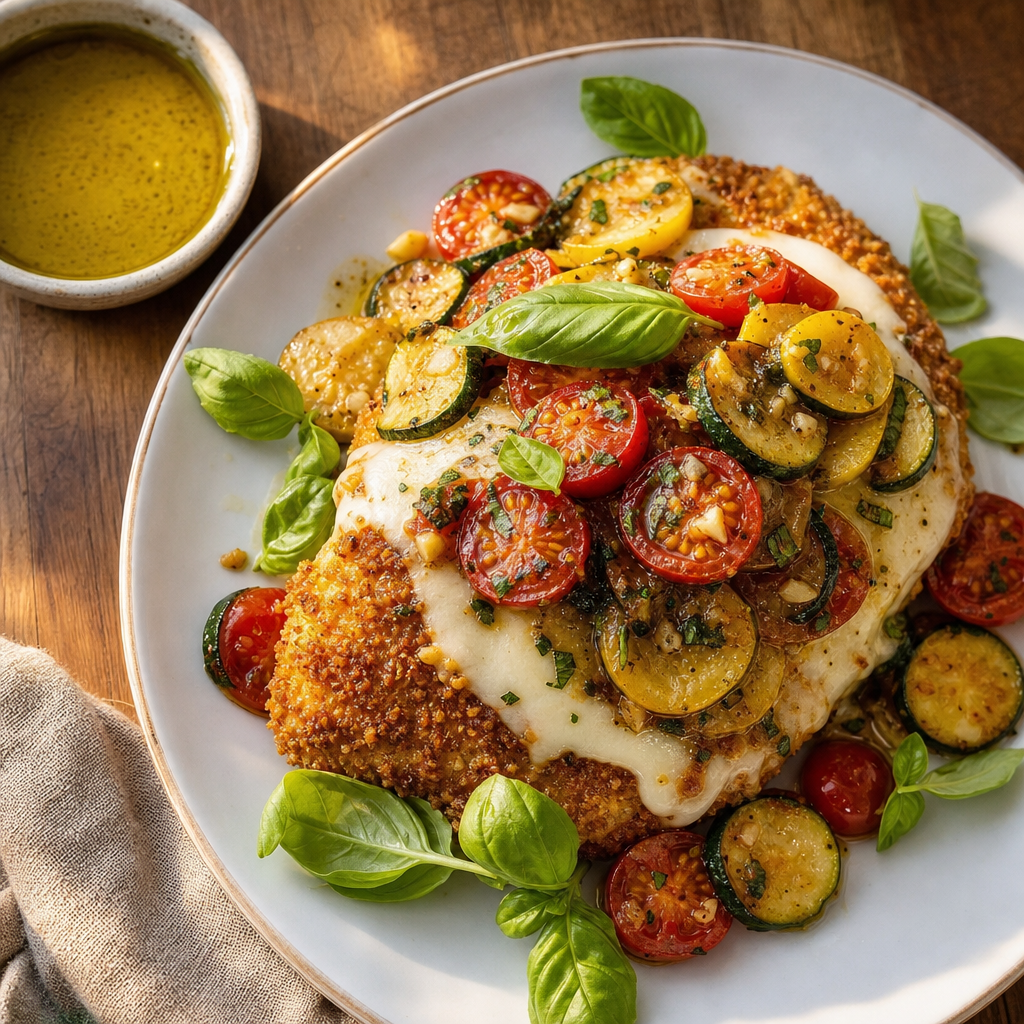
An anti-inflammatory dinner is built on the Mediterranean diet pattern — the most researched eating approach for reducing inflammation. That means a plate centered on colorful veggies, whole grains, healthy fats like extra virgin olive oil, and lean protein (fish, chicken, or legumes). The Summer Chicken Parmesan recipe hits all these marks: whole-wheat breaded chicken cooked in EVOO, topped with cooked tomatoes (for absorbable lycopene), zucchini (for lutein and zeaxanthin), garlic, basil, and a modest amount of cheese.
The Science of an Anti-Inflammatory Dinner
Before we dive into the recipe, let’s talk about what “anti-inflammatory” actually means when it comes to food. Your body’s inflammatory response is a normal, healthy process — it’s how your immune system fights off threats and repairs damage. The problem starts when inflammation becomes chronic, meaning it stays switched on even when there’s no acute threat.
Diet plays a major role here. A 2026 umbrella review of 30 systematic reviews (covering 225 individual studies) found that the Mediterranean diet is the most researched anti-inflammatory eating pattern, with significant beneficial effects on key inflammatory markers like C-reactive protein (CRP) and interleukin-6 (IL-6).
What does that mean for your dinner plate? It means the overall pattern matters more than any single ingredient. You don’t need exotic “superfoods” — you need a consistent approach built on veggies, whole grains, healthy fats, and quality protein. The Summer Chicken Parmesan is a perfect example of this pattern in action.
Ingredient Deep Dive: Why This Anti-Inflammatory Dinner Works
Let’s break down each part of this dish and look at what the evidence actually says. This isn’t about marketing hype — it’s about real science you can trust.
Tomatoes: Lycopene Power (Especially When Cooked)
The tomatoes in this dish aren’t just for flavor. They’re packed with lycopene, a carotenoid that gives them their red color. A 2022 meta-analysis of 26 clinical trials found that lycopene from cooked tomatoes helps reduce inflammatory markers like IL-6. Here’s the key detail: heating tomatoes in a skillet (as this recipe does) makes the lycopene more absorbable by your body. Raw tomatoes are healthy, but cooked ones deliver more of this anti-inflammatory compound.
Zucchini: More Than Just a Summer Veggie
Both green and yellow zucchini bring vitamin C and carotenoids — specifically lutein and zeaxanthin. The same 2022 meta-analysis showed that lutein and zeaxanthin significantly reduce CRP levels. These compounds act as antioxidants in your body, helping to neutralize the free radicals that can trigger inflammatory responses.
Extra Virgin Olive Oil: The Anti-Inflammatory Fat
This is a big one. A 2026 meta-analysis of 23 clinical trials found that extra virgin olive oil has clinically demonstrated anti-inflammatory effects on C-reactive protein and oxidized LDL. The key is the phenolic compounds in EVOO — not just the healthy fat profile. That’s why quality matters: choose extra virgin olive oil (not “light” or “pure” olive oil) for the most anti-inflammatory benefit.
Whole Grains: A Smart Swap
Instead of refined white flour and breadcrumbs, this recipe uses whole-wheat flour and whole-wheat breadcrumbs. A 2022 systematic review of 31 clinical trials found that switching to whole grains may help reduce inflammation, especially if you have elevated markers. The effects were most pronounced in people with overweight or existing health conditions — exactly the population most likely to benefit from anti-inflammatory eating.
Recipe Overview: Summer Chicken Parmesan
Now let’s get to the actual dish. This recipe takes the classic chicken Parmesan you’d order at an Italian restaurant and gives it a seasonal, anti-inflammatory makeover. Here’s how it works:
The Anti-Inflammatory Dinner Formula in This Recipe
- Protein: Chicken breast (thinly pounded) — lean, high-quality protein
- Healthy fat: Extra virgin olive oil for cooking — anti-inflammatory phenolic compounds
- Whole grains: Whole-wheat flour + whole-wheat breadcrumbs for breading — fiber and polyphenols
- Colorful veggies: Tomatoes (lycopene), zucchini (lutein/zeaxanthin), garlic (antioxidants)
- Fresh herbs: Basil — adds flavor and additional antioxidant compounds
- Modest cheese: Mozzarella — a small amount for satisfaction without overdoing saturated fat
The chicken is lightly fried in olive oil (not deep-fried), then topped with a fresh saut\u00e9ed mix of zucchini, tomatoes, and garlic. A sprinkle of mozzarella gets broiled until melty, and fresh basil finishes it off. The result? A meal that feels indulgent but is actually packed with anti-inflammatory compounds.
Meal Prep Tips: This Anti-Inflammatory Dinner Gets Better as Leftovers
Here’s a pleasant surprise — this dish actually improves after a day or two in the fridge. The flavors meld together, and the garlic infuses the veggie topping even more. Here’s how to make it work for your week:
- Batch cook: One pound of chicken (thinly pounded) stretches to 4-6 servings. Make the full recipe on Sunday for easy lunches or dinners all week.
- Reheat smart: Reheat the breaded chicken in an air fryer or oven (about 5 minutes at 375\u00b0F) to keep it crispy. Microwave the veggie topping separately.
- Add cheese after reheating: Sprinkle mozzarella on the hot chicken, then broil for 2-3 minutes. Top with the reheated veggies and fresh basil.
- No side dish needed: This meal is balanced enough on its own — protein, veggies, and whole grains all in one dish.
Customization Options for Every Diet
One of the best things about this anti-inflammatory dinner is how adaptable it is. Here’s how to make it work for different dietary needs without losing the anti-inflammatory benefits:
Dietary Adaptations
- Gluten-free: Swap whole-wheat flour for almond flour or a gluten-free blend. Use almond meal instead of breadcrumbs. This actually adds more protein and healthy fats.
- Dairy-free: Skip the cheese entirely, or use a vegan mozzarella. The veggie mix is the heart of the dish, so it’s still plenty satisfying.
- Lower-carb: Skip the breading entirely and simply saut\u00e9 or grill the chicken. You’ll still get all the anti-inflammatory benefits from the veggies and olive oil.
- More veggies: Add bell peppers, eggplant, or summer squash to the veggie topping. The more colors, the more diverse the antioxidants.
- Extra garlic: Double the garlic for an additional anti-inflammatory boost. Garlic contains allicin and other sulfur compounds with antioxidant properties.
Beyond This Recipe: Building Your Anti-Inflammatory Dinner Pattern
While this Summer Chicken Parmesan is a fantastic starting point, the real goal is to build a consistent anti-inflammatory dinner pattern. A 2026 umbrella review of 30 systematic reviews found that a Mediterranean-style diet significantly lowers inflammation markers like CRP and IL-6 — but only when you follow it consistently, not just once in a while.
Here’s a simple formula you can apply to any dinner:
The Anti-Inflammatory Dinner Plate Formula
- Fill half your plate with colorful veggies — cooked or raw, the more colors the better
- One-quarter with lean protein — fish (especially fatty fish like salmon for omega-3s), chicken, legumes, or tofu
- One-quarter with whole grains or starchy veggies — quinoa, brown rice, whole-wheat pasta, sweet potatoes, or whole-grain bread
- Drizzle with extra virgin olive oil — for the phenolic anti-inflammatory compounds
- Add herbs and spices — garlic, basil, turmeric, ginger, rosemary all add antioxidant benefits
For more inspiration, check out our collection of anti-inflammatory dinner ideas that follow this formula, including sheet-pan salmon with roasted veggies, lentil and veggie soup with a side of whole-grain bread, or a quinoa bowl with roasted veggies, chickpeas, and tahini dressing.
What About Foods That Cause Inflammation?
It’s also worth knowing what to limit. The same research that supports anti-inflammatory eating patterns also identifies foods that tend to promote inflammation when eaten in excess: highly processed foods, refined carbs, sugary drinks, too much saturated fat, and trans fats.
The good news? You don’t need to cut these out completely. The goal is to shift your overall pattern toward more anti-inflammatory choices — not to create a rigid list of “good” and “bad” foods. This Summer Chicken Parmesan replaces the typical refined-flour breading with whole grains, uses a modest amount of cheese instead of drowning in it, and loads up on veggies. It’s a perfect example of how to make comfort food work for your health.
Frequently Asked Questions
How quickly will I notice results from eating anti-inflammatory dinners?
It varies. Some people notice reduced joint pain or better digestion within a few weeks. For measurable changes in inflammatory markers like CRP, many nutrition studies track changes over several weeks to months of consistent dietary changes.
Can I follow an anti-inflammatory dinner plan on a budget?
Absolutely. Focus on seasonal veggies (farmers’ markets or frozen), affordable proteins like beans and lentils, and buy whole grains in bulk. Canned tomatoes and frozen zucchini work just as well as fresh for this recipe.
Do I need to avoid all inflammatory foods completely?
No. The evidence supports an overall pattern, not perfection. Having a meal that’s less anti-inflammatory once in a while won’t undo your progress. Consistency over time is what matters.
Is this recipe suitable for people with high cholesterol?
Yes, with changes. Use less cheese, skip the breading and grill the chicken instead, and increase the veggie portion. The olive oil and whole grains are actually good for heart health.
The Bottom Line
You don’t have to give up the foods you love to eat in a way that supports your health. This Summer Chicken Parmesan is proof that an anti-inflammatory dinner can be just as satisfying as any restaurant meal — maybe more so, because you know exactly what’s in it.
The science is clear: building your dinners around the Mediterranean diet pattern — colorful veggies, whole grains, healthy fats like EVOO, and quality protein — is one of the most effective ways to reduce chronic inflammation. And when that pattern tastes this good? It’s not a sacrifice. It’s a win.
Start with this recipe. See how you feel. And remember — every anti-inflammatory dinner you make is a step toward better health, one delicious bite at a time.