
Distress Tolerance Skills: 4 Science-Backed Ways to Calm Down
Key Takeaways
- Distress tolerance skills are science-backed techniques from DBT therapy that help you survive emotional crises without making things worse.
- The TIP skills (Temperature, Intense exercise, Paced breathing) work through your body’s nervous system to physically reset intense emotions in minutes.
- Cold water face immersion triggers the mammalian dive reflex, which slows your heart rate and activates your body’s calm-down system.
- Different skills work for different situations — having a personalized “menu” of options means you’ll always have a tool ready.
- Safety matters: avoid ice water if you have a heart condition or take beta blockers, and always consult a clinician before starting new practices.
Picture this: You’re in the middle of a stressful day, and suddenly the pressure hits so hard you can’t think straight. Your heart is racing, your thoughts are a jumble, and every small thing feels like a crisis. You know you need to calm down, but willpower alone isn’t cutting it. What if there was a way to hit a physiological “emergency brake” — something that works through your body, not just your mind?
That’s exactly what distress tolerance skills are designed to do. These are evidence-based techniques from Dialectical Behavior Therapy (DBT) that help you survive intense emotional moments without making things worse. And the best part? They work in minutes, using your body’s own biology to reset your nervous system.
Let’s explore what these skills are, how they work, and how you can build your own personalized toolkit for those moments when you need it most.
Quick Answer: What Are Distress Tolerance Skills?
Distress tolerance skills are techniques from DBT therapy that help you get through intense emotional distress without using harmful behaviors. They work by changing your body’s physical state (through temperature, exercise, breathing, and muscle relaxation) or by shifting your mental focus (through distraction, self-soothing, and acceptance). The goal isn’t to solve the problem — it’s to survive the crisis so you can think clearly later.
What Are Distress Tolerance Skills and Why Do You Need Them?
The American Psychological Association defines distress tolerance as your ability to withstand emotional distress while still pursuing your goals. Think of it as your emotional pain tolerance — how much discomfort you can handle before you react.
Here’s the thing: when you’re in the middle of intense distress, your brain’s thinking centers actually shut down. That’s why you can’t “think your way out” of a panic attack or an anger spiral. Your body is in survival mode, and you need body-based techniques to get back to a place where you can think clearly.
That’s where distress tolerance skills come in. They’re your emergency brakes — designed to lower the intensity from a 10 to a 7 or 8, just enough so you can use other coping strategies. As major medical institutions like Cleveland Clinic explain, these skills are a core part of DBT, an evidence-based therapy that helps people manage intense emotions.
The TIP Skills: Your Fastest Emergency Brakes
The TIP skills are the quickest way to lower emotional intensity. They work by changing your body’s physiology directly. The acronym stands for Temperature, Intense exercise, Paced breathing, and Paired muscle relaxation. Let’s break each one down.
T: Temperature — The Ice Water Trick
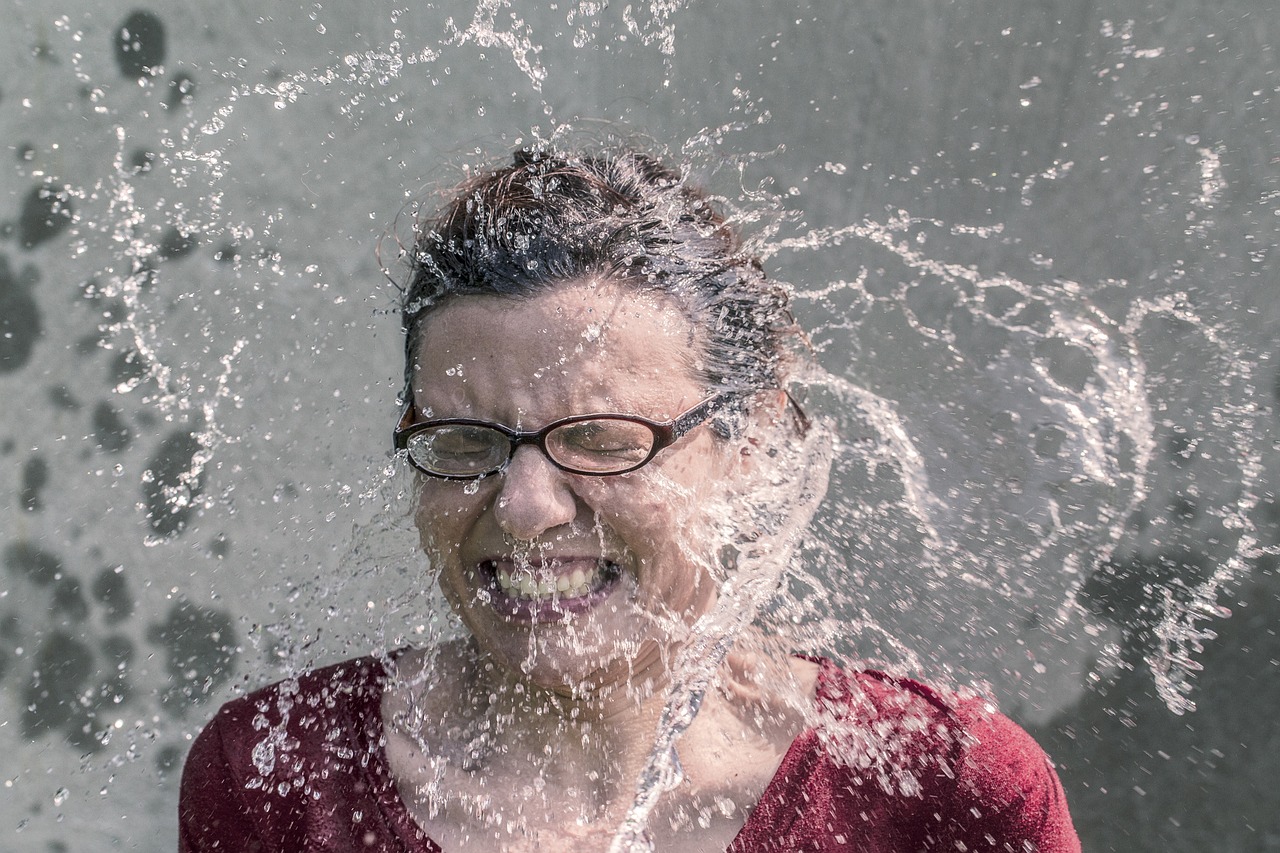
This is the most surprising and effective skill in the toolkit. When you dunk your face in cold water — or hold an ice pack to your cheeks and eyes — you trigger something called the mammalian dive reflex. It’s a survival response that all mammals have. When your face hits cold water, your body automatically slows your heart rate and redirects blood to your core.
A systematic review of 26 studies found that cold water on the face activates the parasympathetic nervous system — your body’s “rest and digest” system — through the trigeminocardiac reflex. In plain English: cold water on your face tells your nervous system to calm down, and it happens within seconds.
How to do it: Fill a bowl with cold water and ice. Hold your breath and dunk your face for 10-30 seconds. If you’re in public, you can use an ice pack on your cheeks and eyes, or splash cold water on your face repeatedly.
⚠️ Safety First: When NOT to Use Cold Water
Do NOT use ice water or extreme cold if you have a heart condition or take beta blockers — as noted by DBT expert Shireen Rizvi, a professor of psychiatry and behavioral sciences. The sudden temperature change can affect heart rate and blood pressure. If you have any medical condition, consult your doctor before trying this technique. If you’re unsure, start with cool (not icy) water, or skip this skill entirely and use the other TIP skills instead.
I: Intense Exercise — Rev Up to Calm Down
This one sounds backwards, but it works. When you’re in distress, your body is flooded with stress hormones like adrenaline. Intense exercise helps you use up that energy so your body can naturally settle down afterward.
How to do it: Do something that gets your heart rate up fast. Sprint in place for 30 seconds. Do jumping jacks. Run up and down stairs. Jump rope. The key is intensity, not duration — even 30 seconds of all-out effort can shift your physiology.
If you have more time, 10-15 minutes of moderate exercise works too. The important thing is to match the intensity to your distress level — higher distress calls for more intense exercise.
P: Paced Breathing — The Long Exhale
You’ve probably heard that deep breathing helps with stress. But the specific pattern matters. The key is to make your exhale longer than your inhale. This stimulates the vagus nerve, which activates your parasympathetic nervous system — the same calm-down system triggered by the dive reflex.
How to do it: Breathe in through your nose for 4 counts. Then breathe out through your mouth for 6 counts. Repeat for 1-2 minutes. The longer exhale is what does the work — it tells your body it’s safe to relax.
P: Paired Muscle Relaxation — Tense and Release
This skill combines muscle tension with breathing. You tense a muscle group as you breathe in, then release the tension as you breathe out. Over time, your body learns to associate the release with relaxation.
How to do it: Start with your hands — make fists as you inhale, then release as you exhale. Move to your arms, shoulders, face, chest, legs, and feet. Say a word like “relax” or “calm” as you release the tension. This helps train your body to respond to that word later.
Beyond TIP: Other Distress Tolerance Skills for Your Toolkit
While TIP skills are the fastest emergency brakes, they’re not the only tools available. Having a variety of distress tolerance skills means you can choose what works best for your specific situation.
ACCEPTS: Distraction That Actually Works
Sometimes the best way to survive a crisis is to shift your focus entirely. The ACCEPTS acronym gives you seven types of distraction:
- Activities: Do a puzzle, clean a drawer, fold laundry
- Contributing: Help someone else — text a friend, volunteer
- Comparisons: Think of a time you coped with something harder
- Emotions: Watch a funny video or listen to music that shifts your mood
- Push away: Put the distressing thought in a box on a shelf for later
- Thoughts: Count backward from 100 by 7s, or do a mental puzzle
- Sensations: Hold an ice cube, eat something sour, take a hot shower
Self-Soothe: Engage Your Senses
This skill is about being kind to yourself through your five senses. The key is to do it mindfully — really pay attention to the experience, not just go through the motions.
- Sight: Look at a photo of a loved one, watch a sunset, look at art
- Hearing: Listen to calming music, nature sounds, or a favorite podcast
- Smell: Light a candle, smell fresh coffee, use a calming essential oil
- Taste: Eat something slowly and savor it — dark chocolate, herbal tea
- Touch: Take a warm bath, pet an animal, wrap yourself in a soft blanket
Radical Acceptance: The Skill That Changes Everything
This is the most challenging — and most powerful — distress tolerance skill. Radical acceptance means fully accepting reality as it is, without fighting it. It doesn’t mean you approve of what’s happening. It means you stop making things worse by fighting reality.
A 2025 randomized controlled trial found that a brief radical acceptance intervention significantly reduced stress, depression, and emotion regulation difficulties — and the benefits lasted at least three weeks. That’s powerful evidence that this skill works, even in a short, self-guided format.
How to practice it: Start with small things. Spilled your coffee? Say to yourself, “I don’t like this, but I can accept that it happened.” The more you practice with small frustrations, the easier it gets to use radical acceptance for bigger challenges.
How to Choose the Right Distress Tolerance Skill for Your Situation
One of the biggest gaps in most articles about distress tolerance skills is that they don’t tell you which skill to use when. Here’s a simple decision framework:
Your Distress Tolerance Decision Tree
If you’re in a crisis (distress level 8-10): Use TIP skills first. They work fastest. Temperature, intense exercise, paced breathing — pick one and do it now.
If you’re distressed but can function (level 5-7): Try ACCEPTS distraction or self-soothe. These work well when you have a little more control.
If you’re stuck in rumination or fighting reality: Practice radical acceptance. This is for when you’re making things worse by refusing to accept what is.
If you’re in public and need something discreet: Paced breathing (no one notices), intense exercise (excuse yourself to the bathroom), or ACCEPTS (mental distraction). Save the ice water for private moments.
Building Your Personalized Distress Tolerance Menu
Here’s the thing about distress tolerance skills: they work best when you’ve practiced them before you need them. Think of it like a fire drill — you don’t want to learn how to use the fire extinguisher while your kitchen is burning.
Create your own “distress tolerance menu” by picking 2-3 skills from each category that feel doable for you. Write them down on a note card or in your phone. When you’re calm, practice each one at least once so you know how it feels. Then, when distress hits, you don’t have to think — you just reach for your menu.
Here’s a sample menu to get you started:
- Fast emergency skills: Ice water face dunk, 30-second sprint, 4-6 breathing
- Distraction skills: Count backward from 100, do a crossword, call a friend
- Soothing skills: Herbal tea, weighted blanket, favorite playlist
- Acceptance skills: “This is hard, and I can get through it”
The Evidence Behind Distress Tolerance Skills
You might be wondering: does this actually work, or is it just another wellness trend? The answer is clear: yes, it works, and the research is solid.
The National Institute of Mental Health recognizes DBT as an evidence-based treatment that teaches skills for managing intense emotions. A comprehensive review of DBT research, published in PubMed Central, confirms that distress tolerance is one of the four foundational skill modules, supported by multiple randomized controlled trials.
The 2025 RCT we mentioned earlier showed that even a brief, self-guided radical acceptance intervention produced significant reductions in stress and depression. And the 2023 systematic review of 26 studies confirmed the physiological mechanism behind the temperature skill — cold water on the face really does activate your body’s calm-down system.
One 2026 study added an interesting nuance: it found that distress tolerance skills may work through emotion regulation pathways rather than directly. What does that mean for you? Simply that these skills are part of a bigger picture. They create the space you need to use other coping strategies effectively. They’re not a magic fix — they’re a bridge to clearer thinking.
Frequently Asked Questions About Distress Tolerance Skills
Q: Can I use these skills if I’m not in therapy?
Absolutely. These skills were developed for DBT therapy, but many can be used outside of therapy too. However, TIP skills have specific safety considerations (see above), and it’s always wise to check with a healthcare provider if you have any medical concerns.
Q: How often should I practice?
Practice each skill at least once when you’re calm so you know how it feels. Then use them whenever you need them. The more you practice, the more automatic they become.
Q: What if a skill doesn’t work for me?
That’s completely normal. Different skills work for different people and different situations. That’s why having a menu of options is so important. If one doesn’t work, try another. The goal is to find what works for you.
Q: Can I combine skills?
Yes! Many people find that combining skills works best. For example, you might do paced breathing while taking a warm bath (combining breathing with self-soothe). Or you might do intense exercise followed by an ice water face dunk. Experiment and see what works for you.
The Bottom Line
Distress tolerance skills are not about fixing your problems or making your feelings go away. They’re about surviving the moment so you can think clearly and make better decisions later. They’re your emergency brakes — and everyone needs emergency brakes sometimes.
The most important thing you can do right now is pick one skill and practice it. Maybe it’s the ice water trick — it’s surprising enough that you’ll remember it. Maybe it’s paced breathing — it’s discreet and you can do it anywhere. Whatever you choose, practice it when you’re calm. That way, when distress hits, your body already knows what to do.
Remember: intense moments don’t last forever. Your feelings are temporary, even when they don’t feel that way. And now you have the tools to ride them out.