

Gut Healthy Salad: 3 Prebiotic Powerhouses in One Bowl
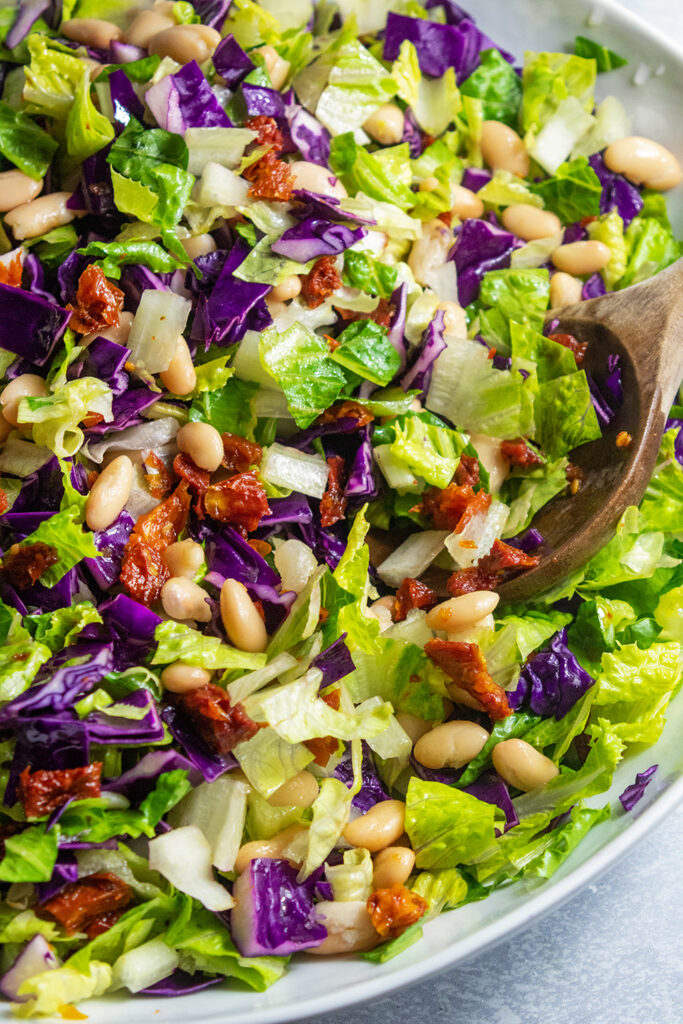
Ever wonder if a single meal could actually do something good for your gut? Not in a vague “this is healthy” way, but in a real, science-backed way. Giada De Laurentiis just shared her White Bean and Sun-Dried Tomato Salad, and it’s more than a quick lunch. It’s a masterclass in eating for your microbiome. This gut healthy salad brings together three prebiotic powerhouses in one bowl. Let’s break down exactly why each ingredient matters and how you can make it your own.
Key Takeaways
- Three prebiotic mechanisms in one dish: White beans (resistant starch + fiber), olive oil (polyphenols), and sun-dried tomatoes (fiber + antioxidants) each support your gut in a different way.
- It’s a 10-minute recipe: With just 5 main ingredients plus pantry staples, this gut healthy salad is as practical as it is delicious.
- Most adults don’t get enough fiber: A single serving of this gut healthy salad helps close the gap between the average 20g/day and the recommended 25-38g/day.
- Easy to customize: Swap beans, change greens, or add protein — the gut-healthy framework stays the same.
- Food first, not supplements: Getting prebiotics from whole foods like this gut healthy salad is the safest, most effective approach for most people.
What Makes a Salad ‘Gut-Healthy’?
Let’s start with a quick definition. Prebiotics are parts of food your body can’t digest, but your gut bacteria can. Think of them as fertilizer for the good microbes living in your colon. According to the Mayo Clinic on prebiotics and probiotics, these compounds are “used by microorganisms” and may help trigger the growth of beneficial bacteria.
Here’s the thing. Not all salads are created equal when it comes to gut health. A bowl of iceberg lettuce with ranch dressing is not doing much for your microbiome. But a gut healthy salad built around prebiotic-rich ingredients? That’s a different story. Giada’s recipe hits three different prebiotic mechanisms at once — and that’s rare for a single dish.
3 Prebiotic Powerhouses in One Bowl
So what makes this gut healthy salad so special? It’s not just one ingredient doing the work. Three key components each support your microbiome in a unique way. Let’s look at each one.
1. White Beans: Resistant Starch + Soluble Fiber
White beans are a gut health superstar. They contain two types of prebiotic compounds: soluble fiber and resistant starch. Soluble fiber dissolves in water and forms a gel that slows digestion and feeds bacteria. Resistant starch resists digestion in the small intestine and travels to the colon, where gut bacteria ferment it into short-chain fatty acids like butyrate. These fatty acids nourish colon cells and support the gut barrier. In this gut healthy salad, white beans are doing double duty — and that’s rare for a single ingredient.
The Mayo Clinic’s dietary fiber guidelines recommend 25g of fiber per day for women under 50 and 21g for women over 50. Most of us get only about 20g. A half-cup of white beans is an excellent source of fiber, contributing significantly to your daily needs — the Mayo Clinic recommends 25g per day for women under 50, and beans are one of the top fiber sources they highlight. The NHS fiber intake recommendations specifically suggest adding pulses like beans to salads to boost fiber intake.
Quick Science: Resistant Starch
When you cook and then cool beans (or potatoes, or rice), some of the starch becomes “resistant” to digestion. This is called retrogradation. Canned white beans have already been cooked and cooled during processing, so they naturally contain resistant starch. No extra work needed. Your gut bacteria love this stuff.
2. Extra-Virgin Olive Oil: Polyphenols That Feed Good Bacteria
Olive oil isn’t just a source of healthy fats. It’s also packed with polyphenols — plant compounds that act as prebiotics. A 2025 clinical trial published in Biomolecules found that polyphenol-rich extra-virgin olive oil increased beneficial bacteria like Bacteroidota in the gut and reduced inflammatory markers. The study on olive oil’s prebiotic effects on gut bacteria also showed improvements in HbA1c, suggesting benefits for metabolic health.
This is important because many people think of olive oil as “just fat.” But the polyphenols in high-quality extra-virgin olive oil do more than add flavor. They selectively feed beneficial bacteria, helping them outcompete less helpful strains. That’s the ISAPP consensus definition of prebiotics in action: a substrate that is selectively utilized by microorganisms and confers a health benefit.
3. Sun-Dried Tomatoes: Concentrated Fiber + Lycopene
Sun-dried tomatoes are a concentrated source of fiber and polyphenols, including lycopene. Because dehydration removes water, sun-dried tomatoes pack more fiber and polyphenols per gram compared to fresh. A 2026 systematic review on polyphenols and gut bacteria found that dietary polyphenols significantly increase beneficial Bifidobacterium in the gut. The effect was moderate-to-large, meaning it’s not just a tiny change — it’s meaningful.
Fresh tomatoes are great, but sun-dried tomatoes pack more fiber and polyphenols per bite because the water has been removed. They also add a savory, umami flavor that makes this gut healthy salad satisfying without needing heavy dressing.
The Recipe: Giada’s White Bean and Sun-Dried Tomato Salad
Here’s the full recipe from Giada De Laurentiis’ White Bean and Sun-Dried Tomato Salad. It takes 10 minutes and serves 2 as a main or 4 as a side. This simple gut healthy salad is proof that eating for your microbiome doesn’t need to be complicated.
Ingredients
- 4 tsp red wine vinegar
- 1/4 tsp salt
- 1/8 tsp black pepper
- 3 tbsp extra-virgin olive oil
- 2 cups finely chopped romaine lettuce
- 2 cups finely chopped radicchio (or red cabbage)
- 1/2 cup drained canned white beans (rinsed and patted dry)
- 8 oil-packed sun-dried tomato halves (drained and chopped)
Instructions
- Whisk vinegar, salt, and pepper in a large bowl.
- Gradually whisk in olive oil to blend.
- Add lettuce, radicchio, beans, and sun-dried tomatoes.
- Toss to coat. Season to taste.
Dietary notes: Dairy-free, gluten-free, nut-free, vegan, vegetarian. Prep time: 10 minutes. Serves 2.
How to Make This Gut Healthy Salad Your Own
One of the best things about this gut healthy salad is how easy it is to adapt. Here are some simple swaps and additions that keep the gut health benefits intact.
Simple Swaps
- Different beans: Chickpeas, cannellini, or black beans all work. Each adds slightly different fiber profiles, which is great for microbiome diversity.
- Different greens: No radicchio? Use red cabbage, arugula, or baby kale. Each brings different polyphenols.
- No sun-dried tomatoes? Try roasted red peppers or fresh cherry tomatoes. You’ll lose some fiber concentration but still get polyphenols.
- Add a protein: Grilled chicken, salmon, or hard-boiled eggs — for more ideas, check out our guide to building a high-protein salad that keeps you full — turn this into a complete meal without changing the gut health benefits.
- Add avocado: Extra healthy fats and fiber. Avocado also helps your body absorb the fat-soluble vitamins from the greens.
Meal Prep Tips for This Salad
Can you make this ahead? Yes, with one trick. Keep the dressing separate until you’re ready to eat. The greens will stay crisp for 2-3 days if stored dry. The beans and sun-dried tomatoes hold up well. When you’re ready, just add the dressing and toss.
For a weekly meal prep approach: chop the romaine and radicchio, rinse and dry the beans, chop the sun-dried tomatoes. Store each in separate containers. Assemble fresh each day. It takes 2 minutes.
Addressing the ‘Beans Cause Gas’ Concern
Let’s be honest. Many people avoid beans because they worry about bloating and gas. Here’s the thing. That gas is actually a sign that your gut bacteria are doing their job — fermenting the fiber and producing those beneficial short-chain fatty acids. But if you’re not used to high-fiber foods, starting with a full serving can be uncomfortable.
A few tips: rinse canned beans thoroughly (this removes some of the oligosaccharides that cause gas). Start with a smaller portion — use 1/4 cup instead of 1/2 cup. Drink plenty of water. And give your gut time to adjust. Most people find that after a week or two of regular bean consumption, the gas diminishes significantly.
Frequently Asked Questions
How much of this salad should I eat to get prebiotic benefits?
One serving (half the recipe) provides roughly 10-12g of fiber from the beans and vegetables alone based on standard nutrition data, which gets you well on your way to the 25g daily target. Plus you get the polyphenols from the olive oil and tomatoes. Even a small portion delivers meaningful prebiotic compounds.
Is this better than a prebiotic supplement?
For most people, yes. Whole foods like this gut healthy salad provide a complex mix of fibers, polyphenols, and other compounds that work together. Supplements typically isolate one type of prebiotic fiber. The Mayo Clinic on prebiotics and probiotics notes that most healthy adults can safely add prebiotic foods to their diets, while supplements require more caution.
Can I use dried beans instead of canned?
Absolutely. Cook dried white beans from scratch, let them cool, and use them in the salad. The cooling process actually increases the resistant starch content, which is great for gut health. Just plan ahead — dried beans need soaking and cooking time.
What if I don’t like radicchio?
Radicchio has a bitter flavor that some people love and others don’t. Red cabbage is a perfect substitute — it’s milder, still colorful, and provides similar polyphenols. Arugula or baby kale also work well.
The Bottom Line
Giada De Laurentiis didn’t set out to write a gut health textbook. She just made a delicious, simple salad. But the beauty of this recipe is that it naturally brings together three different prebiotic mechanisms in one bowl. White beans feed your gut bacteria with resistant starch and fiber. Extra-virgin olive oil provides polyphenols that increase beneficial bacteria. Sun-dried tomatoes add concentrated fiber and antioxidants.
The best part? You don’t need to follow a complicated diet or buy expensive supplements. A 10-minute gut healthy salad with five ingredients can make a real difference for your gut health. Try it this week. Your microbiome will thank you.