18 Meals That Nourish Your Microbiome (And Taste Amazing)
What if the secret to more energy, clearer skin, and a flatter belly was hiding in your kitchen? It just might be. Your gut microbiome—the trillions of bacteria living in your digestive tract—influences everything from your immune system to your mood, hormones, and weight. And the fastest way to change it is through gut healthy recipes that feed the right bacteria and crowd out the harmful ones. The good news? Gut healthy recipes don’t have to taste like medicine. These 18 meals are genuinely delicious, easy to make, and scientifically designed to nourish your microbiome.
Quick Answer: What Makes a Recipe Gut Healthy?
A gut healthy recipe includes at least one of the following: prebiotic fiber (feeds good bacteria), probiotic foods (adds beneficial bacteria), polyphenol-rich plants (protects gut lining), or fermented ingredients (boosts microbiome diversity). The best gut healthy recipes combine two or more of these elements for a powerful, compounding effect on your microbiome.
Why Gut Healthy Recipes Matter More Than You Think
Here’s something most women don’t realize: your gut microbiome isn’t just about digestion. It’s a control center for your entire body. Research from Stanford University published in Cell found that a diet high in fermented foods steadily increased microbiome diversity and decreased inflammatory markers across healthy adults. That means less bloating, less brain fog, better immunity—and better hormonal balance.
For women specifically, this matters enormously. Your gut bacteria regulate estrogen metabolism, influence cortisol production, and even affect how your body responds to hunger hormones like leptin and ghrelin. When your microbiome is out of balance, everything else tends to follow. The right gut health warning signs often show up long before you connect them to your diet.
Fortunately, you don’t need a complicated protocol to see results. Adding a handful of strategic, gut-nourishing meals to your weekly rotation can create meaningful change—quickly. Let’s get into the recipes.
The Science Behind These Gut Healthy Recipes
Before the recipes, a quick primer on what actually makes food gut healthy. There are three key players your microbiome needs: prebiotics, probiotics, and polyphenols.
Prebiotics are non-digestible fibers that feed your existing good bacteria. Think garlic, onions, oats, bananas, asparagus, and leeks. Probiotics are live beneficial bacteria found in fermented foods like yogurt, kefir, kimchi, sauerkraut, and miso. Polyphenols are plant compounds found in colorful vegetables, berries, olive oil, and dark chocolate that act as fuel for beneficial gut microbes.
Research published in PMC on dietary fiber and gut microbiota confirms that fiber fermentation in the colon directly modulates the structure and diversity of the microbiome. And a landmark Stanford study demonstrated that high-fermented-food diets specifically decreased 19 different inflammatory proteins in the bloodstream. These aren’t small, theoretical benefits—they’re measurable, documented effects.
The goal with these gut healthy recipes is to combine all three elements whenever possible. That’s where the real microbiome magic happens. Also worth noting: eating for hormonal balance and eating for gut health are more connected than most people realize—the same foods often support both systems simultaneously.
How Many Plants Should You Eat Per Week?
Research has found that people who eat more than 30 different plant varieties per week—including herbs and spices—have significantly greater gut microbial diversity than those eating 10 or fewer. That sounds like a lot, but it’s easier than you think. Every different vegetable, fruit, whole grain, legume, nut, seed, and herb counts as one. These recipes are specifically designed to help you hit that number without stress.
Gut Healthy Breakfast Recipes (Start Your Day Right)
Breakfast is the perfect opportunity to front-load your gut with fiber and probiotics. Here are five morning gut healthy recipes that make it easy.
1. Overnight Oats with Apple and Probiotic Coconut Yogurt
This one is a gut health powerhouse hiding in a very simple package. Oats are rich in beta-glucan, a prebiotic fiber that feeds Bifidobacterium—one of your most beneficial gut bacteria families. Apples contain pectin, which research shows increases levels of butyrate-producing bacteria and helps reduce harmful bacterial strains. Topping it with probiotic coconut yogurt delivers live cultures directly to your microbiome.
Make it: Combine ½ cup rolled oats with ¾ cup unsweetened almond milk. Stir in 1 tablespoon chia seeds, ½ teaspoon cinnamon, and a drizzle of raw honey. Refrigerate overnight. In the morning, top with ½ diced apple, 3 tablespoons probiotic coconut or plain Greek yogurt, and a handful of walnuts. Add a sprinkle of ground flaxseed for extra prebiotic fiber.
Gut benefits: Prebiotic oats + pectin from apple + live probiotic cultures + omega-3s from walnuts = a genuinely comprehensive microbiome morning.
2. Kefir and Berry Smoothie with Flaxseed
Kefir is arguably the most probiotic-dense food you can eat. It contains up to 61 different microbial strains—far more than most supplements. Blended with antioxidant-rich berries (polyphenol sources) and ground flaxseed (prebiotic fiber plus anti-inflammatory omega-3s), this smoothie is one of the most efficient gut healthy recipes you’ll find for a busy morning.
Make it: Blend 1 cup plain kefir, ½ cup frozen blueberries, ½ cup frozen raspberries, 1 tablespoon ground flaxseed, ½ banana (adds prebiotic fructooligosaccharides), and a small handful of spinach. Blend until smooth. If you need a little sweetness, add ½ teaspoon raw honey rather than sugar.
This pairs beautifully with other dietitian-approved on-the-go breakfast ideas if you’re rotating your morning routine throughout the week.
3. Savory Miso Egg Scramble with Scallions and Sesame
Most people think of gut healthy breakfasts as sweet—but savory options can be even more microbiome-friendly. Miso paste is a fermented soybean product loaded with beneficial lactobacillus strains. Scallions and garlic are excellent prebiotic sources. The key here is to stir miso in after cooking, never while the pan is hot, to preserve the live cultures.
Make it: Scramble 2 eggs in a pan with a little olive oil and minced garlic. Remove from heat, then stir in 1 teaspoon white miso paste. Top with sliced scallions, sesame seeds, and a drizzle of sesame oil. Serve alongside a small portion of kimchi for an extra probiotic boost. Simple, satisfying, and deeply nourishing for your gut.
4. Banana Oat Pancakes with Cinnamon and Yogurt
You’d be hard-pressed to find a more crowd-pleasing gut healthy breakfast than these. Oats provide prebiotic beta-glucan, bananas deliver prebiotic inulin, and serving them with a generous spoonful of live-culture Greek yogurt rounds out the probiotic picture. Oat-based recipes are consistently among the most gut-supportive options in any healthy eating rotation.
Make it: Mash 1 ripe banana, then mix with 1 cup rolled oats (blended into flour), 2 eggs, ½ teaspoon cinnamon, and a splash of milk. Cook in a lightly oiled pan over medium heat. Serve with a dollop of plain Greek yogurt and fresh berries. No syrup needed—the banana provides natural sweetness.
5. Chia Pudding with Turmeric, Mango, and Probiotic Yogurt
Chia seeds are one of the most fiber-dense foods you can eat—two tablespoons deliver nearly 10 grams of prebiotic fiber. Turmeric has well-documented anti-inflammatory benefits for the gut lining. And mango adds polyphenols plus more prebiotic fiber. Layer it all with probiotic yogurt and you’ve built a complete microbiome meal before 8 a.m.
Make it: Whisk 3 tablespoons chia seeds into 1 cup coconut milk with ¼ teaspoon turmeric and a pinch of black pepper (which enhances turmeric absorption). Refrigerate overnight. Layer with plain Greek yogurt and diced fresh mango in the morning. Top with a few pumpkin seeds for crunch and extra gut-friendly zinc.
Gut Healthy Lunch Recipes That Keep You Going All Afternoon
Midday is when most women reach for something quick and convenient—which often means something highly processed. These gut healthy lunch recipes are just as fast but dramatically more nourishing for your microbiome.
6. Kimchi and Grain Bowl with Avocado and Edamame
This bowl brings together almost every element your gut craves in one meal. Kimchi is one of the most studied probiotic foods in the world, containing numerous beneficial Lactobacillus strains. Edamame provides plant-based protein plus prebiotic fiber. Whole grains like brown rice or farro fuel short-chain fatty acid production. And avocado delivers gut-lining-supportive healthy fats.
Make it: Build a bowl with ¾ cup cooked brown rice or farro as the base. Add ½ cup shelled edamame, ½ sliced avocado, a generous serving of kimchi, shredded carrots, and sliced cucumber. Drizzle with a simple sesame-ginger dressing (1 tablespoon tamari, 1 teaspoon sesame oil, ½ teaspoon fresh grated ginger, squeeze of lime). Finish with sesame seeds and sliced scallions.
7. White Bean and Roasted Garlic Soup
Beans are one of the single best prebiotic foods you can eat. White beans specifically are rich in resistant starch—a type of fiber that passes through your small intestine undigested and becomes a direct fuel source for your colon bacteria. Garlic contains inulin, one of the most potent prebiotic compounds in the plant kingdom. Together, this soup is deeply gut-nourishing and incredibly comforting.
Make it: Roast a whole head of garlic in olive oil until golden and soft. Blend the roasted cloves with 2 cans of white beans, 3 cups vegetable broth, fresh rosemary, and a squeeze of lemon. Simmer for 10 minutes, then blend until velvety smooth. Season with salt, black pepper, and a drizzle of good extra-virgin olive oil. This soup pairs perfectly with a small side of fermented pickles or sauerkraut. For more gut-friendly soup ideas, the cozy red lentil vegetable soup is another excellent option.
8. Mediterranean Chickpea Salad with Olive Oil and Herbs
The Mediterranean diet is consistently linked to greater gut microbial diversity, and this salad captures its best gut-healthy elements in one bowl. Chickpeas provide substantial prebiotic fiber and plant protein. Extra-virgin olive oil contains oleocanthal, a polyphenol that supports gut microbiome health. Fresh herbs—parsley, mint, oregano—each count as an additional plant variety for your weekly 30+ plant total.
Make it: Combine 1 can rinsed chickpeas, ½ cucumber diced, cherry tomatoes, chopped red onion, fresh parsley, fresh mint, and crumbled feta. Dress with 2 tablespoons extra-virgin olive oil, juice of 1 lemon, dried oregano, salt, and pepper. Serve over a bed of arugula or alongside warm whole-grain pita. This is also an excellent high-protein option for women focused on meeting their daily protein needs.
9. Miso-Glazed Salmon with Bok Choy and Sesame Brown Rice
Salmon is rich in omega-3 fatty acids, which research shows directly supports the gut lining and reduces gut inflammation. Miso glaze adds fermented umami and probiotic activity. Bok choy delivers cruciferous fiber and glucosinolates that support healthy gut bacteria populations. This is one of those gut healthy recipes that feels indulgent but works hard for your microbiome simultaneously. Salmon’s specific benefits for women go well beyond gut health—it’s a foundational food for hormonal and metabolic health too.
Make it: Whisk together 2 tablespoons white miso, 1 tablespoon honey, 1 tablespoon rice vinegar, and 1 teaspoon sesame oil. Brush over salmon fillets and bake at 400°F for 12–14 minutes. Serve over brown rice tossed with sesame seeds and sliced scallions, alongside quickly sautéed bok choy with garlic.
10. Avocado Egg Salad Lettuce Wraps
Sometimes the simplest gut healthy recipes are the most satisfying. This version swaps mayo for avocado, slashing inflammatory oils and adding gut-lining-supportive monounsaturated fats. Serving it in lettuce cups rather than bread adds raw vegetable fiber without weighing the meal down. You can find the full recipe version on TEOHL—the avocado egg salad recipe is genuinely a lunch game-changer.
Do Gut Healthy Recipes Work for Bloating?
Yes—but there’s nuance. Prebiotic-rich foods can temporarily increase gas production as your gut bacteria ferment the fiber. This is actually a sign your microbiome is active and working. If you’re new to high-fiber gut healthy eating, increase your intake gradually over 2–3 weeks and drink plenty of water. Most people find bloating improves significantly after 4–6 weeks of consistent gut-healthy eating. For immediate relief, the 7-day anti-bloat meal plan is a great starting point.
Gut Healthy Dinner Recipes for the Whole Family
Dinner is where most women have the most time to cook—and the most opportunity to build a truly microbiome-rich meal. These gut healthy dinner recipes are satisfying, family-friendly, and built around evidence-based ingredients.
11. Lentil and Roasted Vegetable Traybake with Tahini
Lentils are one of the most microbiome-friendly foods in existence. They’re rich in resistant starch, prebiotic fiber, and plant protein—and they feed a diverse range of beneficial bacterial species. Roasting a wide variety of vegetables (think sweet potato, red onion, bell pepper, zucchini, cauliflower) adds multiple different plant polyphenols and fibers, helping you hit that 30-plants-a-week target. Tahini dressing adds anti-inflammatory sesame lignans.
Make it: Spread cooked lentils and an assortment of chopped vegetables on a large sheet pan. Drizzle with olive oil, cumin, paprika, garlic powder, and salt. Roast at 425°F for 25–30 minutes until caramelized. Drizzle with tahini thinned with lemon juice and water, sprinkle with fresh parsley and pomegranate seeds.
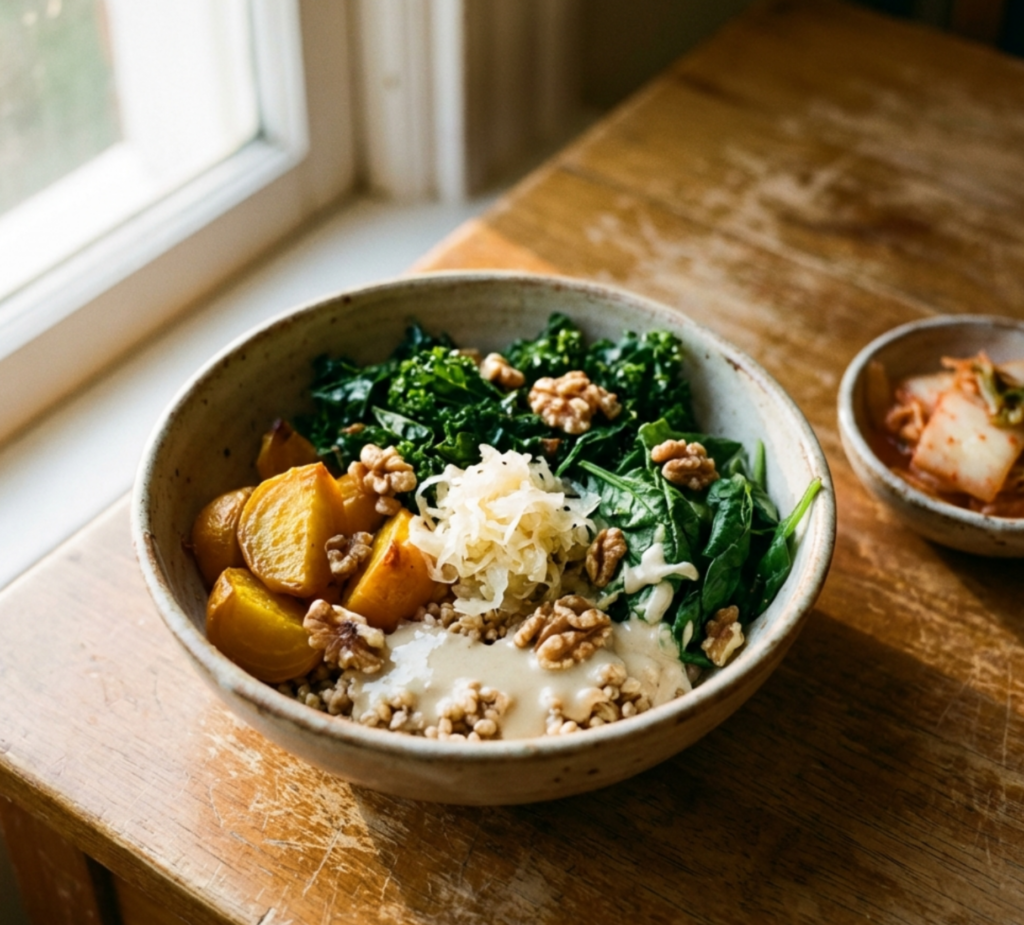
12. Prebiotic and Probiotic Power Bowl with Sauerkraut and Roasted Beets
Beets are one of the richest prebiotic vegetables you can eat—their betaine content supports beneficial Lactobacillus strains while their natural nitrates support overall gut blood flow. Pair roasted beets with sauerkraut (live-culture only—check the refrigerated section), walnuts (associated with healthier gut bacteria populations in clinical trials), and whole grains for a bowl that’s built around your microbiome.
Make it: Roast cubed beets and cauliflower at 400°F until tender. Build bowls with cooked farro or brown rice, roasted vegetables, a generous scoop of live-culture sauerkraut, raw walnuts, pumpkin seeds, and dandelion greens (an excellent prebiotic). Dress with an apple cider vinegar and olive oil vinaigrette.
13. Chicken and Vegetable Stir-Fry with Fermented Black Bean Sauce
Stir-fries are one of the easiest gut healthy recipe formats because they naturally incorporate high volumes of diverse vegetables in one pan. Using fermented black bean paste as the sauce base adds probiotic activity to an otherwise standard dinner. Load this one with as many different vegetables as you can find—each one adds to your weekly plant diversity count.
Make it: Slice chicken breast and stir-fry in a hot wok with sesame oil. Remove and set aside. In the same wok, cook broccoli, snap peas, bok choy, bell pepper, mushrooms, and shredded carrots. Return chicken to the pan with a sauce of fermented black bean paste, tamari, garlic, ginger, and a splash of rice vinegar. Serve over brown rice or cauliflower rice. For extra gut benefit, add a side of kimchi at the table rather than cooking it (heat destroys live cultures).
14. Slow-Roasted Salmon with Asparagus and Walnut Salsa Verde
Asparagus is one of the highest-prebiotic vegetables you can eat—its inulin content specifically feeds Bifidobacterium and Lactobacillus bacteria. Walnuts have been studied in clinical trials and shown to measurably improve gut bacteria composition in adults who consume them daily. Salsa verde made with mixed fresh herbs (parsley, basil, tarragon) adds polyphenols and more plant diversity.
Make it: Place salmon fillets on a baking sheet with a bundle of asparagus. Drizzle with olive oil, season with salt and pepper, and roast at 275°F for 25–30 minutes for silky slow-roasted texture. Meanwhile, blend a bunch of fresh parsley, a handful of basil, toasted walnuts, capers, lemon zest, garlic, and olive oil into a rough salsa verde. Spoon generously over the finished salmon and asparagus.
15. Black Bean and Sweet Potato Tacos with Fermented Salsa
Plant-forward tacos are among the most underrated gut healthy dinner recipes. Black beans provide prebiotic fiber and plant protein. Sweet potato adds beta-carotene and additional prebiotic compounds. Using fermented salsa (look for raw, refrigerated versions) or a simple pico de gallo with raw onion and garlic adds prebiotic punch. Wrap everything in corn tortillas, which also provide resistant starch.
Make it: Roast cubed sweet potato with cumin, smoked paprika, and olive oil until caramelized. Warm black beans with garlic, cumin, and lime juice. Build tacos with corn tortillas, seasoned beans, roasted sweet potato, shredded purple cabbage, avocado, fresh cilantro, and fermented or raw salsa. Finish with a squeeze of fresh lime. For those tracking macros, the macros guide for women’s weight loss can help you balance these meals with your goals.
Can Gut Healthy Recipes Help with Weight Loss?
Research increasingly shows a strong connection between gut microbiome diversity and healthy weight management. A more diverse microbiome is associated with better insulin sensitivity, reduced fat storage signals, and more balanced hunger hormones. Additionally, high-fiber gut healthy meals are naturally more satiating—meaning you feel full longer without overeating. These recipes support weight management as a side effect of improving your microbiome, not as a separate goal. For women specifically interested in weight loss, the complete women’s weight loss guide covers the full hormonal and metabolic picture.
Gut Healthy Snacks and Sides (The Extras That Add Up)
Don’t underestimate snacks in your gut health strategy. These smaller gut healthy recipes help you maintain microbiome support between meals and easily contribute several more plant varieties to your weekly total.
16. Roasted Chickpeas with Smoked Paprika and Cumin
Crunchy, satisfying, and packed with prebiotic fiber—roasted chickpeas are the snack that genuinely feeds your gut. They travel well, they’re inexpensive, and they’re easy to make in big batches. Pat canned chickpeas completely dry, toss with olive oil, smoked paprika, cumin, garlic powder, and salt, then roast at 400°F for 30–35 minutes until deeply crispy. Store in an airtight container. These complement other heart-healthy snacks for women beautifully as part of a gut-conscious snacking strategy.
17. Kefir Ranch Dip with Rainbow Crudités
This snack uses kefir as the base for a probiotic-rich dip, then pairs it with the widest variety of raw vegetables you can muster. Every different vegetable color represents different polyphenols and fibers—which is exactly why eating the rainbow matters for your gut. Blend 1 cup kefir with fresh dill, garlic powder, onion powder, lemon juice, salt, and a tablespoon of olive oil. Serve with bell pepper strips, cucumber, celery, broccoli florets, radishes, carrots, and snap peas. That’s eight different vegetables in one snack session—an impressive microbiome contribution.
18. Prebiotic Garlic Hummus with Whole-Grain Crackers and Fermented Pickles
Hummus is a gut-healthy classic: chickpeas deliver prebiotic fiber, garlic adds inulin, tahini provides sesame lignans, and olive oil contributes polyphenols. Pairing it with fermented (naturally brined) pickles adds live cultures to the mix. Look for pickles in the refrigerated section with no vinegar in the ingredient list—those are the ones with live probiotic activity. Serve with whole-grain crackers or warm pita for resistant starch.
Make it: Blend 1 can chickpeas (liquid reserved), 3 tablespoons tahini, 2 garlic cloves, juice of 1 lemon, 2 tablespoons olive oil, and salt. Stream in chickpea liquid until silky smooth. Finish with a generous drizzle of olive oil, smoked paprika, and a scattering of whole chickpeas. For more healthy snacking inspiration, these guilt-free chocolate snack options are also surprisingly gut-friendly.
How to Build Your Own Gut Healthy Recipes
Once you understand the framework, you can turn almost any recipe into a gut-healthy one. The formula is simpler than you might think.
First, anchor every meal with a prebiotic fiber source: oats, beans, lentils, asparagus, garlic, onions, leeks, banana, or whole grains. Second, add a probiotic element where it makes sense: yogurt, kefir, kimchi, sauerkraut, miso, or kombucha. Third, include as many different plants as possible—each one contributes unique fibers and polyphenols that feed different bacterial species.
Finally, minimize the gut disruptors: ultra-processed foods, refined sugars, artificial sweeteners, and excessive alcohol all negatively impact microbiome diversity. You don’t need to be perfect—but being intentional most of the time makes a real difference. For a comprehensive look at tracking your food composition, the hormonal-aware macros guide for women can help you understand how to balance your overall eating pattern.
Remember too that a landmark study published in Cell showed that participants consuming fermented foods saw measurable decreases in inflammatory proteins and increases in microbiome diversity within just 10 weeks. That’s a relatively short time frame for potentially significant health improvements—and it all starts with the food on your plate.
How Long Before I Notice a Difference?
Research shows gut microbiome composition can begin shifting within days of changing your diet. Most people notice improvements in digestion, bloating, and energy within 2–4 weeks of consistently eating gut healthy recipes. Deeper changes in immune function, inflammation, and hormonal balance tend to develop over 6–12 weeks. Consistency matters more than perfection—eating this way 80–90% of the time will produce real results.
Should I Take Probiotic Supplements Too?
Food-based probiotics are generally more effective than supplements for several reasons: they arrive embedded in a food matrix that helps bacteria survive the journey to your colon, they contain multiple strains rather than one or two, and they come packaged with prebiotics and polyphenols that help those bacteria thrive. Supplements can be useful in specific circumstances, but the 18 gut healthy recipes in this article will do more for your microbiome than most probiotic supplements on the market.
Are These Gut Healthy Recipes Good for Women Over 40?
Absolutely—and they’re especially important. Research published in 2025 found that fermented-food diets had stronger microbiome-diversity effects in participants over 50. Additionally, gut health becomes increasingly connected to hormonal balance, bone density, and cognitive function as women approach perimenopause. Every recipe in this article is designed to support the specific needs of adult women, with particular attention to hormonal and metabolic health.
Can I Eat Gut Healthy Recipes if I Have IBS or Digestive Issues?
Many gut healthy foods are suitable for digestive conditions, but individual tolerance varies significantly. High-FODMAP foods like garlic, onions, and beans can trigger symptoms in some IBS patients even though they’re excellent prebiotics for most people. If you have a diagnosed digestive condition, work with a registered dietitian to adapt these recipes to your specific needs rather than following general guidelines. Always consult a healthcare provider for medical dietary advice.
The Bottom Line on Gut Healthy Recipes
Your microbiome is one of the most powerful levers you have for your overall health—and it responds remarkably quickly to what you eat. These 18 gut healthy recipes aren’t a detox or a temporary protocol. They’re simply a delicious, evidence-based way of eating that happens to feed the right bacteria, reduce inflammation, and support your body from the inside out.
You don’t need to overhaul your entire diet overnight. Start with one or two new gut healthy recipes per week. Try overnight oats with probiotic yogurt for breakfast. Add a kimchi grain bowl for lunch. Make a lentil traybake for dinner. Each small, consistent step compounds into real microbiome change over time.
Moreover, remember that gut health is deeply connected to the rest of your health as a woman—your hormones, your sleep, your weight, your energy, and even your mood. Nourishing your microbiome with these recipes is one of the most comprehensive, foundational investments you can make in yourself. And honestly? It might be the most enjoyable health habit you ever pick up.