

Healthy Foods for Your Skin: 15 Evidence-Based Picks That Work From the Inside Out
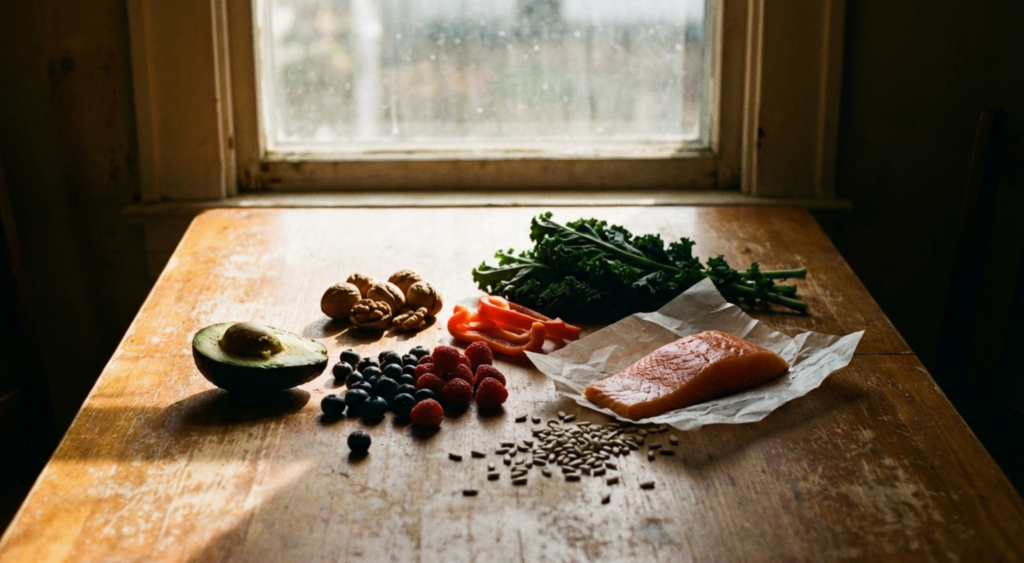
You’ve probably spent more on serums than you’d like to admit. But here’s the truth most skincare brands won’t tell you: the most powerful thing you can do for your skin happens at the dinner table, not the beauty counter. The right healthy foods for your skin deliver vitamins, antioxidants, and fatty acids that topical products simply cannot replicate—because real skin transformation works from the inside out.
And for women especially, this matters more than most articles acknowledge. Hormonal shifts—whether during your cycle, perimenopause, or beyond—directly affect collagen production, skin hydration, and how quickly your skin ages. Foods that support hormonal balance don’t just help your mood and metabolism. They show up on your face too.
Quick Answer: What Are the Best Healthy Foods for Your Skin?
The best skin-supporting foods are rich in omega-3 fatty acids, vitamin C, vitamin E, beta-carotene, zinc, and polyphenols. These nutrients protect against UV damage, support collagen synthesis, reduce inflammation, and maintain skin hydration. For women, foods that also support estrogen balance and gut health add an extra layer of protection that generic lists consistently overlook.
Why Healthy Foods for Your Skin Work Differently for Women
Here’s something most “best foods for skin” articles skip entirely. Skin aging in women isn’t just about sun exposure and free radicals. It’s also deeply hormonal.
Estrogen plays a central role in stimulating the fibroblast cells that produce collagen and elastin. When estrogen levels decline during perimenopause and menopause, collagen synthesis slows, skin thickness reduces, and moisture levels drop. In fact, research shows that collagen content decreases by approximately 2% per post-menopausal year. That’s not a small number over a decade.
Additionally, the gut-skin axis is now one of the most researched areas in dermatology. What you feed your gut microbiome has a measurable impact on skin inflammation, barrier integrity, and even conditions like acne and rosacea. The gut health signs women shouldn’t ignore often show up on their skin first.
So when we talk about the best healthy foods for your skin, we’re not just listing antioxidants. We’re talking about foods that work on multiple levels—hormonal, inflammatory, and microbiome—all at once.
The Science Behind Food and Skin Health
Let’s be clear about what the research actually shows. A comprehensive 2025 review published in Nutrients by researchers who analyzed the full body of nutritional dermatology literature identified the following as the most evidence-supported nutrients for skin: vitamin A, vitamin C, vitamin D, vitamin E, zinc, omega-3 and omega-6 fatty acids, polyphenols, copper, selenium, and silicon.
That same review noted that while skincare products have always capitalized on nutrient-skin relationships, topical applications have limited value compared to dietary intake—because the skin was simply not designed to absorb nutrients the way the gastrointestinal system is.
In other words, rubbing vitamin C serum on your face is not the same as eating a red bell pepper. The food wins.
What Is the Gut-Skin Axis?
The gut-skin axis describes the bidirectional communication between your digestive system and your skin. When gut microbiome balance is disrupted—through poor diet, stress, or antibiotics—it can trigger systemic inflammation that shows up on your skin as acne, redness, eczema, or dullness. Feeding your gut well with fiber, fermented foods, and polyphenols directly benefits your skin’s barrier function and inflammatory response.
15 Healthy Foods for Your Skin, Ranked by Evidence
These aren’t random “superfoods” pulled together for clicks. Each pick is backed by peer-reviewed research and chosen because it delivers multiple skin benefits at once—which matters a lot more than foods that do just one thing.
1. Fatty Fish (Salmon, Mackerel, Sardines)
If you had to pick just one food for skin health, fatty fish would be the strongest argument. Salmon is one of the best foods for women’s skin because it delivers omega-3 fatty acids, vitamin D, vitamin E, and astaxanthin—a powerful carotenoid antioxidant—all in one serving.
Omega-3s keep the skin membrane thick and supple, reducing water loss and protecting against the chronic dryness that accelerates with hormonal changes. They also reduce the inflammatory pathways linked to acne and rosacea. Additionally, omega-3 deficiency has been directly associated with dry, flaking skin.
2. Avocado
Avocados are one of the rare foods that provide both vitamin C and vitamin E together—and that combination matters. Vitamin E is most effective for skin when paired with vitamin C, as they work synergistically to protect against oxidative damage and support collagen production.
The healthy fats in avocado also serve as natural moisturizers for the skin, and the biotin content supports the lipid barrier that keeps skin from drying out. Think of it as moisturizer you eat.
3. Sweet Potatoes
Sweet potatoes are loaded with beta-carotene, which the body converts into vitamin A on demand. Beta-carotene acts as a natural photoprotector in the skin—it accumulates in skin cells and helps defend against UV-induced cell death, sunburn, and premature wrinkling.
One half-cup of baked sweet potato provides enough beta-carotene to exceed your daily vitamin A needs several times over. Moreover, consuming enough beta-carotene gives skin a subtle warm glow—a healthy, natural radiance that no highlighter quite replicates.
4. Red Bell Peppers
Here’s a surprising fact: red bell peppers contain more vitamin C than oranges by weight. Vitamin C is the single most important nutrient for collagen synthesis. Your skin uses it to produce and stabilize collagen fibers—and without adequate vitamin C, that process breaks down.
Red bell peppers also provide beta-carotene, making them a two-in-one for skin protection. Eat them raw to preserve the vitamin C content, as heat degrades it.
5. Walnuts
Walnuts are unique among nuts because they provide both omega-3 and omega-6 fatty acids—essential fats your body cannot make on its own. They’re also one of the few plant sources that deliver meaningful amounts of zinc, a mineral critical for wound healing, inflammation control, and normal skin cell production.
For women managing protein intake for women and hormonal health, walnuts also contain arginine and magnesium, both linked to reduced systemic inflammation.
6. Dark Leafy Greens (Spinach, Kale, Swiss Chard)
If there’s one category that punches above its weight for both skin and hormonal health simultaneously, it’s dark leafy greens. Spinach, kale, and Swiss chard deliver vitamin A, vitamin C, vitamin K, magnesium, and indole-3-carbinol—a compound that supports liver metabolism of estrogen.
That estrogen connection is significant. Supporting your body’s ability to process and eliminate excess hormones has a direct downstream effect on skin clarity, hydration, and inflammation—particularly for women dealing with hormonal acne or perimenopausal skin changes.
7. Berries (Blueberries, Strawberries, Raspberries)
Berries are among the most antioxidant-dense foods available, and that density directly translates to skin protection. The anthocyanins in blueberries and the ellagic acid in strawberries neutralize free radicals—the unstable molecules generated by sun exposure, pollution, and metabolic stress that break down collagen and accelerate aging.
Strawberries in particular are an excellent vitamin C source, supporting collagen production while fighting oxidative damage at the same time. A handful of mixed berries in your morning routine is one of the simplest upgrades you can make for your skin.
8. Tomatoes
Tomatoes are the richest dietary source of lycopene, a carotenoid with impressive evidence for protecting against UV-induced skin damage. Studies show that regular lycopene intake reduces skin sensitivity to sunburn and decreases collagen degradation caused by sun exposure.
One important detail: carotenoid absorption increases significantly when tomatoes are cooked with fat. Tomato paste, sauce, or roasted tomatoes with olive oil absorb far more lycopene than raw tomatoes eaten plain. This is one instance where cooking actually improves the nutritional impact.
9. Pumpkin Seeds
Pumpkin seeds are an exceptional source of zinc, which plays a central role in skin repair and renewal. Zinc regulates oil gland activity, reduces inflammation, and supports the signaling pathways that tell skin cells to regenerate properly.
For women, zinc deficiency is more common than most realize—especially during heavy periods or long periods of dietary restriction. Low zinc often shows up as dull, slow-healing skin, increased breakouts, and reduced wound healing capacity.
10. Green Tea
Green tea contains catechins—polyphenol compounds with remarkable skin-protective properties. A 12-week clinical study involving 60 women found that daily green tea consumption reduced UV-induced skin redness by up to 25% and measurably improved skin moisture, texture, and elasticity.
The EGCG (epigallocatechin gallate) in green tea is particularly potent. It reduces inflammation at a cellular level, helps regulate sebum production, and has been shown to protect skin against photoaging. Drink it without milk to preserve the full antioxidant benefit.
11. Flaxseeds
Flaxseeds offer something almost no other food in this list does: lignans. These are plant-based phytoestrogens that can support estrogen balance in the body—particularly helpful during perimenopause when estrogen levels begin fluctuating unpredictably. That hormonal support has a measurable impact on skin hydration and collagen maintenance.
Beyond lignans, flaxseeds are one of the best plant sources of omega-3 fatty acids (ALA), which reduce systemic inflammation and support the skin’s moisture barrier. Add ground flaxseeds to smoothies, oatmeal, or yogurt—ground form is required for proper absorption.
12. Dark Chocolate (70%+ Cocoa)
Yes, this counts. And no, it’s not a loophole. Dark chocolate with at least 70% cocoa is rich in flavanols—antioxidant compounds with genuine clinical evidence behind them. Studies show that 6–12 weeks of daily high-flavanol cocoa consumption produces measurable improvements in skin thickness, hydration, and smoothness, while reducing sensitivity to sunburn.
The mechanism involves improved blood flow to the skin’s dermis, which delivers more nutrients to skin cells. Think of flavanols as a circulatory boost for your skin. Just keep portions to 20–30g daily and choose chocolate with minimal added sugar.
13. Fermented Foods (Yogurt, Kefir, Kimchi)
This is the gut-skin axis in action. Research on the gut-skin connection consistently shows that when gut microbiome balance is disrupted, inflammatory signals reach the skin, worsening acne, eczema, rosacea, and dullness. Fermented foods deliver live probiotic cultures that restore and support a healthier gut ecosystem.
Kefir and yogurt also provide protein, which supports collagen synthesis—your skin’s structural foundation. Kimchi adds anti-inflammatory vitamin B12 and beneficial bacteria that modulate skin-targeted immune responses. Start with an anti-bloat meal plan that includes fermented foods to experience the difference within weeks.
14. Broccoli
Broccoli is often listed for its general nutrition, but its skin-specific benefits are underappreciated. It delivers vitamin C, vitamin A, zinc, and sulforaphane—a compound with potent anti-inflammatory and antioxidant properties that has shown promise in protecting skin cells from UV-induced damage.
Like leafy greens, broccoli also contains indole-3-carbinol, supporting estrogen metabolism. For women, this dual action—antioxidant protection plus hormonal support—makes broccoli far more useful for skin than its humble reputation suggests.
15. Sunflower Seeds
Sunflower seeds are one of the most concentrated food sources of vitamin E available. Just a small handful provides most of your daily vitamin E requirement. This fat-soluble antioxidant protects skin cell membranes from oxidative damage, particularly from UV exposure and environmental pollution.
Vitamin E also works hand-in-hand with vitamin C—when both are present, they regenerate each other, extending the protective window for your skin. Sprinkle sunflower seeds on salads, blend them into sauces, or snack on them with berries for a vitamin E + antioxidant combination.
What About Collagen Supplements?
Collagen supplements have grown significantly in popularity, and a recent meta-analysis does suggest modest improvements in skin elasticity and hydration with consistent use. However, the evidence for whole food sources of collagen precursors—vitamin C, zinc, copper, and quality protein—is stronger and more consistent. Foods that support your body’s own collagen production tend to outperform supplements that deliver pre-formed collagen that may not survive digestion intact. That said, if you eat a low-protein diet, a quality collagen supplement may be a reasonable addition. Always discuss with your healthcare provider first.
The Blood Sugar–Skin Aging Connection Women Need to Know
There’s one more dimension to skin nutrition that most lists completely ignore: blood sugar. A high-sugar diet doesn’t just affect your waistline. It drives a process called glycation, where sugar molecules bind to proteins—including collagen—forming advanced glycation end products (AGEs).
Once collagen becomes glycated, it loses flexibility and becomes rigid, which increases wrinkling, sagging, and susceptibility to damage. This process accelerates significantly after menopause, when declining estrogen already compromises collagen integrity. In other words, a high-sugar diet combined with hormonal changes is one of the fastest routes to accelerated skin aging.
The practical takeaway: prioritize whole foods, limit refined carbohydrates and added sugars, and focus on the 15 foods above—most of which have low glycemic impact. Weight management for women over 40 and blood sugar stability are deeply connected to skin aging too.
Healthy Foods for Your Skin: How to Build Them Into Your Day
Knowing which foods help is one thing. Actually eating them consistently is another. Here’s a simple framework that doesn’t require meal planning expertise.
Morning: Blend ground flaxseeds and mixed berries into a smoothie with Greek yogurt. You’ll hit omega-3s, phytoestrogens, antioxidants, and gut-friendly probiotics before 9am.
Lunch: Build a bowl with dark leafy greens, roasted sweet potato, pumpkin seeds, and a drizzle of olive oil. Add sliced avocado for vitamin E and healthy fats. This covers vitamins A, C, E, zinc, and beta-carotene in one meal.
Dinner: Bake salmon or mackerel with a side of roasted broccoli and sliced tomatoes. Cook the tomatoes with olive oil to maximize lycopene absorption. Finish with a small square of dark chocolate.
Snacks: Sunflower seeds, walnuts, or raw red bell pepper strips with hummus cover vitamin E, omega-3s, and vitamin C between meals. A mug of green tea works as a daily antioxidant top-up that requires zero preparation.
How Long Before Diet Changes Show on My Skin?
Skin cells turn over approximately every 28 days, so meaningful changes from dietary shifts typically appear within 6–12 weeks of consistent eating. Hydration improvements—from omega-3s and zinc—often come first, usually within 4 weeks. Texture and clarity improvements follow. Longer-term collagen-related changes take 3–6 months of consistent dietary support to show. The good news is that inflammation-related issues like dullness and minor breakouts often respond much faster—sometimes within 2–3 weeks of cutting out high-glycemic foods and adding probiotic-rich options.
Are There Foods That Are Bad for Your Skin?
Yes. Refined sugars and high-glycemic carbohydrates drive glycation and insulin spikes that worsen acne and accelerate collagen breakdown. Excessive alcohol generates free radicals and dehydrates the skin. Highly processed foods high in refined omega-6 oils (like industrial seed oils) tip the inflammatory balance toward skin-damaging responses. Excessive dairy—particularly whey protein—has been linked in several studies to increased acne via IGF-1 pathways, though this varies between individuals. None of these require complete elimination, but reducing their frequency while increasing the 15 foods above creates a measurable shift in skin health.
Does Drinking Water Really Improve Skin?
Hydration supports skin function, but the research on plain water consumption and visible skin improvement is more modest than popular belief suggests. Severe dehydration clearly damages skin. However, the omega-3 fatty acids in foods like salmon and walnuts actually do more to maintain the skin’s moisture barrier than drinking extra glasses of water. Focus on both—stay hydrated, but don’t skip the skin-nourishing fats in favor of water alone.
Can Diet Alone Clear Hormonal Acne?
Diet is a meaningful factor in hormonal acne, but rarely the sole solution for persistent cases. Reducing high-glycemic foods, supporting gut health with fermented foods and fiber, and including zinc-rich foods like pumpkin seeds can significantly reduce hormonal breakouts. However, if acne is severe or deeply tied to hormonal imbalances like PCOS or perimenopause, working with a dermatologist or your healthcare provider is essential. Diet works best as part of a broader strategy, not as a standalone treatment.
The Bottom Line: Your Skin Reflects What You Eat
The 15 healthy foods for your skin in this list aren’t trends. They’re supported by decades of nutritional dermatology research, and their benefits extend well beyond skin deep. They reduce systemic inflammation, support hormonal balance, nourish gut bacteria, and protect collagen—all things your skin depends on far more than any serum.
For women navigating hormonal shifts at any stage of life, this isn’t just about looking better. It’s about protecting your skin’s structural integrity during a period when internal defenses are already changing. Food is one of the few tools you have complete control over—and the evidence says it works.
Start with two or three of these foods this week. Add salmon to dinner twice. Swap your afternoon snack for walnuts and berries. Make a habit of green tea in the morning. Small, consistent changes compound into the kind of skin transformation that no single product can deliver. Your body knows how to build beautiful skin—you just have to feed it right.