

Ceylon Cinnamon vs Cassia: Which Is Safer for Daily Use?
Did you know the cinnamon sitting in your spice cabinet might not be as safe as you think? If you use cinnamon daily—in your coffee, oatmeal, smoothies, or supplements—the difference between Ceylon cinnamon vs Cassia matters more than you realize. One type is considered safe for regular use. The other contains a compound that, in excess, can strain your liver. And here’s the kicker: most women have no idea which one they’re actually using.
Quick Answer: Ceylon Cinnamon vs Cassia — Which Is Safer?
Ceylon cinnamon (“true cinnamon”) is the safer choice for daily use. It contains up to 250 times less coumarin than Cassia cinnamon — the most widely sold variety in US supermarkets. For women who use cinnamon regularly for blood sugar balance, metabolic health, or general wellness, switching to Ceylon is the most important upgrade you can make.
Why Ceylon Cinnamon vs Cassia Is a Question Every Woman Should Ask
Cinnamon is one of the most beloved spices in the world — and for good reason. It supports blood sugar balance, offers anti-inflammatory benefits, and pairs beautifully with everything from oatmeal to your morning latte. But not all cinnamon is created equal, and the type you choose for daily use can make a real difference to your long-term health.
Here’s the situation. When you pick up a jar labeled simply “cinnamon” at the grocery store, there’s a 90% chance it’s Cassia — the cheaper, stronger-flavored variety grown in China, Indonesia, and Vietnam. Cassia contains a naturally occurring compound called coumarin, which in large or repeated doses has been linked to liver stress. Ceylon cinnamon, sourced primarily from Sri Lanka, contains only trace amounts of coumarin, making it far better suited for everyday use.
For women especially, this matters. Whether you’re adding cinnamon to cinnamon water, exploring cinnamon before bed, or taking a daily supplement for blood sugar support, knowing which type is in your cabinet is step one.
What Is Cassia Cinnamon? (The One Most Women Are Using)
Cassia cinnamon is what most of us grew up with. It’s the bold, warm, intensely spicy variety that fills holiday kitchens with that iconic scent. It’s also the type you’ll find in virtually every mainstream supermarket, coffee chain cinnamon shaker, and the majority of cinnamon supplements — often without any label clarification.
Cassia (Cinnamomum cassia) is primarily grown in China, Indonesia, and Vietnam. It has a dark reddish-brown color, a thick single-layer rolled stick, and a bold cinnamaldehyde-forward flavor profile. Approximately 95% of its essential oil is cinnamaldehyde, which explains that punchy, assertive taste. It’s also significantly cheaper to produce than Ceylon, which is part of why it dominates the market.
The problem? Cassia contains substantial amounts of coumarin — approximately 1% of its dry weight, compared to just 0.004% in Ceylon. According to nutrition research, this means a single teaspoon to two teaspoons of Cassia can bring some women right to or past the tolerable daily limit for coumarin exposure. For women using cinnamon daily as a health ritual, this adds up fast.
What Is Ceylon Cinnamon? (The Safer “True Cinnamon”)
Ceylon cinnamon (Cinnamomum verum) is native to Sri Lanka and southern India, and it has been prized as a premium spice for centuries — hence its nickname, “true cinnamon.” If you’ve ever tasted it side by side with Cassia, you’ll immediately notice the difference. Ceylon has a lighter, sweeter, more delicate flavor with subtle citrus and floral notes. It’s less aggressive, more nuanced, and genuinely lovely in hot drinks, desserts, and wellness recipes.
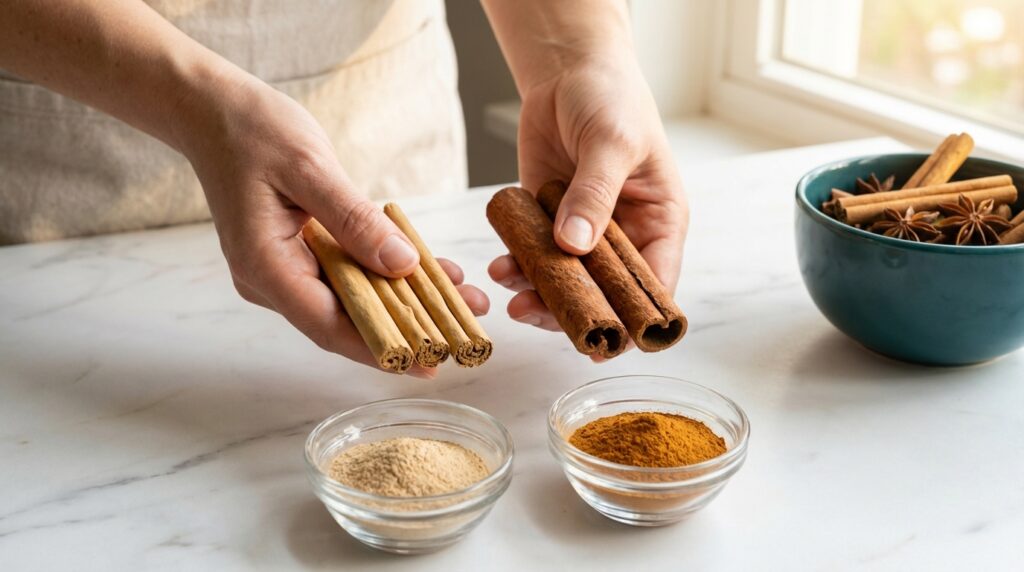
Visually, Ceylon sticks look completely different from Cassia. They’re light tan in color, composed of multiple thin papery layers rolled together like a cigar. They crumble easily between your fingers. Ground Ceylon is a lighter, more muted powder compared to the deep reddish-brown of ground Cassia. If you know what to look for, they’re easy to distinguish.
Most importantly for daily use: the National Center for Complementary and Integrative Health (NCCIH) notes that Ceylon cinnamon contains only trace amounts of coumarin — so low it’s often undetectable. For women building a daily cinnamon habit for metabolic health, hormonal support, or general wellness, this is the version to use. You can explore the best Ceylon cinnamon supplements for women if you prefer a standardized supplement form.
Ceylon vs Cassia at a Glance
Ceylon: Light tan color | Thin, soft, multi-layer stick | Mild, sweet, citrusy flavor | Coumarin: ~0.004% | Origin: Sri Lanka | Higher price | Recommended for daily use
Cassia: Dark reddish-brown | Thick, hard, single-layer stick | Bold, spicy, strong flavor | Coumarin: ~1% | Origin: China/Indonesia/Vietnam | Lower price | Use occasionally or sparingly
The Coumarin Problem: What It Means for Your Liver
Coumarin is a naturally occurring compound found in various plants, and it’s what gives Cassia its distinctively sweet, slightly medicinal aroma. In small amounts — like the occasional pinch in a holiday recipe — it’s not a concern for most people. The problem arises with regular, daily consumption, especially in supplement form.
The European Food Safety Authority (EFSA) has set a tolerable daily intake of 0.1 mg of coumarin per kilogram of body weight. For a 130-pound (59 kg) woman, that works out to approximately 5.9 mg of coumarin per day. Here’s the issue: a single teaspoon of Cassia cinnamon powder can contain anywhere from 2.6 to 18.2 mg of coumarin depending on the source — easily exceeding that daily limit in one serving.
A case report published in PMC (NIH) documented a 73-year-old woman who developed acute hepatitis after taking cinnamon supplements for just one week — particularly significant because she was also taking a statin medication. Coumarin’s interaction with hepatotoxic drugs is a genuine concern that many women taking common medications may not be aware of.
This isn’t meant to alarm you — it’s meant to empower you. Ceylon cinnamon sidesteps this concern almost entirely. Women who want to use cinnamon as part of a daily metabolism ritual or long-term wellness practice can do so safely with the right variety. Those interested in the liver-health angle may also find it useful to explore other everyday foods that affect liver health.
How Much Cassia Cinnamon Is Too Much?
This is the practical question most women want answered, so let’s be direct. If you’re healthy and have no liver conditions, an occasional sprinkle of Cassia cinnamon on your oatmeal or in a baked good is perfectly fine. The concern arises with daily use, especially at higher amounts like one teaspoon or more per day.
The US Department of Agriculture suggests limiting daily cinnamon intake to about half a teaspoon if you’re using Cassia — and that’s being generous. For context, many wellness recipes recommend one to two teaspoons daily, and cinnamon supplements often deliver even more. If your daily routine includes cinnamon water, cinnamon coffee, and a supplement, your total intake could easily exceed safe coumarin limits with Cassia.
Women with liver disease, those taking statins or blood thinners, or anyone who is pregnant should be especially cautious with Cassia. For these groups, Ceylon is the only appropriate choice for any regular use. Pregnant women in particular should avoid cinnamon supplements entirely (both types) and stick to culinary amounts only, as the safety of high-dose supplemental cinnamon during pregnancy has not been established.
Health Benefits: Does the Type of Cinnamon Matter?
Both Ceylon and Cassia share many of the same health-promoting compounds, particularly cinnamaldehyde and polyphenol antioxidants. So, do the benefits differ depending on which type you use? The answer is nuanced — and important for women making intentional choices about their wellness.
For blood sugar support, much of the research has actually been conducted using Cassia. Some studies suggest Cassia may have a stronger short-term blood glucose effect due to its higher cinnamaldehyde concentration. However, a safety umbrella review published in PMC noted that the coumarin levels in many study doses raise concerns about long-term use — which is precisely why Ceylon becomes the more practical choice for sustained daily habits.
For anti-inflammatory benefits, both varieties provide cinnamaldehyde, which research has linked to reduced markers of inflammation. A study of 36 women who took 2,000 mg of cinnamon daily for eight weeks showed meaningful reductions in C-reactive protein and TNF-alpha — key markers of systemic inflammation. The type of cinnamon matters here because only Ceylon can be safely consumed at therapeutic doses over extended periods without coumarin risk.
For cardiovascular health, a 2024 systemic review found that cinnamon effectively supports cardiovascular health by helping to lower blood pressure and improve lipid balance — benefits that matter deeply for women in perimenopause and beyond. You can also explore whether cinnamon helps with weight loss and how it connects to metabolic health for women over 40.
Ceylon Cinnamon and Women’s Hormonal Health
One area where cinnamon genuinely shines for women is hormonal and metabolic health — particularly around insulin sensitivity. Estrogen and progesterone fluctuations throughout perimenopause and menopause directly affect how the body responds to glucose. Many women notice increased blood sugar variability, stronger cravings, and more difficulty managing weight during this transition.
Cinnamon’s role in improving insulin sensitivity makes it a meaningful addition to a hormonal health strategy. Because this type of support requires consistent daily use over time to be effective, Ceylon is clearly the appropriate choice — it allows you to use therapeutic amounts without accumulating coumarin exposure. Women navigating these changes can learn more about foods that naturally balance hormones and how cinnamon fits within that broader framework.
Women using cinnamon as part of a weight loss plan after 40 should be especially thoughtful about their supplement choices, since many products marketed for blood sugar and metabolism use Cassia without clearly disclosing it on the label.
How to Tell Ceylon Cinnamon and Cassia Apart (Before You Buy)
Here’s something frustrating but important to know: in the United States, both types are legally sold under the simple label “cinnamon.” There’s no regulatory requirement to specify whether it’s Ceylon or Cassia. That means the responsibility falls entirely on you as a consumer — and a little knowledge goes a long way.
When buying sticks, the visual difference is unmistakable. Ceylon sticks are light tan, soft, and composed of many thin rolled layers — like a tightly furled scroll of papery bark. They crumble easily and feel almost fragile. Cassia sticks, by contrast, are dark reddish-brown, thick, hard, and made of a single dense layer. You could practically knock on a Cassia stick. If a stick snaps instead of crumbles, it’s Cassia.
When buying ground powder, color is your best guide. Ground Ceylon is a lighter, more neutral tan-brown. Ground Cassia is noticeably darker and redder. However, the most reliable approach is simply to look for the label. Legitimate Ceylon cinnamon will say “Ceylon,” “Cinnamomum verum,” “true cinnamon,” or specify Sri Lanka as the origin. Anything that says “Chinese cinnamon,” “Saigon cinnamon,” or “Korintje cinnamon” is a Cassia variety.
On price: genuine Ceylon costs noticeably more — typically $3.50 to $6 per ounce compared to $1 to $1.50 for Cassia. If a product is claiming to be Ceylon at a rock-bottom price, treat it with skepticism. EU studies have found a meaningful percentage of “Ceylon” labeled products actually contain Cassia when lab-tested. For supplements especially, look for third-party tested brands — our guide to the best cinnamon supplements for women covers what to look for.
How to Spot Real Ceylon Cinnamon
Sticks: Multiple thin, soft, papery layers | Light tan color | Crumbles easily between fingers
Powder: Light tan-brown color (not dark red-brown)
Label: Says “Ceylon,” “Cinnamomum verum,” “true cinnamon,” or lists Sri Lanka as origin
Price: Noticeably higher than generic cinnamon
Red flags: “Mexican cinnamon,” “Chinese cinnamon,” “Saigon cinnamon,” or Korintje = all Cassia varieties
Daily Use Guidelines: How Much Ceylon Cinnamon Is Safe?
Because Ceylon contains such negligible amounts of coumarin, it can be used daily at meaningful amounts without liver concerns for most healthy women. Research generally supports using between half a teaspoon and one and a half teaspoons (1–3 grams) per day for blood sugar and metabolic benefits. Up to one tablespoon (about 6 grams) of Ceylon daily has been used in studies without safety issues noted for healthy adults.
That said, even Ceylon cinnamon warrants some mindfulness. Because it contains small amounts of cinnamaldehyde, extremely high doses could still cause mouth irritation or digestive sensitivity in some women. Start with half a teaspoon daily and build from there. Most women find that half a teaspoon to a full teaspoon gives them the metabolic support they’re looking for without any discomfort.
Timing matters too. Many women find that adding Ceylon cinnamon in the morning — to coffee, oatmeal, or a smoothie — helps stabilize blood sugar from the first meal of the day. Others prefer the benefits of cinnamon before bed for overnight metabolic support and better sleep quality. Both approaches work well with Ceylon. You can also explore Ceylon cinnamon extract as an alternative to powder if you prefer a measured, supplement-style approach.
When Is Cassia Cinnamon Still Okay to Use?
Let’s be clear: Cassia cinnamon isn’t dangerous in small, occasional amounts. If you’re sprinkling it over a holiday apple pie or adding a pinch to a batch of cookies once in a while, there’s no meaningful cause for concern. The issue is exclusively with regular, daily consumption — and especially with supplement-level doses.
For cooking where you want that bold, spicy punch — think mulled wine, slow-cooked stews, or aromatic rice dishes — Cassia’s more intense flavor profile actually works better than Ceylon’s delicate sweetness. Used occasionally and in culinary quantities, it’s a perfectly reasonable choice. The flavor difference matters in cooking: Cassia brings heat and intensity, while Ceylon brings warmth and complexity. They’re not always interchangeable in recipes.
Where Cassia is never appropriate: daily supplements, therapeutic doses intended to support blood sugar management, or regular use by women with liver conditions, those taking statins or blood thinners, or pregnant women.
Which Type of Cinnamon Is in My Supplement?
Many supplements don’t disclose the cinnamon variety. Look for “Cinnamomum verum” or “Cinnamomum zeylanicum” on the label to confirm Ceylon. If the label only says “cinnamon” or “Cinnamomum cassia/aromaticum,” it’s Cassia. Third-party tested supplements from specialty retailers are more likely to contain authentic Ceylon. Always verify before taking any cinnamon supplement regularly.
Can I Use Ceylon Cinnamon If I’m on Medication?
Ceylon is significantly safer than Cassia for women on medication, but that doesn’t mean it’s without any consideration. Cinnamon can interact with blood thinners and diabetes medications. If you take statins, warfarin, metformin, or any diabetes medication, speak with your healthcare provider before adding regular cinnamon to your routine — regardless of which type.
Does Ceylon Cinnamon Taste Different from Regular Cinnamon?
Yes — and most women prefer it once they try it. Ceylon has a milder, sweeter, more nuanced flavor with subtle citrus and floral undertones. It’s less sharp and punchy than the Cassia you may be used to. In beverages like cinnamon water or lattes, this delicate flavor is a genuine upgrade. In bold baked goods or spiced dishes, you may want to use slightly more Ceylon to achieve the same intensity.
Is Organic Cassia Cinnamon a Safer Option?
Not when it comes to coumarin. Organic certification addresses pesticide and farming practices — it has no effect on coumarin levels, which are inherent to the Cassia plant’s biology. Organic Cassia still contains the same high levels of coumarin as conventional Cassia. If you want a safer daily option, the only meaningful switch is from Cassia to Ceylon — organic or not.
Where Can I Buy Real Ceylon Cinnamon?
Specialty spice retailers like Penzeys or The Spice House reliably carry Ceylon. Some health food stores and online retailers also carry it, but always verify the label says “Cinnamomum verum” and lists Sri Lanka as the origin. Check our reviewed Ceylon supplement options for trustworthy brands that have been third-party verified.
The Bottom Line: Ceylon Cinnamon vs Cassia for Women’s Daily Health
The Ceylon cinnamon vs Cassia debate really comes down to one simple principle: intent and frequency. If cinnamon is an occasional flavor in your cooking, the type matters less. If cinnamon is a meaningful part of your daily wellness routine — which for so many health-conscious women it genuinely is — then Ceylon is the only choice that makes sense.
Cassia dominates the market because it’s cheaper and more familiar. But that familiarity doesn’t make it ideal for daily therapeutic use. The coumarin content is a real consideration that the research supports taking seriously, particularly for women who are also managing medications, navigating perimenopause, or supporting liver health as part of a broader wellness strategy.
Ceylon, on the other hand, gives you virtually all of the same benefits — blood sugar support, anti-inflammatory antioxidants, cardiovascular protection, metabolic support — without the coumarin concern. It’s a small upgrade in cost that delivers a meaningful upgrade in safety for any woman using cinnamon as more than just a flavor. Make the switch, know what’s on your label, and enjoy your cinnamon habit with confidence.