

Walking Speed That Burns MORE Fat (Science Says Slow!)
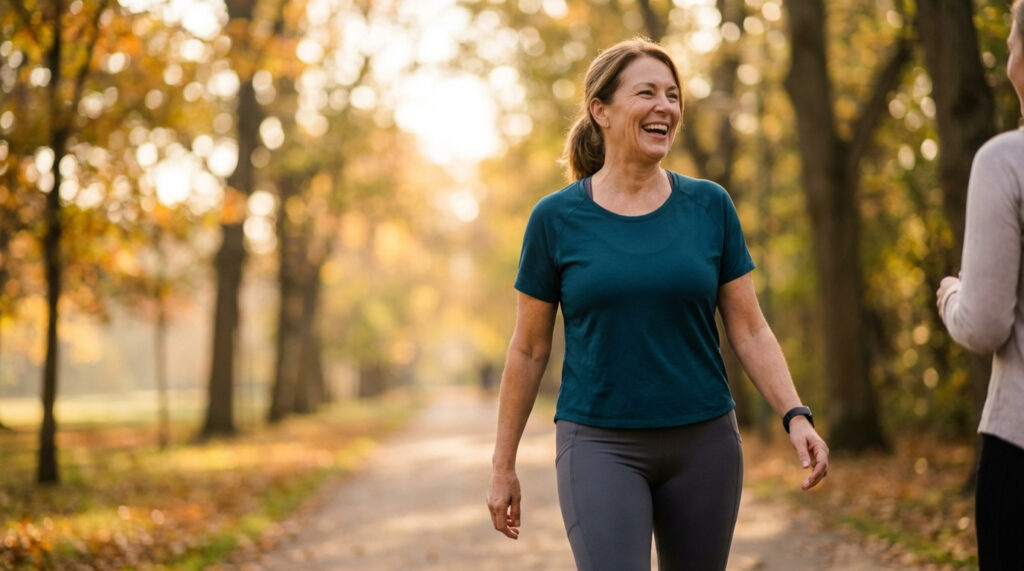
Everyone thinks faster walking burns more fat. But here’s what science actually says: walking speed burns more fat when you slow down, not speed up. In fact, a 2022 study found that women who walked at a slower, comfortable pace lost nearly three times more body fat than those who power-walked their way through the same distance.
Sounds backwards, right? However, before you throw out your fitness tracker and commit to leisurely strolls forever, there’s more to this story than the headlines suggest. Let’s look at what the research actually shows—and what it means for your body.
Quick Answer: Does Slower Walking Really Burn More Fat?
For women with weight to lose—especially those over 40—slower walking (3.2 mph) showed 2.73 times more fat loss than faster walking (4.1 mph) in a 30-week study. However, this took consistent effort (4 days/week, 45-60 minutes) and the slow walkers started with 20% more body fat. Both speeds eventually work, but slow walking showed earlier results for overweight women.
The Study: What Walking Speed Burns More Fat?
In January 2022, researchers from the University of Michigan published a study in the journal Nutrients that challenged everything we thought we knew about walking for weight loss. Therefore, they recruited 25 postmenopausal women and divided them into two groups.
The setup was simple:
- Slow walkers: 3.2 mph (5.5 km/h) for about 54 minutes
- Fast walkers: 4.1 mph (6.6 km/h) for about 45 minutes
- Both groups walked the same distance (3 miles)
- Both groups burned the same calories (~300 per session)
- Everyone walked 4 days per week
After 30 weeks, the slow walkers lost 2.73 times more body fat than the fast walkers. Moreover, the slow group showed progressive fat loss throughout the entire study period. Meanwhile, the fast walkers actually gained body fat during the first 15 weeks before finally starting to lose it.
Why Slower Walking Speed Burns More Fat
The science behind this finding isn’t magic—it’s metabolism. When you walk at a comfortable, conversational pace, your body stays in what’s called the “aerobic zone.” As a result, this is the sweet spot where your body preferentially burns fat for fuel instead of carbohydrates.
Here’s what happens at different speeds:
At Slow Speeds (3.2 mph):
- Your body uses fat as the primary fuel source
- You can sustain the activity longer
- Your breathing stays controlled
- Fat oxidation remains high throughout
At Fast Speeds (4.1 mph):
- Your body shifts to burning glucose (blood sugar)
- You breathe harder and faster
- Intensity is difficult to maintain
- Fat burning decreases as carb burning increases
Simply put, when you walk fast enough to get breathless, your body thinks, “This is intense—I need quick energy!” and switches from fat (slow-burning) to glucose (fast-burning). Consequently, you burn fewer fat stores even though you’re working harder.
The Honest Truth About This Research
Before you lace up your sneakers for a slow stroll, let’s talk about what the headlines don’t tell you. At TEOHL, we believe in real benefits over false promises—and that means being honest about the complete picture.
It Took 15 to 30 Weeks
This wasn’t a “lose weight fast” miracle. The slow walkers who saw the best results walked consistently for 30 weeks—that’s over 7 months. Furthermore, they didn’t see dramatic changes overnight. Progress was gradual, steady, and sustainable.
Baseline Body Fat Mattered
Here’s the crucial detail most articles skip: the slow walkers started with 20% more body fat than the fast walkers. Women with more weight to lose saw faster results with slow walking. In contrast, leaner women might see similar results with either speed.
This makes sense. If you’re carrying extra weight, especially around your midsection (which tends to increase during perimenopause and menopause), your body responds well to lower-intensity, longer-duration exercise.
Small Study, Specific Population
The study included just 25 postmenopausal women aged 50-70. While the findings are compelling, they’re specific to this demographic. Nevertheless, the underlying science about fat oxidation applies to everyone—the dramatic differences might be less pronounced in younger or male populations.
Both Speeds Eventually Worked
The fast walkers didn’t fail—they just took longer to see results. After 30 weeks, they lost body fat too. Therefore, this isn’t about “slow good, fast bad.” It’s about understanding which approach might work better for your body and timeline.
What This Means for Your Walking Routine
So should you walk slower to burn more fat? It depends on where you’re starting and what you’re trying to achieve. Here’s how to think about it:
If You’re Overweight or Obese
Slow walking is your friend. Indeed, focus on building a sustainable routine at a comfortable pace. Your body will respond well to the consistent, lower-intensity activity, and you’re less likely to get injured or burnt out. Additionally, you can enjoy mental health benefits from regular outdoor movement.
If You’re Already Active and Lean
Either speed works. Choose based on your schedule and preferences. Faster walking offers cardiovascular benefits and takes less time. Slower walking is easier on your joints and can be maintained longer. Moreover, you might benefit from mixing both speeds throughout the week.
If You’re Over 40 or Postmenopausal
This research was done on women like you. Slow walking appears particularly effective during the years when metabolic changes make weight loss harder. Consequently, the combination of hormonal shifts and lower-intensity exercise creates an ideal fat-burning environment.
How to Start Slow Walking for Fat Loss
Ready to try it? Here’s a practical, sustainable approach that won’t overwhelm you:
Find Your Perfect Pace
The “talk test” is your guide: You should be able to hold a conversation without gasping for breath. If you can speak in full sentences comfortably, you’re in the right zone. In other words, if you’re walking with a friend, you should be able to chat normally.
For most people, this translates to about 3.0-3.5 mph—a purposeful stroll, not a window-shopping meander, but not a race either.
Start Manageable, Build Gradually
4-Week Beginner Plan:
- Week 1-2: 20-25 minutes, 3 days per week
- Week 3-4: 30 minutes, 4 days per week
- Week 5-8: 40 minutes, 4 days per week
- Week 9+: 45-60 minutes, 4-5 days per week
Remember, the study participants walked for 54 minutes, four days per week. However, they built up to this gradually. Start where you are, not where you think you should be.
Make It Enjoyable
The best walking routine is the one you’ll actually do. Therefore:
- Walk in nature when possible—parks, trails, waterfronts
- Listen to podcasts, audiobooks, or music you love
- Walk with a friend (bonus: built-in accountability)
- Change your routes to keep things interesting
- Walk at times that work with your energy levels
Support Your Walking with Smart Nutrition
Walking alone won’t transform your body if your nutrition is working against you. Moreover, you don’t need to follow extreme diets. Focus on balanced macros and adequate protein to support your activity level.
Additionally, proper sleep quality enhances fat loss. Your body does most of its fat-burning and muscle recovery while you sleep.
Beyond Weight Loss: Other Benefits of Walking
While we’ve focused on fat loss, walking offers benefits that matter just as much:
- Improved insulin sensitivity (helping prevent type 2 diabetes)
- Lower blood pressure and better heart health
- Reduced joint pain through gentle movement
- Better mood and mental clarity from outdoor activity
- Stronger bones through weight-bearing exercise
- Improved balance and coordination (critical as we age)
In fact, research shows that regular walkers are more likely to stick with other healthy habits. Furthermore, walking creates a positive feedback loop—when you feel better, you make better choices across all areas of health.
The Bottom Line on Walking Speed and Fat Loss
Does walking speed burn more fat when you slow down? According to this research, yes—especially if you’re a woman over 50 with weight to lose. However, this doesn’t mean fast walking is ineffective or that slow walking is a magic bullet.
Here’s what we know for certain:
- Slow, steady walking (3.2 mph) showed faster initial fat loss in overweight postmenopausal women
- Results took 15-30 weeks of consistent effort (4 days per week, 45-60 minutes)
- Both slow and fast walking eventually led to fat loss—slow just showed earlier results
- The “best” speed depends on your starting weight, age, fitness level, and goals
- Consistency matters far more than speed—the routine you can maintain wins
At TEOHL, we’re not here to sell you quick fixes or exaggerated claims. Walking slower might burn more fat for some women, particularly those navigating weight loss after 60 or dealing with metabolic changes after 40. But the real secret isn’t about walking slower—it’s about walking consistently.
Choose the pace that feels sustainable. Build the habit. Trust the process. Your body will respond in its own time.
Real benefits over false promises. Always.
How Long Does It Take to See Results?
Breathing improvements often appear within days or weeks. Sleep quality may improve within a month. Subtle changes in how your clothes fit typically develop over 2-3 months. Measurable fat loss would take 3-6 months or longer. The key is consistency—practicing slow walking throughout the week, every week.
Should I Slow Down My Current Walking Routine?
If you’re already walking fast and seeing results, there’s no need to change. However, if you’re struggling to maintain a fast pace or not seeing fat loss, slowing down and extending your duration might help. The research suggests that lower intensity for longer duration works particularly well for women with higher baseline body fat.
What About Incline Walking or Hills?
Walking uphill increases intensity and calorie burn. While the 2022 study focused on flat-ground walking, incline walking can be beneficial. Just maintain a pace that keeps you in the conversational zone—if hills make you too breathless, you might shift from fat-burning to glucose-burning mode.
Can I Mix Slow and Fast Walking?
Absolutely. Some women walk slowly most days and add one or two faster sessions weekly for cardiovascular benefits. The research shows both speeds eventually work. Variety can also keep your routine interesting and prevent boredom.
Do I Need Special Equipment or Shoes?
Comfortable, supportive walking shoes are helpful but you don’t need expensive gear. The beauty of walking is its simplicity. Start with what you have, and if you walk regularly, invest in proper shoes to protect your joints and prevent injury.
Scientific References
- La New JM, Borer KT. Effects of Walking Speed on Total and Regional Body Fat in Healthy Postmenopausal Women. Nutrients. 2022;14(3):627. https://pmc.ncbi.nlm.nih.gov/articles/PMC8840715/
- La New JM, Borer KT. Effects of Walking Speed on Total and Regional Body Fat in Healthy Postmenopausal Women. PubMed. 2022 Jan 31. PMID: 35276986. https://pubmed.ncbi.nlm.nih.gov/35276986/
- Park S, Kim Y. Moderate intensity walking exercises reduce the body mass index and vascular inflammatory factors in postmenopausal women with obesity. Scientific Reports. 2023;13:19935. https://www.nature.com/articles/s41598-023-47403-2