

How Much Cinnamon in Coffee for Weight Loss: Science-Backed Guide
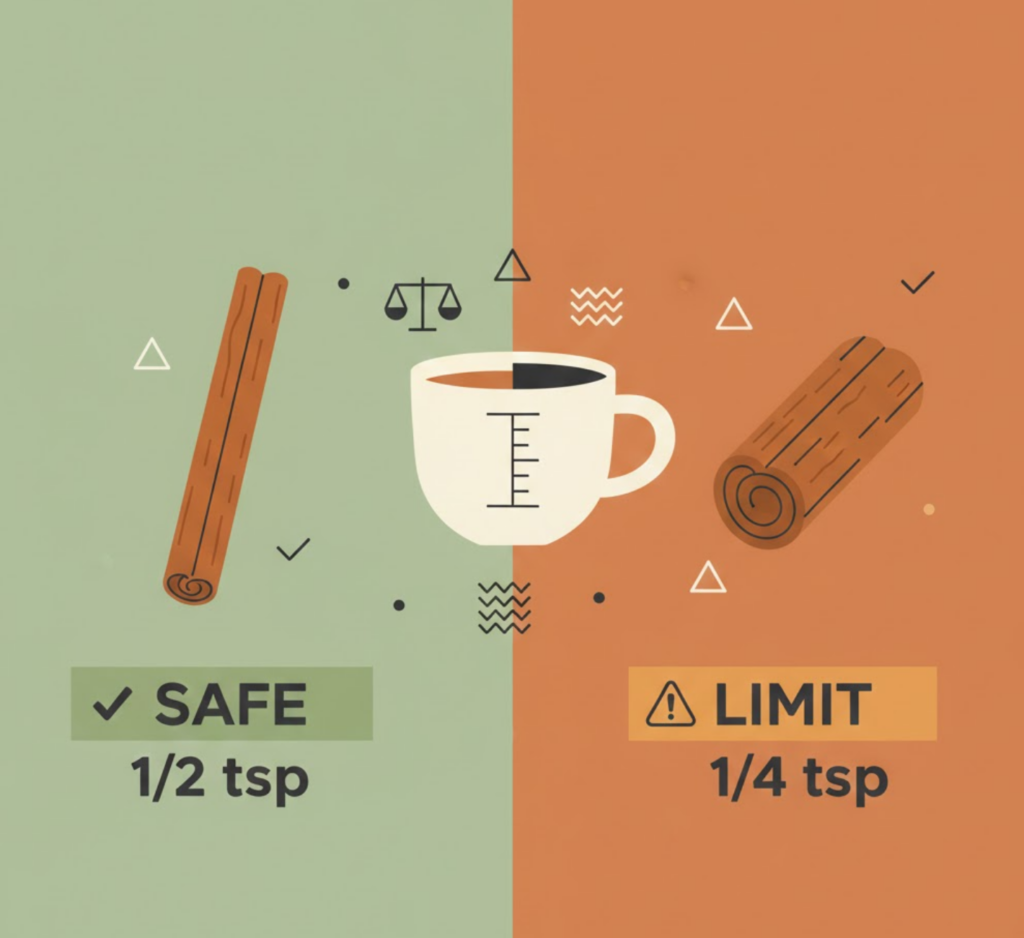
Scroll through social media and you’ll see countless videos claiming cinnamon in coffee melts fat. TikTok influencers swear by it. Wellness blogs promote it as a “game-changer.” But here’s what nobody tells you: exactly how much cinnamon in coffee for weight loss is safe and effective.
Adding too little won’t give you any benefits. Furthermore, adding too much could actually harm your liver. Moreover, the type of cinnamon matters more than most people realize—one type is perfectly safe for daily use while the other can be dangerous in larger amounts.
Throughout this guide, you’ll discover the exact amount of cinnamon to add to your coffee, which type to choose, and what realistic results to expect. Additionally, you’ll learn the safest preparation methods and who should avoid this combination entirely.
By the end, you’ll have a clear, science-backed plan you can start using today—no guesswork, no risk, just honest information.
🔑 Key Takeaways
- Safe dosage: 1/4 to 1/2 teaspoon per cup—but the type of cinnamon changes everything
- Ceylon cinnamon is safer: Contains 99.6% less coumarin than Cassia (the liver-damaging compound)
- Realistic results: Studies show about 1.5 lbs weight loss over 2-6 months when combined with healthy habits
- Not a magic bullet: Cinnamon supports weight loss but doesn’t replace diet and exercise
- Safety matters: Exceeding safe limits can cause liver damage—especially with Cassia cinnamon
Quick Answer: How Much Cinnamon Should You Add?
The short answer: Start with 1/4 teaspoon of cinnamon per cup of coffee and work up to 1/2 teaspoon based on taste and tolerance.
However, the type matters critically:
Ceylon Cinnamon (recommended): Safe up to 1 teaspoon daily. This “true cinnamon” contains minimal coumarin, making it safe for regular use.
Cassia Cinnamon (use cautiously): Limit to 1/4 teaspoon daily if using every day. This common grocery store variety contains high levels of coumarin, which can damage your liver in large amounts.
Realistic expectations: Research shows cinnamon may support about 1-1.5 pounds of weight loss over 2-6 months when combined with a healthy diet and exercise. Consequently, it’s a helpful addition but not a miracle cure.
Can’t identify which type you have? Most grocery store cinnamon is Cassia—stick to 1/4 teaspoon daily to be safe, or invest in labeled Ceylon cinnamon for worry-free daily use.
The Science: Does Cinnamon Actually Help With Weight Loss?
What the Research Really Shows
Let’s be honest: cinnamon isn’t going to melt fat while you sleep. However, solid research does show modest but real benefits when used consistently.
A comprehensive review of multiple studies found that people taking cinnamon lost an average of 0.67 kg (about 1.5 pounds) and reduced their BMI by 0.45 points over 2-6 months. Moreover, another study showed that doses below 1.5 grams per day (about 1/2 teaspoon) decreased waist circumference by 1.68 cm.
Research published in Clinical Nutrition confirms that cinnamon supplementation positively affects obesity markers, though effects are modest and require consistency.
Indeed, these aren’t dramatic numbers. Nevertheless, when you combine cinnamon with coffee (which has its own metabolic benefits), plus proper nutrition and exercise, the effects add up over time.
Source: ScienceAlert – Cinnamon and Weight Loss Research
How Cinnamon Supports Weight Loss
Cinnamon doesn’t directly burn fat. Instead, it works through several mechanisms:
Blood Sugar Regulation: Cinnamon improves insulin sensitivity, helping your body process glucose more efficiently. According to research from the National Institutes of Health, this reduces blood sugar spikes and crashes that trigger cravings and overeating. Furthermore, stable blood sugar means fewer hunger pangs throughout the day.
Appetite Suppression: When combined with coffee’s natural caffeine, cinnamon may help you feel fuller longer. Therefore, you’re less likely to snack between meals or overeat at mealtimes.
Metabolism Boost: The compound cinnamaldehyde (which gives cinnamon its flavor) may slightly increase metabolic rate. However, the effect is modest—don’t expect to burn hundreds of extra calories daily. Learn more about how cinnamon affects weight loss.
Reduced Inflammation: Chronic inflammation can interfere with weight loss. Notably, cinnamon’s anti-inflammatory properties may help your body function more efficiently during your weight loss journey.
How Much Cinnamon in Coffee for Weight Loss: The Right Amount
The Critical Difference You Must Know
Finding the right amount of cinnamon in coffee for weight loss requires understanding the type you’re using. Here’s why this matters critically:
The key difference is coumarin—a natural compound that can damage your liver when consumed in high amounts. Therefore, knowing how much cinnamon in coffee for weight loss is safe means understanding coumarin content.
Ceylon Cinnamon (True Cinnamon)
💡 Recommended for Daily Use
Coumarin content: 0.004% (extremely low)
Safe daily amount: Up to 1 teaspoon (about 3 grams)
Recommended coffee dosage: 1/4 to 1/2 teaspoon per cup
Taste: Sweeter, milder, more delicate
Cost: $10-15 per jar
Where to buy: Health food stores, specialty markets, online (look for “Ceylon” or “Sri Lankan” on label)
Bottom line: This is the best choice for daily cinnamon coffee. Indeed, you can use it worry-free at the recommended amounts.
Cassia Cinnamon (Common Cinnamon)
⚠️ Use With Caution
Coumarin content: Up to 1% (250 times more than Ceylon!)
Safe daily limit: Maximum 1/4 to 1/2 teaspoon for daily use
Recommended coffee dosage: 1/8 to 1/4 teaspoon per cup
Taste: Stronger, spicier, more bitter
Cost: $3-5 per jar
Where to buy: Most grocery stores (this is usually what you’re getting unless labeled otherwise)
Important safety note: For a 150-pound person, just 2 teaspoons of Cassia cinnamon exceeds the European Food Safety Authority’s safe coumarin limit. Therefore, if you’re using Cassia daily, stick to 1/4 teaspoon or less.
How to Identify Which Type You Have
Unfortunately, most cinnamon sold in grocery stores doesn’t specify the type. However, here are some clues:
- Check the label: Look for “Ceylon” or “Sri Lankan.” If it doesn’t specify, assume it’s Cassia
- Color: Ceylon is tan/light brown; Cassia is darker red-brown
- Texture: Ceylon has thin, paper-like layers; Cassia has thick, hard bark
- Price: Ceylon costs 2-3 times more than Cassia
When in doubt: Treat any unlabeled cinnamon as Cassia and limit yourself to 1/4 teaspoon daily, or invest in clearly labeled Ceylon cinnamon for peace of mind.
How to Add Cinnamon to Coffee for Weight Loss (5 Methods)
When determining how much cinnamon in coffee for weight loss, the answer depends entirely on which type you’re using. Here’s a common frustration: cinnamon doesn’t dissolve in liquid. Instead, it floats on top or clumps at the bottom. Nevertheless, these five methods solve that problem:
Method 1: Mix With Coffee Grounds (Best for Even Flavor)
How: Add 1/4 to 1/2 teaspoon of ground cinnamon directly to your coffee grounds before brewing.
Best for: Drip coffee makers, pour-over, French press
Pros: Even distribution, no clumping, smooth flavor throughout
Cons: Can’t adjust strength after brewing
Method 2: Steep a Cinnamon Stick (No Clumping)
How: Place a cinnamon stick in your coffee while it brews or steep one in your cup for 5-10 minutes.
Best for: Those who dislike texture or want subtle flavor
Pros: Zero clumping, subtle flavor, reusable (2-3 times)
Cons: Less potent than ground cinnamon, takes longer to infuse
Method 3: Create a Cinnamon Paste (Best Mixing)
How: Mix 1/4 teaspoon ground cinnamon with a few drops of warm water to create a paste, then stir into your coffee.
Best for: Avoiding clumps while using ground cinnamon
Pros: Distributes evenly, no floating powder
Cons: Extra step required
Method 4: Blend With Milk or Cream First
How: Whisk cinnamon into warm milk or cream before adding to coffee. Alternatively, use a milk frother for best results.
Best for: Lattes, cappuccinos, or anyone who uses dairy/plant milk
Pros: Creamy texture, well-integrated flavor
Cons: Adds calories if using whole milk or cream
Method 5: Make Cinnamon Syrup (Convenient)
How: Simmer 1 cup water, 1 cup sugar (or sweetener), and 2-3 cinnamon sticks until sugar dissolves. Strain and store in fridge for up to 2 weeks.
Best for: Those who like sweetened coffee
Pros: Easy to use, consistent flavor, no clumping
Cons: Contains sugar (unless using sugar-free sweetener), requires prep time
Beginner’s Guide: Start Slowly
If you’ve never tried adding cinnamon to coffee for weight loss, don’t jump straight to 1/2 teaspoon. Instead, your taste buds (and stomach) will thank you for taking it slow:
Week 1: Start with 1/8 teaspoon (just a pinch) per cup. Get used to the flavor. Notice how it tastes and how your body responds.
Week 2: If all goes well, increase to 1/4 teaspoon per cup. This is the sweet spot for most people—enough for benefits without overpowering coffee’s flavor.
Week 3-4: If you enjoy stronger cinnamon flavor and tolerate 1/4 teaspoon well, try 1/2 teaspoon (only if using Ceylon cinnamon).
Listen to your body: If you experience stomach upset, mouth sores, or any discomfort, reduce the amount or stop using it.
Taste Troubleshooting
Too bitter or spicy? Switch to Ceylon cinnamon (naturally sweeter) or reduce the amount. Alternatively, try a cinnamon stick for subtler flavor.
Clumping at the bottom? Use one of the mixing methods above (paste, blend with milk, or add to grounds before brewing).
Overwhelming coffee’s flavor? You’re using too much. Cut back to 1/8 teaspoon and gradually increase only if desired.
Safety Warnings and Who Should Avoid It
Understanding Coumarin Toxicity
The European Food Safety Authority sets a safe coumarin limit of 0.1 mg per kilogram of body weight daily. For a 150-pound (68 kg) person, that’s about 6.8 mg of coumarin per day.
Here’s why this matters:
- Cassia cinnamon: Contains up to 1% coumarin. One teaspoon (about 2.6 grams) = up to 26 mg coumarin—nearly 4 times the safe limit for a 150-lb person!
- Ceylon cinnamon: Contains only 0.004% coumarin. One teaspoon = only 0.1 mg coumarin—well within safe limits
The takeaway: Daily Cassia use must be limited to about 1/4 teaspoon. Ceylon can be used freely at recommended amounts.
Who Should Avoid Cinnamon Coffee
Pregnant or breastfeeding women: Limited research exists on safety during pregnancy. Additionally, high doses might stimulate the uterus. Stick to food amounts (pinch here and there) rather than therapeutic doses.
People with liver disease: Coumarin is processed by the liver. Therefore, those with existing liver problems should avoid cinnamon supplements and limit dietary cinnamon.
On blood thinners (Warfarin, etc.): Cinnamon has mild blood-thinning properties. Consequently, it may enhance the effect of blood-thinning medications. Consult your doctor first.
On diabetes medications: Cinnamon lowers blood sugar. When combined with diabetes medications, it could cause hypoglycemia (dangerously low blood sugar). Monitor closely and discuss with your doctor.
History of cinnamon allergy: Some people are allergic to cinnamaldehyde (the main compound in cinnamon). Symptoms include mouth sores, rash, stomach upset, or in severe cases, anaphylaxis.
Warning Signs to Watch For
Stop using cinnamon and see a doctor if you experience:
- Mouth sores or irritation: Sign of sensitivity to cinnamaldehyde
- Persistent stomach upset: Nausea, cramping, or diarrhea
- Skin rash or hives: Allergic reaction
- Unusual fatigue or jaundice: Potential liver stress (rare but serious)
Maximizing Benefits: Best Practices
When to Drink Cinnamon Coffee
Morning (best choice): Drinking cinnamon coffee in the morning provides metabolic benefits throughout the day. Moreover, it helps control appetite and cravings from breakfast through dinner.
Pre-workout (30-45 minutes before): The combination of caffeine and cinnamon may enhance fat burning during exercise. However, stay hydrated and don’t rely on this alone for energy.
Afternoon (optional): A second cup can help manage afternoon cravings and prevent evening snacking. Nevertheless, avoid after 2-3 PM if you’re sensitive to caffeine.
Avoid evening: Both caffeine and cinnamon’s metabolism-boosting effects may interfere with sleep. Instead, try cinnamon in warm water before bed if you want evening cinnamon benefits without caffeine.
What to Add (and Avoid)
✅ Good additions:
- Black pepper: Contains piperine, which may improve cinnamon absorption
- Small amount of honey: If you must sweeten, honey is better than sugar (but still adds calories)
- Stevia or monk fruit: Zero-calorie natural sweeteners that won’t spike blood sugar
- Protein powder: Makes it a complete meal replacement that supports weight loss
- Ginger: Try ginger-cinnamon combinations for additional benefits
❌ Avoid adding:
- Sugar: Negates blood sugar benefits and adds empty calories
- Heavy cream or full-fat milk: Adds significant calories and fat that could offset weight loss benefits
- Flavored syrups: Usually contain sugar, artificial ingredients, and lots of calories
- Whipped cream: Turns your healthy drink into a high-calorie dessert
Combine With Healthy Lifestyle
Cinnamon coffee works best as part of a complete approach to weight loss:
- Follow a balanced diet: Focus on proper macros for weight loss
- Get enough protein: Aim for adequate daily protein to preserve muscle
- Stay hydrated: Drink plenty of water throughout the day
- Exercise regularly: Combine cardio and strength training for best results
- Get quality sleep: Poor sleep sabotages weight loss efforts
- Manage stress: High cortisol from stress promotes fat storage
Additionally, consider anti-bloating meal plans to reduce water retention and feel lighter.
Quality and Freshness Matter
Check the date: Cinnamon loses potency after 6 months. Smell your cinnamon—if it’s weak or has no aroma, it’s too old to provide benefits.
Store properly: Keep cinnamon in an airtight container in a cool, dark place. Heat and light degrade its active compounds.
Organic vs conventional: While not essential, organic cinnamon avoids pesticide residues. Given that you’re consuming it daily, the investment may be worthwhile.
Ground vs stick: Ground cinnamon is more potent and convenient for coffee. However, cinnamon sticks last longer (up to 2 years) and can be used multiple times.
Alternatives to Coffee
Don’t like coffee or sensitive to caffeine? You can still enjoy cinnamon’s benefits:
- Cinnamon water: Simple and caffeine-free option
- Ginger-cinnamon-lemon tea: Combines multiple metabolism-boosting ingredients
- Anti-bloating tea with cinnamon: Reduces water retention
- Green tea with cinnamon: Lower caffeine than coffee but still provides energy boost
- Golden milk (turmeric latte) with cinnamon: Anti-inflammatory powerhouse
Frequently Asked Questions
Can I use cinnamon sticks instead of ground cinnamon?
Yes! Cinnamon sticks work great and eliminate the clumping problem. However, they provide milder flavor than ground cinnamon. Steep one stick in your coffee for 5-10 minutes, and you can reuse the same stick 2-3 times before it loses potency.
How long until I see weight loss results?
Be patient—this isn’t a quick fix. Research shows results appear after 2-6 months of consistent use combined with healthy eating and exercise. You might notice reduced cravings and better blood sugar control within 2-3 weeks, but significant weight changes take longer.
Is it safe to drink cinnamon coffee every day?
Yes, if you follow safe dosage guidelines. With Ceylon cinnamon, up to 1 teaspoon daily is safe. With Cassia cinnamon, limit yourself to 1/4 teaspoon daily. Exceeding these amounts regularly could lead to liver problems due to coumarin buildup.
Can I take cinnamon supplements instead of adding it to coffee?
Cinnamon supplements contain concentrated doses that may exceed safe limits, especially if they use Cassia cinnamon. Moreover, they lack coffee’s synergistic benefits (caffeine’s appetite suppression and metabolism boost). If you prefer supplements, choose Ceylon cinnamon extract and follow dosage instructions carefully.
What if I’m sensitive to caffeine?
Try cinnamon water, decaf coffee with cinnamon, or herbal tea with cinnamon. You’ll still get cinnamon’s blood sugar and metabolism benefits without the caffeine jitters.
Does the type of coffee matter?
Not significantly. Cinnamon pairs well with any coffee type, though medium and dark roasts complement cinnamon’s warm flavor better. For weight loss, black coffee is best—avoid adding sugar and heavy cream that negate the benefits.
Can children have cinnamon coffee?
The caffeine in coffee isn’t recommended for children. However, children can enjoy cinnamon in other beverages like warm milk, hot chocolate, or cinnamon water. Use small amounts (1/8 teaspoon or less) and always choose Ceylon cinnamon for safety.
What about iced coffee with cinnamon?
Absolutely! Cinnamon works in iced coffee too. For best results, make a cinnamon paste (cinnamon + tiny bit of warm water) or cinnamon syrup before adding to cold coffee. This prevents clumping better than adding dry cinnamon to cold liquid.
The Bottom Line
Adding cinnamon to your coffee can support weight loss—but only when you do it correctly and maintain realistic expectations.
The safe, effective approach:
- Start with 1/4 teaspoon per cup and adjust based on taste and tolerance
- Choose Ceylon cinnamon for daily use to avoid coumarin toxicity
- Limit Cassia cinnamon to 1/4 teaspoon daily if that’s what you have
- Expect modest results—about 1-1.5 pounds over 2-6 months when combined with healthy habits
- Use proper mixing methods to avoid clumping and ensure even flavor
- Avoid if pregnant, breastfeeding, or on certain medications without doctor approval
Remember: cinnamon isn’t a magic weight loss solution. Rather, it’s a helpful tool that works best when paired with proper nutrition, regular exercise, adequate sleep, and stress management.
The women who see the best results aren’t the ones looking for shortcuts. Instead, they’re the ones who use cinnamon coffee as one piece of a comprehensive, sustainable approach to healthy weight loss.
Ready to start? Grab some Ceylon cinnamon, start with 1/4 teaspoon in your morning coffee, and give it at least 2-3 months of consistent use. Track your progress, listen to your body, and combine it with other healthy habits for best results.
Related Articles:
- Does Cinnamon Help You Lose Weight? Science-Based Answer
- Cinnamon Water Recipe for Weight Loss
- Ginger Cinnamon Lemon Tea: 9 Science-Backed Benefits
- Cinnamon and Warm Water Before Bed
- Best Protein Powder for Women’s Weight Loss
- Weight Loss for Women Over 40: Complete Guide