

Free Training Programs for Women’s Weight Loss: 12-Week Guide
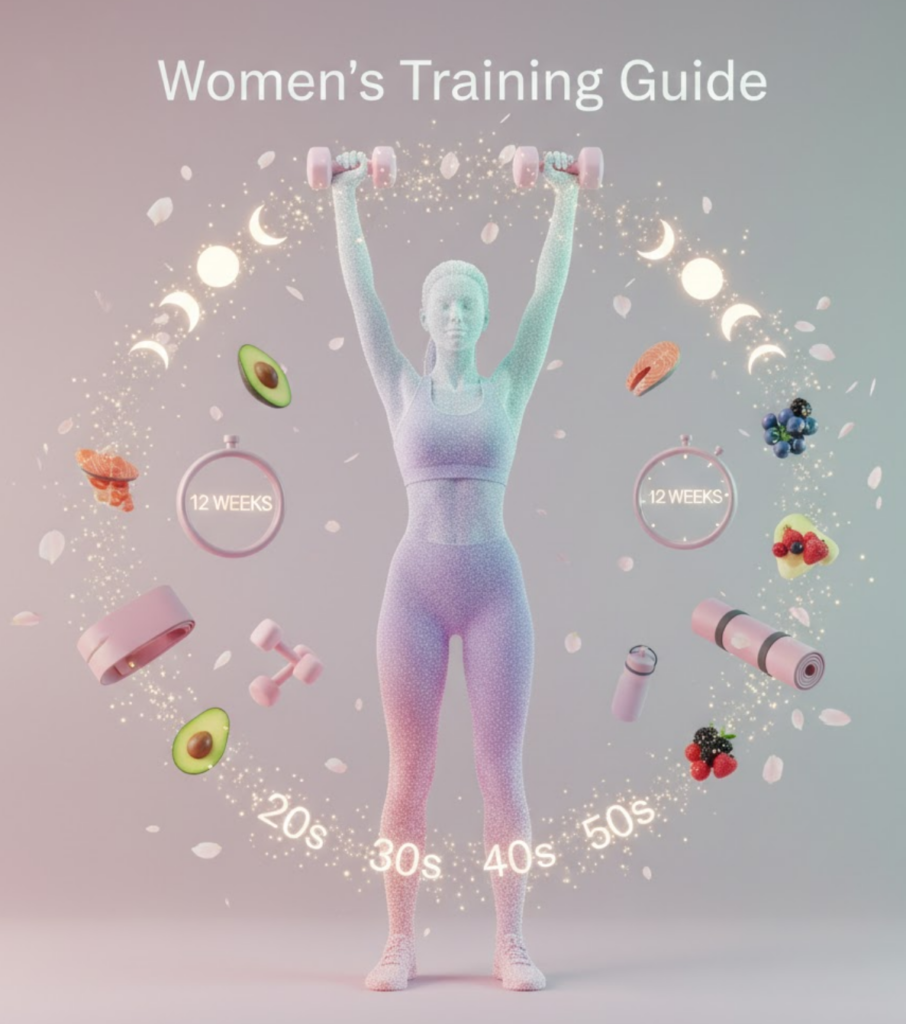
Are you tired of following workout programs that were clearly made for men? Frustrated because generic fitness plans don’t work with your hormones, your schedule, or your body? Moreover, have you noticed that the weight loss advice everywhere ignores what women actually need?
Indeed, you’re not alone. In fact, millions of women waste time on training programs that ignore female biology, hormones, and real-life challenges. Specifically, most workout plans completely miss critical factors like menstrual cycle changes, menopause, PCOS, postpartum recovery, and the unique ways women store and lose fat.
Throughout this complete guide, you’ll discover a science-backed 12-week training program made for women’s bodies. Additionally, you’ll learn exactly how to adjust your workouts based on your age, hormones, and life stage. Furthermore, you’ll get three complete program versions—whether you train at a gym, at home with dumbbells, or with just your bodyweight.
By the end, you’ll have everything needed to build a strong, lean body while working with your female physiology instead of against it.
🔑 Key Takeaways
- Women need different training than men: Hormones, metabolism, fat storage patterns, and recovery needs all differ greatly
- 12 weeks minimum for real results: Most programs are too short (4-8 weeks). True change needs at least 12 weeks of steady work
- Strength training is essential: Cardio alone won’t work. Women need to lift weights to keep muscle, boost metabolism, and burn fat
- Your cycle matters: Training should change throughout your menstrual cycle for best results and easier workouts
- Age changes everything: A woman in her 20s needs different training than a woman in her 50s
Quick Answer: What’s the Best Training Program for Women’s Weight Loss?
The best training split for women’s weight loss combines:
1. Strength Training (4 days/week): Full-body or upper/lower splits. Focus on compound moves like squats, deadlifts, rows, and presses. This builds muscle, boosts metabolism, and creates the toned look most women want.
2. Cardio (2-3 days/week): Mix of steady-state (Zone 2) and HIIT. Cardio burns extra calories and supports heart health, but shouldn’t replace strength work.
3. Rest & Recovery (1-2 days/week): Active recovery like walking, yoga, or complete rest. Recovery is when your body actually builds muscle and burns fat.
Expected Timeline: Most women see visible changes by weeks 4-6. Major changes happen around weeks 8-12. Sustainable results need at least 12-16 weeks of steady work.
However, this basic framework must be changed based on your age, menstrual cycle, fitness level, and any health issues like PCOS or thyroid problems. Consequently, the complete guide below shows you exactly how to customize everything for your unique situation.
Research published in the Journal of Applied Physiology shows that women respond differently to training than men. Specifically, women build muscle more slowly but have greater endurance capacity. Furthermore, hormonal changes throughout the month impact training performance and recovery needs.
Source: PubMed – Sex Differences in Training Adaptations
Why Generic Training Programs Fail Women
The Problem with “Unisex” Workout Plans
Walk into any gym or search online for workout programs, and you’ll find tons of options. Nevertheless, most were made using research done mainly on men. Consequently, they miss critical factors that affect how women train, recover, and lose fat.
Hormonal Differences: Women experience monthly hormone changes that greatly affect energy, strength, hunger, and recovery. Meanwhile, most programs completely ignore these changes and expect you to train at the same level every day.
Fat Storage Patterns: Women naturally store more fat in hips, thighs, and lower body (essential for healthy hormones and fertility). In contrast, men store more in the belly. Therefore, fat loss strategies that work for men often fail women.
Muscle Building Differences: Women have about 50% less upper body strength than men and build muscle more slowly due to lower testosterone. However, most programs are based on male muscle-building rates.
Source: NIH – Sex Differences in Skeletal Muscle
Recovery Needs: Women typically need different recovery strategies due to hormonal changes. Notably, recovery needs change throughout the menstrual cycle—yet most programs give the same rest days every week.
Why Women Struggle to Lose Fat
If you’ve struggled to lose weight despite working out regularly, it’s not your fault. Indeed, several factors make fat loss harder for women:
Lower Metabolic Rate: Women typically have 5-10% slower metabolism than men of similar size. Additionally, women naturally have higher body fat percentages (22-25% vs 15-18% for men), which burns fewer calories than muscle.
Hormonal Impact: Estrogen affects where you store fat (hips and thighs). Furthermore, monthly hormone changes impact hunger, cravings, and water retention. Meanwhile, conditions like PCOS and thyroid issues (much more common in women) make everything harder.
Muscle Loss with Age: Women lose muscle faster than men as they age, especially after menopause. Importantly, less muscle means slower metabolism and easier fat gain. Therefore, strength training becomes critical for aging well.
Stress and Cortisol: Women juggling work, family, and life often have high cortisol (stress hormone). Notably, high cortisol promotes belly fat storage and makes fat loss much harder.
The Solution: Women-Specific Training
Clearly, the good news? When you follow a program made for female physiology, fat loss becomes much easier. Specifically, you’ll work with your hormones instead of fighting them. Moreover, you’ll build strength while burning fat, rather than just getting smaller and weaker.
Throughout this guide, you’ll learn exactly how to train based on your cycle, age, and life stage. Additionally, you’ll get complete workout templates you can start using today.
The Science of Women’s Fat Loss Training
Why Strength Training is Non-Negotiable
Many women avoid weights, fearing they’ll “get bulky.” However, this is a myth. In fact, building muscle is the best thing you can do for fat loss and a toned physique.
Muscle Burns More Calories: Each pound of muscle burns about 6 calories daily at rest (fat burns only 2). Therefore, more muscle means higher metabolism 24/7. Consequently, you burn more calories even while sleeping.
The “Toned” Look Comes from Muscle: That defined, sculpted look you want? It comes from having muscle with lower body fat. Simply losing weight without building muscle leaves you “skinny fat” with no shape.
Prevents Age-Related Decline: Women lose about 3-8% of muscle mass per decade after age 30. Importantly, this speeds up after menopause. Strength training is the only way to fight this. Learn more about staying strong as you age.
Source: PubMed – Resistance Training and Women’s Health
💡 Pro Tip: You Won’t Get Bulky
Women have 15-20 times less testosterone than men, making it nearly impossible to build large muscles without years of specific training and eating at a big surplus. Instead, lifting weights gives you a lean, defined, “toned” look—exactly what most women want. Moreover, adequate protein intake supports muscle building without adding bulk.
The Right Balance of Cardio
Cardio has its place, but it shouldn’t be your main focus. Notably, too much cardio without strength training leads to muscle loss, slower metabolism, and the dreaded “skinny fat” outcome.
Zone 2 Cardio (Low Intensity): Walking, easy cycling, or light jogging at a pace where you can talk easily. This burns fat without stressing your body too much. Aim for 2-3 sessions of 20-30 minutes weekly.
HIIT (High Intensity): Short bursts of all-out effort followed by rest. Burns lots of calories in less time and boosts metabolism for hours after. However, limit to 1-2 sessions weekly to avoid overtraining. Additionally, HIIT can support brain health and cognitive function.
The Balance: For most women, 4 days of strength training plus 2-3 days of cardio works best. Importantly, strength training comes first—it builds the metabolism-boosting muscle. Then, cardio adds extra calorie burn.
Understanding Your Body’s Fat Loss Process
Fat loss happens when you burn more calories than you eat (calorie deficit). Nevertheless, how you create that deficit matters greatly for women.
Preserve Muscle While Losing Fat: Aggressive dieting without strength training causes you to lose both fat AND muscle. Consequently, your metabolism slows, and you gain weight back easily. Instead, moderate calorie deficit plus strength training keeps muscle while burning fat.
Spot Reduction Doesn’t Work: You can’t target fat loss from specific areas. However, strength training for specific muscles creates shape and definition once you lose overall body fat. Furthermore, understanding proper macros for weight loss helps preserve muscle.
Realistic Expectations: Healthy fat loss is 0.5-1% of body weight weekly. For a 150 lb woman, that’s 0.75-1.5 lbs weekly. Faster weight loss often means losing precious muscle along with fat.
The Complete 12-Week Progressive Training Program
This program is split into three 4-week phases. Each phase builds on the previous one, gradually increasing difficulty. Moreover, you’ll find three versions: gym, home with dumbbells, and bodyweight only.
Program Overview
Training Split: Upper/Lower (4 Days/Week)
Week Structure:
- Monday: Upper Body
- Tuesday: Lower Body
- Wednesday: Cardio or Rest
- Thursday: Upper Body
- Friday: Lower Body
- Saturday: Optional Cardio
- Sunday: Complete Rest
Why This Split Works: Training each muscle group twice weekly provides enough work for growth without overdoing it. Additionally, having 2-3 days between training the same muscles allows full recovery.
Phase 1: Foundation (Weeks 1-4)
Goal: Learn proper form, build base strength, create habits
Sets × Reps: 3 sets × 10-12 reps
Rest Between Sets: 60-90 seconds
Weight Selection: Choose weights where the last 2 reps feel challenging but doable with good form
Focus: Perfect your technique. It’s better to lift lighter with great form than heavier with poor form. Moreover, this builds the foundation for bigger gains later.
Phase 1 Workouts (Weeks 1-4)
Upper Body Workout A (Monday)
| Exercise | Sets × Reps | Gym Version | Home/Dumbbell | Bodyweight |
|---|---|---|---|---|
| Horizontal Push | 3 × 10-12 | Bench Press | Dumbbell Press | Push-ups (knees if needed) |
| Horizontal Pull | 3 × 10-12 | Cable Row | Dumbbell Row | Inverted Row (table/bar) |
| Vertical Push | 3 × 10-12 | Shoulder Press | Dumbbell Press | Pike Push-ups |
| Vertical Pull | 3 × 10-12 | Lat Pulldown | Dumbbell Pullover | Chin-ups (assisted) |
| Biceps | 3 × 12-15 | Cable Curl | Dumbbell Curl | Towel Curl |
| Core | 3 × 15-20 | Cable Crunch | Weighted Crunch | Plank Hold (30-60s) |
Lower Body Workout A (Tuesday)
| Exercise | Sets × Reps | Gym Version | Home/Dumbbell | Bodyweight |
|---|---|---|---|---|
| Quad-Focused | 3 × 10-12 | Leg Press or Squat | Goblet Squat | Bodyweight Squat |
| Hip Hinge | 3 × 10-12 | Romanian Deadlift | Dumbbell RDL | Single-Leg RDL |
| Lunge Pattern | 3 × 10 each | Walking Lunges | Dumbbell Lunges | Bodyweight Lunges |
| Glute Focus | 3 × 12-15 | Hip Thrust | Dumbbell Hip Thrust | Glute Bridge |
| Calves | 3 × 15-20 | Calf Raise Machine | Dumbbell Calf Raise | Bodyweight Calf Raise |
| Core | 3 × 15-20 | Leg Raises | Leg Raises | Bicycle Crunches |
Upper Body Workout B (Thursday)
Repeat Monday’s workout with slight changes: different angles, grips, or exercise variations. For instance, incline press instead of flat press, or underhand rows instead of overhand. Additionally, this keeps workouts fresh while hitting same muscle groups.
Lower Body Workout B (Friday)
Repeat Tuesday’s workout with variations. For instance, try sumo squats instead of regular squats, or step-ups instead of lunges. Similarly, these changes work muscles from different angles for better overall development.
Phase 2: Strength Building (Weeks 5-8)
Goal: Build serious strength, increase metabolism, add muscle
Sets × Reps: 4 sets × 8-10 reps
Rest Between Sets: 90-120 seconds
Weight Selection: Increase weights by 5-10%. The last rep of each set should be very challenging.
Focus: Progressive overload is key. Track all lifts and aim to lift heavier each week. Moreover, this phase builds the most muscle and boosts metabolism.
Deload Week: Week 8 is a deload week—cut volume by 40% (fewer sets and lighter weights). This allows recovery and prevents burnout. Consequently, you’ll come back stronger for Phase 3.
Phase 2 Changes
Keep the same exercises from Phase 1 but make these changes:
- First, increase to 4 sets per exercise (instead of 3)
- Second, lower reps to 8-10 (instead of 10-12)
- Third, lift heavier weights (5-10% more than Phase 1)
- Additionally, add 1 HIIT cardio session weekly (15-20 minutes)
- Finally, track everything in a notebook or app
💡 Progressive Overload Made Simple
Each week, aim to do one of these: (1) Add 5 lbs to the exercise, (2) Do 1-2 more reps than last week, or (3) Do the same weight/reps but with better form and control. Furthermore, small steady improvements add up to major changes over 12 weeks. Additionally, adequate daily protein intake supports these strength gains.
Phase 3: Sculpting & Acceleration (Weeks 9-12)
Goal: Maximize fat loss, create definition, push limits
Sets × Reps: 4 sets × 12-15 reps (higher reps, moderate weight)
Rest Between Sets: 45-60 seconds (shorter rest = more calorie burn)
Weight Selection: Use about 70% of Phase 2 weights. Focus on muscle burn and pump rather than max strength.
Focus: This phase burns maximum fat while keeping muscle. Shorter rest periods increase calorie burn. Moreover, higher reps create the “toned” look.
Phase 3 Changes
Keep the same exercise pattern but make these changes:
- First, increase to 12-15 reps per set
- Second, reduce rest to 45-60 seconds between sets
- Third, add supersets (pair two exercises back-to-back with no rest)
- Additionally, increase cardio to 3 sessions weekly
- Finally, consider adding finishers (5-minute burnout at end of workout)
⚠️ Important: Listen to Your Body
Phase 3 is intense. If you feel exhausted, your period becomes irregular, or sleep worsens, these are warning signs. Take an extra rest day if needed. Moreover, women must pay special attention to recovery—pushing too hard backfires by raising cortisol and slowing fat loss.
Training Throughout Your Menstrual Cycle
This is revolutionary information most programs completely miss. Indeed, your hormones change throughout the month, greatly impacting strength, energy, and recovery. Therefore, adjusting your training to match your cycle makes workouts easier and more effective.
Follicular Phase (Days 1-14): Go Heavy!
Hormones: Estrogen rises steadily. You feel stronger and more energetic.
Training Strategy: This is your power phase! Focus on heavy lifting and personal records. Your pain tolerance is higher and recovery is faster. Consequently, schedule your hardest workouts here.
What to Do:
- Lift heavier weights (80-90% max effort)
- Try for PRs (personal records)
- Add an extra HIIT session if you feel good
- Push yourself—your body can handle it now
Ovulation (Around Day 14): Peak Performance
Hormones: Estrogen peaks, testosterone rises slightly. You feel amazing!
Training Strategy: This is when you’re strongest all month. Therefore, attempt your heaviest lifts and most intense workouts now.
What to Do:
- Max effort training
- Try exercises you’ve been scared of
- Push for new records
- Take advantage of this energy surge
Luteal Phase (Days 15-28): Scale Back
Hormones: Progesterone rises, estrogen drops. You feel tired and less motivated.
Training Strategy: This is your “chill” phase. Lower intensity, focus on form and endurance. Moreover, don’t beat yourself up if you can’t lift as heavy—it’s your hormones, not you!
What to Do:
- Reduce weight by 10-15%
- Increase cardio slightly (helps with bloating)
- Focus on higher reps (12-15) with perfect form
- Add yoga or stretching
- Listen to your body more
Menstruation (Days 1-5): Gentle Movement
Hormones: Everything is low. You feel tired, crampy, emotional.
Training Strategy: Light movement helps with cramps and mood. However, don’t force intense workouts. Rest is productive here!
What to Do:
- Walking or light cardio
- Yoga or stretching
- Light weights if you feel up to it
- Extra rest is totally fine
- Focus on anti-bloating nutrition
Source: PubMed – Menstrual Cycle and Exercise Performance
Age-Specific Training Modifications
Your training needs change as you age. Here’s how to adjust the program based on your life stage:
Women in Their 20s-30s
Key Focus: Build muscle foundation, create habits, push limits
Modifications:
- Can handle more volume and intensity
- Recovery is faster—take advantage
- Focus on learning proper form now
- Build habits that last a lifetime
- Can do more HIIT (2-3 times weekly)
Special Note: If you’re postpartum, see the specific section below. Don’t rush back—proper recovery prevents long-term issues.
Women in Their 40s (Perimenopause)
Key Focus: Preserve muscle, manage stress, support hormones
Modifications:
- Strength training becomes MORE important (fighting muscle loss)
- May need extra rest days (recovery slows)
- Watch for overtraining signs (hormones more sensitive)
- Increase protein intake to 1.0-1.2g per lb
- Add stress management (yoga, walking, meditation)
- Sleep becomes critical—prioritize 7-8 hours
Hormone Changes: Perimenopause brings changing cycles and energy. Listen to your body more. Some weeks you’ll feel great, others not. That’s normal!
Women in Their 50s+ (Menopause & Beyond)
Key Focus: Preserve muscle and bone, maintain strength, prevent injury
Modifications:
- Strength training is ESSENTIAL (only way to fight sarcopenia)
- Focus on compound lifts for bone density
- May need longer warmups (joints need more prep)
- Recovery takes longer—add extra rest days
- Reduce HIIT to 1 time weekly (easier on joints)
- Increase Zone 2 cardio (heart health priority)
- Consider working with a trainer initially
Menopause Changes: Muscle loss speeds up after menopause. Therefore, strength training becomes your best anti-aging tool. Moreover, staying strong protects independence as you age.
Source: PubMed – Resistance Training in Older Women
Condition-Specific Training Protocols
Training with PCOS
PCOS (Polycystic Ovary Syndrome) affects about 10% of women and makes weight loss harder due to insulin resistance. However, the right training helps greatly.
Best Training Approach:
- Strength training 4 times weekly: Builds muscle, which improves insulin sensitivity
- Moderate cardio: Walking and Zone 2 cardio. Avoid excessive high-intensity work (can raise cortisol)
- Avoid overtraining: Too much exercise raises stress hormones, worsening PCOS
- Focus on consistency: Regular moderate exercise beats sporadic intense workouts
Nutrition Note: PCOS women benefit from lower carb intake. Consider adjusting your macros to 35% protein, 30% carbs, 35% fats.
Source: PubMed – Exercise and PCOS
Training with Thyroid Issues
Hypothyroidism (underactive thyroid) makes weight loss frustrating. Nevertheless, training helps if done correctly.
Key Adjustments:
- Start conservatively: Energy levels may be lower initially
- Prioritize strength training: Builds muscle to fight slow metabolism
- Watch for overtraining: Fatigue is already an issue—don’t make it worse
- Be patient: Results come slower but they DO come
- Ensure medication is optimized: Work with your doctor to get thyroid levels right first
Postpartum Return to Training
Returning to exercise after pregnancy needs careful progression. Don’t rush—your body has been through major changes!
Weeks 0-6 Postpartum
- Walking only: Start with 10-15 minute walks
- Pelvic floor exercises: Essential for core recovery
- Gentle stretching: Focus on tight areas (hips, chest, shoulders)
- NO intense exercise: Your body is healing
Weeks 6-12 Postpartum
- Get doctor clearance before starting any program
- Start with bodyweight exercises: Squats, modified push-ups, planks
- Rebuild core strength: Focus on deep core activation
- Increase walking: Work up to 30-45 minutes
- Watch for issues: Heavy bleeding, pain, or incontinence mean slow down
Months 3-6 Postpartum
- Begin Phase 1 of main program: Start conservatively with lighter weights
- Listen to your body: Some days you’ll be exhausted (normal with a baby!)
- Be patient: Full recovery takes 9-12 months
- Prioritize sleep: Rest is more important than workouts right now
⚠️ Postpartum Warning Signs
Stop exercise and see your doctor if you experience: heavy bleeding, severe pain, pelvic pressure, urinary/fecal incontinence, or diastasis recti (ab separation) that doesn’t improve. Moreover, proper postpartum recovery prevents long-term issues with core strength and pelvic floor.
Nutrition to Support Your Training
Exercise alone won’t get you results without proper nutrition. In fact, you can’t out-train a bad diet. However, you don’t need perfection—just consistency with the basics.
Protein: Your Most Important Macro
Protein is critical for building muscle, keeping you full, and maintaining metabolism during weight loss. Specifically, aim for 0.8-1.0g per pound of target body weight.
For a 150 lb woman targeting 140 lbs:
- Target: 112-140g protein daily
- Spread across 4 meals: about 28-35g per meal
- Include protein at every meal and snack
Best Protein Sources:
- First, chicken, turkey, lean beef, fish
- Second, Greek yogurt, cottage cheese
- Third, eggs and egg whites
- Additionally, protein powder (convenient for busy women)
- Finally, protein shakes as meal replacements
Learn more: How Much Protein Do I Need Daily?
Pre & Post-Workout Nutrition
Pre-Workout (1-2 hours before):
- Moderate carbs + moderate protein
- Examples: oatmeal with protein powder, banana with nut butter, Greek yogurt with berries
- Provides energy without feeling too full
Post-Workout (within 2 hours):
- Higher protein + moderate carbs
- Examples: chicken with rice, protein shake with fruit, eggs with toast
- Supports muscle recovery and replenishes energy
Hydration Strategy
Adequate water is essential for performance, recovery, and fat loss. Therefore, aim for:
- Base amount: Half your body weight in ounces (150 lb woman = 75 oz)
- Additionally, add for exercise: Extra 16-24 oz per hour of training
- Furthermore, check urine color: Light yellow is ideal
- Finally, front-load hydration: Drink most water before 6pm to avoid nighttime bathroom trips
Sample Training Day Meal Plan
For a 150 lb woman (130g protein target):
Breakfast (7am): 3 eggs + 1 egg white scrambled with spinach, 1 slice whole grain toast, berries (30g protein)
Snack (10am): Greek yogurt with 1 scoop protein powder mixed in (30g protein)
Lunch (1pm): Grilled chicken salad with quinoa, veggies, olive oil dressing (35g protein)
Pre-Workout (4pm): Banana with almond butter, or protein shake (15g protein)
Post-Workout Dinner (7pm): Salmon with sweet potato and roasted broccoli (35g protein)
Optional Snack: Cottage cheese with berries if still hungry (15g protein)
Total: ~145g protein, supports muscle building and fat loss
Find more meal planning help: Anti-Bloat Meal Plan
Recovery: The Missing Piece
Most women focus only on workouts and nutrition. However, recovery is when your body actually changes. Without adequate recovery, you won’t see results—you’ll just get exhausted and injured.
Sleep: Non-Negotiable for Fat Loss
Poor sleep ruins everything. In fact, studies show that sleeping less than 7 hours nightly:
- First, increases hunger hormones (ghrelin)
- Second, decreases fullness hormones (leptin)
- Third, raises cortisol (stress hormone that stores belly fat)
- Additionally, reduces insulin sensitivity
- Furthermore, lowers testosterone (yes, women need it for muscle building)
- Finally, makes you crave junk food
Sleep Optimization Tips:
- First, aim for 7-8 hours nightly (non-negotiable)
- Second, keep bedroom cool (65-68°F)
- Third, block all light (blackout curtains or eye mask)
- Additionally, avoid screens 1 hour before bed
- Furthermore, maintain same sleep/wake times daily (even weekends)
- Finally, consider magnesium supplement (helps sleep and muscle recovery)
Source: PubMed – Sleep and Weight Loss
Active Recovery Strategies
Rest days don’t mean sitting on the couch all day. Light movement actually speeds recovery.
Best Active Recovery Activities:
- Walking: 30-45 minutes at easy pace
- Alternatively, yoga: Gentle stretching and mobility work
- Similarly, swimming: Low-impact, full-body movement
- Finally, foam rolling: Helps muscle recovery and reduces soreness
Deload Weeks
Every 4-8 weeks, take a deload week where you reduce training volume by 40%. Specifically, this means:
- First, cut sets from 4 to 2-3 per exercise
- Second, reduce weight by 20-30%
- Third, skip HIIT cardio
- Finally, do only 2-3 training sessions instead of 4
Why Deload: Constant hard training eventually leads to burnout, injury, or plateau. A deload week allows full recovery so you come back stronger. Moreover, this is when your body actually builds muscle and burns fat.
Managing Stress for Better Results
High stress raises cortisol, which promotes belly fat storage and makes fat loss much harder. Therefore, stress management isn’t optional—it’s essential.
Stress Reduction Strategies:
- First, daily meditation (even 5 minutes helps)
- Second, deep breathing exercises
- Third, nature time (walking outdoors)
- Additionally, social connection (call a friend)
- Furthermore, journaling
- Moreover, saying “no” to non-essential commitments
- Finally, professional help if needed (therapy)
Tracking Progress the Right Way
The scale isn’t the only measure of success. In fact, it’s often misleading! Women’s weight changes daily due to water retention, hormones, and digestion.
Multiple Progress Metrics
Track These Weekly/Monthly:
When to Adjust Your Program
Increase calories/reduce training if:
- Feeling exhausted constantly
- Period becomes irregular or stops
- Sleep worsens
- Getting sick frequently
- Mood is terrible
- Losing strength in the gym
Keep going if:
- Feeling good overall
- Getting stronger weekly
- Sleeping well
- Period is regular
- Measurements/photos showing changes (even if scale doesn’t)
Building Consistency: The Real Secret
The perfect program means nothing without consistency. Most women fail not because their program was bad, but because they didn’t stick with it long enough.
Habit-Building Strategies
Start Small: Don’t try to change everything at once. Instead, pick 2-3 habits to focus on first. For instance: train 3 times weekly, hit protein target, get 7 hours sleep. Once these are automatic, add more.
Schedule Everything: Workouts aren’t “if I have time”—they’re appointments. Therefore, put them in your calendar like any other important meeting. Moreover, morning workouts are less likely to get skipped.
Prepare the Night Before: Lay out workout clothes, pack gym bag, prep breakfast. Consequently, reduce morning decisions that lead to skipping workouts.
Have a Backup Plan: Can’t get to gym? Do the bodyweight version at home. Feeling terrible? Do a 15-minute walk instead of skipping completely. Remember, something is always better than nothing.
Dealing with Slip-Ups
You will miss workouts. You will overeat sometimes. You will have bad weeks. Obviously, that’s normal—life happens!
The Key: One missed workout or bad meal doesn’t ruin progress. Instead, what ruins progress is using one slip-up as an excuse to quit entirely. Therefore, just resume your plan at the next opportunity. No guilt, no drama, just continue.
Remember: Consistency means following your plan 80% of the time, not 100%. Perfect is the enemy of good enough. Moreover, learning to listen to your body helps build sustainable habits.
Common Training Mistakes Women Make
Mistake #1: Lifting Too Light
Using 3-5 lb dumbbells won’t build muscle. Specifically, if you can easily do 15+ reps, the weight is too light. Instead, choose weights where reps 10-12 feel challenging. Remember, your purse probably weighs more than 5 lbs—your muscles need real challenge to grow!
Mistake #2: Too Much Cardio, Not Enough Strength
Hours of cardio without strength training leads to “skinny fat”—losing weight but looking soft with no shape. Therefore, the solution? Prioritize strength training (4 days/week) and add moderate cardio (2-3 days/week).
Mistake #3: Not Eating Enough Protein
Most women eat only 50-70g protein daily—not nearly enough for muscle building and fat loss. Consequently, aim for 0.8-1.0g per pound of target weight. Use protein powder if needed to hit your target.
Mistake #4: Changing Programs Too Often
Hopping between programs every few weeks prevents results. In fact, your body needs at least 8-12 weeks on one program to adapt and change. Therefore, stick with this 12-week program completely before trying something new.
Mistake #5: Ignoring Recovery
Training 7 days weekly with poor sleep leads to burnout, not results. Remember, your body builds muscle and burns fat during rest—not during workouts. Therefore, take rest days seriously and prioritize sleep.
What to Do After 12 Weeks
Congratulations on completing 12 weeks! Now what?
Option 1: Repeat the Program with Heavier Weights
Run through all 3 phases again but start with heavier weights than last time. Consequently, this builds more muscle and continues fat loss. Indeed, many women repeat the program 2-3 times with great results.
Option 2: Maintenance Phase
Reduce training to 3 days weekly using Phase 1 workouts. Therefore, maintain your current weight and muscle while taking a mental break from intense training. Notably, this works well for busy life periods.
Option 3: New Goal Focus
If you’ve reached your fat loss goal, consider:
- Muscle building phase: Eat at slight surplus, focus on getting stronger
- Alternatively, performance goal: Train for a 5K, try CrossFit, learn Olympic lifts
- Finally, new challenge: Try rock climbing, martial arts, dance classes
The key is having something to work toward so you maintain your results. Additionally, continuing to challenge yourself keeps training fun and prevents backsliding.
Frequently Asked Questions
How quickly will I see results?
Most women notice changes within 4-6 weeks—clothes fit better, strength increases, energy improves. However, major visual changes typically appear around weeks 8-12. Remember, sustainable fat loss is 0.5-1% of body weight weekly. For a 150 lb woman, that’s 0.75-1.5 lbs per week. Slower is actually better for keeping muscle and maintaining results long-term.
Can I do this program at home without equipment?
Yes! The bodyweight version works great at home. Eventually, you may want to add resistance bands or dumbbells for better progressive overload. However, beginners can definitely start with just bodyweight and see excellent results for the first 8-12 weeks.
What if I miss a workout?
Life happens! If you miss a workout, simply continue with the next scheduled session. Don’t try to “make up” missed workouts by doing doubles—this usually backfires. Moreover, one missed workout won’t ruin your progress. Consistency over weeks and months matters more than perfection every single day.
Should I do cardio before or after weights?
Always do strength training first when you’re fresh and strong. Cardio after weights works perfectly fine. Alternatively, separate them entirely—weights in morning, cardio in evening. However, avoid intense cardio before lifting as it reduces strength performance.
How do I know if I’m lifting heavy enough?
The last 2 reps of each set should feel challenging but doable with good form. If you easily complete all reps with energy to spare, increase weight by 5 lbs next time. Conversely, if you can’t complete the target reps with good form, reduce weight slightly.
What about abs? Should I train them separately?
The program includes core work in every session, which is enough for most women. Additionally, compound exercises like squats and deadlifts work your abs heavily. Remember, visible abs come from low body fat (achieved through diet) more than endless crunches. Focus on the full program and proper nutrition.
Can I do this program while breastfeeding?
Yes, after getting medical clearance (usually 6-8 weeks postpartum). Start conservatively with Phase 1 and listen to your body. Importantly, eat enough to support milk production—don’t try aggressive fat loss while breastfeeding. Moderate deficit plus this program works well for gradual postpartum weight loss.
I’m over 50. Is this program safe for me?
Yes! In fact, strength training becomes even more important after 50 to fight muscle loss and maintain bone density. Start with Phase 1, take extra rest days if needed, and consider working with a trainer initially to ensure proper form. Moreover, the age-specific modifications section above has details tailored for you.
What if I have joint pain?
Modify exercises to pain-free ranges of motion. For example, use shallower squats, switch to incline push-ups instead of flat, or use machines instead of free weights initially. However, sharp pain is a warning sign—see a doctor or physical therapist. Additionally, proper posture throughout the day helps reduce joint stress.
How important is meal timing?
Less important than total daily nutrition. Eating protein and carbs around workouts helps performance and recovery, but it’s not magic. Focus first on hitting daily protein target and calorie goals. Meal timing is just fine-tuning for advanced trainees.
Can I drink alcohol while following this program?
Occasional alcohol (1-2 drinks) won’t ruin results if everything else is on track. However, alcohol does interfere with fat loss, reduces protein synthesis (muscle building), disrupts sleep, and provides empty calories. Therefore, limit alcohol to 1-2 times weekly maximum for best results.
What supplements should I take?
Most women benefit from: (1) Protein powder for convenience, (2) Creatine monohydrate (5g daily) for strength and muscle, (3) Vitamin D (most people are deficient), (4) Magnesium for sleep and recovery, (5) Iron if you have heavy periods. However, supplements don’t replace proper training and nutrition—they just support it.
Your Transformation Starts Now
You now have everything needed to completely change your body over the next 12 weeks. This isn’t just another generic workout program—it’s a complete system designed for women’s unique biology, hormones, and challenges.
Remember the key principles:
- First, strength training comes first: This builds the metabolism-boosting muscle you need
- Second, work with your cycle: Adjust training intensity throughout the month
- Third, age matters: Use the modifications for your life stage
- Additionally, protein is essential: Hit your daily target every single day
- Furthermore, recovery builds results: Sleep 7-8 hours, take rest days seriously
- Finally, consistency beats perfection: Following the plan 80% of the time gets results
Most importantly, be patient with yourself. Indeed, real change takes time. You didn’t gain unwanted weight in 12 weeks, and you won’t lose it all in 12 weeks either. However, 12 weeks of steady work will absolutely transform how you look, feel, and perform.
The women who succeed aren’t the ones with perfect genetics or unlimited time. Instead, they’re simply the ones who start, stay consistent, and don’t quit when it gets hard. You can be one of them.
Your 12-week journey begins today. Let’s do this! 💪
Related Articles on TEOHL:
- Weight Loss for Women Over 40: Complete Guide
- Protein Powder for Women’s Weight Loss
- How Much Protein Do I Need Daily?
- Macros for Weight Loss Women
- Weight Loss Shakes for Women
- Squats for Longevity and Healthy Aging
- Optimal Wellbeing After 60
- Anti-Bloat Meal Plan: 7-Day Reset